
By Dave Workman
Editor-in-Chief
Whether chambered for rimfires or a variety of centerfire cartridges ranging from .32 H&R Magnum to—believe it or not—.41 Magnum, my adventures with handguns from Charter Arms has been interesting, sometimes challenging, certainly educational and pretty darned noisy!
I’ve had the opportunity to sit and chat at an NRA or SHOT show with company honcho Nick Ecker, and probably burned up a lot more ammunition than some people might believe while testing assorted guns from this outfit. Headquartered in Connecticut, Charter Arms produces a line of double-action revolvers which has sometimes been referred to as the “poor man’s Smith & Wesson,” but I’m not sure that is a fair representation.
Every Charter Arms wheelgun I’ve ever fired—and let’s be honest, I really have lost count—seemed well-built, reliable for concealed carry, and dependable. I cannot recall one of these sidearms to have ever not fired.
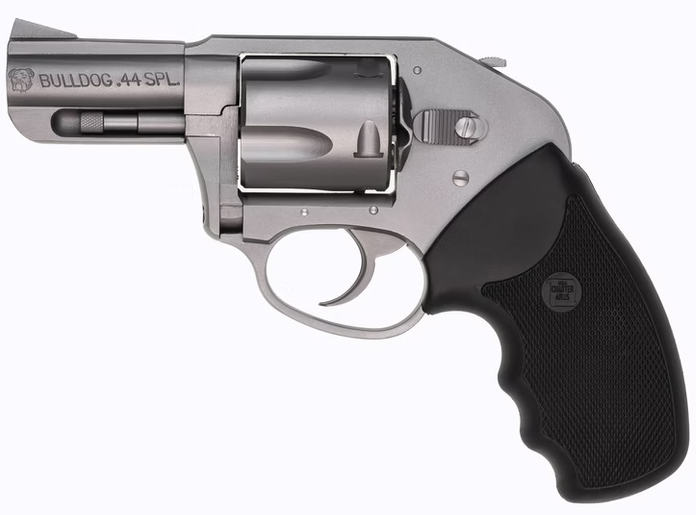
While lately the handgun world has been buzzing about the return of Smith & Wesson’s Night Guard in .44 Special, Charter Arms has been conking out .44-caliber Bulldog revolvers for decades. They may not be as snazzy as some other .44 Special, but I’ve always considered Charter Arms guns to be work horses rather than show horses. That’s not to disparage the Night Guard, reviewed in this space a few weeks ago, but it is to say the Charter .44 is no slouch when it comes to launching big, slow-moving bullets.
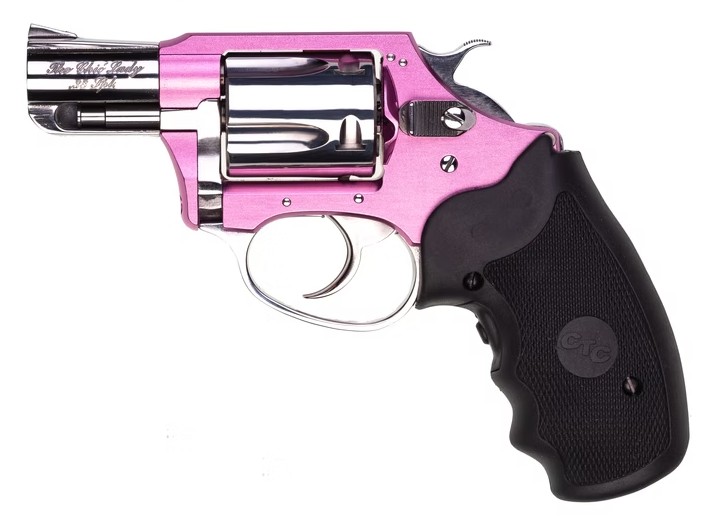
I can’t recall when I fired a Charter Arms revolver for the first time, but I do remember it was chambered for the .38 Special, had an interesting color motif and, if I recall correctly, it was aimed primarily at the women’s market. I can say it ate up .38 Special ammunition with the best of ‘em.
Once several years ago, I had the opportunity to run Charter’s “Professional” through its paces. This was a 7-shot wheelgun in .32 H&R Magnum, and I had a bit of trouble finding the zero, but once I figured it out, the bullets went where they were supposed to. As I recall, the gun shot a bit low at 20 yards, so I simply adjusted the point of aim and started punching holes in the black.
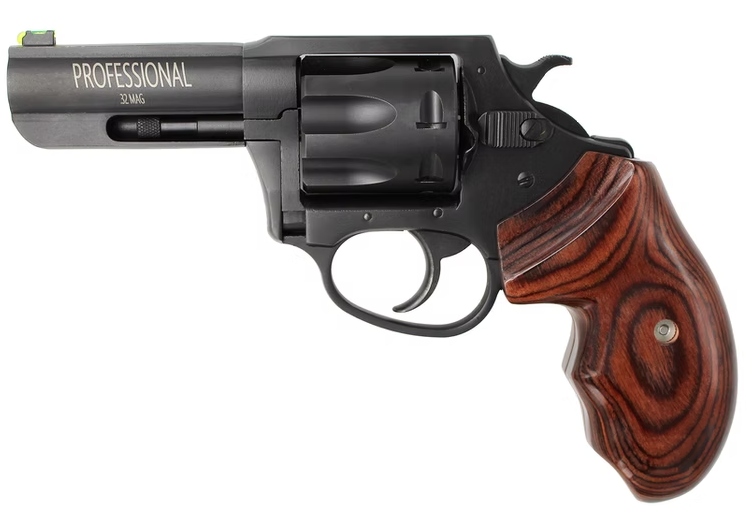
As a cartridge, the .32 H&R has always impressed me, and out of the Professional, it didn’t disappoint.
Charter Arms has so many variations of its 5-shot snubby that it’s hard to pick one as a “favorite.” I do know the guns I tested all fit okay into holsters designed for the J-frame Smith & Wesson, although I recall I had a bit of trouble getting one into an ankle rig I was also testing at the time.
For a backup gun, one could do a lot worse than have a Charter .38 in his or her pocket, because these little guns can dish out .38-caliber behavior modification with the best of ‘em.
Charter even offers some guns in .357 Magnum. The Mag Pug evolver features a full rubber grip, which sucks up a lot of felt recoil, and it has adjustable sights, which I prefer on any .357 Magnum. While it only holds five rounds, you can rest assured that by the time you’ve fired all of them, you will have gotten someone’s undivided attention!
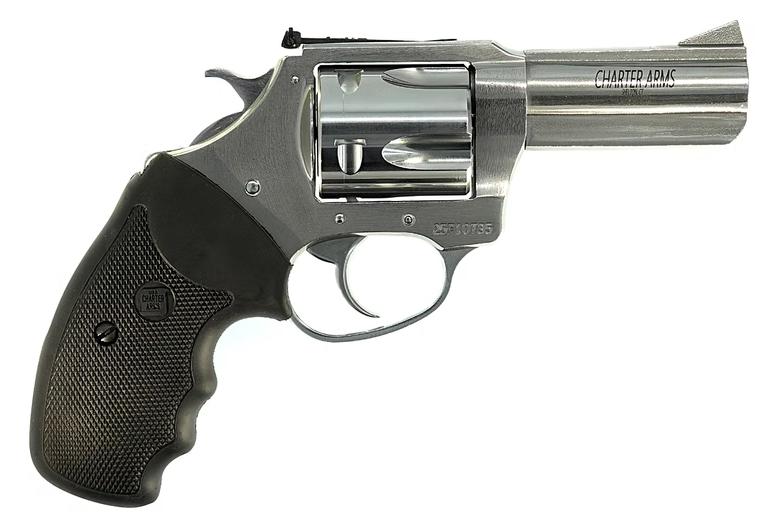
Of course, for sheer muzzle blast, I can say from experience there may be nothing comparable to Charter’s big frame guns in .45 Colt or even the .41 Magnum, the latter which does not appear to be on the company’s list of firearms these days. If you want to impress somebody, just crank off a round or two from either of these guns at dusk. The muzzle flash is awesome, the blast is temporarily deafening and the recoil is, well, memorable.
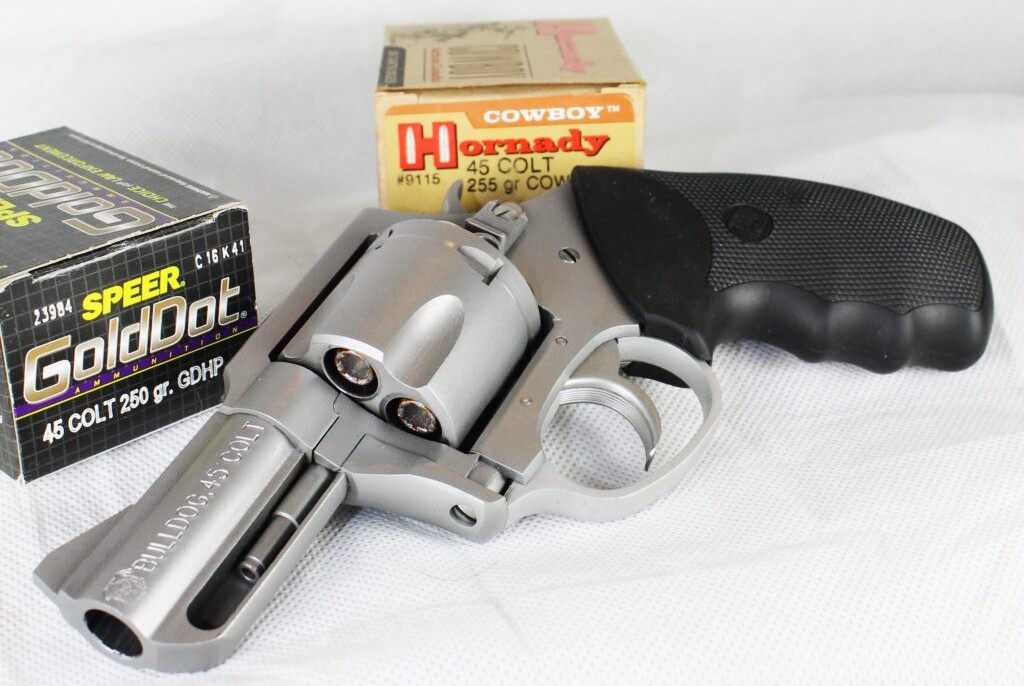
Both of these big bores are strictly for close work. They were definitely not Olympic target grade guns, but at gunfight ranges out to 15 yards, I did keep them in the black.
There will always be a place for an American-made revolver which competes very well in the marketplace these days. People with lower or fixed incomes still deserve to be able to afford a defensive firearm if they need one, and maybe that’s the niche Charter Arms carefully occupied decades ago when nobody else was looking. You may not see a Charter handgun in any Hollywood epic, but you will see them in places where they will do the most good for the persons using them.
That’s really all that counts.