By Jim Dickson | Contributing Writer
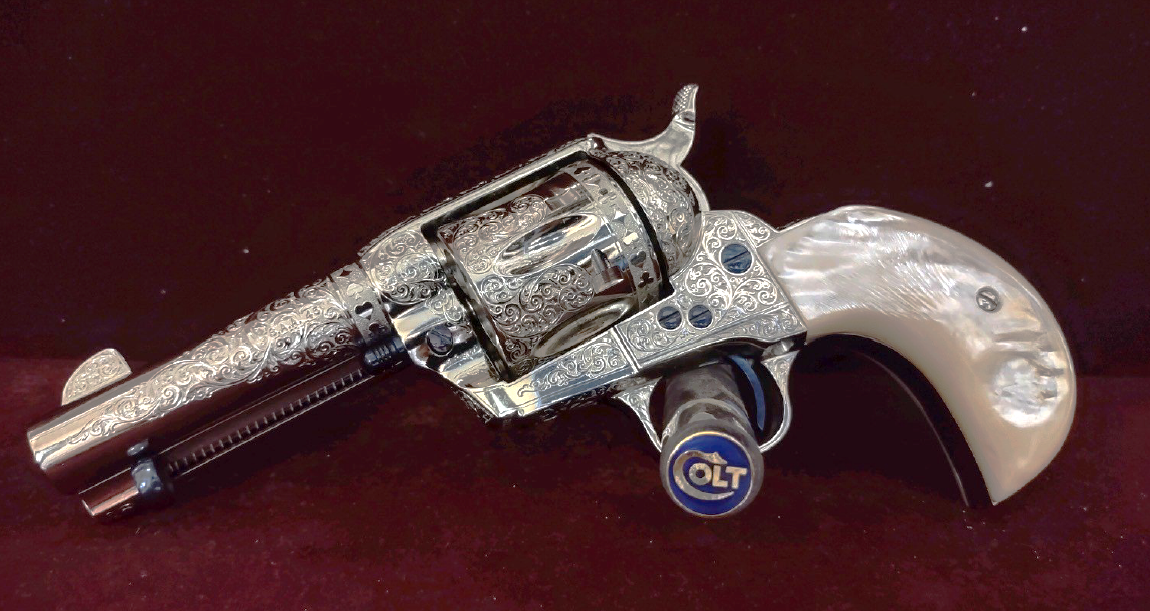
While the Colt Custom Gun Shop made birds head grip Colt .45 Single Action Army revolvers with
3½-inch barrels and ejector rods and housings the factory never made them a standard item which is a shame because these guns are much more concealable than the standard configuration guns.
It remained for the now defunct U.S. Firearms company and the current Italian companies to make this version a factory standard item.
While I prefer the full size Colt Single Action Army for most applications, the smaller version can be just as effective. This is quite unlike the snub nose .38s and .357 Magnums, which are harder to hit with at long range than the full size revolvers.
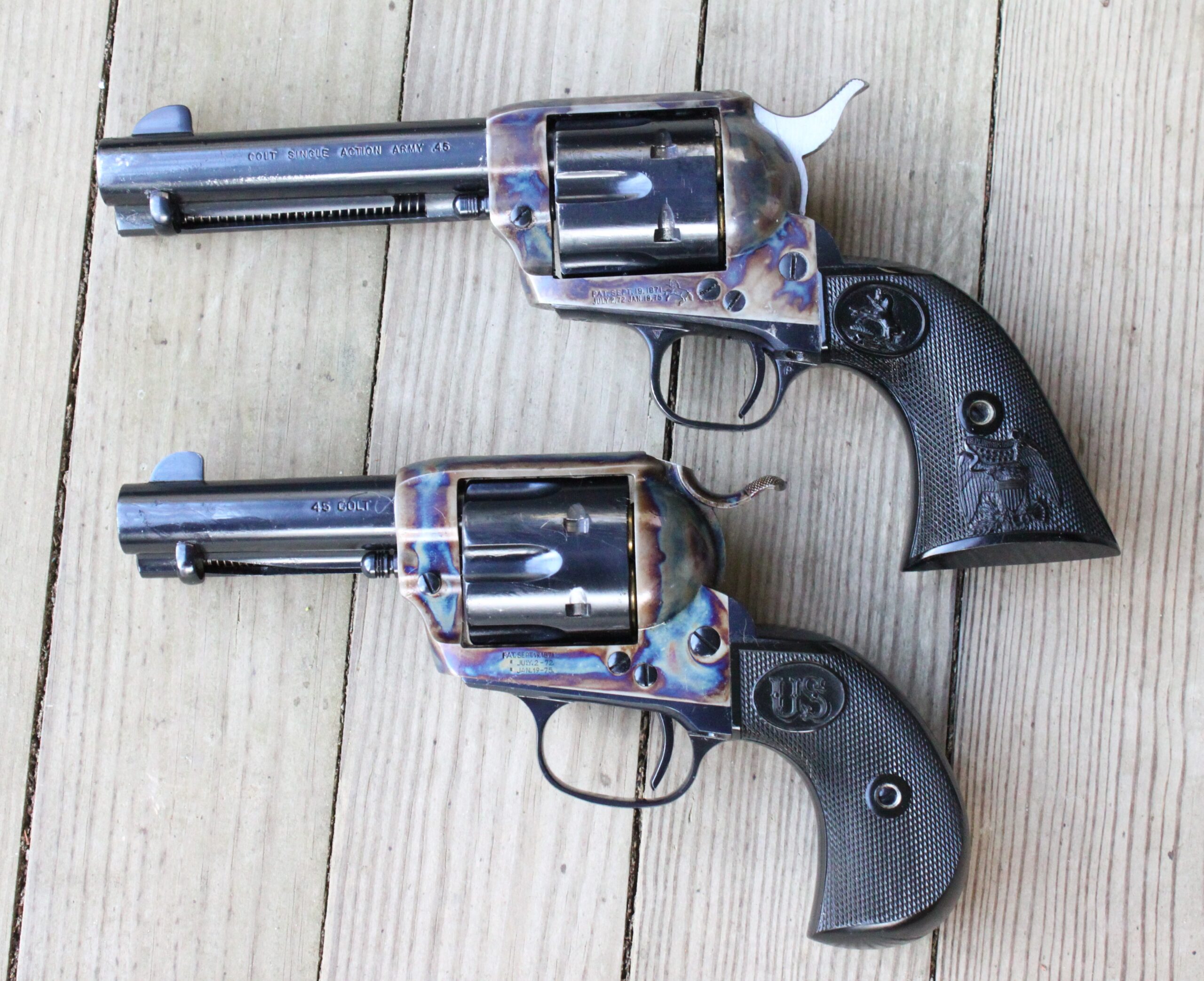
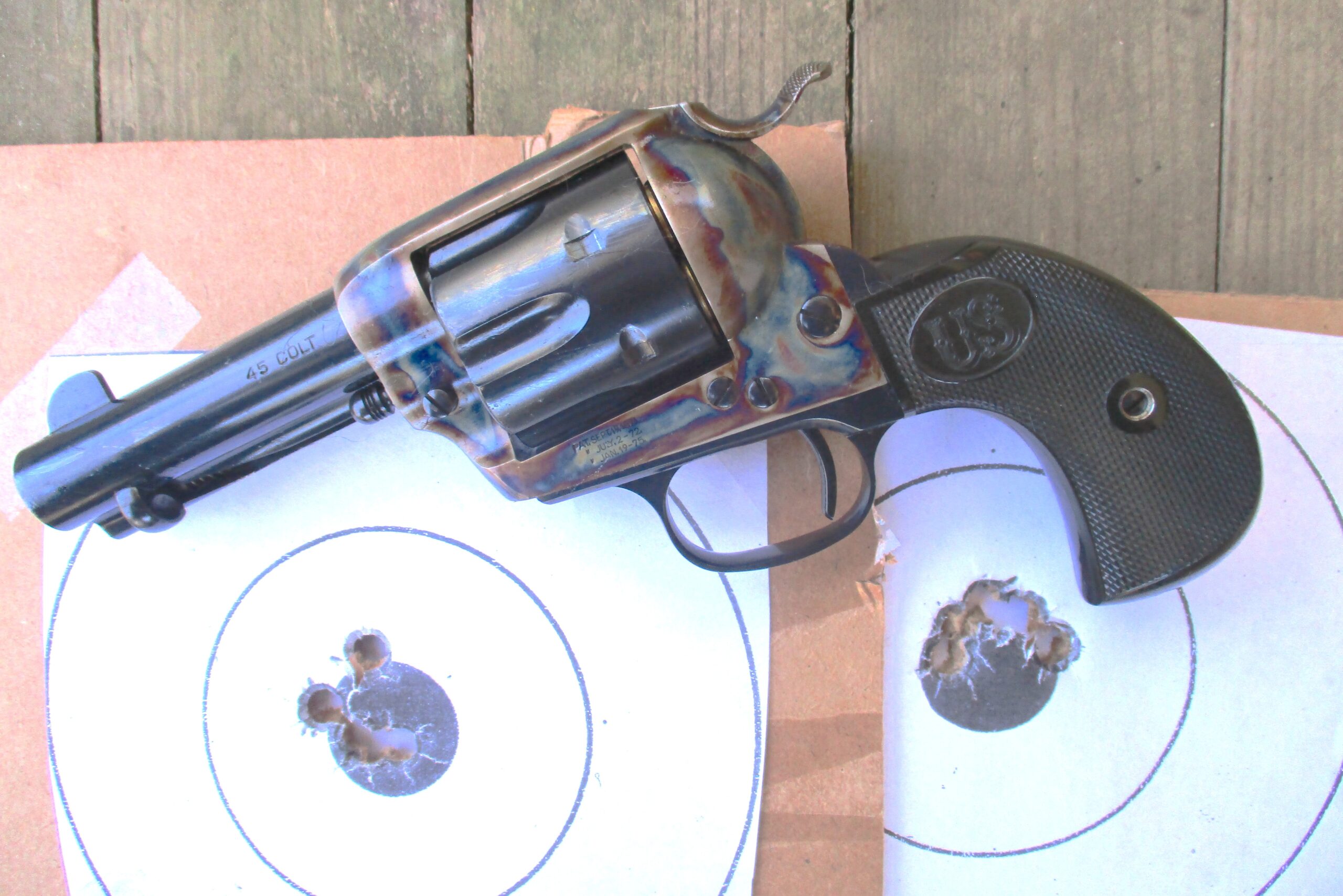
The smaller version of the SAA has consistently given me hits on a 3-inch target at 75 yards requiring no extra skill or effort than the full size 4 ¾-inch barrel square grip standard version. It points the same as the standard version and the rounded back of the birds head grip does not print conspicuously under a coat like a square butt revolver can.
The 3 ½-inch barrel enables reasonably comfortable carry inside the waistband whereas a 4 ¾-inch barrel Colt single action is a bit long for this and the short barreled snub nose 38s tend to dig into you more and are far less comfortable to carry in that position as a result.
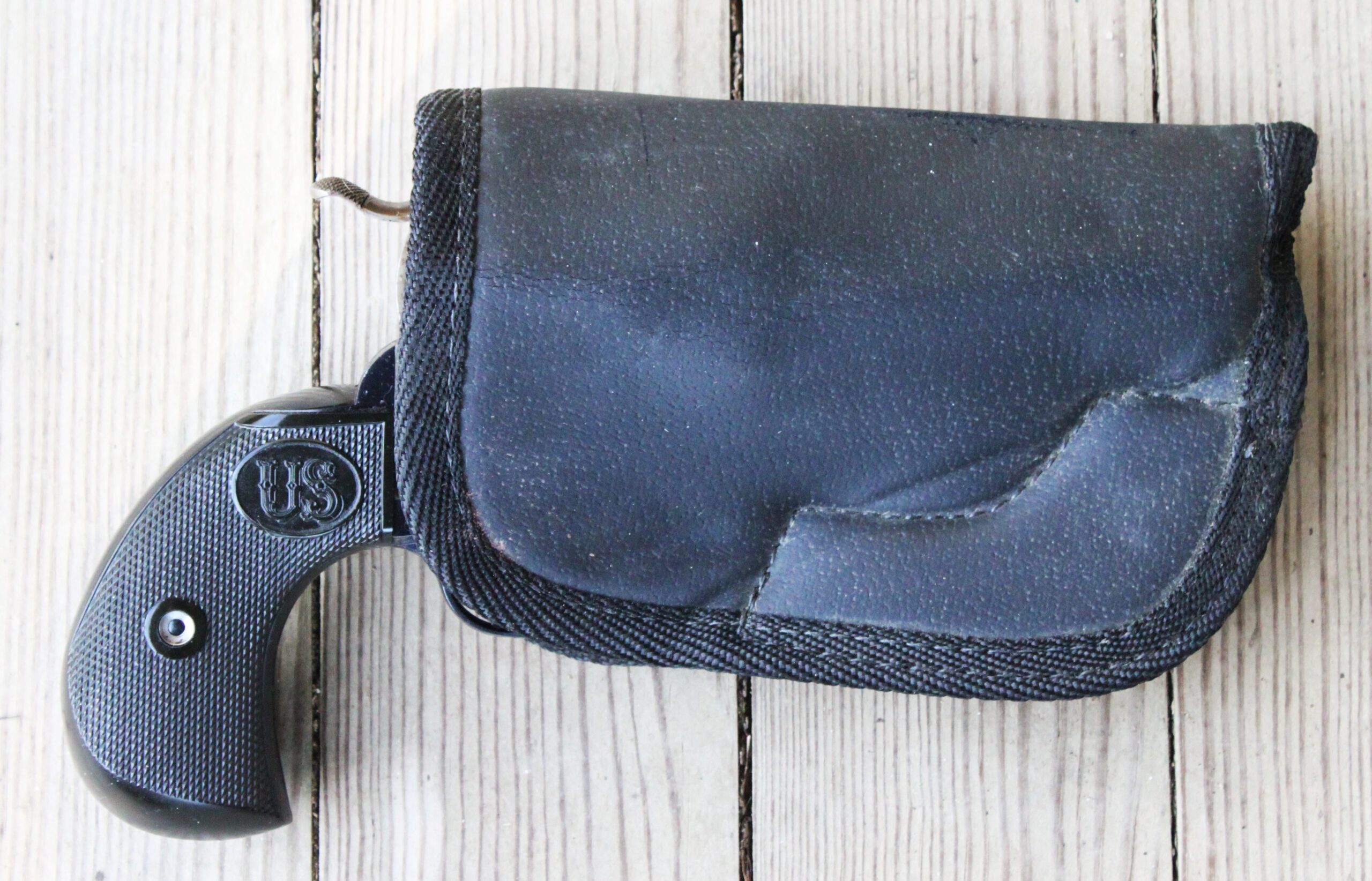
Placed in a Sticky Holster from the Sticky Holster company, the birds head grip single action can be positioned for maximum comfort on the individual carrying it and once positioned there it stays there without moving about no matter what you do.
Of course the most comfortable carry mode is the pancake holster which holds the gun high and tight against the body where it can be easily hidden by a coat.
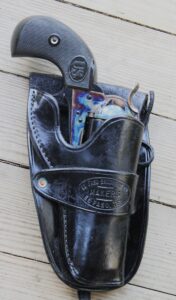
The Tortilla holster from El Paso Saddlery is an excellent choice for this type of carry which is also excellent for fast drawing with its thumb break holster and ergonomic positioning on the body. While you can also conceal a full size Colt Single Action Army .45 in one of these holsters as I have often done, the fact remains that the birds head grip version is smaller and less obtrusive to conceal. This holster works equally well for open carry.
Single actions have always been commonly carried in shoulder holsters. The one shown is a duplicate of a shoulder holster made for John Wesley Hardin, the most deadly gunfighter with the highest score of men killed in the old West. It is still made by El Paso Saddlery Co., which made holsters for Hardin in the old days. They also made all the rifle bandoleers you see crossed on the old photos of Pancho Villa’s men.
El Paso Saddlery’s 1890 holster has always been a popular Western rig. Personally, I prefer their duplicate of Hardin’s version of the Slim Jim holster, however with the shorter barrel there is not room for a full reload from the cartridge loops Wes had sewn on the side of his holster. I carry a full size Colt .45 Single Action in one of these to shoot coyotes with and it rides on my hip when I make the one mile walk to get my mail. I live so far back in the woods that the mail won’t deliver to my property and they made me put my mailbox far from my house. I have to walk right past the stand of white pines that Mama Bear uses each year for a nursery, sometimes passing within 10 feet of them. While I have never had trouble with these bears I like my hand on a .45 that I can draw and fire in a fraction of a second when I go by them that close.
While most folks dismiss the idea of a .45 for pocket carry they should remember that in the 1930’s Colt’s Henry Fitzgerald carried a pair of cut down Colt New Service .45 Fitz Specials in his pants pockets. The thick wool pants of the day made that easier.
The Colt New Service is a whole lot bigger than a Colt Single Action Army revolver yet Fitz managed to conceal them. Shown is the single action .45 in an El Paso Saddlery Pocket Max horse hide holster that I have used.
These are just some of the carry options available. The big advantage of the birds head grip 3 ½-inch barrel guns is that you can shoot them as accurately and as far as you can a full size Single Action Army revolver. If the gun must be carried concealed, and most are in the 21st Century, then it offers real advantages.
Why would you carry an 1873 design in 2026? The answer is simple. Effectiveness. One shot stopping power in one of the easiest pistols to shoot accurately ever made. No double tap per target to slow you down and get you killed by the second or third criminal. Sure you only have five shots because you always keep the hammer down on an empty chamber as the old design lacks a hammer block safety, but how many times do you have to shoot more than five opponents at a time?
As Frank Hamer, the lawman who took down Bonnie and Clyde in the 1930’s famously said “If I can’t handle it with five shots then I am not much of a lawman.” This was in response to someone who questioned why he didn’t carry reloads for his Colt Single Action, “Old Lucky.”
The natural pointing and ease of hitting with a Single Action Army when you are under the stress of someone trying to kill you is a lifesaving ace up the shooter’s sleeve and it can make the difference between life and death in these scenarios. If you need more shots then it’s time for a self-loading rifle with a 20 or 30 shot magazine. If it’s a human wave attack then I want a water cooled machinegun not a pistol.
Pistols are carried for personal protection against criminals and the single action still shines there.
Some people will say that a double action revolver or an automatic is faster firing. If we are fighting a timer that may be true by a tiny amount but in a real world scenario the time it takes to move from one target to another negates that entirely as you have more than enough time to operate the single action.
The old plow handle grip of the single action makes it easy to firmly hook your hand in it when drawing and saves precious time where you need it most. Once clear of the holster that same grip points accurately. The hammer should be cocked as the gun is midway between the holster and the target. Not before and not after. Forget the steel lined fast draw competition holsters where they cock the gun while it’s in the holster. That led to many folks shooting themselves in the leg. Always cock with the thumb held crossways on the hammer where it can’t easily slip off like it can if you cock it with the thumb held longways as you would on a double action revolver.
Grip the single action as high as possible. If the hammer spur is sharp on the end take a file and then a stone directly to that edge and flatten it out so that it doesn’t draw blood when you take the high grip with your hand stopped by the spur of the cocked hammer.
Engage the trigger with the first joint of the trigger finger, not the tip of the finger. Squeeze the flat Colt logo panels with the rampant Colt on them with the base of the trigger finger and the thumb. To fire, move the tip of the trigger finger towards the thumb. This procedure makes instinct shooting easy as it aligns the gun with whatever your eyes are locked on. This is particularly important as many attacks come at night when there is not enough light to see the sights and they also may be so close and sudden that you have to fire before the gun can be raised to eye level. This is where the old Colt shines and where it can outperform more “Modern” designs with its speed and accuracy under the worst possible conditions.
The real world can be a very different place than the firing line at Camp Perry or a so-called “Combat course.” Pull, point, and fire. All done in a fraction of a second with fast follow-up shots for other customers as needed. One shot per customer. That’s the way the Colt .45 Single Action has gotten the job done when things get down and dirty for the last 153 years.
Colt really needs to make the birds head grip 3½-inch barrel version a standard catalog item for those who must carry their single action concealed instead of leaving it to lesser makers. American customers deserve the best.