By Mike Nesbitt | Contributing Editor
While a lot of things about muzzleloaders have been updated over the years, they still use ramrods for loading and cleaning.
That shouldn’t surprise any of us. But some of the things done either with or to those ramrods might be surprising. This tale is about some of the things I’ve either done or observed concerning muzzleloaders’ ramrods over the years.
For my muzzleloaders, I still like the wooden ramrods, although they are breakable. I feel that using a non-breakable ramrod can lead to developing bad habits. Years ago, I was watching another shooter who was loading his rifle while using one of the modern black flexible non-breakable ramrods. He would pour his powder down the muzzle and then get the patched ball started, probably just like most of us do. Then he’d take the un-breakable ramrod and grip it at the very top end, and ram the patched ball all the way down to the powder with one long mighty stroke. I thought while watching him that if he tried that with a wooden ramrod it would break, probably on the very first try.
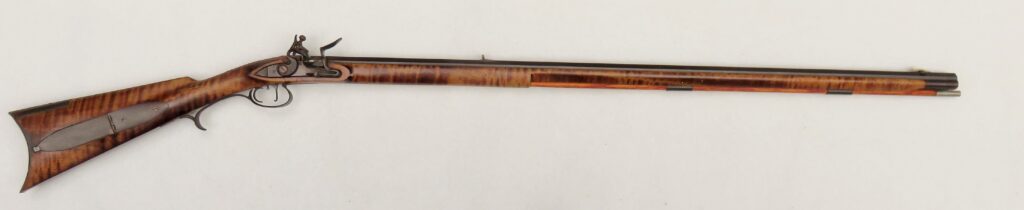
That flexible ramrod was flexing quite a bit…
The way to use a wooden ramrod while loading the gun is to simply ram the ball down to
the powder with several short strokes. Grab the ramrod only a foot or less away from the muzzle, push that much down the bore, then grab another foot or so of the rod and do it again. Continue until the ball is resting on the powder. That way the rod does not have the chance to bend and most likely the same wooden ramrod can be used for several years.
It was back in the ‘80s and I was shooting on the trail-walk at one of the “Rain-de-voos,” a doin’s which is held annually in the month of February (when we often shoot in the rain). The rifle I was using was my little .40 caliber Tennessee Rifle which was made by Tennessee Valley Manufacturing. And, because my rifle’s ramrod was showing signs of weakness, I was carrying a “loading rod” with me in addition to the rifle’s ramrod. (That was the first and last time I ever carried a “loading rod.”)
Making Splinters
Things were going rather well but I certainly do recall my shot at the big bear, which is near the far end of the trail. As you might guess, that loading rod was “stored” down the barrel of the loaded rifle. At the previous targets I had remembered to remove it before taking my shot, but I didn’t remember it this time.
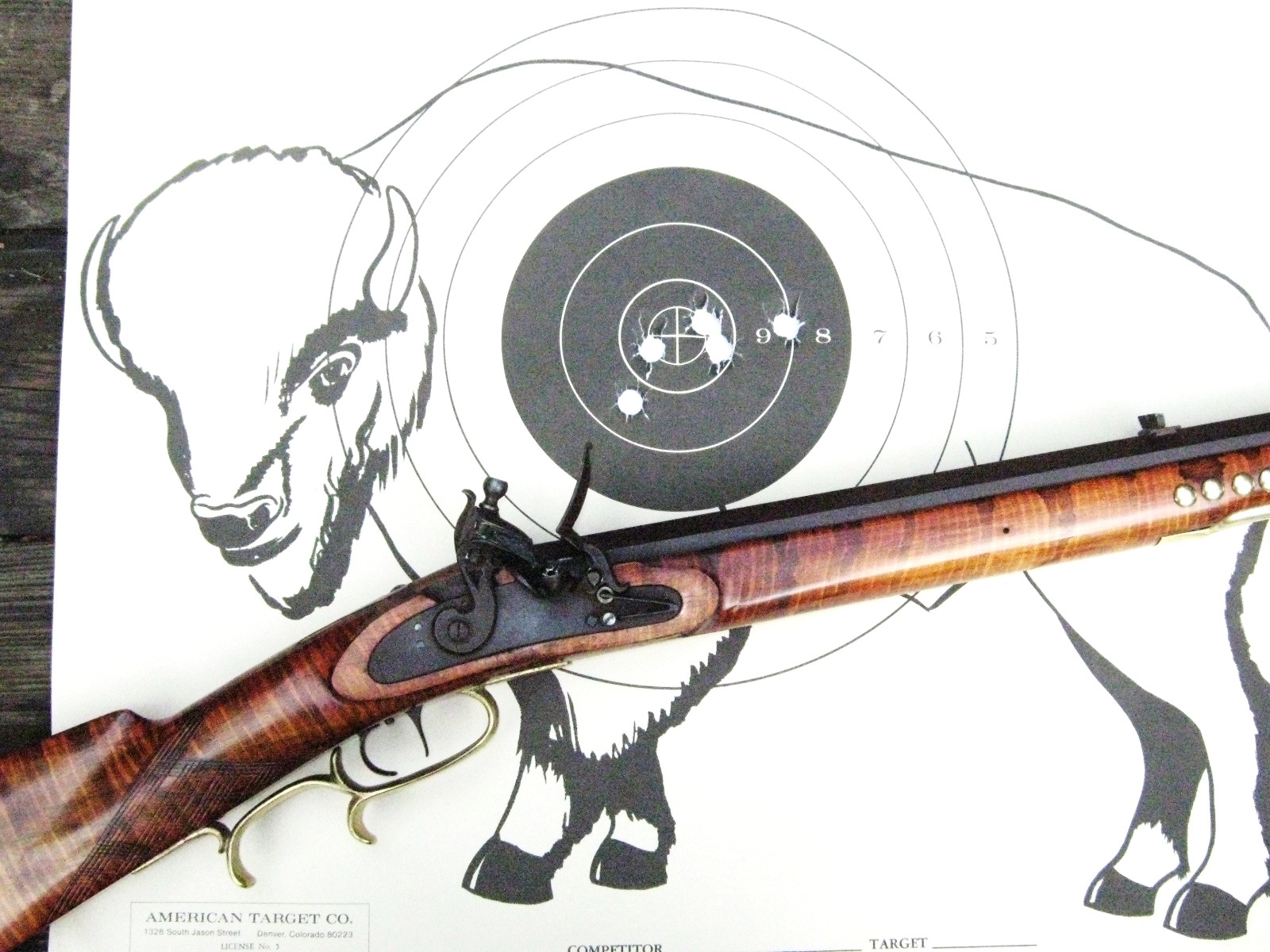
One of the other shooters tried to warn me about the rod sticking out of the muzzle but he was both too quiet and too late. Of course, while aiming the rifle, the shooter can’t see the ramrod unless there is a rather large handle on the end of it. So, with nothing but the big bear gong sitting in my rifle’s sights, I squeezed the set trigger.
At first I had no idea anything strange had happened. But the cheers and jeers of the others quickly told me and those jibes were supported by the fact that my loading rod was gone. Oh, the shame of it… The loading rod had hit a tree and was reduced to short splinters.
No, I don’t think I hit the bear either…
With only a few more shots to take on that trail-walk, I finished while using the rifle’s regular ramrod, using it very carefully. The weakened ramrod did not break but I must have replaced it rather soon afterward. I don’t remember actually replacing the ramrod but that must have been done.
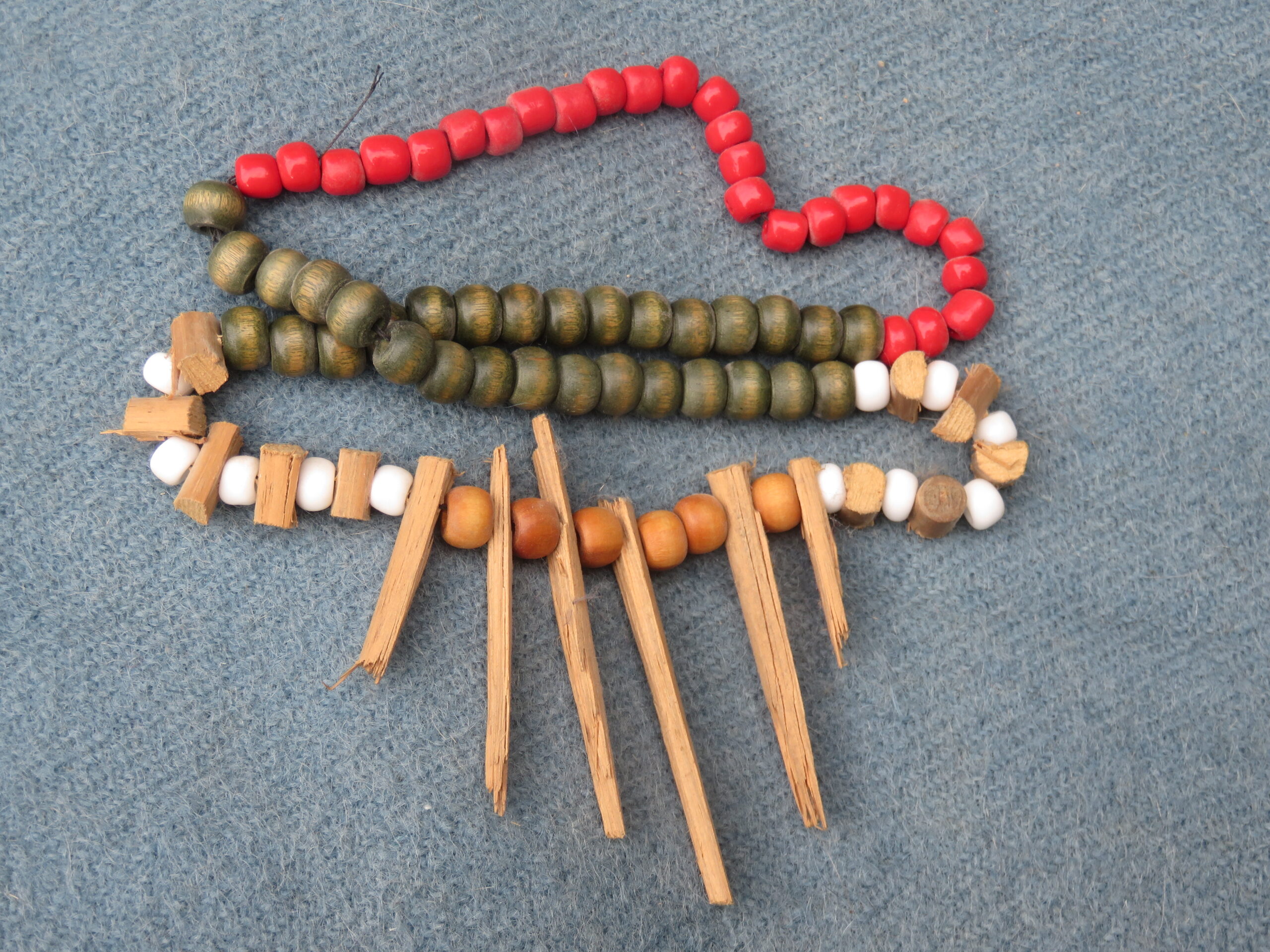
What I do remember is a special prize that was presented to me at the awards ceremony for that Rain-de-voo. After the trail-walk had closed for the day, a couple members of the group I had shot with went out to where I had shot my loading rod and picked up several of the broken splinters from the ground. Then, with some colored wooden beads added for décor, they made a “bear claw necklace” for me, using the wooden splinters in place of bear claws. I wore that necklace for the remainder of the awards ceremony and actually I wore it again at least a couple of times at later Rain-de-voos. I still have the necklace and show it off every now and then.
Moving Right Along
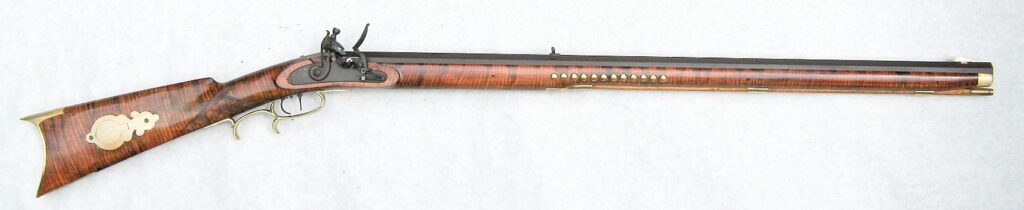
For the next look at ramrods we’ll step forward for several years on our memory trail to something that happened to me while I was shooting “Tacky Too,” the .54 caliber flintlock Leman style rifle that I used so long and actually so well for so many years.
This took place in another shooting match and I have forgotten just how long ago. “Tacky Too,” the rifle that I was using almost all of the time back then, was loading fine after already taking several shots. Then I noticed a funny feeling while ramming the ball down to the powder and I wondered if the bore was simply getting too dirty. But that load shot just fine, giving me a good hit, so I figured to just try it again for another shot.
Again, the funny feeling was encountered when the ball was almost all of the way down, within a couple of inches over the powder. So, to be sure the ball was well seated, all the way down, I put both hands on the exposed part of the ramrod and slowly pushed on it while I held the rifle between my knees.
The ramrod broke with a loud snap! There I was with both hands holding no more than 4 inches of my rifle’s broken ramrod and with nothing else holding the rifle. The rifle went crashing to the ground, smacking part of a shooting bench on the way down. All of this happened very quickly, so fast that I was simply still holding the short bit of broken ramrod with both hands. The funny feeling I noticed while seating the ball was apparently the splitting and flexing of the ramrod just before it broke completely. To say the least, I was highly surprised.
The good side of this short story is that I wasn’t hurt and neither was my rifle except for a loosened sight from hitting the shooting bench while falling. The sight was easy to fix, just tap it back to the middle of the barrel. Where I might have gotten hurt was because ramrods don’t usually break clean in two. They break length-wise, often leaving a long sharp section at the top of the split. That long sharp section of broken ramrod has a reputation for cutting and possibly penetrating the shooter’s hand. For me no first aid was necessary and the top of the split part of the broken ramrod was down inside the rifle’s barrel.
Ram-BAM!
Another ramrod was borrowed to finish loading that shot and this was a good lesson learned, anytime I feel something different “through” the ramrod while seating a ball, I’ll probably take a good look at the ramrod right away. Any ramrod that gets so weak that it gives a “funny” feeling while you’re loading the gun must be on its ‘last legs,’ so to speak. There’s no point in using it until it breaks because doing so carries the risk of injury to your hand, if not both hands.
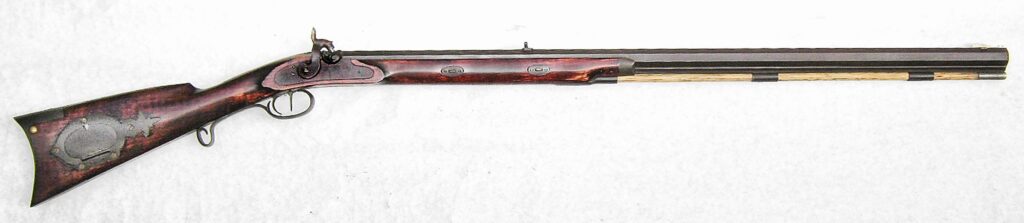
There’s one more ramrod that I want to tell you about. This also took place at a rendezvous and the shooter grabbed his smoothbore, and went down the trail to try some Trade Gun targets. Along with his smooth bore he carried a loading rod. His loading rod was a steel ramrod, possibly the ramrod from a replica musket.
While on the trail and enjoying some good shooting, he apparently ran out of bullets. But that wasn’t discovered until after he had dumped a powder charge for the next shot down the barrel. Looking for one more round ball, he searched his pouch through. And, while looking for that ball, he forgot that he had poured a powder charge into the gun’s muzzle. He even turned his gun muzzle-down to pour out any powder that he had loaded into the barrel. No powder came out. With that, he considered the gun empty and returned to camp.
Back at camp, and inside his tent, he let the gun stand in his gunrack for a few minutes. After relaxing for a little while, he decided to clean the gun. That was also done with the steel ramrod. Perhaps he let the ramrod simply drop down the barrel. I don’t know but the rod must have had some speed to it because before the ramrod reached the breech of the barrel, the gun fired.
The steel ramrod was blown out of the barrel as you might guess. The shooter’s hand was still on or near the ramrod and he got some dandy cuts along with a very numb hand but no lasting or disabling injuries. And the ramrod was blown through the side of the tent before it lost a little energy and simply fell to the ground. The shooter was very lucky to have escaped more serious injuries and it was also lucky that the camp itself was a small one, no other camps or lodges were on that side of the tent.
We can re-construct several things that led up to this situation. First, of course, keep your mind on what you’re doing. If he had remembered pouring the powder down the muzzle, he might have at least shot the powder to clear the barrel. Forgetting that the gun had a powder charge in it begins a long list of errors, including bringing a loaded gun back to camp.

But a question remained about how the powder charge got ignited. My opinion is this; let’s remember that black powder is a Class A explosive. The definition of a Class A explosive is that it can be ignited by a spark. When the steel ramrod was thrust down the bore, it must have rubbed against the steel barrel near the muzzle and at least one tiny spark was made. That spark had nowhere to go except down into the powder charge. And that happened much faster than it took you to read these few lines that describe about it.
Some of you might doubt my opinion on how this happened. I have no way to prove what I suggest caused the ignition of the powder. No one has even offered another explanation for such an occurrence. This gives me one more reason to favor wooden ramrods, they can’t cause sparks.
Those three incidents are what come to my mind the most when I remember ramrods. Otherwise, a gun’s ramrod is simply a silent necessity that seems to get no recognition or introduction at all. I suppose that’s the way it should be and for a ramrod to be specifically remembered, it must have been used or done something on the spectacular side. For the most part let’s hope that our ramrods remain our silent partners and that we use them properly.