By Dave Workman
Editor-in-Chief
Packing a puny revolver or semi-auto pistol has never been a problem; some people carry them in their pockets and others in small holsters tucked discreetly here and there.
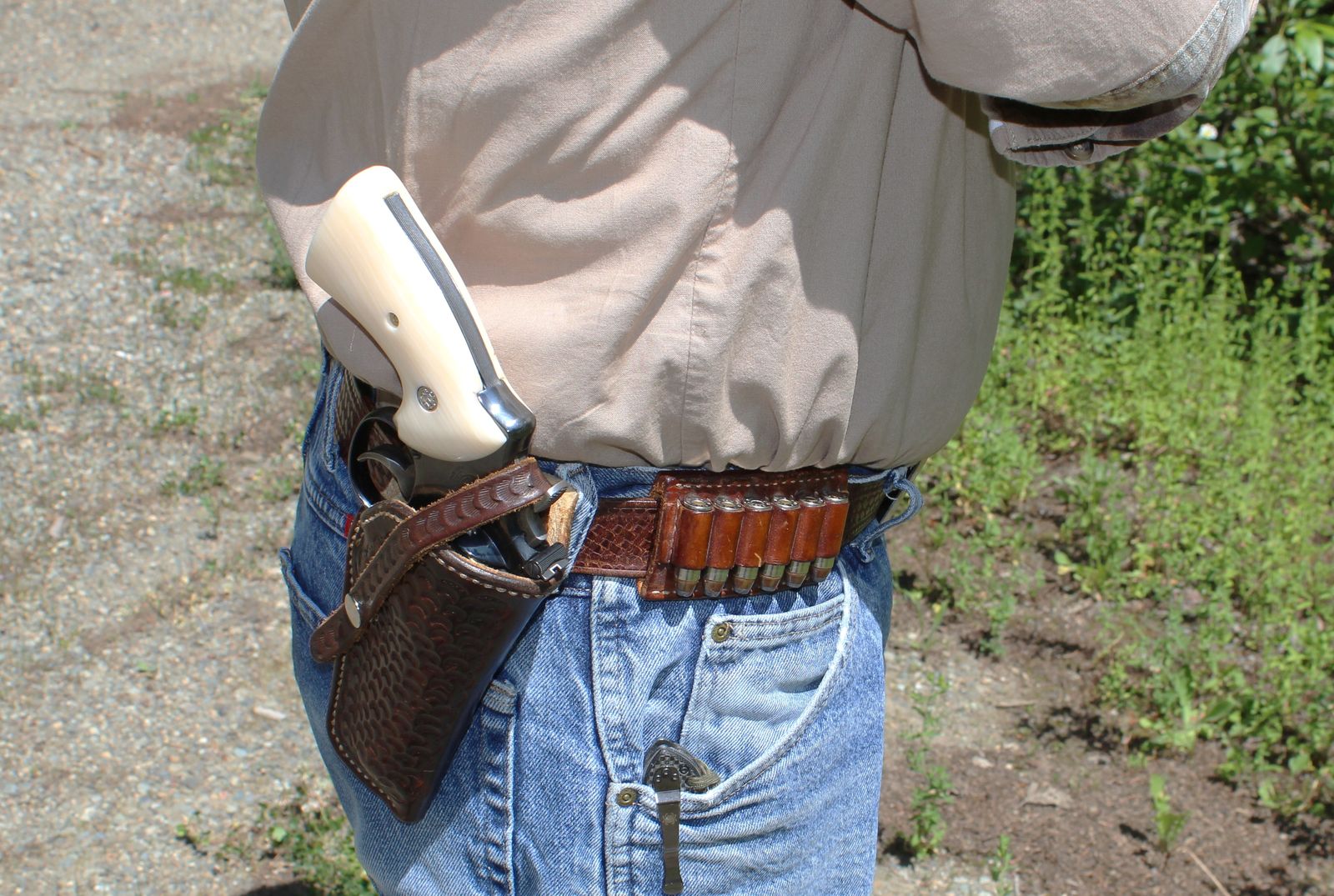
But a larger handgun? No real problem here, either, as I’ve been doing it for years. The only real impediment I’ve ever considered is how to do it comfortably, and this only required finding a suitable holster—or building one—to accommodate my sixgun.
Early in my career, I sometimes carried a Model 19 Smith & Wesson with a 6-inch barrel discreetly under a longer fleece-lined leather coat and nobody was any the wiser. Nowadays, I’ve found it comfortable to carry such guns as a Ruger single-action in .45 Colt or an N-frame S&W with a 4-inch barrel, and I’ve been able to carry a 4-inch Colt Diamondback .38 Special in a pancake-type holster.
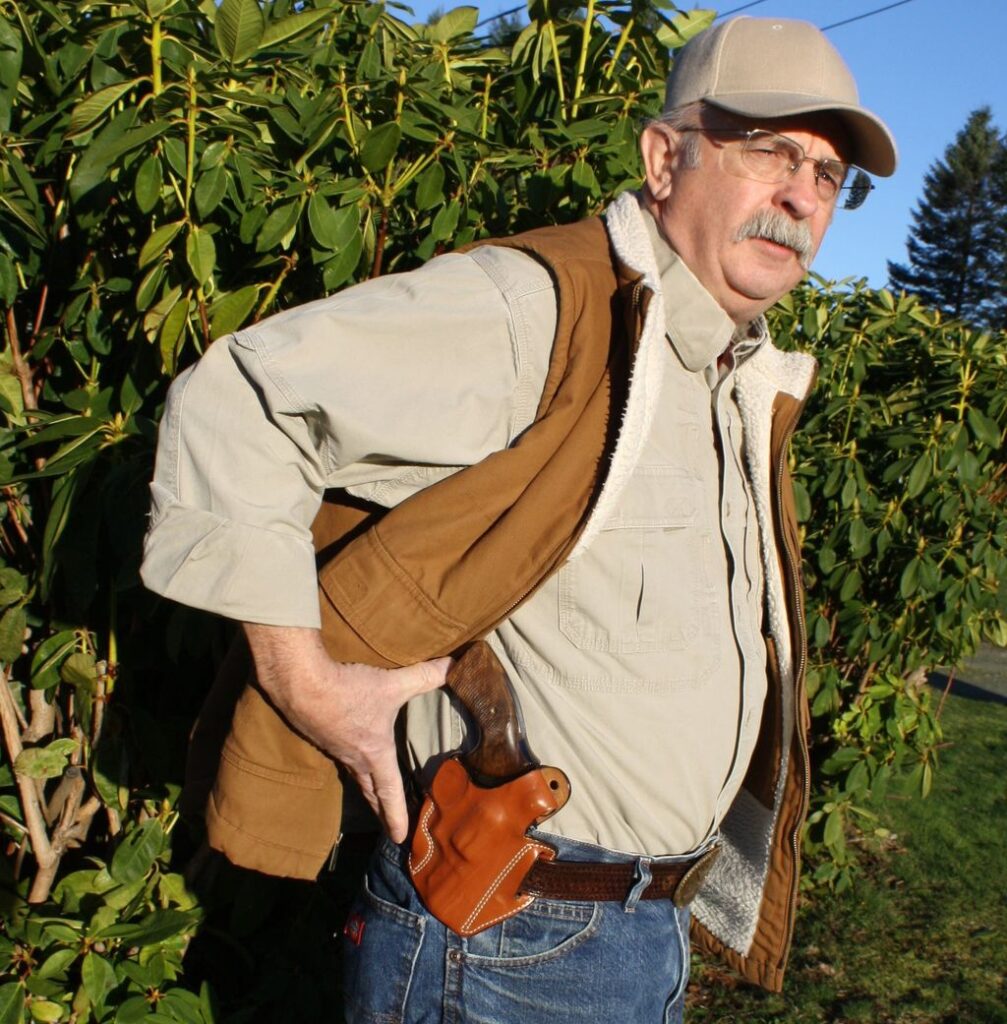
Sure, it takes getting used to and you need a stout belt for the bigger revolvers, simply so your trousers don’t start sagging. Fortunately, there are lots of quality belts available which are designed for packing sidearms.
This isn’t just a matter of concealing a sidearm, but packing it either openly or under cover just to have it in the event you need it in an emergency.
The late Elmer Keith habitually carried an N-frame S&W, chambered either for the .44 Special or .44 Magnum, and he was not a large fellow at all. On some occasions, according to stuff I’ve read, Keith might have been packing a .41 Magnum S&W revolver, as his holster(s) for the .44s could accommodate that sixgun as well.
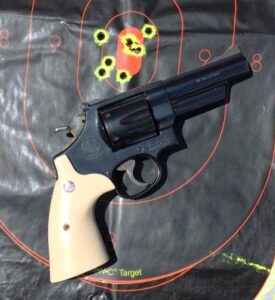
Over the course of my rather mundane life, I’ve somehow managed to accumulate a few revolvers which I simply can’t bear to leave locked up at home while traveling to this or that spot on a map. I used to hike around the central Cascade Mountains just to stay in shape, and I discovered rather early on that when one leaves the pavement and ventures back up some trail more than a few hundred yards, it is possible to come face-to-face with things that growl, snarl and look at you only as walking food.
It only needs to happen once before a serious attitude adjustment takes place, and you start thinking about things that go “BANG!”
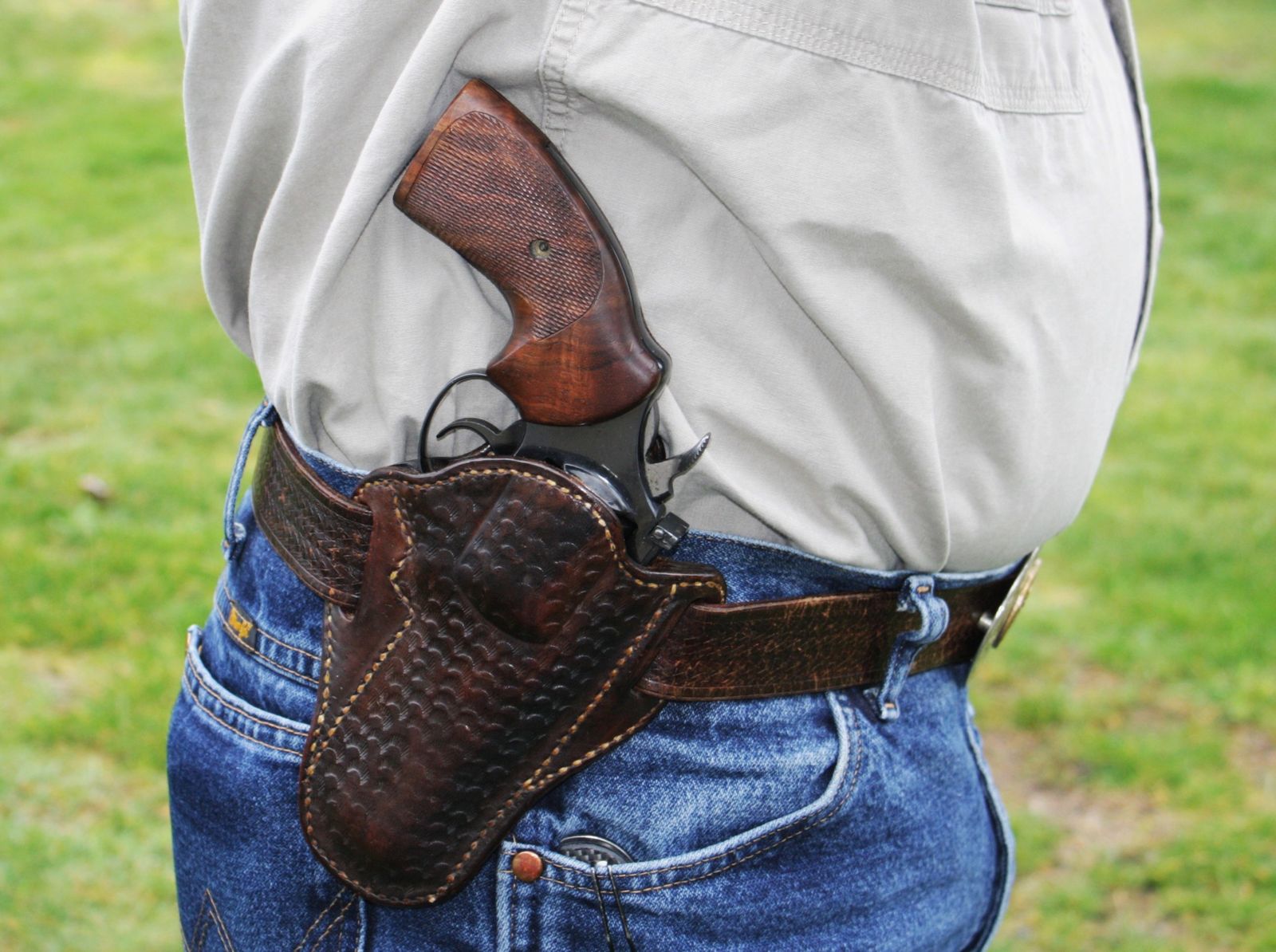
Different modes of carry appeal to different people. Where some folks might prefer a pancake-type rig, others will go for a traditional belt holster. The pancake hugs the revolver close to the body while a more traditional belt rig allows the sidearm to project slightly away from your body, where your hand can get a very good grasp instantly.
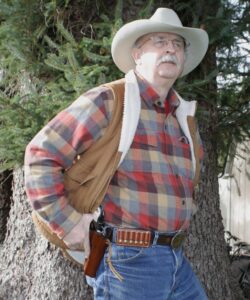
Which gun do I prefer? That’s not an easy question, since every wheelgun in my battery has a purpose, and has proven itself one way or another, to my satisfaction. So let’s break things down a bit.
With my early spring firewood cutting just over the horizon, the gun that rides along more often than not is a S&W Model 19 with a 2 ½-inch barrel. It’s a .357 Magnum, stoked with handloads pushing 158-grain Hornady STP hollowpoints over a stout does of Hodgdon’s H110 propellant, ignited by a Magnum CCI small pistol primer. It carries comfortably, stays out of the way on my belt while I’m running a chainsaw, and it is only a quick grab away from being deployed.
Once or twice I’ve opted for the Diamondback, with handloads filing the chambers. I have found the 125-grain Speer, Nosler or Hornady JHPs to be very accurate over a charge of HP-38 or CFE Pistol, ignited by a CCI standard small pistol primer. Check various loading manuals and you will find all kinds of recipes for the .38 Special cartridge, and they won’t beat your revolver to pieces, either!
For the past couple of years, I’ve been experimenting with 215-grain LSWC bullets in my .41 Magnum loads, propelled either by 2400 (when I cold still find it) and more recently with Accurate #9 or H110, the latter being probably my favorite magnum pistol powder. I’ve done rather well with 210-grain JHPs from Nosler or Sierra over H110, and since it ain’t broke, I don’t need to fix it.
Recently I’ve been using CFE Pistol in my .45 Colt loads, either behind a 250-grain Hornady JHP or the 255-grain Hornady RNL bullet, and both seem adequate for my purposes. Not being a cowboy action shooter, I’m interested only in velocities in the 850- 900 fps realm.
Weight will always be a factor, but that’s a double-edge sword. One might consider it a “reassuring weight” of having a sixgun where it might come in handy, as opposed to just considering it an anchor tugging on your belt.
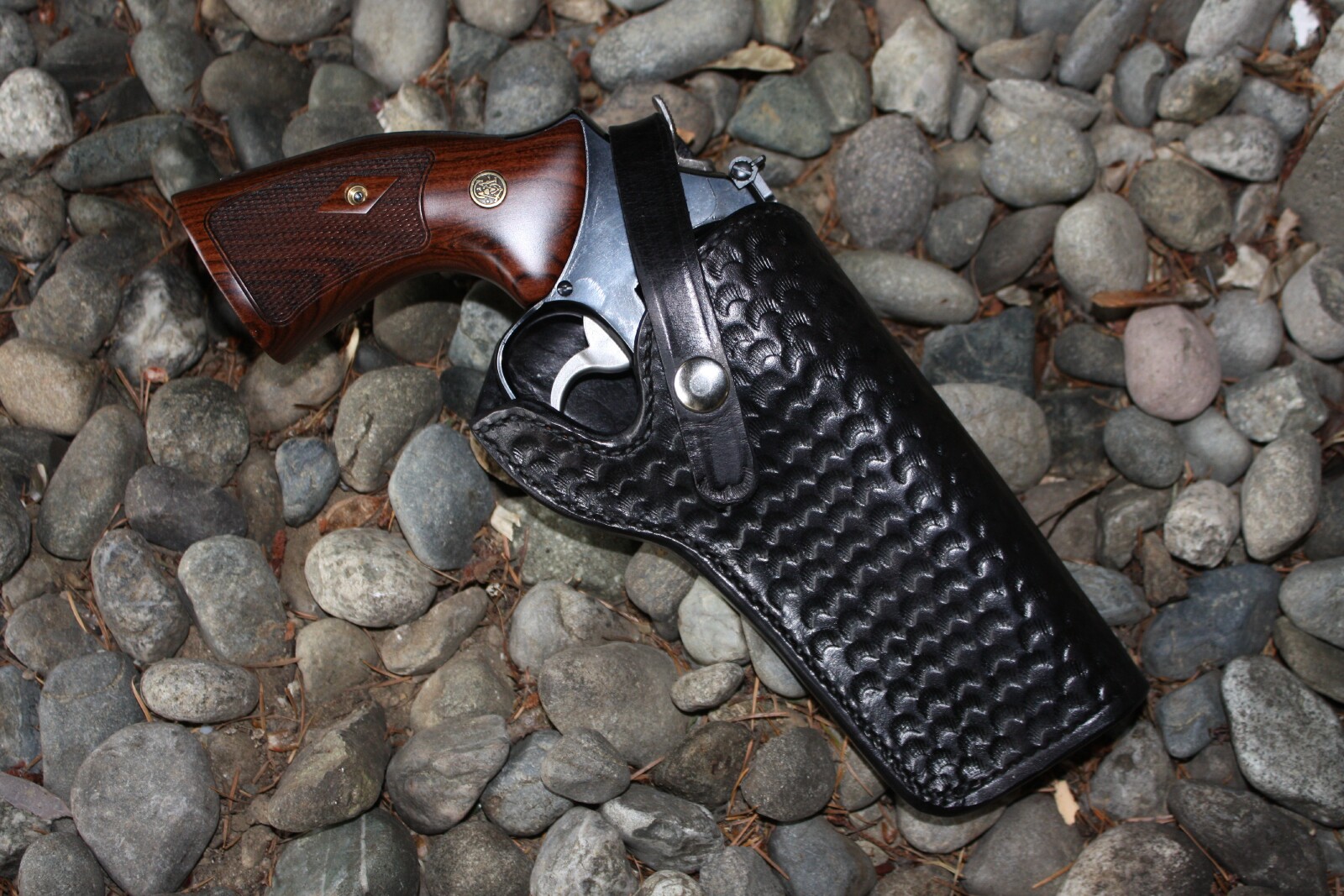
None of my packin’ sixguns weighs more than 48 ounces, and the majority weigh less. Four pounds may seem like an uncomfortable burden to some folks, while others take it in stride. What may seem heavy in one holster might be far less noticeable in another rig which spreads weight around.
All I can say from experience—another story for a different day, perhaps—is that having a noticeable weight on your belt or on your hip reminds you that if everything seems to fall apart, that piece of emergency survival equipment is right there within reach.