
By Tanya Metaksa
Pam Bondi’s brief but impactful tenure as Attorney General marked the first time the Department of Justice treated the Second Amendment as a civil right to be enforced—not an inconvenience to be managed—and the structure she built is now driving a strong, pro-gun‑rights agenda that Second Amendment supporters will work to ensure its survival.
Building a Second Amendment DOJ
From the outset, Bondi arrived with a clear presidential mandate. Acting on President Trump’s White House order to review and correct prior firearms policies, she created a Second Amendment Enforcement Task Force that pulled in the Solicitor General, Civil Rights, Criminal, ATF, and the FBI, ensuring that every major litigating component internalized 2A protection as part of its core work. The charge was unapologetically and blatant—to use DOJ’s “full might” to advance compliance with the Second Amendment, not only by defending the right in court but by actively identifying and rolling back prior regulatory overreach.
In practice, that meant two things. First, the task force began targeting Biden‑era gun rules—such as restrictions on stabilizing braces and broad “engaged in the business” definitions—that burdened law-abiding citizens while doing little to stop criminals. Second, it shifted DOJ’s litigation approach: revisiting old briefs that treated the Second Amendment narrowly, admitting errors when necessary, and selectively participating in appellate and Supreme Court cases as amicus to develop a strong, consistent 2A doctrine. Instead of defending every gun restriction out of habit, Bondi’s DOJ started choosing strategies that could expand protection for ordinary gun owners without provoking chaotic or rights‑narrowing decisions.
A civil rights framework for gun owners
Bondi’s most enduring innovation was to pull gun rights into the heart of civil‑rights enforcement. She tasked the Civil Rights Division with treating the right to keep and bear arms as a civil‑rights priority, not a sideline for regulators and criminal prosecutors, and began building a Second Amendment Section within the division. That move sent a powerful signal: citizens facing systemic barriers to exercising their 2A rights—whether through hostile permitting schemes, arbitrary denials, or bureaucratic slow‑walking—deserve the same federal attention that has long been reserved for voting and anti‑discrimination cases.
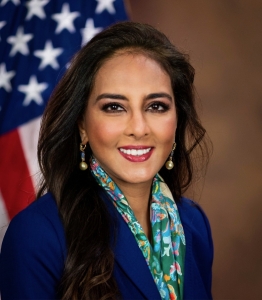
Under Harmeet Dhillon, that vision has become a tangible institutional reality. The new Second Amendment Section is specifically tasked with investigating “patterns or practices” of Second Amendment infringements by state and local authorities. DOJ now encourages citizens to report “Second Amendment rights violations” to the Civil Rights Division, viewing gun owners as a community with rights who can prompt federal action. For the Second Amendment movement, this marks the long‑awaited recognition that the right to keep and bear arms is on par with civil rights like speech and worship.
Dhillon’s aggressive 2A agenda
Dhillon, a veteran conservative civil‑rights litigator, has strengthened Bondi’s pro‑2A trajectory. She announced the Second Amendment Section as a “historic course correction” after decades in which the Civil Rights Division ignored or even opposed gun owners’ claims. Her office has already broken new ground in three areas.
First, direct litigation. The division has initiated pattern‑or‑practice lawsuits against jurisdictions that have rendered Bruen ineffective by slow‑walking or arbitrarily denying carry permits, with Los Angeles County serving as a model for a new type of civil‑rights case: not about race or religion, but about de facto bans on ordinary citizens carrying firearms.
Second, rights restoration. DOJ has moved to revive a long-dormant program that allows certain non-violent felons and other prohibited persons to seek restoration of firearm rights through an administrative process, explicitly framed as a civil rights remedy for Americans who have been permanently stripped of a constitutional right despite their rehabilitation.
Third, narrative and culture. Dhillon has repeatedly declared that the Second Amendment is not a “second‑class” right and has embedded that message in official DOJ guidance, public videos, and web resources, normalizing the idea that federal civil‑rights lawyers exist partly to vindicate gun owners’ freedoms. Gun‑rights groups have responded with rare unanimity, praising the new section as “very active” and touting Dhillon’s “100% pro‑2A action score”. They note that, unlike prior leadership, she is using federal power to advance the right to keep and bear arms.
Criticism and the importance of definition
Certainly, these changes have faced strong criticism from traditional civil rights advocates and some former DOJ officials, who argue that resources are shifting away from core race and voting rights efforts toward gun rights, religious liberty, and challenges to diversity initiatives. Progressive think tanks and anti-Second Amendment groups worry that treating gun owners as a quasi-protected class blurs the lines between traditional anti-subordination efforts and broader constitutional claims.
From a pro‑2A perspective, those critiques highlight the importance of what Bondi and Dhillon have accomplished. For the first time, DOJ’s civil‑rights system is not automatically aligned with the gun‑control agenda; it is willing to examine permitting processes, bureaucratic hurdles, and lifetime restrictions that have long acted as de facto bans on ordinary Americans exercising a fundamental right. The debate now is not whether gun rights belong in the civil‑rights discussion at all—they certainly do—but how far and how quickly federal enforcers should go in removing legal and administrative barriers to lawful ownership.
Durability and opportunity for the 2A movement
Bondi’s sudden dismissal—rooted in broader management and political disputes—does not dismantle the framework she established. Trump’s executive order, the Second Amendment Enforcement Task Force, and the Civil Rights Division’s 2A reorganization remain intact, and pro‑gun commentators now acknowledge that the new section is “very active” and ready to initiate more challenges to restrictive state and local laws. While future administrations could theoretically starve or repurpose this machinery, they would have to actively undo a clear, institutional commitment to Second Amendment enforcement.
For Second Amendment advocates, that creates both opportunity and responsibility. There is, for the first time, a federal civil‑rights office whose mission includes protecting gun owners from systemic infringement—through abusive permitting systems, arbitrary delays, or lifetime disabilities untethered from public safety. The question is how the movement will use that opening: which test cases it will bring, which patterns of local obstruction it will document, and how it will frame 2A claims so that future administrations will find it harder to roll back the gains Bondi and Dhillon have secured.
Bondi’s real 2A legacy is not a single case or rule but an institutional template: a Justice Department that treats the Second Amendment as a true civil right, backed by task forces, sections, and pattern‑or‑practice tools that can be deployed on behalf of law‑abiding Americans who want to exercise their right to keep and bear arms. Whether that template is expanded or curtailed in the years ahead will be one of the defining strategic questions for the modern Second Amendment movement.