By Jim Dickson | Contributing Writer
Shooting a handgun is not the easiest thing to master, but millions of people have decided to learn what should be considered a necessary skill.
First thing is to disregard what you see in the movies. Remember that movies are make believe. The director cries “Action”, the hero fires a blank in the general direction of his adversary and, on cue, the adversary drops.
Actors hold pistols sideways to fire them “Gangster style” despite the fact that it is almost impossible to hit the target this way. A pioneer wife closes her eyes and touches off a rifle in the general direction to hit an Indian riding on horseback 200 yards away. Finally there is the old gag of every time a gun is fired straight up a duck falls down on the shooter. If you think this is the way guns really work you need to be reading a comic book instead of this article.
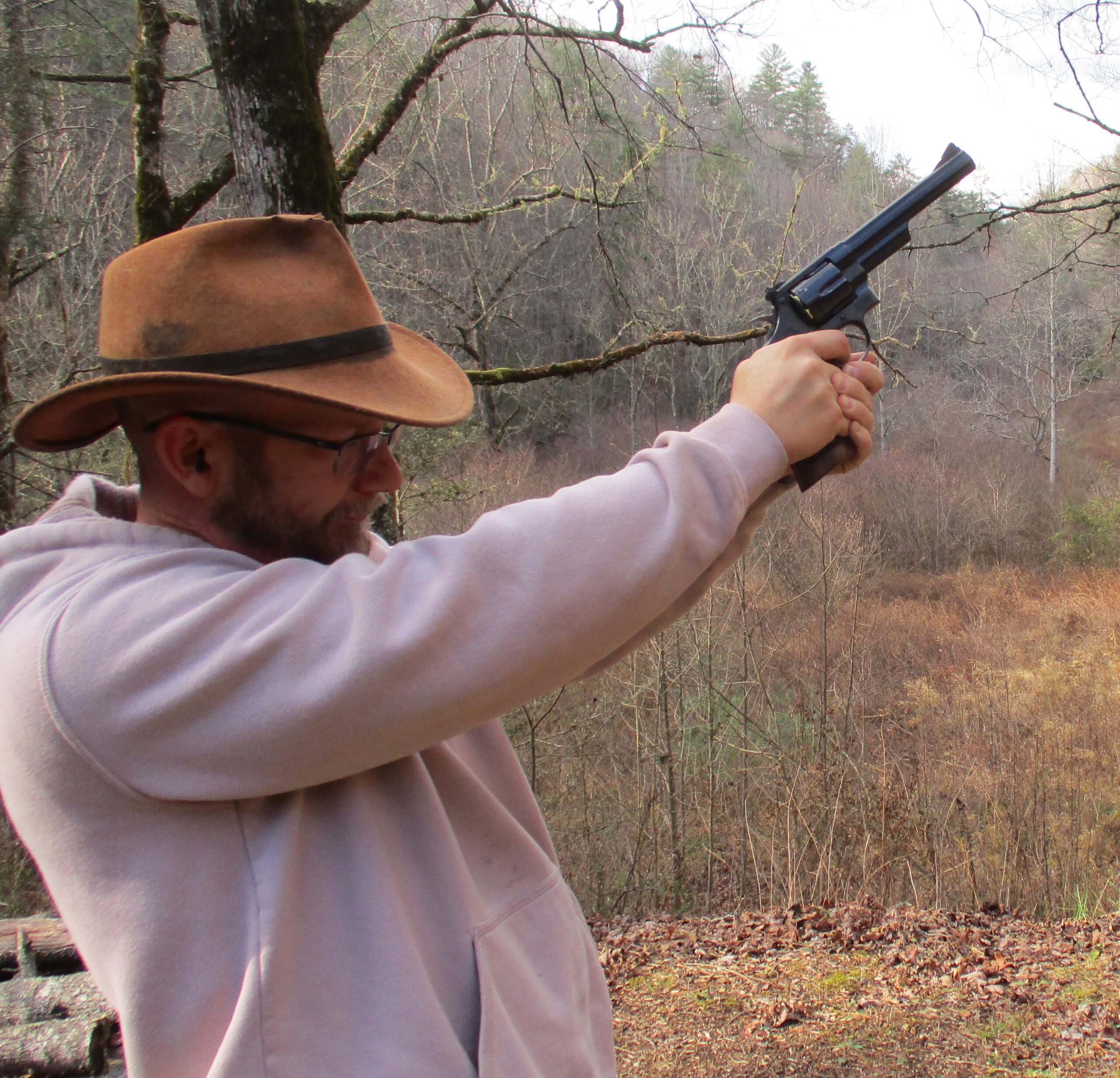
To begin with, you need to grip the pistol firmly. The trigger should be engaged with the crook of the first joint of the little finger instead of the tip of it as this locks the pistol into the hand more firmly. The base of the trigger finger and the thumb should be firmly squeezing the grips. The tip of the thumb should be extended to touch the tip of the trigger finger if your hand and the pistol permit this. Otherwise it should be pointed down in a natural gripping manner.

In WWII, the army used to tell the troops to shoot the .45 ACP Model 1911 with the thumb pointed up to prevent sideways movement at firing. That’s fine for a few rounds but shoot 200 rounds at a time and you can expect a blister on the side of your thumb. Side movement is controlled by pressure in the upper grip and holding the thumb up doesn’t help as much as a natural grip.
Some guns need a firmer grip than others.
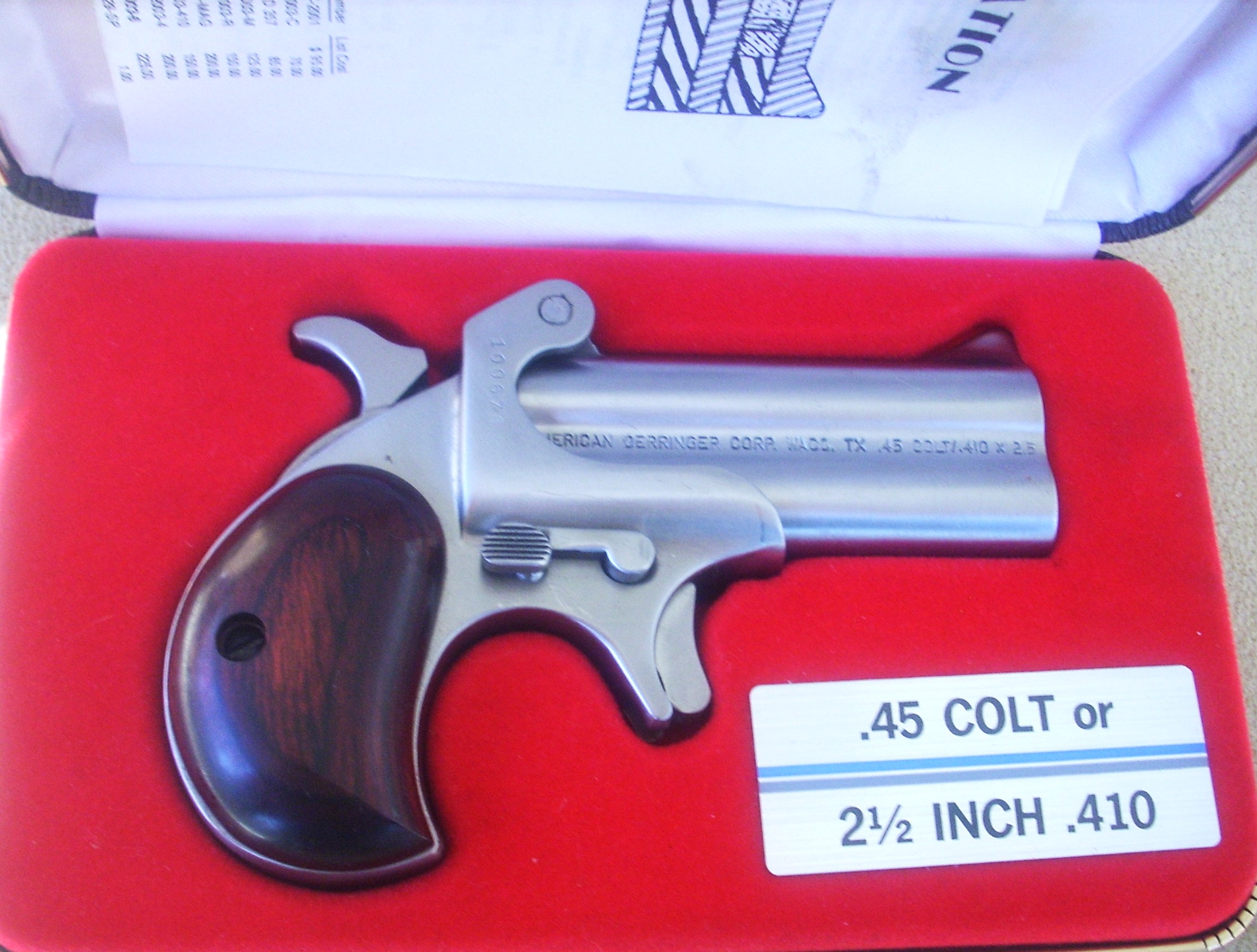
The American Derringer Co. Double Derringer in .45 Colt is easily controlled with a tight grip and not unpleasant to shoot. I would not want to fire that tiny, lightweight piece with a loose grip though. Note that this is intended as a short range defense gun and is difficult to hit with at any distance. Used within its intended design parameters it is perfect.
Some guns need a special grip for best results. The Colt Single Action Army revolver needs as high a grip as possible to aim most accurately. The palm of the hand should be behind the backstrap as much as possible, just the opposite of shooting an automatic where the palm is positioned more along the side of the grip.
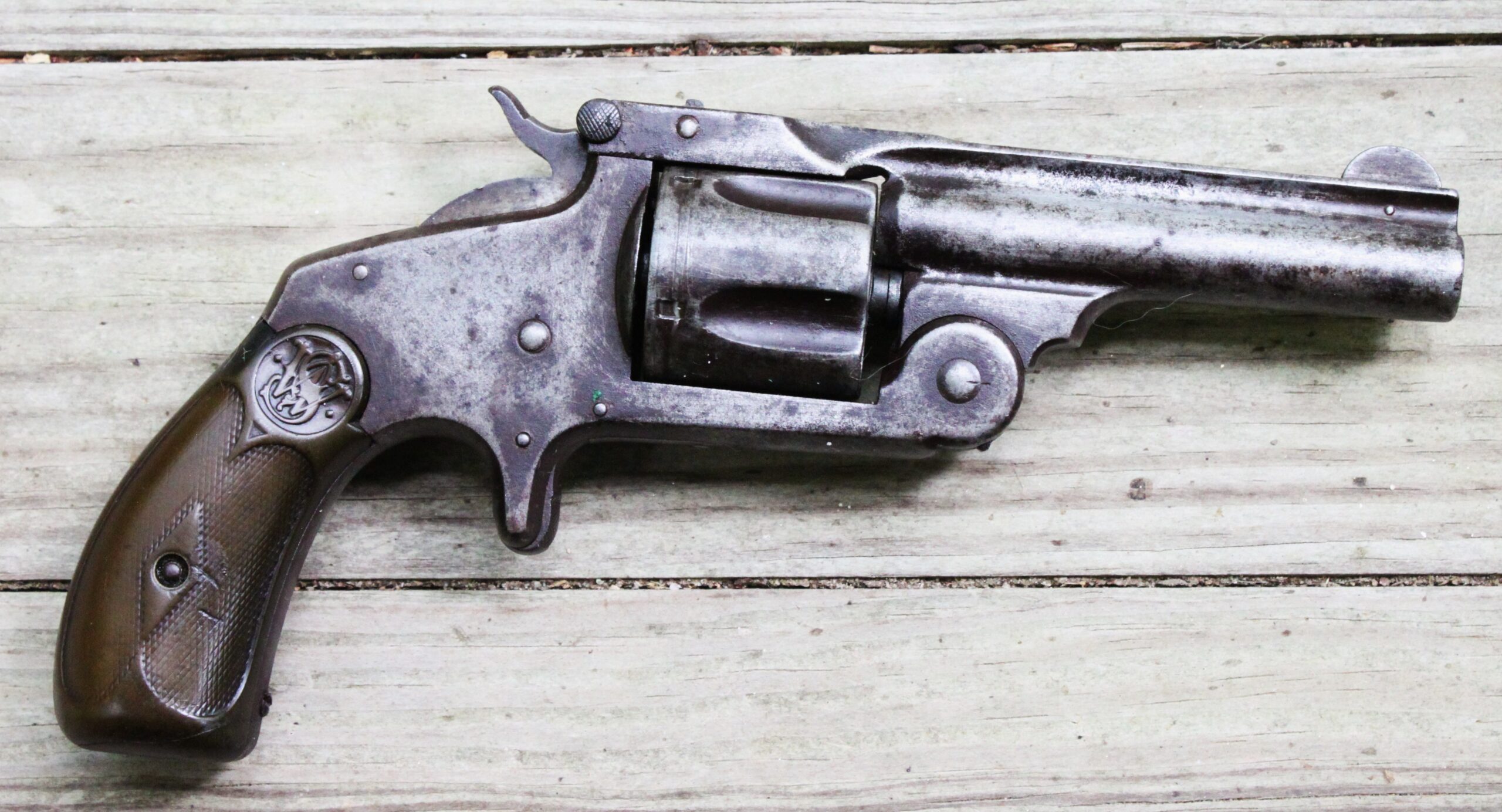
The old .32 and .38 S&W top break pocket pistols need the little finger placed under the short grips where it can help steady the pistol. These little jewels are very accurate, quite unlike the super miniature .32 and .380 autos that have replaced them today. In the old days farmers killed a lot of rabbits for the table and killed coyotes and foxes after the chickens with these pocket pistols. You sure won’t see many, if any of these killed with the micro-mini autos popular today.
The exotic looking Mauser Military Pistol requires that you keep your grip low enough that the hammer doesn’t smash your hand. This pistol looks and feels clumsy but is so unerringly accurate that many people praise it’s handling qualities. It certainly won’t let you down in a tight spot.
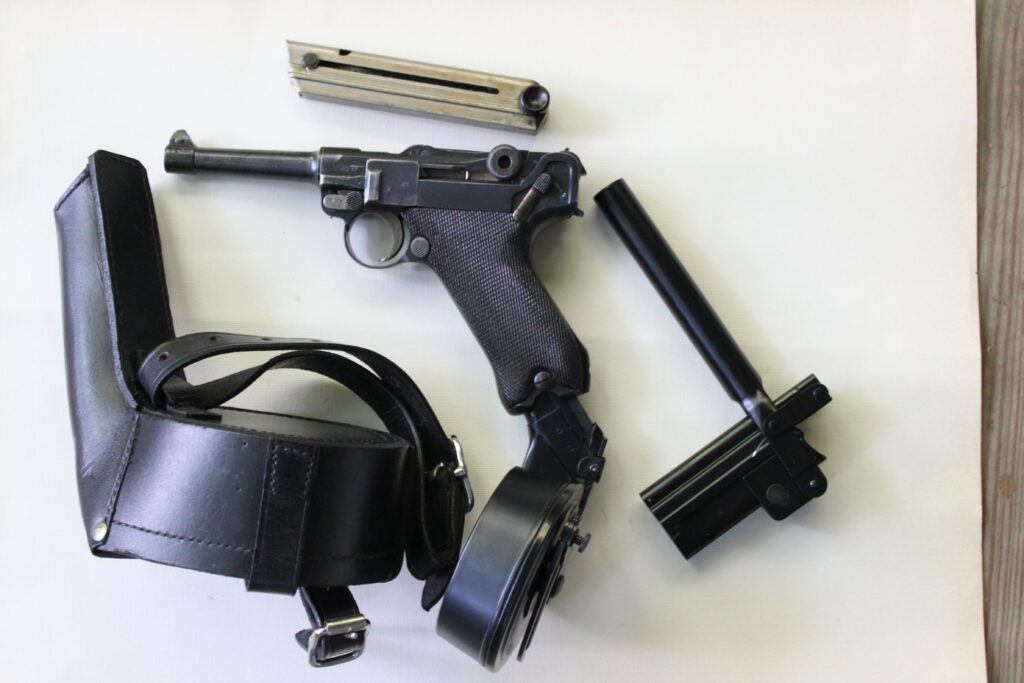
The Luger pistol remains the most accurate and best pointing military pistol ever made and it is perfectly reliable with good springs and the proper ammo. It doesn’t care how you hold it. Just point your trigger finger at the target and the Luger will do the rest. The fore finger points just as accurately when crooked around a trigger as it does when held out straight. For those enamored of high capacity magazines the famed Luger 32 round Snail Drum is currently being made by Gun Parts Company (AKA Numrich Arms) in West Hurley, NY. I have tested these and they work perfectly. They also sell the loader and the leather carrying case for the drum magazine. This is a reliable combination and can deliver devastating firepower.
Speaking of pointing, an arm fully extended points much more accurately than an arm crooked tightly near the chest. The further you extend your arm the easier it is to hit.
The tendency of most people is to linger over their sight picture trying to get it perfect before squeezing the trigger. Don’t. Your first sight picture is your best. Learn to fire fast and you will hit better and be better prepared to use the pistol when you need it.
Sights on older revolvers were tiny as they were just intended to help the shooter find out where the gun was pointing quicker. Pistols were always intended to be pointed and fired in an emergency. Most emergencies happen in low light or dark conditions where you cannot even see sights. Learn to point shoot. Don’t expect to win the Nation Matches at Camp Perry after investing in a single box of ammunition. There are only three ways to learn to shoot. Shooting, shooting, and more shooting. You should shoot as much as you can each time and you should shoot daily if possible.
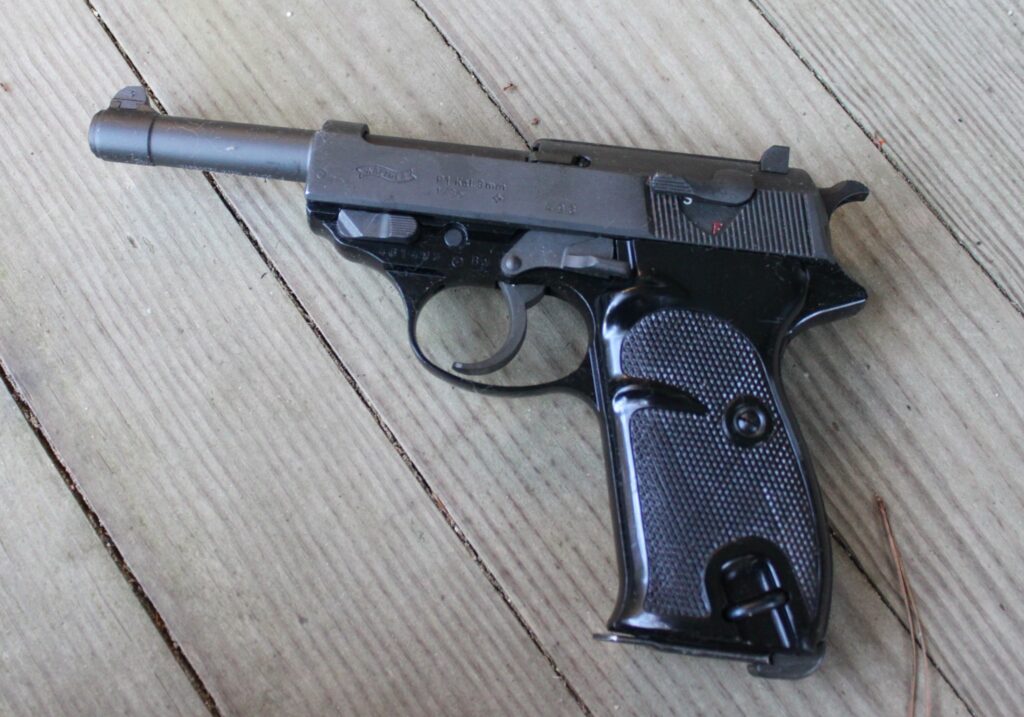
To learn to point shoot you will progress much faster if you follow strict form at first. Stand in the classic duelist stance with your body sideways to the target. This also makes you a much more difficult target if your target is the kind that shoots back. Your target should be a row of match sticks 6 inches or more apart as far away as you can see them clearly. Now fully extend your arm toward them as you lock your eyes on the target completely ignoring the gun and it’s sights. Point at the target and fire at each one in turn. If you miss one go on to the next one or you will just miss again in the same place. Point shooting involves hand/eye coordination and muscle memory. You must do it often or your skill at it will diminish fast. You cannot leave it off for a year and expect to pick it up right where you left off a year ago.
Point shooting, also called instinct shooting, makes double action revolver shooting easy as it can automatically compensate for the long double action trigger pull. A severely hard double action pull will often pose problems though. Again, practice is the key to success.
The two-hand hold is very popular but you should practice shooting with one hand, as it will not ever interfere with shooting using the two-hand hold. The reverse is not true for if you always use two hand, you will not be able to use one hand as effectively.
The great Japanese swordsman Miyamoto Musashi taught that the two handed Japanese sword should be wielded in one hand because it could attack to each side more quickly. The same is true with using a pistol. Musashi also taught the use of a sword in both hands.
This brings up the use of two guns. There are times when a gun in each hand is a tactical advantage. Being able to shoot with either hand is also vital if one hand or arm is injured. Simply alternate hands every time you reload and you will soon get the hang of it. You will find that you can shoot just as fast and accurately with one hand as you can with two and you may find that one hand works even more fast and accurate if you practice enough.
Many people train with a .22 pistol as it is economical and has virtually no felt recoil. Making the transition to a powerful centerfire pistol tends to throw people off at first. Again, the answer is practice.
Semi-automatic pistols that fire the first shot like a double action revolver and the remaining shots as a single action first were developed to deal with the problem of misfires that plagued ammunition up until the 1920’s when they began making ammunition more reliable. They enable you to repeatedly drop the hammer on a dud cartridge safely which would usually set it off. Cocking the hammer with your thumb on a hangfire could result in the cartridge going off and the slide coming back with your thumb in the way resulting in an injury to your thumb.
Always use hearing protection whenever possible. Obviously you cannot take time out in an emergency to put them in or for that matter, even when game suddenly appears when hunting. This is one reason I do not like magnum pistol calibers as they have a much higher decibel level of noise to damage your hearing.
The .45 ACP and the .45 Colt have reliably taken all North American big game and they have also proved the most reliable manstopper being in that sweet space of optimum velocity, bullet diameter, and bullet weight for that job. They can deliver faster rapid-fire than the magnums, which can be a life and death matter when facing multiple opponents. With these rounds you only need one to a customer. Too many men have been killed trying to do a double tap when there wasn’t time for that. If I want more power I will take a rifle. For pistol calibers, these two are perfection.
If I had only one pistol it would be a WWII M1911A1. It is everything a pistol should be and neither it nor it’s .45 ACP FMJ ammunition will ever fail you.
Remember, practice is the difference between a shooting master and the amateur.