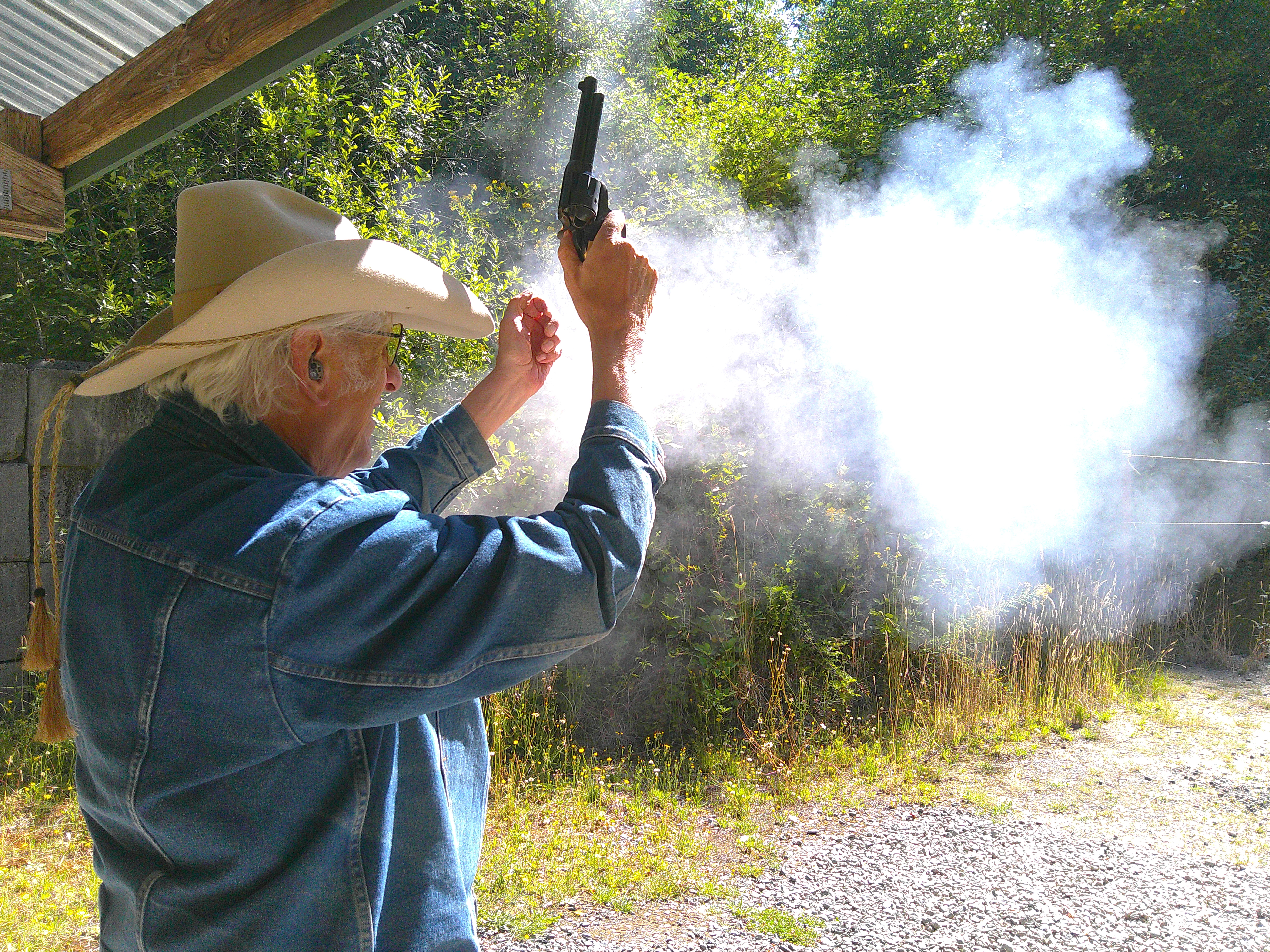
By Mike Nesbitt | Contributing Editor
A few weeks ago, I told you about a new Cimarron Bisley Model in .44-40 which needed its front sight lowered as well as getting a new .44 Special cylinder for that gun.
Other things, both other guns and some road trips, have gotten in the way but the Bisley was certainly not forgotten. Now I’m getting back to it and some short steps toward progress have been made.
First of all, I now have a .44 Special cylinder that works well in this revolver. Most of my attention given to this gun in the way of bullets and loads will be done with .44 Russian brass and the 245-grain bullets. I’ll be sure to keep the .44-40 cylinder on hand and ready for use. This is not the first double-cylinder gun I’ve had and I find having the two cylinders to be rather enjoyable. It makes the revolver a double-caliber gun, maybe for use with the .44 Russian ammo for target work and fun shooting, where the .44 Russian’s performance must be admired, and then switching to the .44-40 cylinder if the shooting should get more serious.
As this story gets started, the work at lowering the height of the front sight has not yet begun. I wanted to get at least a couple more trips to the shooting range with this gun before attacking the front sight. After all, it is much easier to file down that sight than it is to build it up again and I don’t want to over-do my work with the file. Mainly, I need to know what needs to be done before getting started on that work, so getting to know the gun better is the first priority.
So, back on the firing line, with a target posted at just 30 feet way, ten shots were fired using the .44 Russian loads. Those shots grouped quite nicely but a touch to the left. Hitting a bit to the left did not disappoint me, there are reasons that can happen in just the way that the gun is held while the trigger is squeezed. We’ll talk about that a little later. For now, getting a group and how low that group was is what held my attention.
Shooting Low
Because I expected the gun to be hitting low, I held the sights at 12 o’clock on the target. That is actually hard to do because the sights and the gun hide the target from the shooter’s view. And my shooting was done while seated at the bench. This target was meant to show what the gun would or could do, not how good I might do. With that in mind, the target was rather good, successful because it gave me a good group to work with. Measuring down from the top of the black, where the sights had been held, to the approximate center of the group showed the gun to be hitting two inches low at this 30-foot distance.
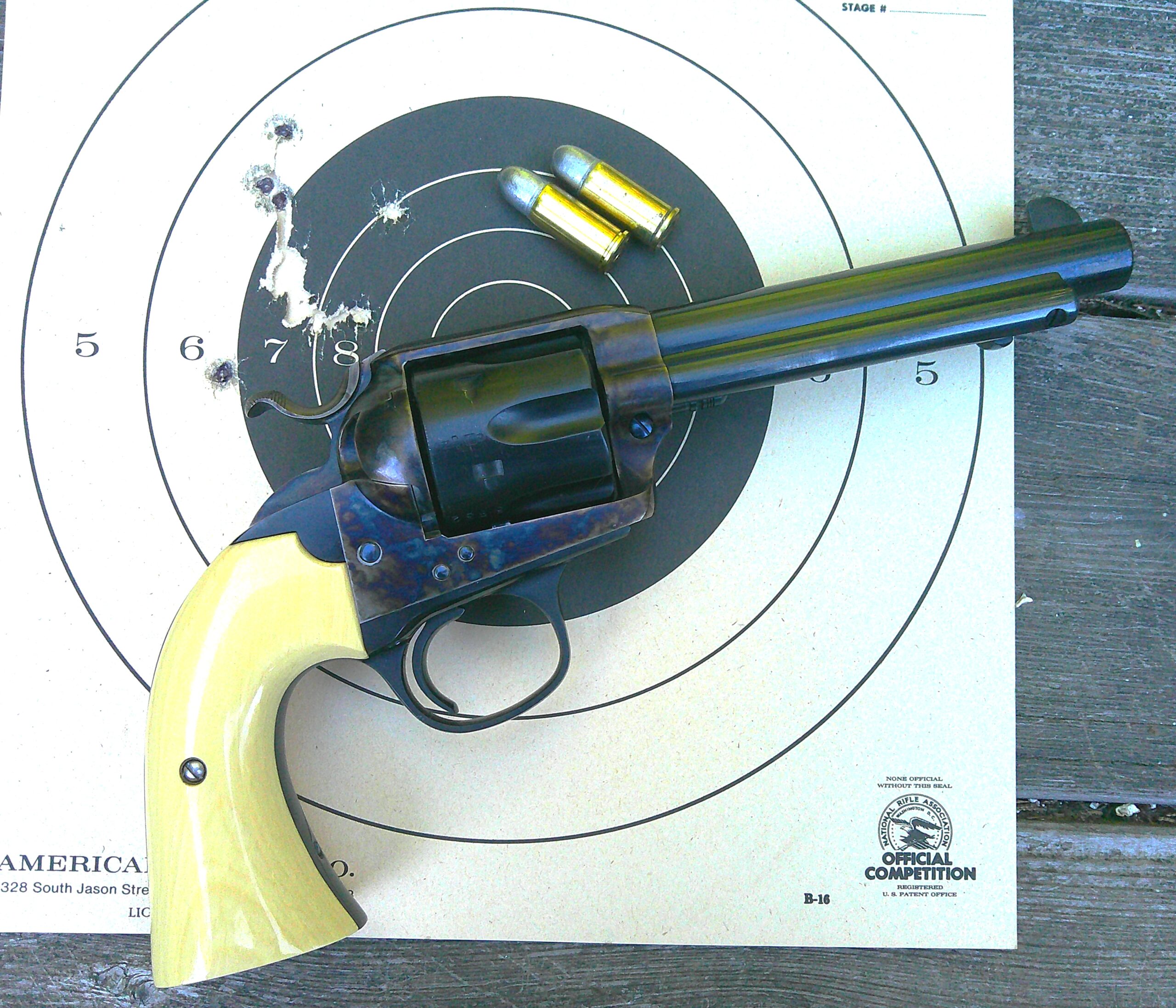
In addition to that, those ten shots were speed checked and they had an average velocity of 655 feet per second. The loads, once again, used 18 ½ grains of Olde Eynsford 2F powder under the 245-grain cast bullets. That is the load I use most often in .44 Russian cases.
Everything about this 10-shot group pleased me, except for its location. The group size was good and the load was rather comfortable while being shot. And the group was tight enough that I could get the measurement and then have an idea of how low the gun was hitting. All of these things helped in trying to determine how much the front sight needed to be lowered. But, even so, I wanted to learn more and that meant more shooting before doing any “smithing” on the Bisley’s front sight.
Another target was posted for more shooting. Again, ten shots were fired, although this time the shooting was done while standing, shooting offhand with a two-hand hold, and this time I held for the center of the bullseye. My first couple of shots went very well, scoring low but cutting the 10-ring. Those shots made me wonder if I should just leave the front sight as is and simply get more shooting done with this .44. But continued shots at this target proved to tell a better tale, they went low which was more expected.
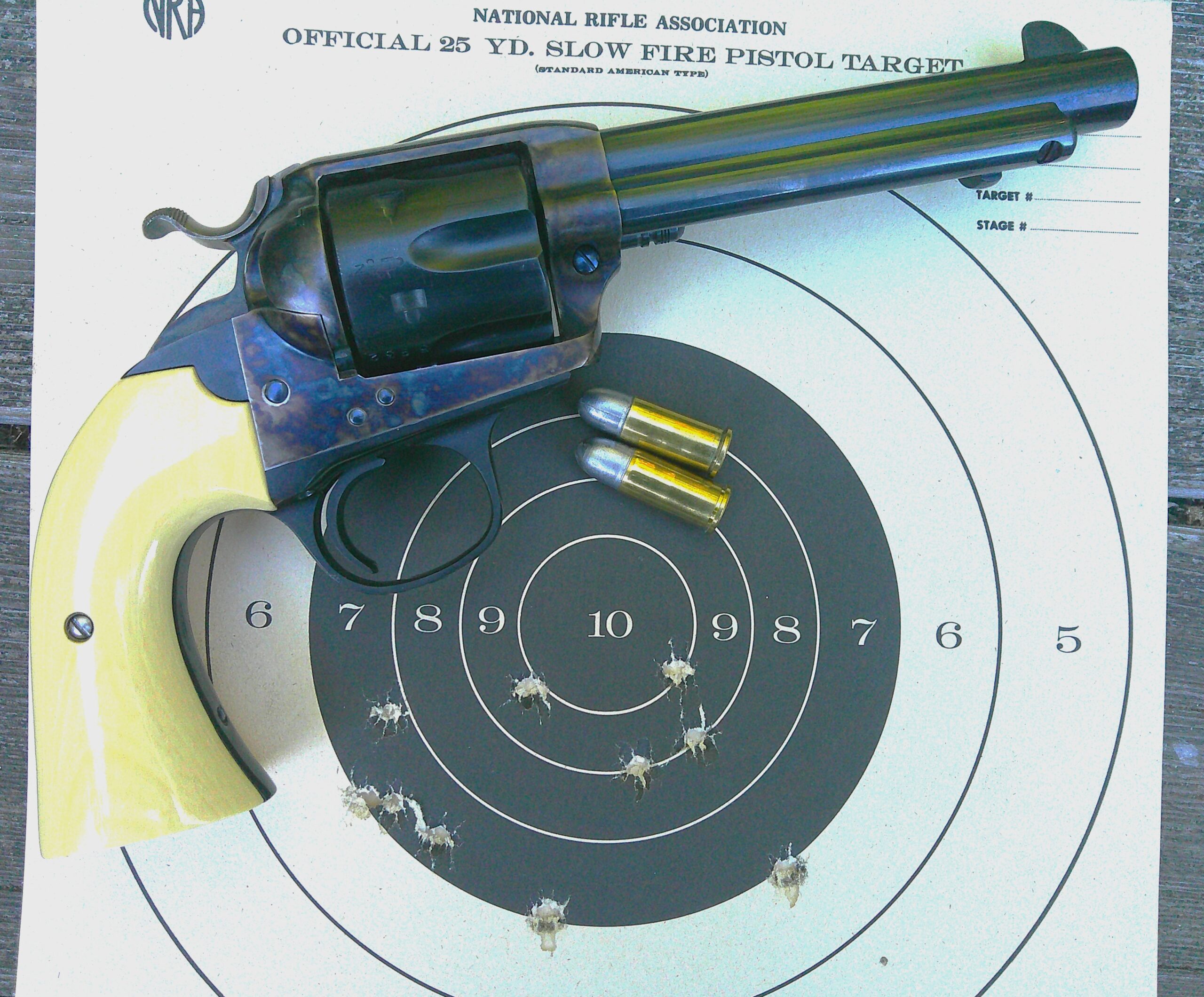
Those ten shots printed in a wider group and they were much more centered, windage-wise, than the group fired from the bench, which was pretty much expected. The crowning touch, however, was when the approximate center of that group was measured down to, from the center of the target this time, it proved to be two inches low again. That was the very same as the group fired from the bench and I had to appreciate knowing how much the elevation needed to be changed.
Slow Filing
With that information, basically raising the point of impact two inches at 30 feet, can be figured out mathematically, which would also indicate how much the front sight needed to be lowered. Even so, I felt more comfortable by lowering the sight a little at a time and doing a “test group” every now and then to keep track of things and not go too much at once. I’ve already mentioned how it is easier to file the front sight down than it is to build it back up.
I had a small plan on how to file the sight down. My filing would be slow, that I’ve already said, but I would concentrate on only reducing the height of the sight at first. Once the proper height of the sight had been established and it wouldn’t take much, proven by more than one good target, reshaping or recontouring the profile of the sight to make it look like it had been made that way, would be the next step.
Even so, with that little plan and the obvious need for reducing the height of the gun’s sight, I was reluctant to get started. I guess I’m not used to taking a file to any part of a beautiful gun and I already had some strong feelings for this Bisley. With John Wayne’s “A man’s gotta do what a man’s gotta do” ringing quietly in my ears, I did get the file and made the first cut.
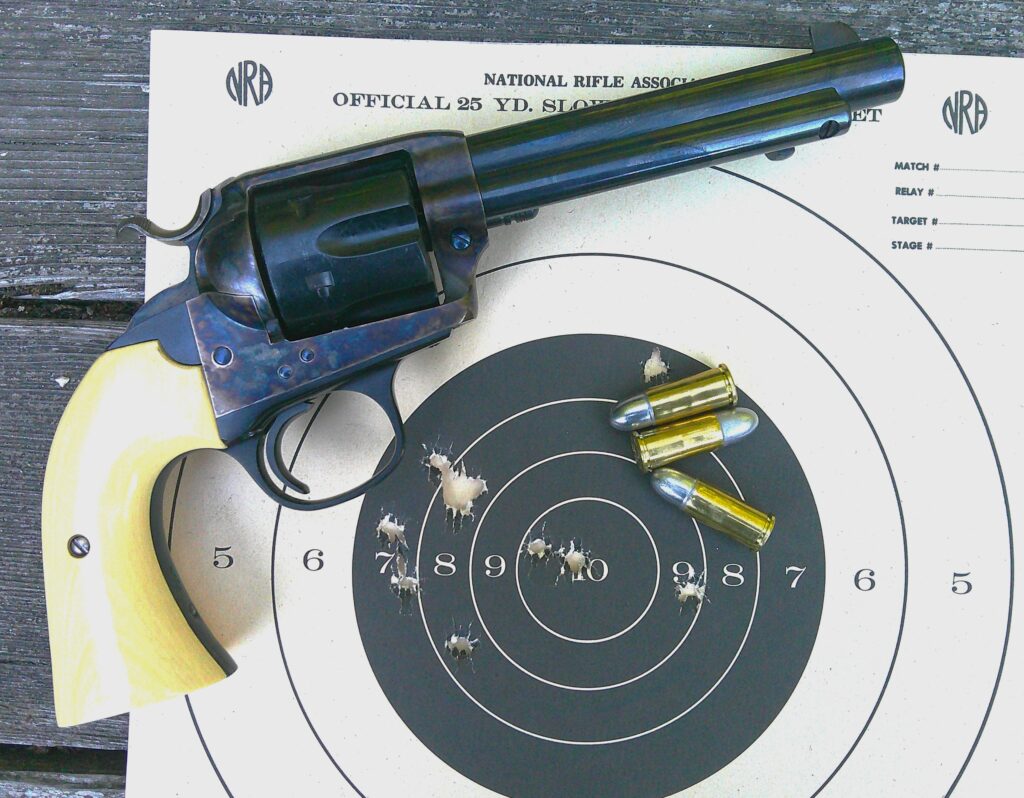
The way I did the filing might not make me many new friends because it probably won’t sound very professional. I sat down beside a wooden bench, rested the gun’s muzzle on the wood so it would be firm, and simply began with the file. Maybe a pro would have removed the ejector rod housing and firmed the gun with padding in a vise. That might have held the gun more firmly but I think the end result would be just the same. The file was used only until a definite “flat top” could be seen at the top of the blade sight. Then it was time for more shooting.
But before I could do more shooting, I had to cast more bullets. So, the lead was melted while the de-primed and washed empty cases were drying. Just over 80 bullets were cast and after those cooled down, they were ready to be loaded. Forty fresh loads were then prepared and more shooting could be done.
With the front sight filed down just a little bit, two targets were shot at, both still at just 30 feet. The first target was fired while taking a center hold, aiming at the center of the black. That proved to be not the best, mainly because I had a very hard time seeing the gun’s front sight. So that target was not used for measuring. The second target was posted and ten more shots were fired but this time the aiming point was for 6 o’clock, just at the bottom of the black. With the revolver’s sights aimed at the “white” of the target, the sights could be seen clearly and the results were much more on the positive side.
This target was not photographed but it was certainly a good stepping-stone in the right direction. The group was entirely below the black, as we might expect, but when measured down from the bottom of the black to the approximate center of the group, it proved to be a half-inch higher than the previous groups.
Back at the bench, more filing was done to lower the top of the Bisley’s front sight. Another small factor was introduced with the filing this time. A very short 45-degree angle was cut at the top of the front sight to catch just a little more light, so that the top of the sight could be seen better when the gun was aimed at a dark target, such as the black bullseye. My eyes tend to “request” more light than they used to and for my shooting I need just about all the light I can get. And, of course, the front sight was lowered even more.
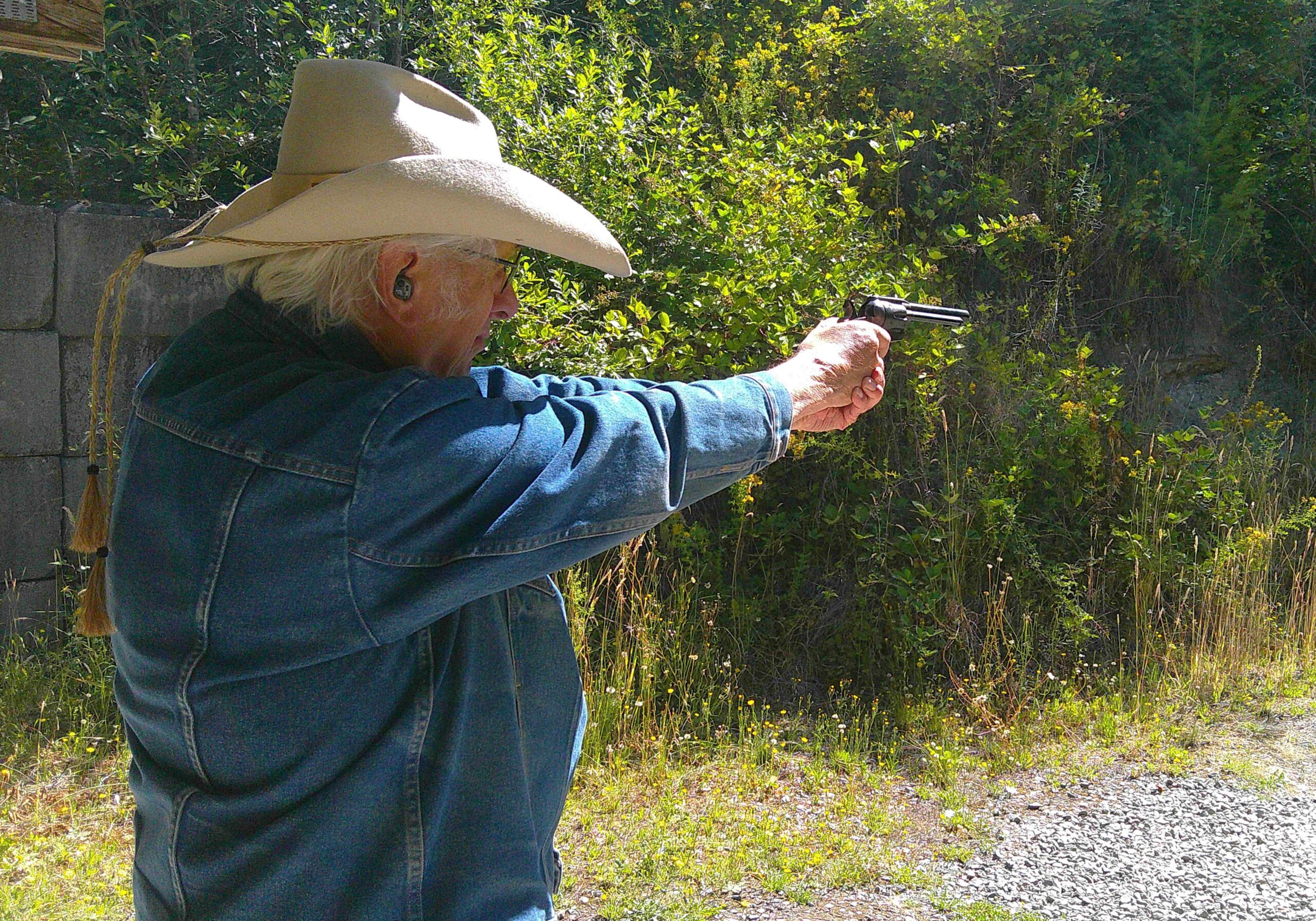
The next trip to the range was very satisfying, the gun was hitting much closer to the point of aim. Only one target was needed and once again that target was posted at 30 feet. Using a two-hand hold, with the sights held for the center of the bullseye, with the front sight nicely visible with the 45-degree angle cut at the top, ten shots were fired. The resulting group was well centered, elevation-wise, on the target and just slightly to the left. It is my opinion that those shots going a bit to the left result from my hold on the gun and more practice should find that tendency reduced. The best news, of course, was the fact that the gun was hitting center instead of shooting low. My front sight modifications were over with.
Cleaning, Lubricating
A little work still needed to be done to give the front sight a Colt-like contour, which was quickly done. Now some cold blue will be applied to the sight which might make it look as if the gun’s sight was made that way.
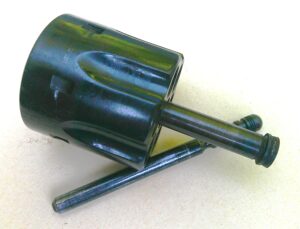
Before “signing-off,” I’d like to make just a few comments about cleaning the revolver after shooting with black powder. Of course, the guns will need to be cleaned, that is probably generally understood. One little thing which might not be as well known is that when cleaning a Colt Single Action, or a Colt-clone such as my Bisley from Cimarron Fire Arms, always remove the base pin bushing from the cylinder and make sure it is well lubricated before re-assembling the gun. Likewise, lubricate the gun’s base pin as well. Having those parts well lubricated will be a big help to prevent those parts from binding-up from black powder fouling.
If the base pin bushing can’t be pulled out of the cylinder with your fingertips, the best way to push it out is to insert the gun’s base pin from the back, then hit the top of the base pin against a bench-top. That will usually break the base pin bushing free and then it should easily be removed with just a finger hold. I do not recommend using pliers unless they are very well padded. Besides that, there is almost nothing for the pliers to grab…
To lubricate those parts, I have used some light grease, such as October Country’s Bumblin’ Bear Grease, but most often just a good gun oil is used. Just be sure to lubricate those parts with something that will keep the parts freely moving.
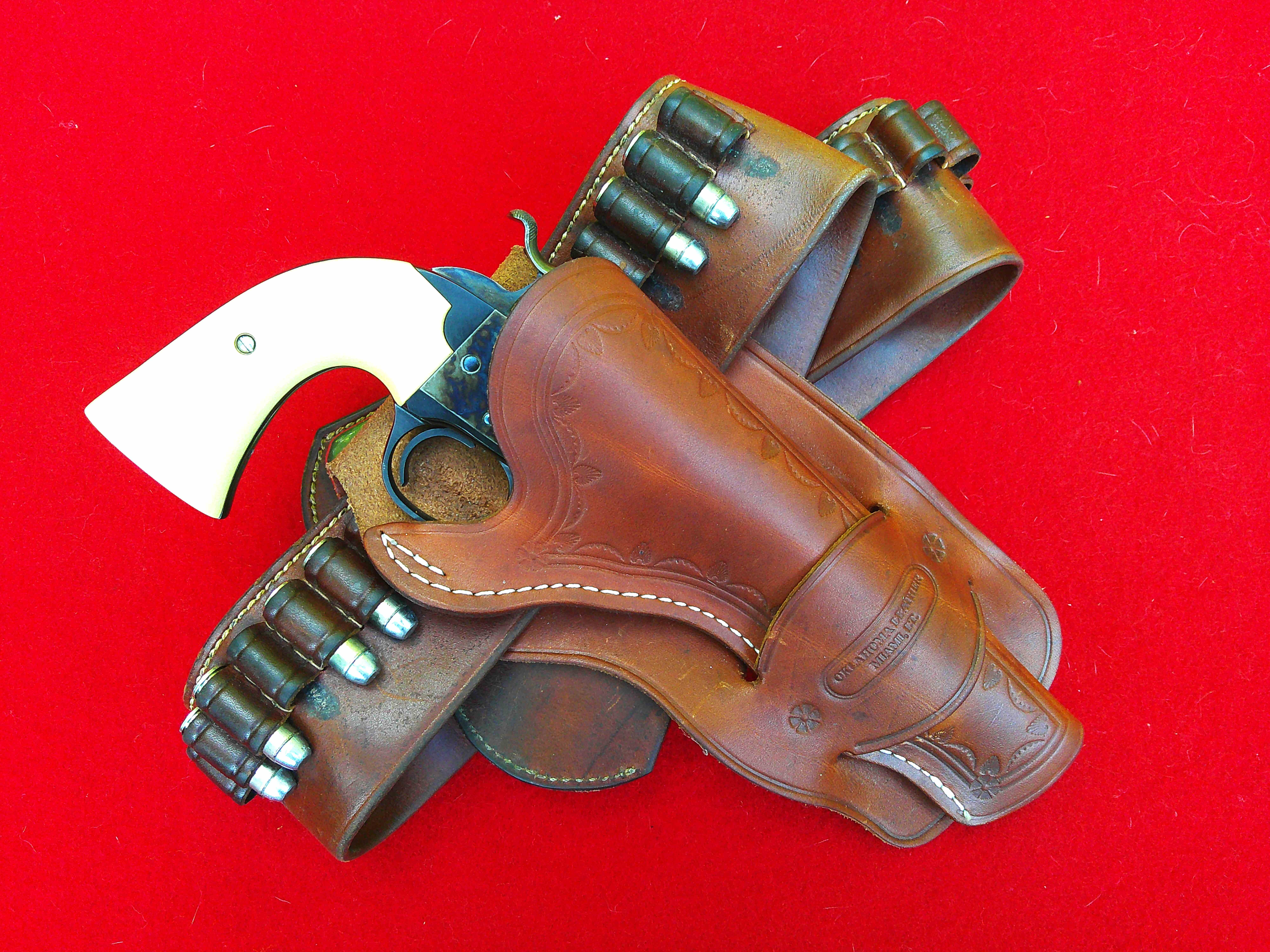
Now my Cimarron Bisley is ready for some good “hip travel.” This gun will see some trail time, for sure. I certainly do like this .44 and more experience with it will be gotten quite soon. And now, as you might guess, I’ll put the .44-40 cylinder back in the gun just to see where those loads will be hitting.