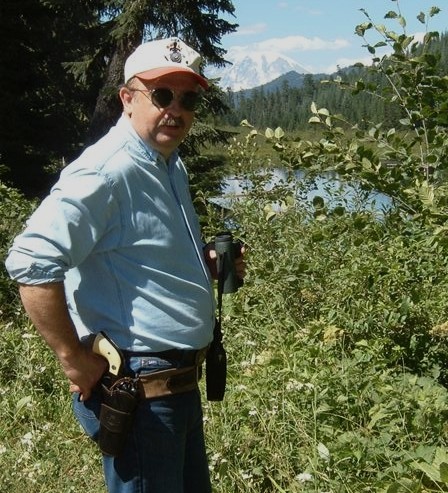
By Dave Workman
Editor-in-Chief
I’ve often explained in these columns why I pack a sidearm whenever I leave the pavement and any semblance of civilization in the wilds.
It is possible to encounter things with teeth and claws out there, and they are not always easily scared off.
This was brought home to readers of the Seattle Times recently who read about the close encounter between a jogger named Ned Buckingham and a mountain lion in western Okanogan County in May. According to the story, he spotted the cougar while running along the Upper Winthrop Trail, and the cougar also had spotted him.
The story also was reported by the Methow Valley News, which added some tips about how to handle a cougar encounter, according to the Washington Department of Fish & Wildlife. Check the WDFW website for details on handling a cougar encounter.
- Face the cougar. Talk to it firmly and hold your ground . Always leave the animal an escape route.
- Move slowly. Running or rapid movements may trigger an attack.
- Try to appear larger than the cougar. If wearing a jacket, hold it open to further increase your apparent size. If you are in a group, stand shoulder-to-shoulder to appear intimidating.
- If the cougar does not leave the area, be more assertive. If it shows signs of aggression (crouches with ears back, teeth bared, hissing, tail twitching, and hind feet pumping in preparation to jump), shout, wave your arms and throw anything you have available (water bottle, book, backpack) at the animal. Use bear spray at this point!
- If the cougar attacks, fight back. Be aggressive and stay on your feet. Spraying bear spray (EPA approved) in the cougar’s face is also effective, even if the spray ends up on you and the cougar. Remember: keep bear spray accessible and review directions on its use.
This isn’t just a problem confined to Washington state. There are mountain lions, as well as black bears, throughout much of the West, and in Montana, Idaho and Wyoming—and maybe the northern reaches of Washington—you just might cross paths with a grizzly, and also don’t forget wolves.
I’ve seen bears and a couple of mountain lions up close, and in most of those situations, within a nano-second my hand was firmly fixed to the grip of whatever handgun I happened to be packing, finger off the trigger.
A little more than four years ago, attorney Bill Kirk, founder and president of Washington Gun Law, did an enlightening video with Capt. Eric Anderson with the WDFW Police, and they had quite a chat about using force in self-defense against a mountain lion.
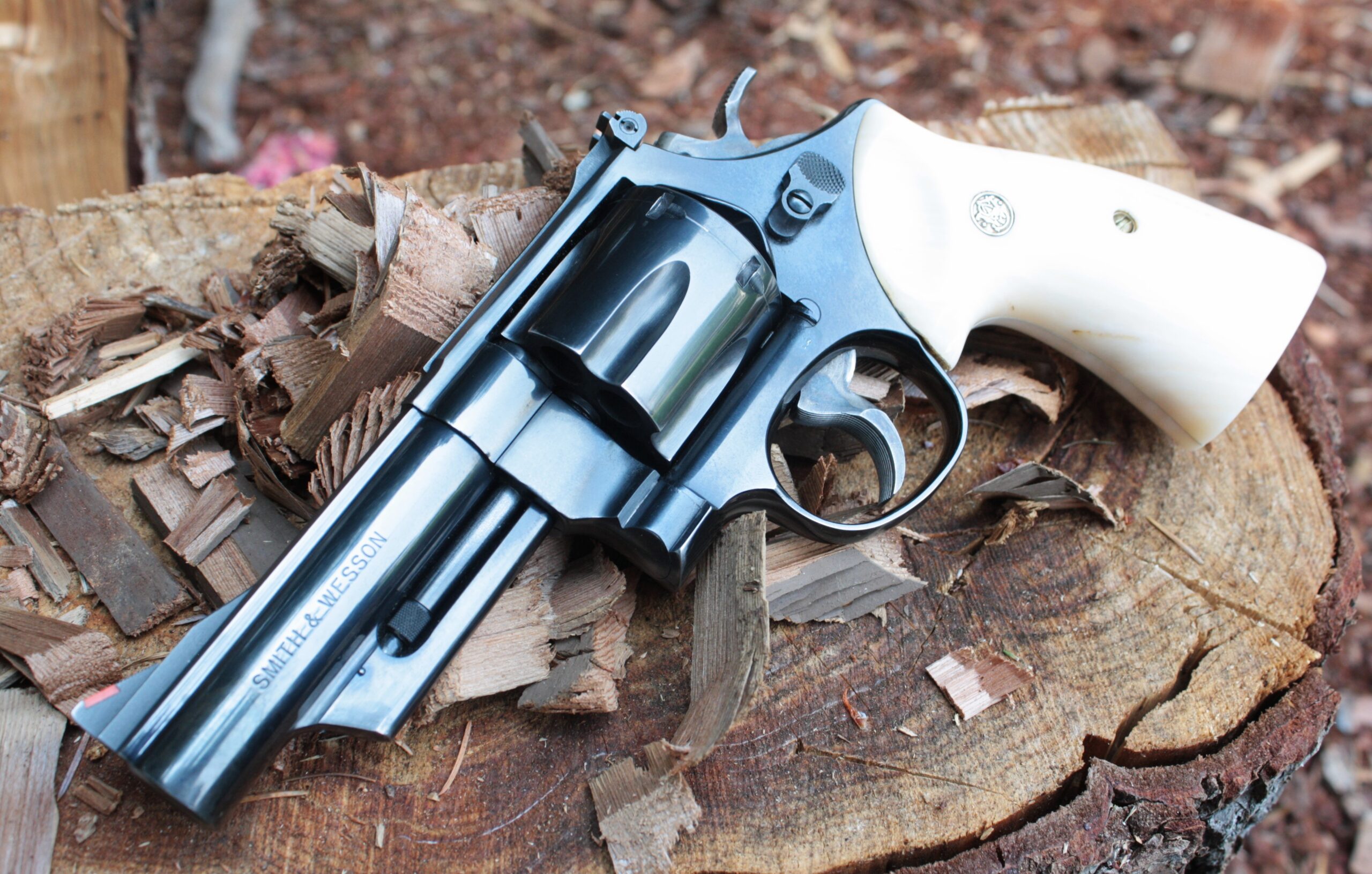
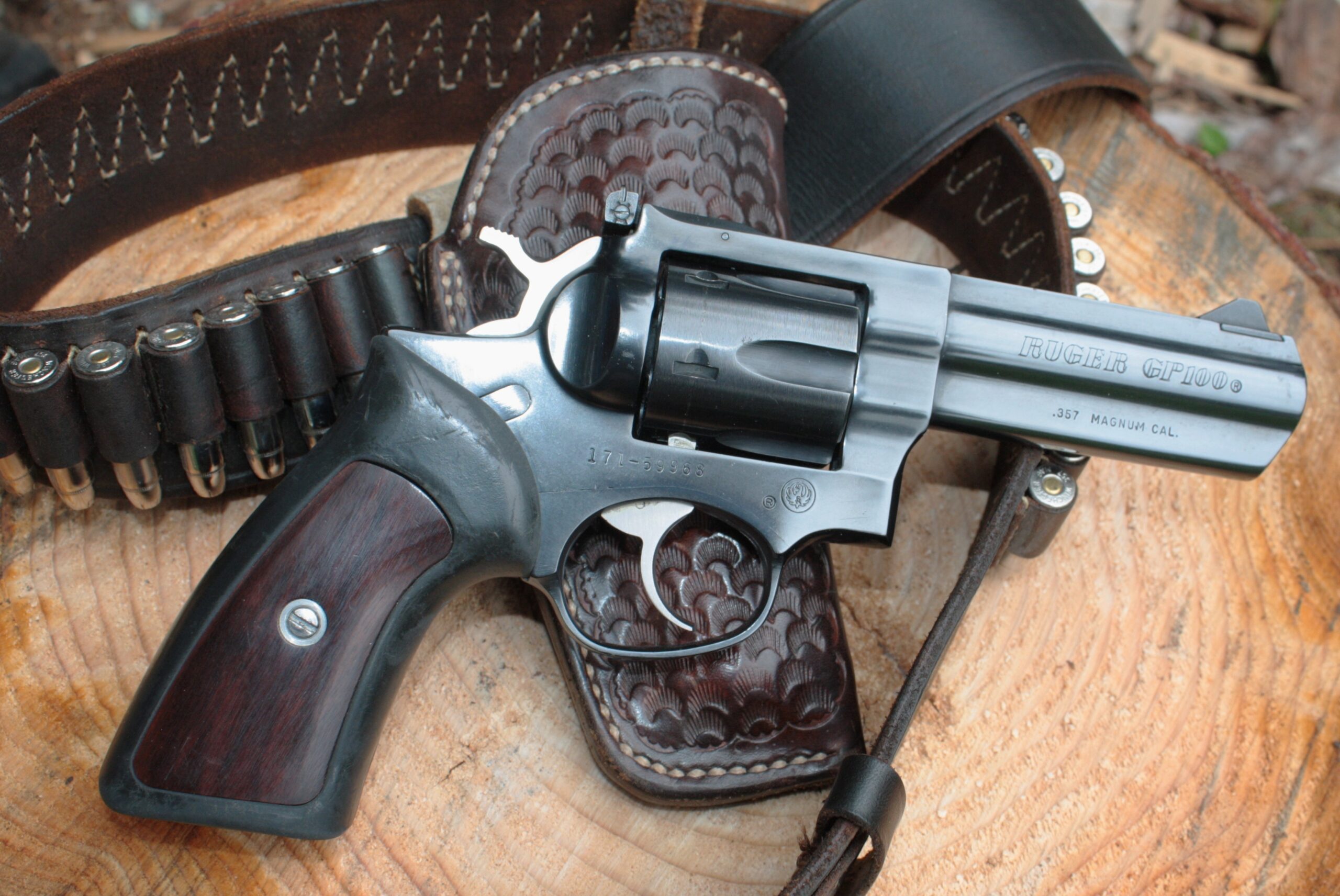
Packing a sidearm while hiking around the mountains has always made very good sense to me. Among the irons I’ve carried over the years have been essentially all the major calibers: .357 Magnum, .41 Magnum, .44 Magnum and .45 Colt. I own three of the four calibers, and I’ve had my brother’s .44 Magnum once or twice; enough to warrant reloading cartridges for it and studying up on the ballistics of a 240-grain JHP.
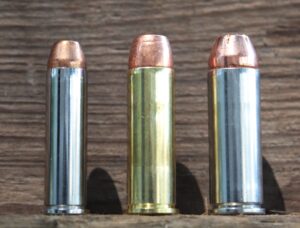
Like the 220-grain bullets I load for my .41 Magnum (ahead of H110 or Accurate #9), and the 158-grainers for the .357s (H110 or 2400), the 240-grain .44-caliber bullets will definitely put the hurt on whatever they hit. I recently loaded up some .44s for use in my brother’s Ruger Redhawk, using 24 grains of Alliant Power Pro 300-MP behind 240-grain Hornady XTPs. That’s not the hottest load but it has a punch.
When packing a .45 Colt sixgun, I’ll either stoke it with 250-grain JHPs launched by a stout charge of HP-38 or CFE Pistol, two reliable propellants which work rather well in the .45, in my humble opinion.
Once about ten years ago, I was field testing a Ruger Alaskan chambered for the awesome .480 Ruger cartridge. I can say without fear of contradiction that the handgun, and the cartridge, are impressive. The revolver was a short-barreled specimen but still hefty and the cartridge launches bullets weighing anywhere from 275 to 400 grains, and anything on the receiving end is going to think it’s been hit by a splitting maul.
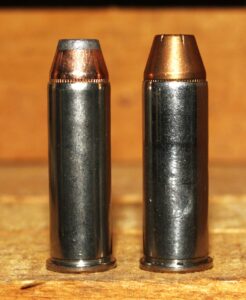
Of course, it’s much preferable to never have to shoot anything in self-defense—after all, to a wild predator, you’re just a big piece of walking food—but if all else fails and the critter you’re facing just won’t take “no” for an answer, self-preservation is the oldest natural right on earth.
Of course, I’ve read accounts of people defending themselves against bears with all kinds of semi-auto pistols in 9mm, .40 S&W, 10mm and .45 ACP. More power to them. I just prefer a wheelgun in the back country because all one needs to make it work is ammunition.
Sixguns are simple, they don’t require magazines and they are definitely reliable.
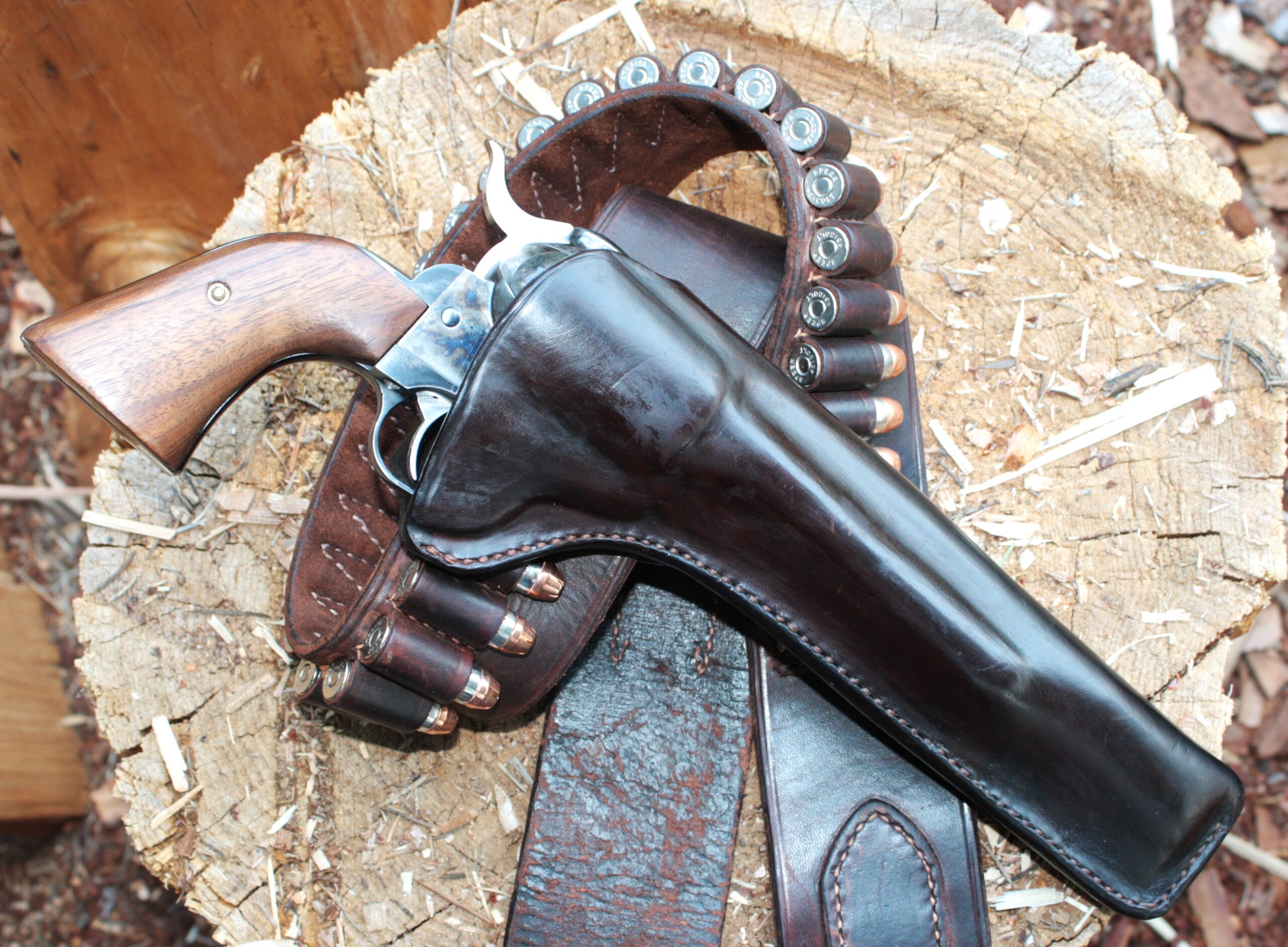
I pack my wheelguns in leather holsters, usually on a cartridge belt. They may seem like unnecessary weight on the trail, right up to the moment you need a gun. Then you’ll be delighted you had the foresight to bring one along.
Single- or double-action, the choice is really up to you.