By Dave Workman
Editor-in-Chief
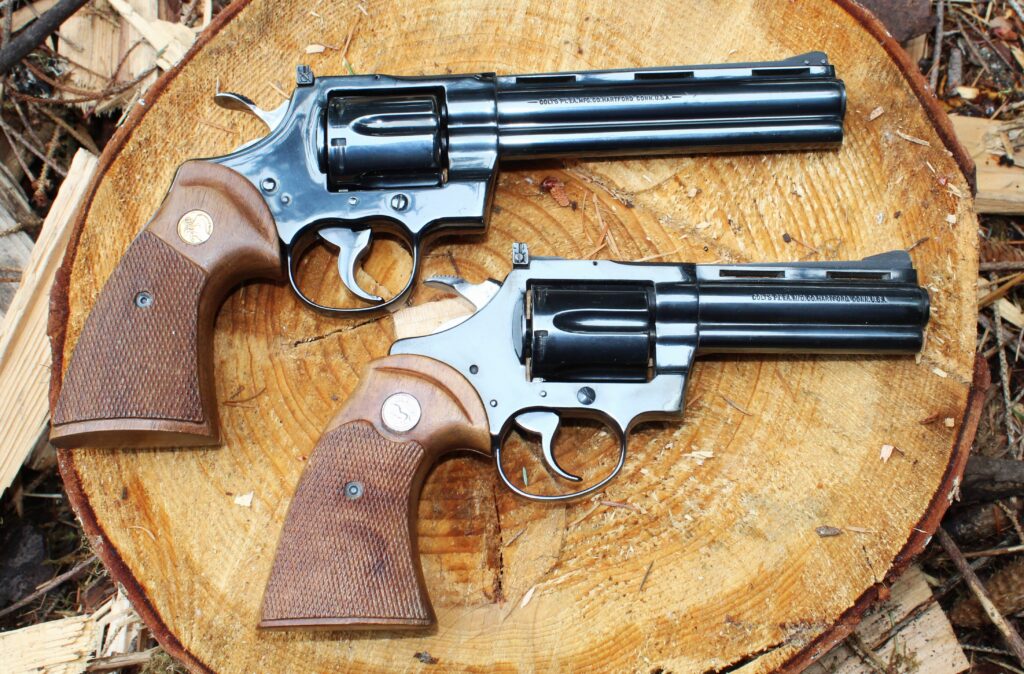
I own a couple of classic Colt wheelguns—a circa-1980s Colt Python and a Colt Diamondback from 1975—and reloading for these gems is something I don’t care to screw up, since they are essentially irreplaceable due to the memories we’ve made together.
Recently, during the course of brewing up about a hundred rounds of .357 for the Python, I stumbled across something which raised my eyebrows, although it did not set off any alarms. Call it more of a curiosity. There is a difference in recommended maximum data for the particular bullet I’m using, the 158-grain Hornady XTP. In my estimation, this projectile is letter-perfect for my bigger snake gun, but one can’t be too careful about choosing the powder charge to launch it.
The superb Annual Manual produced by Hodgdon is my quick go-to reference guide because I almost exclusively use Hodgdon propellants for my magnum ammunition. I say “almost,” as I’ve been delighted over the years with Alliant (formerly Hercules) 2400, and lately started sampling loads with Alliant Power Pro 300-MP, also from Alliant.
I have frequently admonished people who push the envelope when reloading, and then wonder why their handguns blow up or are otherwise damaged by pushing hot loads. So, when the Volume #8 Hornady Manual at my loading bench listed 15.6 grains of H110 as the maximum, and the 2026 Hodgdon Annual Manual put the maximum powder charge at 16.7 grains, I took notice.
Now, I habitually never load to the maximum, having settled on recipes with muscle but less recoil that have paid off with accuracy for many years.
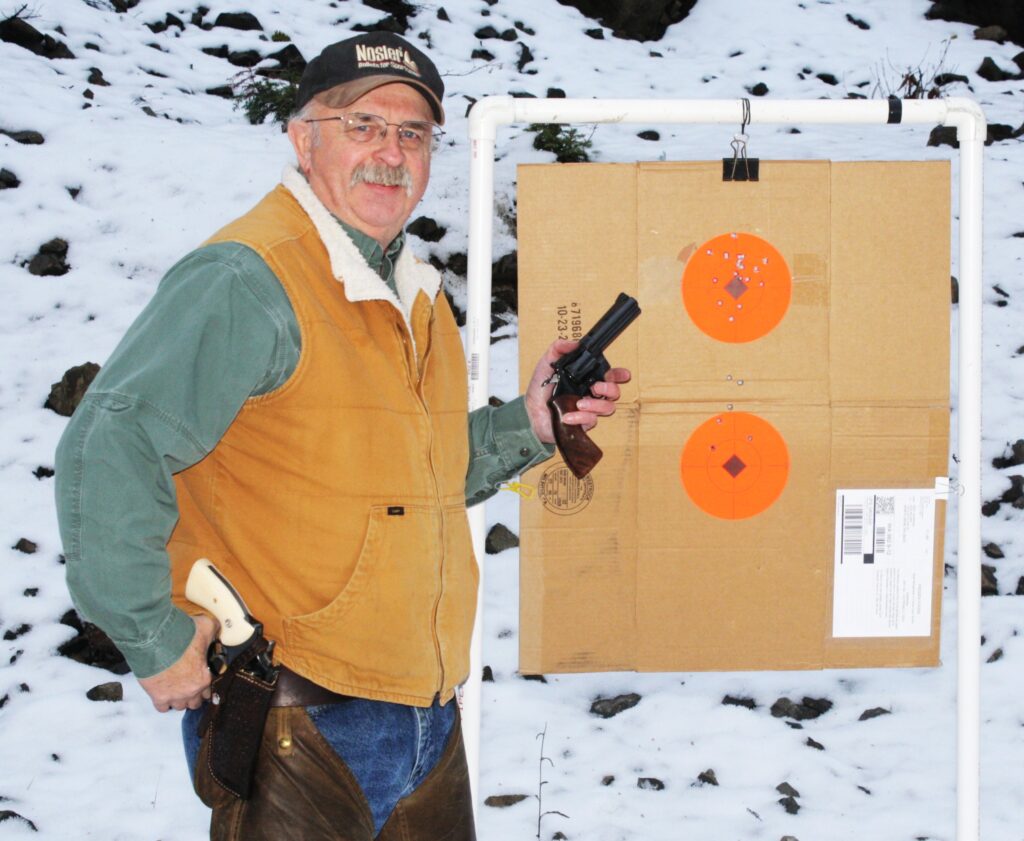
I tossed together about 15 loads using 16.4 grains of H110 just to see what it would do, and happy to report it showed no signs of pressure and produced what I could call deadly accuracy at 25 yards when shooting at a couple of orange clay disks. Using a two-hand hold off a solid bench, my rounds fractured those targets or struck so close to the edges that had I been firing at live game or some predator, it would have been curtains.
However, I had been loading with a charge of 15.4 grains and was happy with the performance of that load. So the majority of my empty brass was stoked with that powder charge.
Meanwhile, when it comes to the .38 Special for which the Diamondback is chambered, I have tinkered with 110- and 125-grain Hornady JHPs, a lot of 125-grain JHPs from Speer an, when they were available in past years, 125-grainers from Nosler. All of them performed beautifully, whether launched ahead of Hodgdon HP-38 and more recently HS-6, AutoComp and CFE Pistol, the latter which is my current choice for velocity. The Diamondback is capable of handling them all, and I’ve gotten warp speed velocities with the 110-grain bullets, clocking well above 1,100 fps, with no telltale signs of pressure.
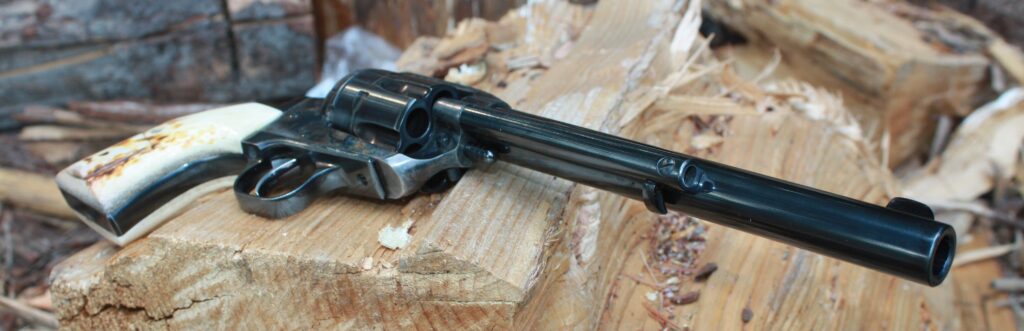
If I’m going to pack a sixgun for personal protection, it darned well needs to deliver impressive results at the range, especially as it crosses over the screens of my chronograph. I’ve never had to worry about either the Python or Diamondback measuring up to expectations.
Pretty much everybody knows the Diamondback is essentially a beefed-up Detective Special with a slightly better (in my opinion, anyway) action, the full underlug vent-rib barrel and adjustable rear sight. My 4-inch model has acquitted itself favorably with various loads, in all kinds of weather from freezing cold to sweaty heat.
My Python has been hunting with me over the course of 40-plus years. It has never given me cause to cuss it, and my care with handloads has guaranteed the cylinder is still in time, and with my current loads, I don’t have even the tiniest concern about packing it in bear country, which is where I live.
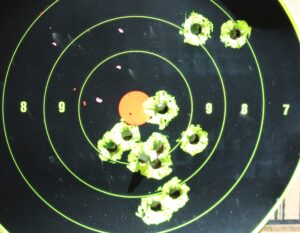
A 158-grain XTP or some other JHP traveling in excess of 1,400 fps is going to make an impression on whatever it hits, and I’m confident any bullet leaving the muzzle of my 6-inch barrel is going exactly where it’s aimed.
About the data: I’ve had similar experience with different resource manuals in the past, which is why I keep loading manuals from different bullet makers on my lading bench. I shoot a lot of .41 Magnum, .45 ACP and .45 Colt, plus .357 and .38 ammunition, and always keep my powder charges slightly lighter than the maximums listed for whichever bullet/caliber I’m cooking up, usually by a two tenths of a grain or maybe more. I’ve found over the years that maximum isn’t always the most accurate, and I’ve always been far less impressed with muzzle flash than I have been with entrance and exit wounds.
When I started loading for the .45 Colt, I experimented satisfactorily with 250-grain LSWC bullets from Speer, the 255-grain FPLRN Cowboy bullets from Hornady, and the 250-grain Hornady XTP.
I’ve settled on the 255-grain lead pill, with the 250-grain XTP for my .45-caliber sixguns as my second choice. I’m running 6.9 grains of HP-38, the maximum recommended in the Hornady manual, behind those lead bullets and getting 800-850 fps with no signs of leading or too much pressure, and I’m happy to report that out of my sixgun with its 7½-inch barrel, it is delightfully accurate.
My wheelguns aren’t just tools, they’re investments, and one day they will become heirlooms perhaps, so I treat them with respect.