By Dave Workman
Editor-in-Chief
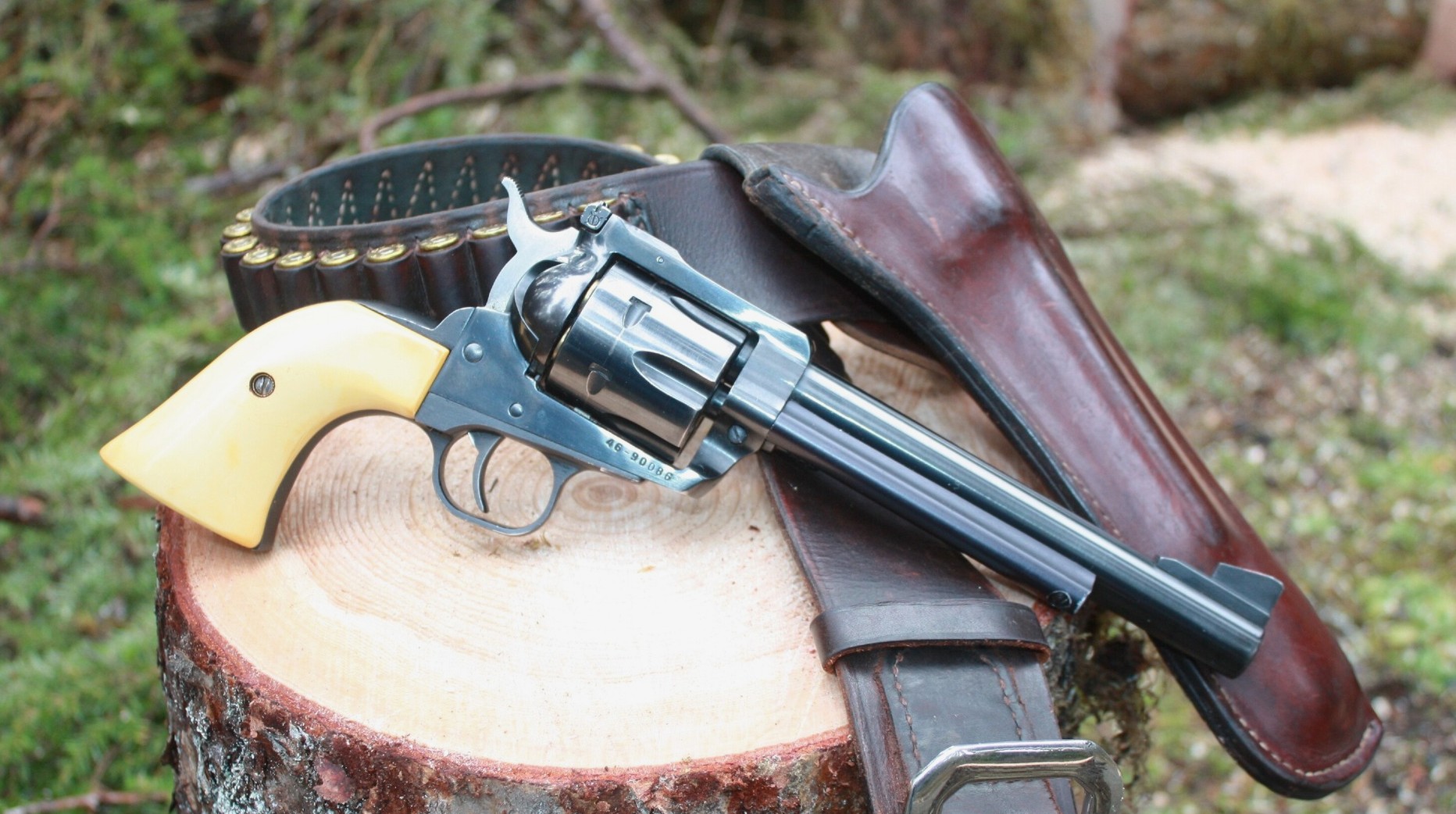
Back in the early 1950s, after Bill Ruger saw early success with the Ruger Standard semiautomatic .22-caliber pistol (I have one!) and the Single-Six, a single-action .22-caliber western-style revolver, his next feat was one which has lasted for decades and has become a legend.
In 1955, the Ruger Blackhawk—initially chambered for the potent .357 Magnum cartridge—made its debut, as noted in a report at Wikipedia. Capitalizing on America’s fascination with television westerns, and the popularity of major stars such as John Wayne, Gary Cooper, James Stewart and Henry Fonda, all of whom had cranked out western films which endear even today, the Blackhawk was a winner. It was affordable, utilized modern coil springs, attractively finished and nostalgic. What’s not to like, eh?
Here was a sixgun built to last. It had a heavy frame, adjustable rear sight, and specimens I’ve seen over the years have endured whatever the outdoors threw their way.
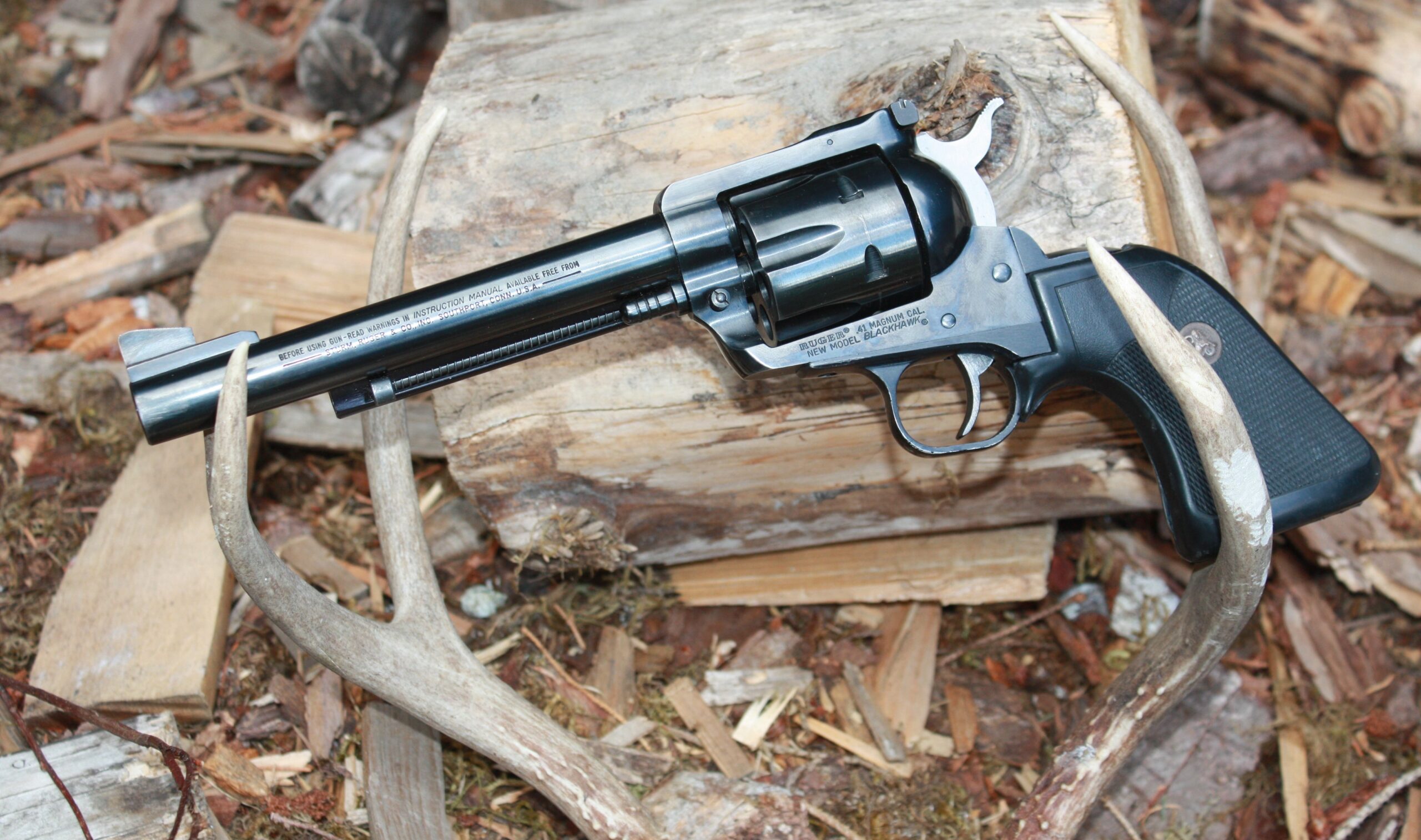
The following year, Ruger unveiled the Blackhawk in .44 Magnum, following on the heels of Smith & Wesson’s introduction of a big bore N-frame revolver in that caliber. Those early Blackhawk models were known as “Flattops” because the company hadn’t yet introduced the “ears” at the back end of the frame which were designed to protect the adjustable sight.
Then along came the Super Blackhawk, which a pal of mine living in Alaska quickly purchased, and eventually Ruger chambered other versions of the Blackhawk in .41 Magnum, .30 Carbine, and .357 Maximum.
More than 40 years ago, after successfully advocating for handgun hunting in Washington state, I bought my first Blackhawk in .41 Magnum. Having researched the cartridge and being not-so-enamored with the .44 Magnum version, I figured the .41 was the smart choice, and so far, nobody has convinced me otherwise.
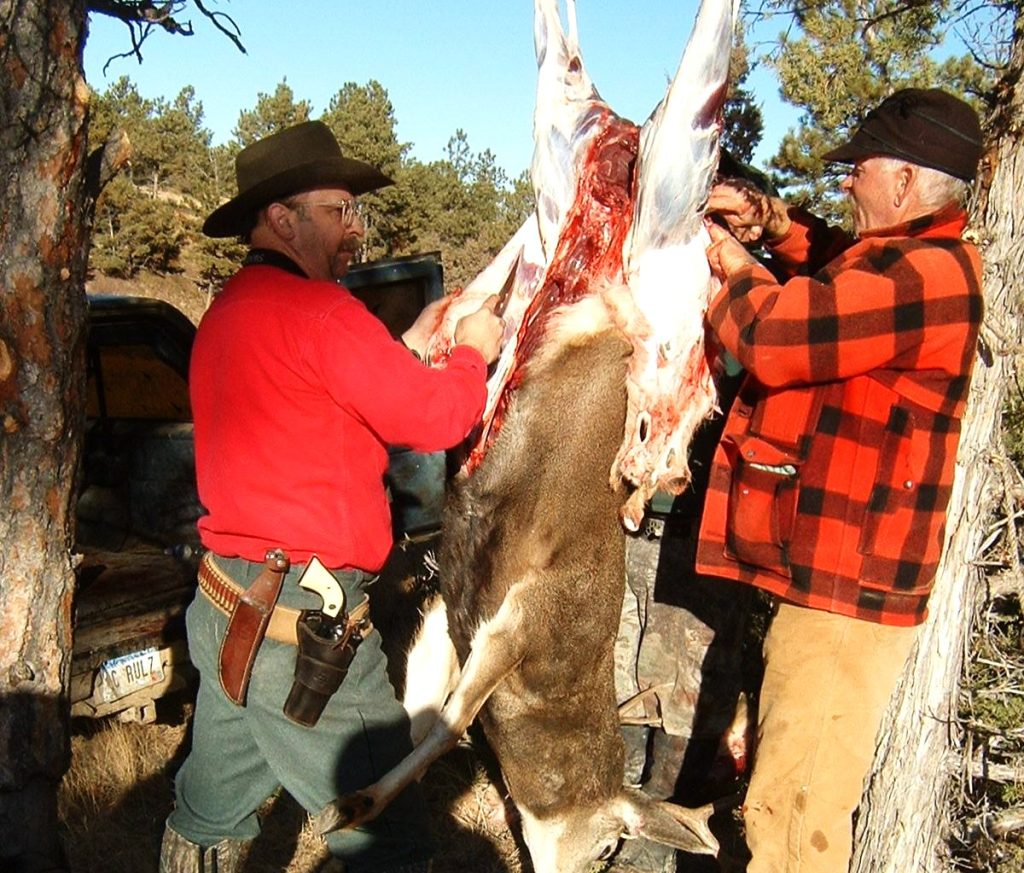
Mine had a 6 ½-inch barrel, the front sight appeared to have been installed with a very tiny, but discernable, off-true angle. But it shot like the proverbial house on fire, and as I got into handloading the cartridge, relying on two great propellants—Hercules 2400 and Hodgdon H110—and using superb bullets including the 200- and 220-grain Speer half-jacketed pills resembling semi-wadcutters, Nosler 210-grain JHPs, Sierra 210-grainers and Hornady’s XTPs, I learned the Ruger Blackhawk was capable of reliable—and sometimes impressive—downrange accuracy.
I eventually took two deer with that wheelgun, a coastal blacktail spike and high-country mule deer fork horn, and carried it through years of big game hunting.
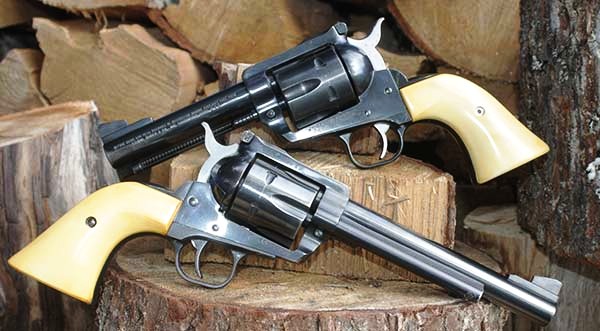
About 20 years ago, I bought a second Blackhawk in .41 Magnum, this one with the shorter 4 5/8-inch barrel, so I could actually wear it while driving or seated as a passenger. It also is capable of good downrange performance.
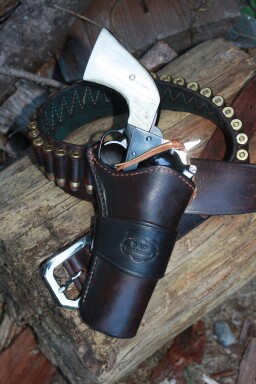
I built a couple of cartridge belts and holsters for both sixguns, one a smooth leather model with an adjustable billet and the other a rough-out “money belt”-type rig made from folded-over suede and reinforced on the inside with a strip of suede and fixed billet. They’re still in use today, and have—over the years—gained a bit of “character.”
I’ve written over the years that the Blackhawk platform was both strong and durable, and even a blow from a hammer might not put one out of service. On my shorter model, I replaced the aluminum ejector rod housing with one of steel, and never looked back.
The second buck I shot with the 6 ½-inch Blackhawk was not exactly planned. It was on the second day of the season, I took my young family up to show them where I’d been hunting the previous day with some pals. It was very mild weather and I recall remarking to my wife that the prospects for the season didn’t look too good.
About ten seconds later as we rounded a bend in the very beat-up excuse for a logging road, there stood the 2-point muley. He was as startled as me. I hit the brakes, throwing gravel all over the place, and he jumped off into an old clearcut that was full of young alders.
My rifle was jammed in the back seat but the Blackhawk was right there where it was supposed to be. I bailed out, rushed down to where the buck had jumped, making my way down the steep slope into the old cut.
I spotted him moving through the alders, brought the sight up to just behind his shoulder and let go with the first of two shots. The second round hit him within an inch of where the first bullet struck, and down he went.
About that time, by sheer coincidence, a couple of guys with whom my wife had graduated from high school showed up and helped me drag the buck back up out of the brush. Venison had never tasted so well, as I had managed to fulfill a desire to conk a buck with a handgun.
One of the two rounds went all the way through, but I recovered the other just under the skin on its way out, perfectly mushroomed.
The reliability of Ruger’s Blackhawk has never been in any doubt around my campfire. I frequently encounter other hunters with Blackhawks on their hips or in shoulder rigs, and I have yet to hear a discouraging word from any of them about their wheelguns.
I’ve swapped out the factory grips on both guns more than once. Choices have included Pachmayr rubber grips, some aftermarket grips with Ruger medallions, grips from Ajax and more recently, some Magna Tusk “aged ivory” grips from Arizona Custom.
My loads haven’t changed much over the years. I’ve settled on 20-grains of H110 behind the Nosler, Hornady or Sierra JHPs when I ran out of 2400, and I’m using either H110 or Accurate #9 behind some recently-obtained—and long out of production—220-grain Speer half-jacketed pills, which I wrote about recently for GUNS online.
Would I sell either of my Blackhawks? Surely, you jest! These sixguns will become heirlooms hopefully. And this fall, they will ride with me again to some new adventure.