By Dave Workman
Editor-in-Chief
Winning the Second Amendment battle, especially when testifying before Congress or a state legislative panel, involves more than blurting out data and details people can quickly forget, it requires the ability to persuade, according to a woman who has been on the front lines of the fight.
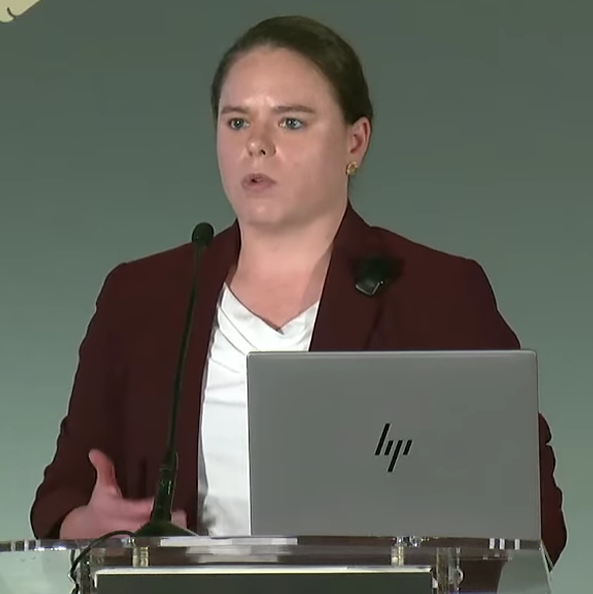
Amy Swearer, senior legal fellow at Advancing American Freedom, offered a captivating and insightful look at how it all works during an all-too-brief presentation at the Gun Rights Policy Conference in Dallas over the weekend. A former senior legal fellow at the Heritage Foundation, she has testified before Congress several times, and she brought some important advice to grassroots activists who might someday find themselves appearing at a legislative hearing.
“The goal of legislative testimony is fundamentally to persuade,” she explained. “Except for sometimes it’s actually about knowing how to throw (verbal) punches, so know how to do both effectively.”
She recalled one episode where she was in a hearing and she, and other witnesses, were escorted out for their own safety. Her comment underscores just how volatile the fight over gun rights can become.
“You start with the presumption that everyone there is there in good faith and (is) actually persuadable and that it is your job to persuade them,” she said.
However, there can be times when the mere fact of showing up for a hearing might be half the battle.
“Sometimes the goal you want to accomplish is showing up to testify because they didn’t want anybody there,” Swearer told the audience. “Sometimes it’s stealing their thunder. Sometimes it’s stealing their show and taking away their vital moment.”
Appearing before a legislative panel often means you have only two or three minutes to make your point. In such situations, Swearer’s advice is to “boil down what you are trying to say into one big idea, one major point that you want them to take away.”
As an example, she offered a quote such as, “This universal background check law won’t stop most criminal gun transfers but it will make felons out of lawful gun owners who exercise common sense.”
She further suggested telling a story, something people can relate to.
“You will never win the war of emotions against gun control advocates,” Swearer cautioned. “But you can’t afford to lose that battle either. You cannot persuade people when you emotionally turn them off to what you’re trying to say. We cannot lose our humanity. If we lose our humanity, it does not matter if we win the argument, we have lost the plot.”
She recalled once telling a story about teaching her mother to shoot. Her mother wasn’t doing very well with a handgun, but when she fired a semiautomatic rifle, she produced a tight little group on the target. Swearer said people remembered the story about her mom when they forgot statistics.
“The gun control side does not have a monopoly on emotions,” she noted. “They do not have a monopoly on caring about victims of gun violence, and I am tired of ceding that ground to them because they did not earn it.”
This strategy is not just about testifying before lawmakers, Swearer said. It is about communicating with people in everyday settings.
“You have an opportunity to testify every day,” she observed, “about good gun policies and about the Second Amendment to your neighbors, friends to your family members, the random strangers on the internet.”
Make it simple,” she advised, “make it resonate, make the only point you need to make in a story that they will remember.”