By Lee Williams
SAF Investigative Journalism Project
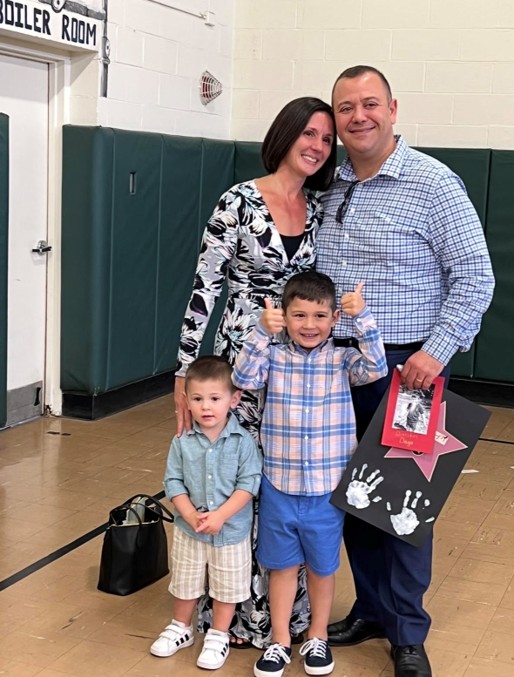
Albany, New York resident Demetrio Daga is currently facing 40 years in a state prison, but if he had lived in Florida, Texas, Georgia or any other free state he would never have been charged with a crime.
Daga, who is 44, was convicted last month after a seven-day trial of violating 15 New York State criminal charges: one count of Criminal Possession of a Weapon in the First Degree, two counts of Criminal Possession of a Weapon in the Second Degree, three counts of Criminal Possession of a Weapon in the Third Degree, and nine counts of Criminal Possession of a Firearm.
“Demetrio Daga was buying and producing gun parts and building weapons in his home,” Deputy Chief Assistant District Attorney Jessica Blain-Lewis told the jury during closing arguments. “And he wasn’t just someone who builds guns, he was building an arsenal.”
Shortly after saying this Blain-Lewis slowly poured a box of bullets onto the courtroom floor to emphasize her point.
Blain-Lewis is used to acting.
In 2016 she appeared on the CBS hit show “Survivor: Millennials vs. Gen X.”

In court, Blain-Lewis is known for wearing conservative business attire with extremely wild footwear. She did not respond to calls or emails seeking her comments for this story.
What she referred to as Daga’s “arsenal” consisted of 13 handguns, which she called “ghost guns,” 22 “AR-style assault rifles,” which she also said were “ghost guns,” 18 “AR-style assault rifles” with serial numbers, and two pump-action shotguns.
Prosecutors also said investigators found several 3D printers including one that was running, numerous “high-capacity” magazines, “miscellaneous gun manufacturing devices,” ammunition, and more than 200 “3D-printed lower handgun receivers and rifle frames.”
Daga’s defense team called no witnesses during his trial.
Prosecutors called 17 people.
The jury deliberated for less than two hours before finding Daga guilty of all 15 state charges.
His sentencing is scheduled for Oct. 28.
There was no testimony during the trial that Daga broke any law with his firearms. In New York mere possession of a homemade firearm is a crime.
There were no ATF or any other federal agents present when law enforcement raided Daga’s home in 2025. The entire investigation was conducted by the New York State Police. These state troopers examined purchases Daga had made online, after they were told to look at his online history by New York’s Queens County District Attorney’s Office.
“We’ll provide you with a list of 10-20 viable targets to focus your efforts on as we try to bring our ghost gun model to the Capital Region as a test run,” an investigator in Queens wrote in an email to state police in Albany, according to evidence presented during Daga’s trial.
Daga’s defense attorney claimed that the list included the names of several former politicians and even the son of the current sheriff.
Daga and his family maintain he was the only one of the 20 people on the list who was investigated by state police.
Americans have been making guns in their homes since before there even was a United States of America, but now it’s outlawed in New York State.
From behind bars
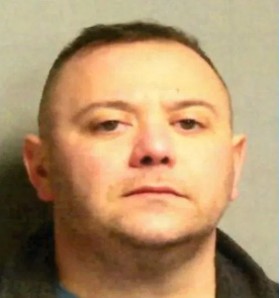
“I am doing okay,” Daga Wednesday afternoon on a recorded jail phone. “It’s all a bit of a shock for me, but it’s definitely not what my previous life was. That’s for sure.”
Around three times a day Daga hears the jail’s emergency horn blow, and he sees guards running down the hallways.
“The one thing that kills me is being away from my family,” he said. “That’s been the toughest part. My boys were my constant companions. The only time I get really upset is when thinking about them. I was mainly doing okay until my seven-year-old asked me when I was coming home. He said, ‘Life is not so regular without you here.’ That hit me like a freight train.”
The fact he may spend years behind bars is a “terrifying prospect.”
“Nobody outside that courtroom thinks I should have been charged with anything,” he said. “Probation is not going to be an option.”
One juror became highly distraught after the trial ended, telling Daga’s attorney that if she knew he would be imprisoned for years she would not have voted how she did.
Daga is angry about what they were not allowed to include in his trial.
“We weren’t allowed to discuss how privately made firearms were legal in 47 other states. We weren’t allowed to introduce other things. That’s terrifying,” he said. “These are our rights. The Constitution is the most beautiful document ever created and they’re perverting it. Everyone should be terrified of anyone trying to disarm you. You are your own First Responder.”
He believes the judge took the prosecution’s side.
“It was like a clown show. The judge did everything she could to help the prosecutor win her case,” he said. “It felt like a nightmare. I don’t really have any faith in the justice system anymore.”
Growing up
Daga’s mother, Domenica Greco, is incredibly upset at the thought her son may have to spend decades in prison. He has not had an easy life, she said.
“He grew up in a single-parent household,” his mother said. “His father has had very little contact with his kids, three phone calls within the past 10 years.”
Daga’s uncle was a police officer at the time, and the two were very close. Greco remarried and Daga grew very close to his mother’s second husband, until tragedy struck again.
“After one year of marriage he was diagnosed with brain cancer,” she said. “He died a few years later.”
As a young man, Daga initially went to a private military school, but he didn’t fit in.
“Demetrio likes to do his own thing,” his mother said. “He was very smart and has a very strong character.”
“He went to a public school for his senior year, but he didn’t do much of anything,” his mother said “He got his GED, did go to college for one semester. He grew up in our family business, which was a pizza place in Albany.”
Daga started working at the local police department as a “Paddy wagon driver,” his mother said.
“Then he got a job as a 911 dispatcher for a number of years,” she said. “After that he worked in real estate, residential and commercial.”
Daga’s family changed him.
“He is very dedicated to his family. He would do anything to protect his family. He grew up with his cousins. He was very protective. Whenever anyone needed anything, he was always there. He was always willing to give a hand. He wanted to be the kind of father that he never had. He was very involved with his kids. That’s one of the things I miss. I miss opening up Instagram and watching the stories about what he did with his boys, hiking at the park, eating ice cream. His father-in-law owns an apartment complex. He would teach his boys how to paint, how to mow the lawn. His seven-year-old is amazing,” she said. “If he goes to prison, it’s already destroying his family. I can’t see them for more than a few minutes. His youngest always wants to go get his daddy. With his family, he tried to do as much as possible. Even with me, when I was diagnosed … he advocated for me. I had cancer. He was here every day. Every day he was here looking after me when I was going through treatment, making sure I was okay. His wife Maria is doing all she can to keep their sons’ lives as normal as possible. They talk to him every day on the phone. They always ask him: ‘When are you coming home?’”
Desperate interview
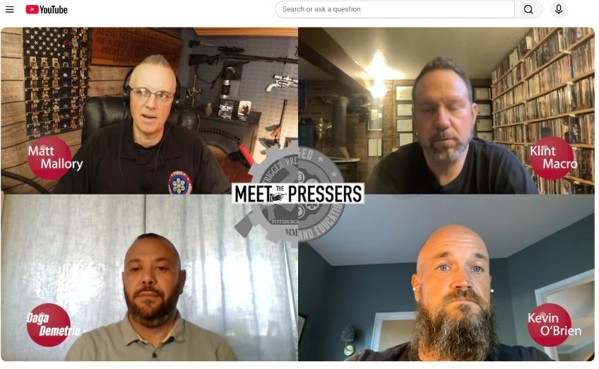
Thirteen days before his trial started, Daga and his attorney Kevin O’Brien appeared on the “Meet the Pressers” podcast, which is hosted by Matt Mallory and Klint Macro. They appeared hoping to get word of his legal mistreatment to someone who could make a difference.
“They made comments to me, that they knew I wasn’t violent,” Daga said of the state police investigators on the podcast.
Officers allegedly knew he had no violent history and that he had committed no real crime.
He said state police investigators shopped his case around to other law enforcement agencies, including several federal agencies, but were unable to gain any interest, which he said says a lot about their charges.
As a result, Daga asserted state police started conducting “lawfare,” which included allegedly making several false statements against him. They falsely claimed he was investigated for trafficking firearms, or that a car stop led to their search warrants, he said.
“The whole case itself has a lot of really highly concerning elements that I think would terrify people,” Daga told the podcast viewers.
“Everything he purchased was legal. There were no illegal purchases but it put him on a list,” O’Brien said. “Something about this feels very personal. If we’re unsuccessful at trial, which seems likely, based on the terrible laws we have in New York, he could be going away for a very long time, more than a decade for sure.”
O’Brien clearly said Daga has done “nothing to harm anyone else.”
“I’ve had clients in the same court who have shot at cars with people in them, and they have been given probation or they have been given another chance,” he said. “With Demetrio [Daga] they want to put him in a cage, and it makes no sense to me.”
O’Brien said he has never conducted public interviews with a client before trial, until now.
“The problem is too big for us to tackle without some support from the public,” he said. “They are sending a message to all other gun owners that if you don’t get in line, you are next.”
“Fully political”
In an interview this week with the Second Amendment Foundation’s Investigative Journalism Project, O’Brien said he expects Daga will be sentenced to serve years if not decades in a state prison. Getting a state pardon will be extremely difficult.
“The governor of New York is not going to pardon him, unless she does not win reelection. They say the polls are close. She wouldn’t pardon him, but the new [Republican] governor would. That would be his best hope for a pardon,” O’Brien said.
New York’s “ghost gun” law made defending Daga difficult.
“It was an unusual case for me because the way the law was written, in New York, he was guilty,” O’Brien said. “But even talking to liberal folks who may believe in gun control more than I do, no one believes that what the District Attorney’s Office was seeking is a just sentence.”
Daga, he said, had no criminal history, was a hardworking family man and “just a good dude.”
“The best offer he received was eight years,” he said. “He’s a 44-year-old man who had never even been accused of anything before. Now he’s facing a significant portion of his life in prison. To me, that was the unique thing about this case. Even though it may have technically constituted a crime, no one thought that this punishment was the right thing for the crime.”
O’Brien couldn’t say how New York’s “ghost gun” law is perceived.
“It’s hard for me to respond to it exactly. The people I associate with are more against things like that. There are plenty of people who are nervous about guns and think that gun control is a good thing, but what I think is that the relative issue is that most of these people don’t understand what they’re supporting. When talking about Demetrio’s case, I wanted to hear someone explain to me why a good dude should be charged. I couldn’t find a single person—I couldn’t find a single person in the DA’s office who would tell me why putting Demetrio in prison would be good for society. To this day I don’t have an answer on that.”
Daga’s demeanor, O’Brien said, made the case personal for him. Justice, he said, was not served. “The opposite of justice is going to be served by putting him in prison,” he said. “I believe they know that. He’s never done anything that’s made the community worse and they’re going to put him in a cage? I don’t think justice would have been served if he’d been put on probation with a felony. I’ve handled cases where the actions are much more severe than Demetrio’s. This feels fully political. I would love to have someone explain to me how this is justice.”
About the charges

One legal expert said the charges against Daga should not apply.
“Article VI of the Constitution asserts that ‘[t]his Constitution … shall be the supreme Law of the Land; and the Judges in every State shall be bound there.’ The right to keep and bear arms is no exception to that. As the Supreme Court explained in McDonald v. Chicago, the Second Amendment is not a ‘second-class right, subject to an entirely different body of rules than the other Bill of Rights guarantees that we have held to be incorporated into the Due Process Clause.’ Where New York law conflicts with the Second Amendment, it is void,” according to Kostas Moros, Director of Legal Research and Education for the Second Amendment Foundation.
The decades Daga could serve behind bars are similar to the 20-year federal prison sentence Patrick “Tate” Adamiak was serving until he was pardoned last month by President Donald J. Trump. However, since Daga was convicted of New York State charges, he is not eligible for a presidential pardon.
Said Adamiak: “I have spoken to Mr. Daga and he is experiencing the same hell I was going through. Facing decades in prison when the alleged conduct involves no victim, no ill intent but just a citizen exercising their God-given right to keep and bear arms, is completely egregious. He needs to be freed and the community needs to rally around him like they did for me.”
Demetrio Daga’s family has established a GiveSendGo page for those who are able to help.
The Second Amendment Foundation’s Investigative Journalism Project wouldn’t be possible without you. Click here to make a tax-deductible donation to support pro-gun stories like this.