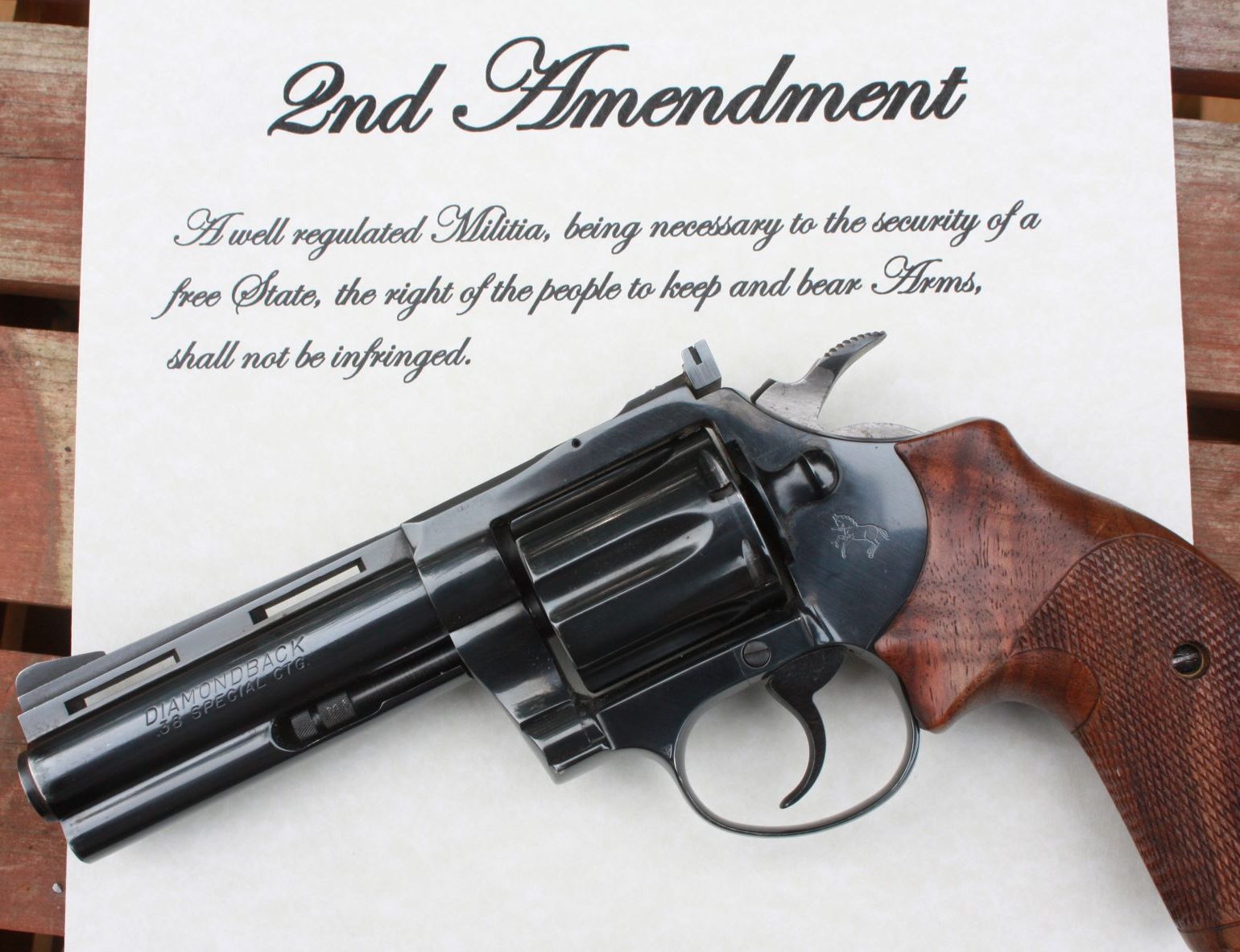
The Second Amendment Foundation (SAF), National Rifle Association (NRA) and Firearms Policy Coalition (FPC) have filed an amicus brief with the U.S. Supreme Court in Johnson v. United States, urging the Court to review the Tenth Circuit’s decision upholding a lifetime federal firearms ban for nonviolent felons.
Joseph Frederick Johnson is challenging 18 U.S.C. § 922(g)(1) as applied to a peaceable person. In their amicus, the three rights groups contend, “Our Nation’s historical tradition of firearm regulation demonstrates that the Second Amendment prevents the disarmament of peaceable Americans, including Mr. Johnson. Certiorari should be granted to clarify that the historical justification for felon disarmament laws referenced in Heller is the tradition of disarming dangerous persons.”
The Tenth Circuit treated Heller’s reference to “presumptively lawful” felon prohibitions as conclusive and foreclosed an as-applied challenge, according to a SAF news release. The brief argues that Bruen and Rahimi require every arms regulation – including those Heller called “presumptively lawful” – to be justified by historical tradition. That tradition supports disarming only dangerous persons, not everyone whose offense happens to be classified as a felony.
“Heller’s ‘presumptively lawful’ line was never a blank check for a lifetime ban on every peaceable American with a felony on his record,” said SAF Director of Legal Research and Education Kostas Moros. “Historically, we disarmed dangerous people. We did not strip the Second Amendment right from those who broke the law without violence and then went back to living as ordinary, peaceable citizens. A permanent ban with no path to restoration is simply not how our tradition worked.”
Colonial and Founding-era restrictions targeted people thought to pose a threat: wartime enemies, rebels and those with a proven proclivity for violence, SAF noted. Ratifying conventions spoke of “peaceable citizens” and of disarmament only for those “in actual rebellion” or who presented “real danger of public injury.” After Shays’s Rebellion, Massachusetts required rebels to surrender arms and then allowed them to reclaim those arms within months. Militia laws required able-bodied men to keep arms and contained no exemption for prior nonviolent convictions. Some statutes even expressly protected criminals’ arms from seizure for debt.
“A conviction for a nonviolent offense should not automatically require a lifetime forfeiture of a person’s right to keep and bear arms,” said SAF Executive Director Adam Kraut. “The historical tradition as applied here requires only those who are deemed “dangerous” be disarmed. A nonviolent felony mistake should not require a lifetime ban on exercising someone’s Second Amendment rights. We encourage the Court to grant this petition and make clear that § 922(g)(1) cannot be applied to peaceable people the historical tradition never disarmed.”
In announcing the amicus submission to its members, the NRA observed, “A firearm regulation is unconstitutional under the Supreme Court’s Second Amendment test unless the government proves that it is consistent with America’s historical tradition of firearm regulation. The U.S. Court of Appeals for the Tenth Circuit, however, has never applied the Supreme Court’s test to the federal prohibition on firearm possession by felons and precludes any challenge to the law—regardless of the nature of the offense or how long ago it occurred.”
The FPC noted in its own release, “The amicus brief argues that American history supports disarming people who were considered dangerous—not permanently stripping peaceable people of their rights merely because they committed a nonviolent felony. It explains that historically, nonviolent offenders retained the right to keep and bear arms and, in some circumstances, were even legally required to possess arms through militia laws.”