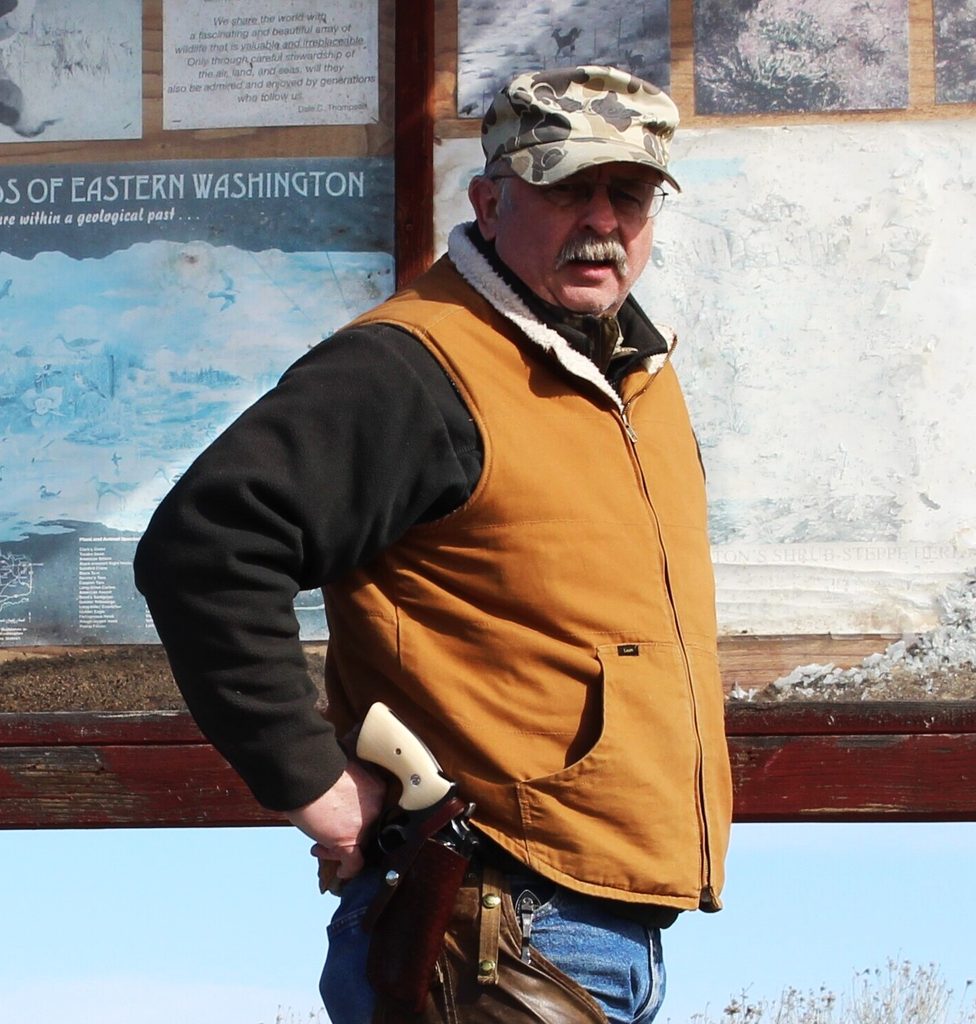
By Dave Workman
Editor-in-Chief
Okay, let’s see if we have this straight. A “Fudd” is someone whose choice of holster for his wheelgun may be functional, may even be practical, but it just might not present a visual impression of someone well-skilled with the iron on his hip.
Back in the days I was building holsters as a sideline, I knocked together a few such rigs for people who wanted leather around their revolver, but had probably never considered being in a situation which required them to “get it out fast” in an emergency.
In all fairness, it’s probably not fair to refer to such folks as “Fudds,” which signals they aren’t terribly adept at shooting. I know one of the folks for whom I built such a rig was actually a pretty decent pistoleer. He just didn’t feel the need to look the part.
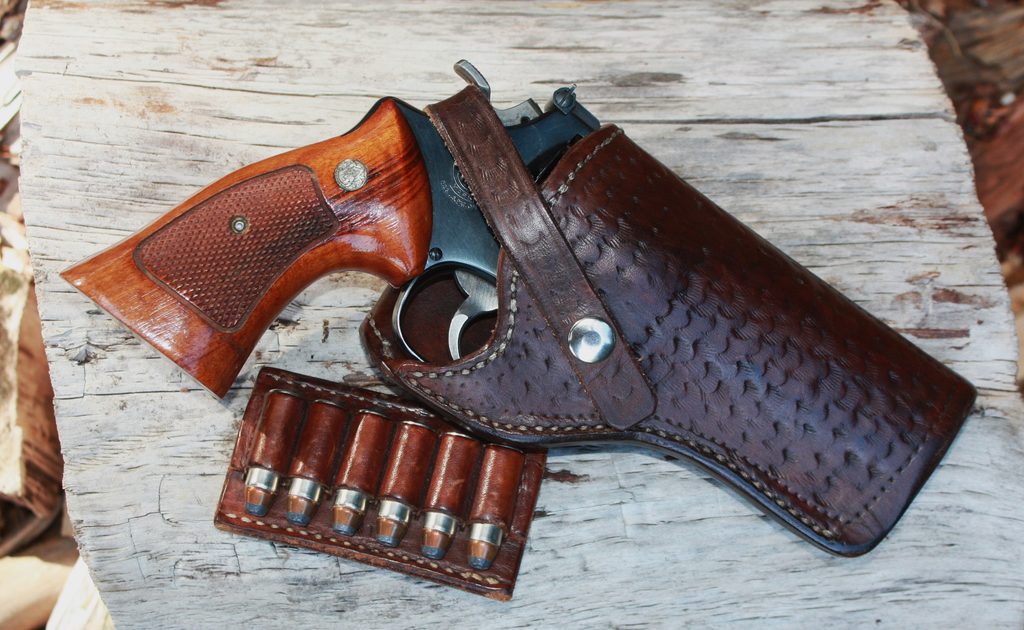
Most of my personal carry rigs, and the more popular holsters I sold had a couple of things in common:
- Their trigger guards were exposed, rather than covered
- The safety straps were positioned to come off fast
- They were lined with hand-oiled smooth leather
For sure, when I did a “Fudd” rig, which was simply a very traditional design which one can find even today, new or used, to cover your sixgun, I would recommend to the client that it include a lining. Most folks went for it, and never complained about the functionality.
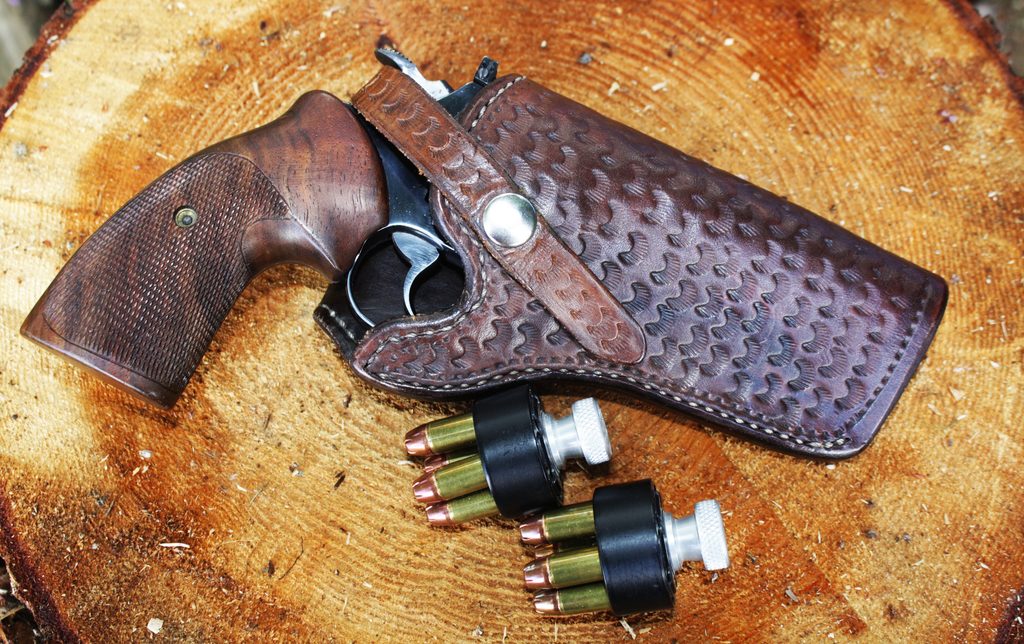
The traditional rig either covers the trigger guard completely, or allows the gun to be seated with a slight dip which sort of exposes the trigger, but the leather comes up around the guard. In the outdoors, they work.
My dad used to carry a .22-caliber Harrington & Richardson double-action revolver in such a holster, which I believe had been built by the old George Lawrence company in Oregon. As holsters go, it was a bit oversized for the revolver—I suspect it was designed to handle a K-frame Smith & Wesson—but it worked for him. He carried it on a plain trouser belt, which also held a leather cartridge slide for ten centerfire rifle cartridges (.32 Specials) and a hunting knife. He was not a pistolero by any stretch, but he could shoot okay, and taught me to shoot a handgun, using that very revolver. I graduated to something bigger; he didn’t live long enough for me to give him a better iron.
My preferences have always been to pack a sixgun on a cartridge belt unless it was just too darned big, in which case I carried it in a shoulder holster. I built cartridge belts for several people, based on prototypes I still use today in various calibers.
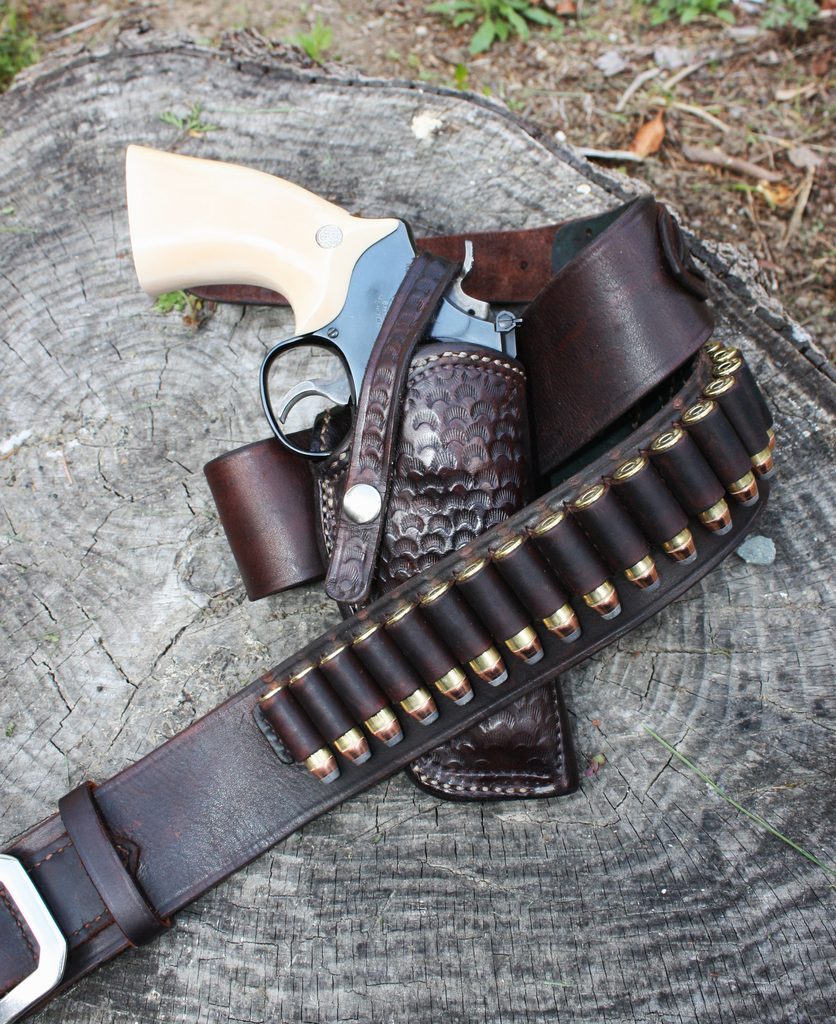
It’s not just the holster, but the belt upon which it rides which may separate the handgunners from people who just carry a handgun. This might be a visual thing as much as being functional. Whether single- or double-action, the wheelgun should be instantly accessible with as little fuss as possible. A 400-pound bear or hundred-pound mountain lion is not going to wait around for you to wrestle your sidearm out of its leather.
A couple of years ago, I got carried away and put together a cartridge belt for use with my .357 Magnum revolvers. It has 42 loops, cut 1-inch wide to prevent cartridges from falling out, with just enough room on the right side end for a holster and maybe a knife sheath. Forty-two rounds translates to seven full reloads for a six-shot revolver, and if that’s not enough, you’re being attacked by a herd of angry bears!
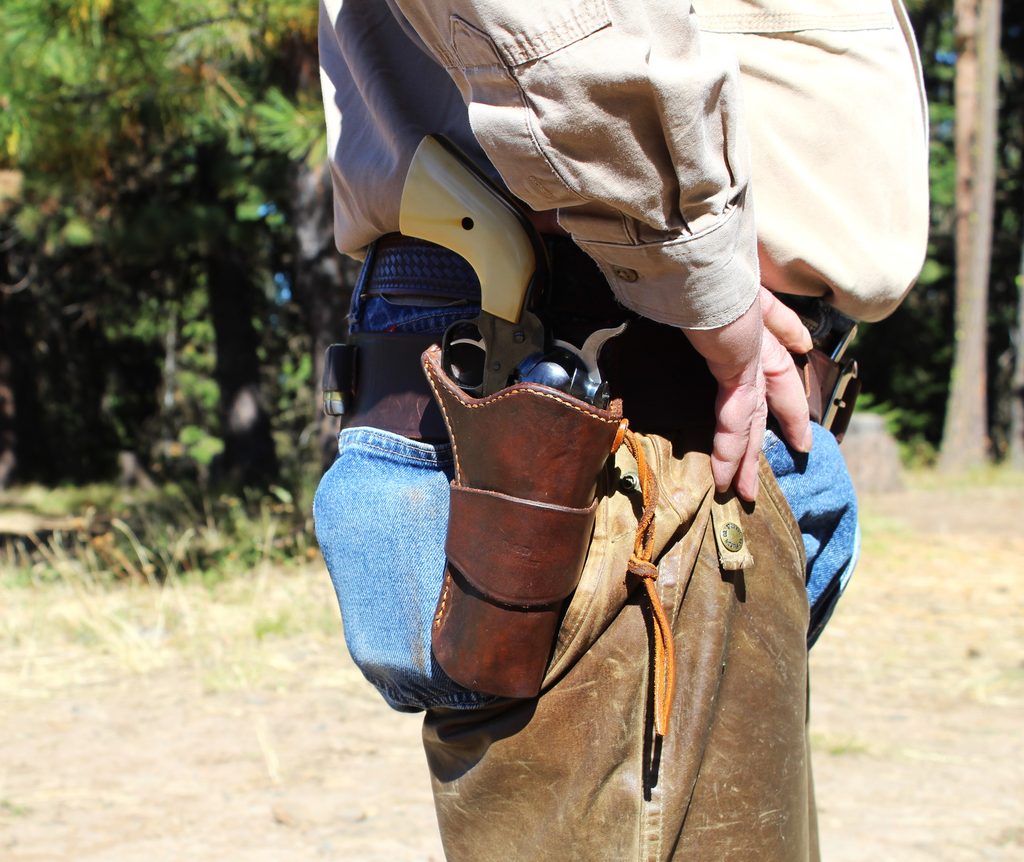
The holster is not one of my own, but an old Smith & Wesson brand I acquired somewhere which fits my vintage Colt Python.
Another telltale sign which signals that someone is not a serious handgun shooter is the condition of the holster. I’ve seen some real beaters in hunting camps or carried on belts underneath parkas, suggesting to me the owner has been a bit careless about his gear. Leather with scratches, which appears dry and worn, hints that the gun inside probably doesn’t receive the care it deserves. Every year after hunting season, I hand rub all of my gear with neatsfoot oil and saddle soap. It prevents cracking, helps preserve the leather and even protects the stitching. The last thing one wants is for a holster to literally go to pieces.
So, even if you have a “Fudd” holster, treat it like you’re the fastest gun alive, and it will probably survive your outdoors career.