By Mike Nesbitt | Contributing Editor
At the big Matthew Quigley Buffalo Rifle Match this year, reloading in camp was actually necessary, at least for my partner Allen Cunniff.
The number of cartridges needed for the match itself is 48 but for registered shooters the range is open for practice during the week before the match gets started. Allen took advantage of that, for sure, on Wednesday he fired 45 shots and the following day he fired over 50 rounds of his .45-70 ammunition. With over 100 empty cases which needed his attention, it was certainly time to do some reloading.
This isn’t the first time Allen has reloaded his ammo while in camp at Quigley. Some years ago, he did some reloading with a Lyman 310-tool (apparently discontinued, no longer on the Lyman website) and that was mentioned in a previous story. This time, however, he had some different equipment and, as he would quickly tell you, some better reloads were assembled.
Let me say that at some of the very big black powder cartridge shoots and matches, there are some shooters who reload “in camp” quite a bit. Some of those shooters have “loading rooms” built right into their outfits, whether those are in trailers or motor homes. As an example, during my first visit to Quigley I was invited into a cargo trailer where the shooters had a complete reloading bench set up. They were working up loads for the .50-90 Sharps and had asked me for some recommendations. As it worked out, I couldn’t suggest any recommended loads because they were using smokeless powder and all of my reloading for black powder cartridges is done with black powder. When they switched to black powder loading, which they did, I was quick to help them.
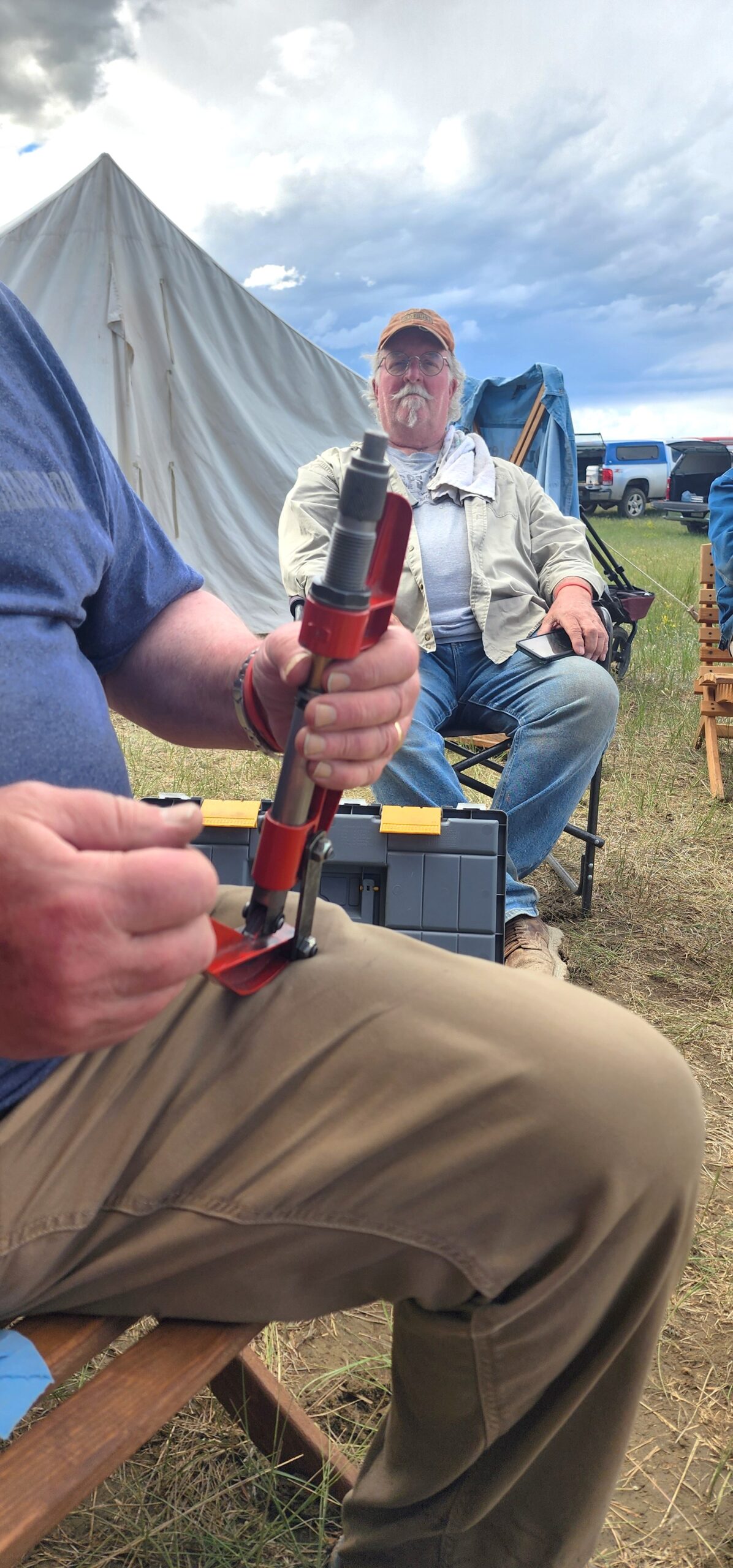
But the reloading that Allen did, and what I might also do, was not “at the bench” in any way. First of all, we camp in a tent and while we do have a table, where the camp stove is set, we don’t have other benches or fixin’s for reloading equipment and our loading gear is mainly hand-held. That really doesn’t require specialized loading gear and the products I will mention are readily available from most reloading outlets.
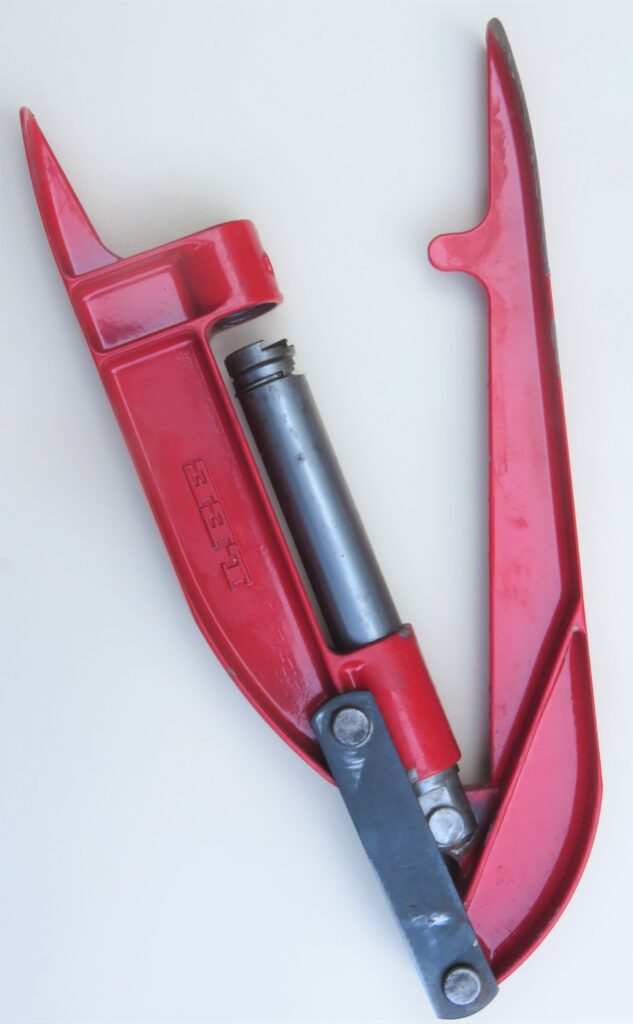
Allen did his reloading in camp using his regular reloading dies with a Lee Hand-press.
Lee Precision, Inc., calls this their Breech Lock Hand Press and for the press by itself the list price is about $74. Buyers should shop around and those hand-presses can be found on sale. The hand-press is easy to use and, if necessary, full length resizing of the cartridge cases can be done with it. Usually, full length resizing is not needed if the ammo being reloaded will be fired again in same gun that the empties were fired in. Allen did do some full length resizing because he had two rifles in the same caliber and he wanted his reloads to work in both of his guns.
Of course, he was also very prepared to do his reloading and he took all of the needed “ingredients” with him, including a couple of hundred cast and lubricated bullets. Casting and preparing bullets for buffalo rifle in camp was done back in the buffalo hunting days and if we were to do that today, in a camp such as at the Quigley Match, we’d probably be casting smooth-sided bullets for paper patching. Applying paper patches can be done easily with fingertips. But Allen was shooting and reloading with grease-groove bullets and, like I said, his bullets were already sized and lubed.
It isn’t that we couldn’t size and lubricate those bullets in camp, it could be done. Actually, it would be easier to “pan-lube” those bullets and shoot them un-sized. Pan-lubing is where you take a batch of bullets, stand them on their bases in a heated pan, and add lube until all of the grooves on the bullets are covered. This can be done at far less temperatures than is needed to melt the lead. Then, after letting the pan-lubed bullets cool enough so they can be handled, punch them out with a “cake-cutter” and the lubing is done.
Sizing those lubricated cast bullets could also be done and it is generally considered best to size the bullets before loading them in the cartridge cases. To do that sizing, Lee Precision makes sizing dies in several diameters which are used with a standard reloading press, and for in camp reloading, with the hand-press. Those bullet sizing dies by Lee are far less-expensive than a bullet sizer/lubricator, being priced at $25.98 for each size, and I’d want .459” for my .45-90s. Lee produces those bullet sizing dies for most all of the black powder cartridges right up to the .50 caliber boomers. Actually, those dies are cheaper than the sizing dies which are used in the sizer/lubricators and they should work just as well.
Likewise, the bullets could also be cast in camp but to do so simply takes time as well as a source of heat. Fires are not allowed at Quigley which means we could put a small lead pot on the Coleman camp stove and cast some bullets. I used to cast bullets in camp quite often but those were round ball bullets meant for muzzleloading rifles and not the heavy elongated bullets for long range loads in the Sharps rifles. So, to cast those bullets for our long-range loads, we would only need to have the molds, a casting ladle, and a lead pot, along with some lead of the alloy we’d want to use, and we’d be in business.
Or, reflecting on all of the portable generators I see and hear running in camp at Quigley, bring your electric lead furnace. That would work just fine.
Someday I’ll do that just to show how easy casting bullets in camp can be. That sounds like real a good project to do at one of our Buffalo Camps and it will be done with paper patched bullets. And don’t be too surprised if that gets done for some .50-70 ammo.
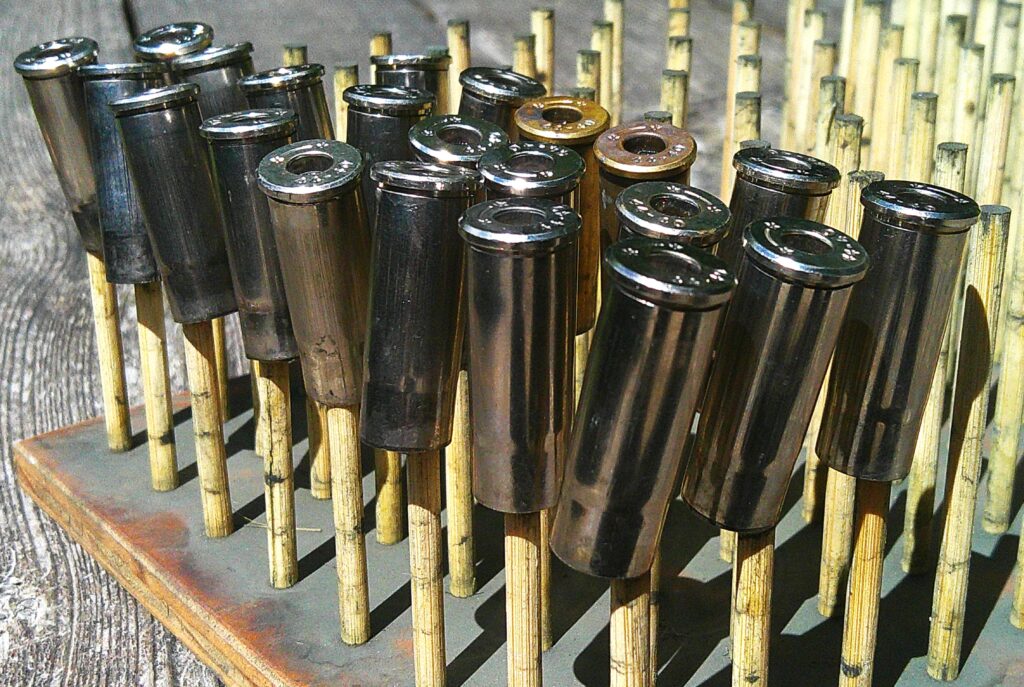
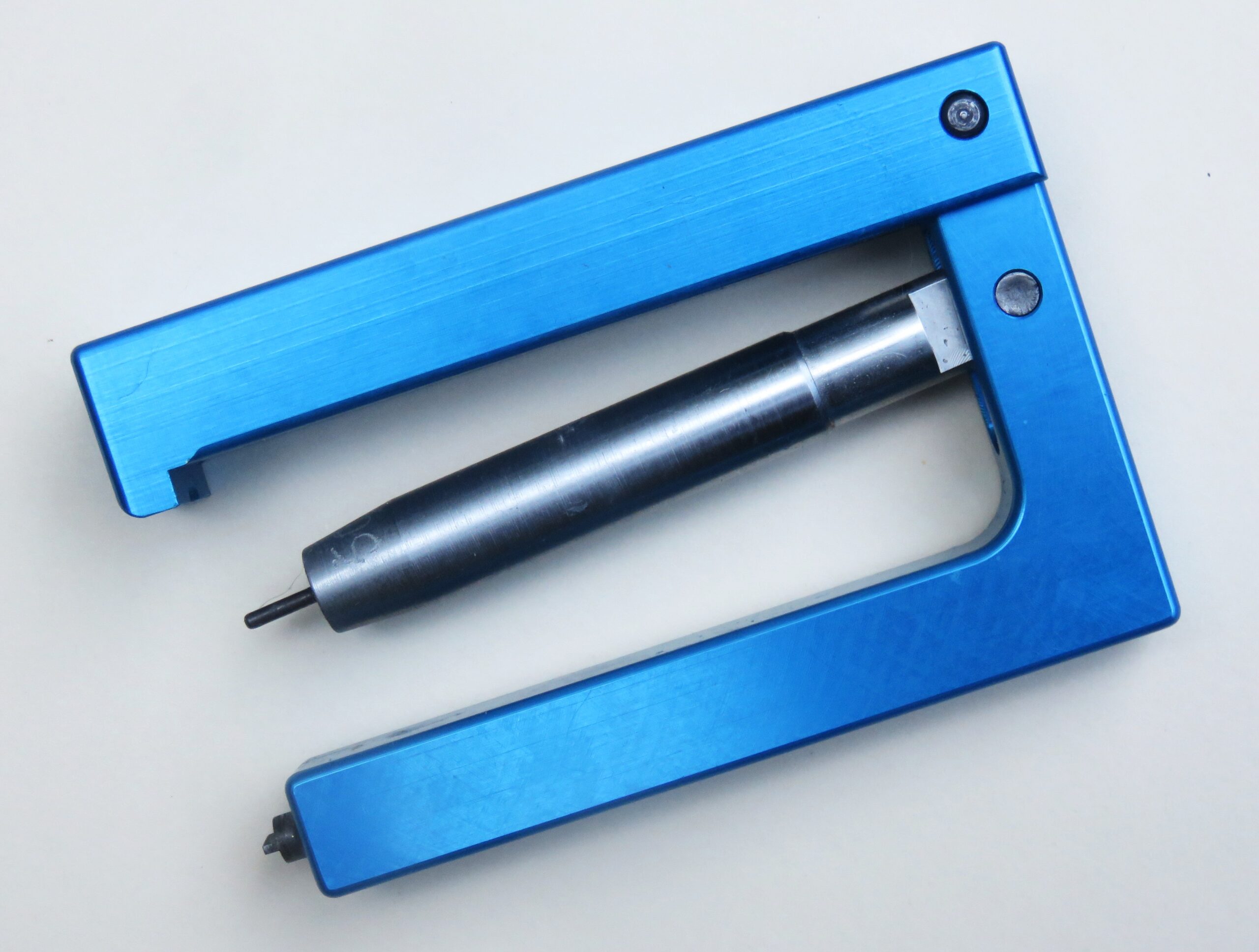
But this talk about making or preparing bullets to be loaded has put us ahead of what needs to be considered first and that is cleaning the cases. Empty cartridge cases after being shot with black powder loads are simply dirty, some will say very dirty. After being de-primed, with a de-priming tool (see Buffalo Arms) or simply a de-capping rod which is tapped with a hammer, the cases are washed in soapy water. My habit is to scrub the insides of the cases with an appropriate-sized bottle brush. Then the wet cases are put on a “case drier” and allowed to dry. If they are sitting in the sun the drying time is very short. Regardless of how much time it takes for the cases to dry, just be sure they are dry before you attempt reloading them.
Following that, the empties can go through the typical steps for being loaded; sized, then expanded so the bullets will enter the mouth of the cases easily, and, of course, re-primed. For priming, Allen had his priming tool with him which holds several primers to make re-priming a fairly quick job. With my 310-tool, the primers must be handled one at a time which makes the job last a bit longer. Either way, getting the cases sized, then expanded, and primed prepares them for receiving powder and bullets.
At Quigley this year, Allen brought along his regular powder measure which needed to be mounted to a temporary “bench” which he made out of a simple piece of wooden board, which was clamped to the camp table. One big advantage to using the adjustable powder measure is that he might have wanted to change his powder charge. Yes, he also brought his powder scale along so he’d know what the powder measure was set to.
Once his powder measure was set, for 65 grains of Swiss 1½ Fg powder I believe, he loaded the powder into the cases one at a time. And for this bit of reloading, Allen had his drop tube set up beside the powder measure. Using a drop tube simply gives the powder charges a headstart on compression, it settles in the cases better. Then an added a fiber wad was forced down over the powder with a compression die. Almost all black powder loads are done with compressed powder charges and compressing the powder by simply seating the bullets over the powder charge will commonly deform the bullets. Using a compression die is much better because then the bullets can be seated with only the cases’ neck tension, which is very little resistance.
For his reloading, Allen was using 500-grain bullets with all or most of the bullet’s lube grooves seated within the case and the 65-grain powder charge is certainly capable of sending the bullets on their merry way out to the “buffalo” target which is standing out on the hillside at 805 yards. I think Allen did use some of his reloaded-in-camp ammunition for his shooting in the match and there shouldn’t be any difference between those reloads and the ammunition which he had loaded at home before the trip. After all, the in-camp ammo was loaded with the same tools and same techniques as the ammo he had loaded at home.
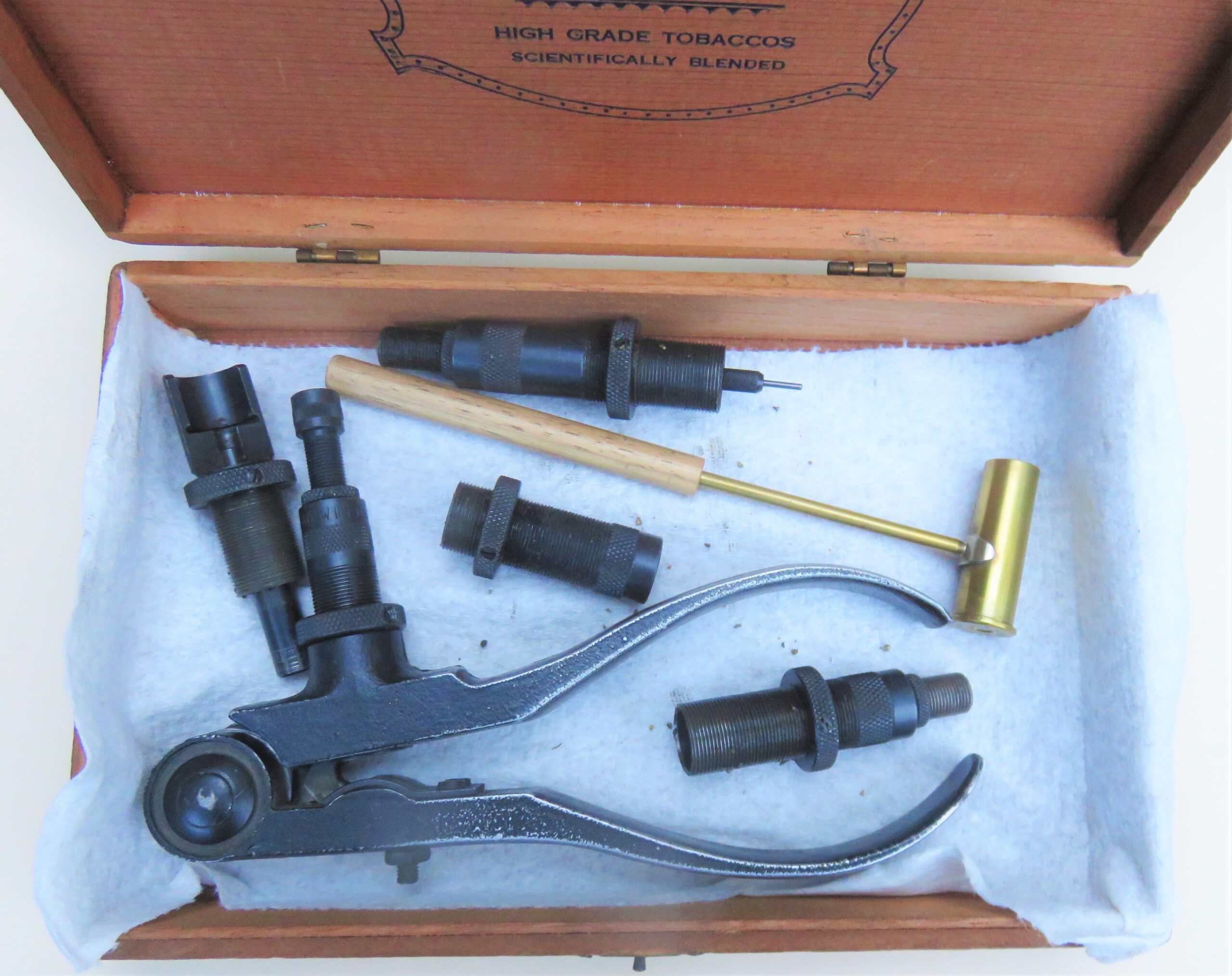
Things would be a bit different if I had done some reloading for one of my rifles with the tools that I have. For instance, with my .50-70’s 310-tool, I have a “scoop” that was made to hold 65 grains of Olde Eynsford 2F powder which I’d use to measure the powder with instead of an adjustable measure. That scoop is simply an empty .50-70 case which was shortened to hold the 65-grain charge and then a nice wooden handle on a metal rod was soldered to the side of the case for easy handling as well as identification. (I didn’t want to reload my powder scoop by mistake.)
There are some powder scoops available from reloading suppliers but to the best of my knowledge none of them are made for use with black powder. So, the best recommendation is to make your own. At least that is the best way to get what you want. And, when pouring the powder from the scoop into the case, a funnel is highly recommended for obvious reasons.
More reloading will be done in the camps yet to come. While the information I’ve put in this article is more or less general in nature, the reloading in camp that was talked about was actually done. And the ammo assembled while in camp performed very well. I believe Allen used some of it while shooting for score at the recent Quigley Match, and he shot his highest score this year by getting 31 hits on those elusive targets standing out there in the wind.