By Mike Nesbitt | Contributing Editor
Over the course of several articles, as well as a number of years, I have given some history about the .44-40 and, of course, have mentioned my favorite loadings for that grand old cartridge.
I’m still using the .44-40 but with some different loads which I’d like to share. It is actually difficult to suggest that I have new things to say about this 153-year-old cartridge, although some of what I’ll tell you about now was very new to me.
One of the things that has changed is my taste in powder for the black powder loads in the .44-40, and I’m relating this primarily to use in rifles, especially the Uberti replicas of the Winchester Model 1873, although they are certainly at home in the Model 1892 and the Marlin lever actions.
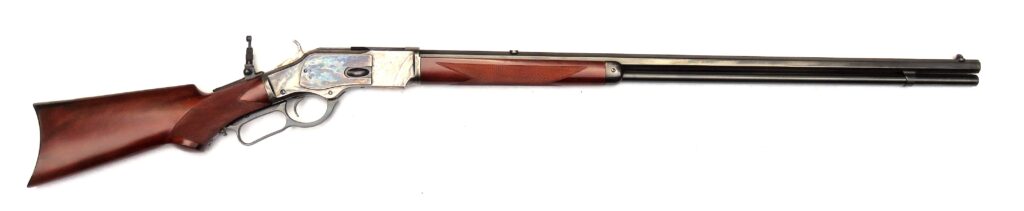
How my selection of powder for the old .44 W.C.F. (Winchester Center Fire) came about was rather simple and with rather few stepping stones. At first I certainly liked Olde Eynsford 2F powder and that will still give a very good performance. Then Olde Eynsford 3F powder was tried, for a quicker burning fuel. That raised velocities and also seemed to tighten groups fired in the rifle; in my case that was the Cimarron Long Range .44-40 with the 30-inch barrel.
Following my switch to Olde Eynsford 3F powder, which became hard to get as production at GOEX came to a stop, (I still do not have any updates on future availability), I began using Swiss 3Fg powder, which is still being for my .44-40 loads.
My use of the Olde Eynsford 2F powder was mainly done with 34.0 grains of that fuel under the 205-grain bullets, cast from one of the excellent bullet molds made by Accurate Molds. To put things simply, that load satisfied me completely, until I tried using the faster burning 3F powder. But when the Olde Eynsford 3F powder was tried, the switch to the 3F was made rather fast and without looking back. It simply worked better.
Then, while still using the 205-grain bullets, which is listed at 43-205C in the on-line catalog of Accurate Molds, the powder charge was increased to 35.0 grains of the Olde Eynsford 3F with no specific changes in performance. However, there was a noticable change when switching to the Swiss powder, because it has a slightly greater density. In other words, the same amount of powder by weight does not fill the .44-40 case so completely.
Compression of the powder charge with the Swiss 3Fg is still necessary but that compression is not quite as much. This makes starting the bullet into the case charged with powder just a little easier. While the difference in the densities of the two grades of 3F powder is not much, it is something that is easy to recognize.
Mike Holeman’s Experience
Mike Holeman shoots with me using another Cimarron Model 1873 rifle with a 30-inch barrel, also in .44-40 caliber. He now uses the same style of bullets with similar powder charges to what I use. We can generally swap ammunition with no concerns about different sight settings.
While I will talk about performance, let’s establish a basis. In the old days, the black powder factory loads using 40 grains of black powder under the 200-grain lead bullets were advertised as having a velocity of 1,300 feet per second when fired out of a rifle. Those loads, of course, were fired in the old balloon head cases and the solid head cases of today, such as those made by Starline, have a reduced internal capacity. Because of that reduced capacity, we can expect equal velocities with less powder.
While shooting loads with the 35.0 grains of the Swiss 3Fg, some velocities were checked. With a 24-inch barreled rifle, the velocity was about 1,325 fps and with my favorite 30-inch barreled gun the speed jumped up to 1,350 fps. In both cases, or out of both of those rifles, the muzzle velocity was higher than expected.
My standard load for my ’73 for the Lever-Gun matches features a 205-grain cast bullet, lubricated with Vigilante #1 lube.
While my loads using the 205-grain bullet are still my “standard,” another bullet has entered the broad picture for my .44-40 loads. That bullet is quite a bit like the 205-grainer but it does weigh approximately 10 grains more. In fact, it is almost a twin, being Accurate Molds’ number 43-215C, and it has the same very wide single lube groove.
Note from Dick Savage
Just after my trials with 43-215C began, I received a note from Dick Savage, an experienced black powder cartridge shooter, and a modern buffalo hunter. I was able to shake his hand the first time in 2014 and we’ve been trading notes on loads, sights, and rifles ever since.
Dick told me, “Back some 15 years ago I teamed up with John Kort to find the best shooting bullet in the 44-40. There was another fellow that joined us and we each took some of the Accurate designs and ran them through the paces with both smokeless and black powder loads. For smokeless we settled on the 43-220C. Same design as the 43-205C that you like but the heavier bullet shot better for all of us. Then we simply eliminated the center band (43-220C has two lube grooves) and got Accurate’s 43-215C for black powder shooting and dang if that wasn’t a spectacular performer also…others have agreed as when you look at the number of those molds that have been sold since we added it to the catalogue all those years ago. I still have my 3-cavity gang aluminum 43-215C mold and sold my 43-220. I normally only cast those bullets every two years as I make up 5000 and then I am good to go loading up my 1000 brass in my Dillion 550 twice a year.”
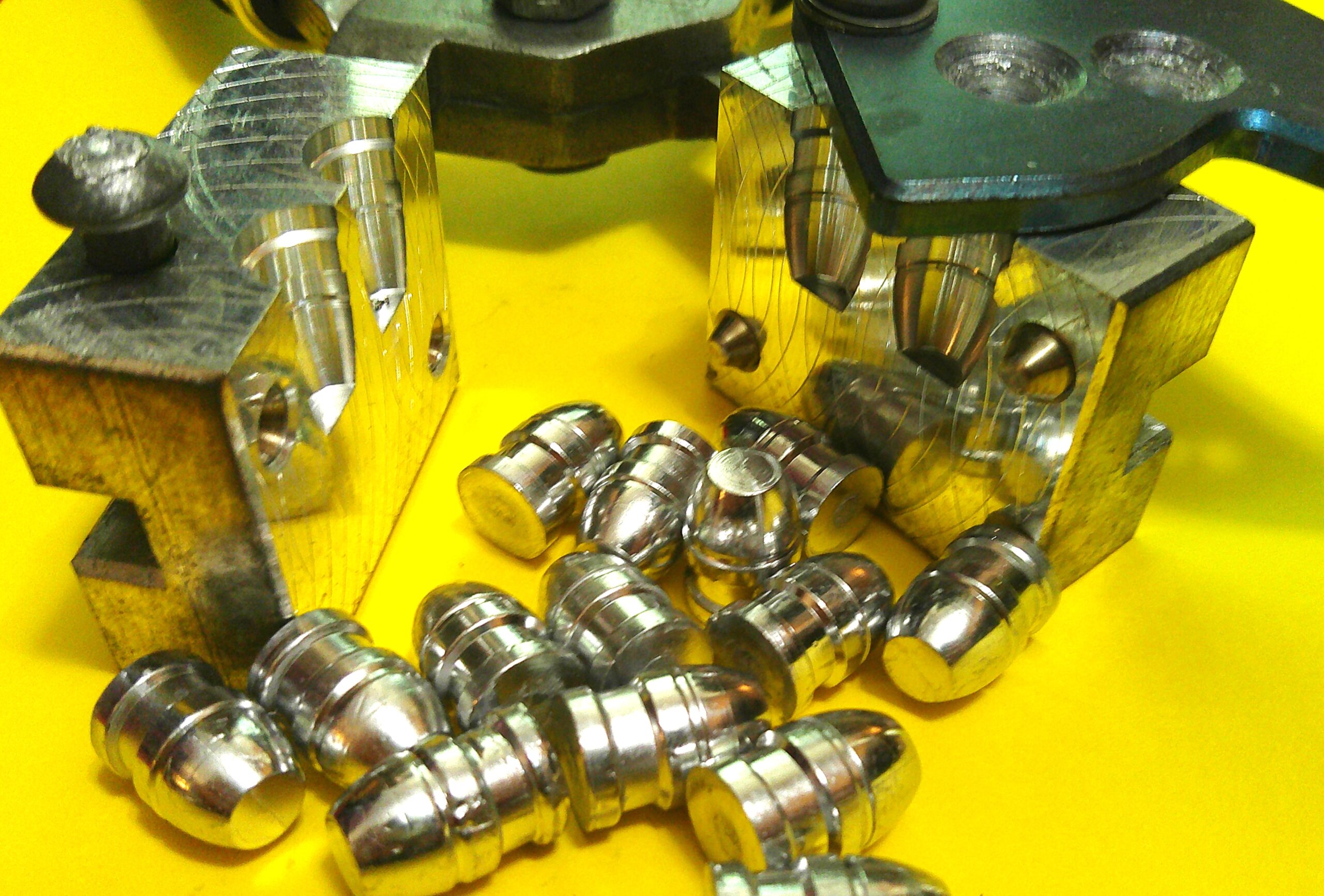
Given an endorsement like that, I had to get one so my order was placed with Accurate Molds for a copy of 43-215C right away. The mold I ordered was a double cavity for dipper casting with aluminum blocks. That order was filled on schedule and I received my new mold right around Christmas time, and a really fine thing to get at Christmas it was.
Casting Bullets
Casting, using an alloy that approximated 25-1, lead-tin, was done right away. With some of those first-run bullets to work with some loading began for my .44-40s. The load I used held 35 grains of Olde Eynsford 3F powder under the bullets, which were sized to .429”. Those bullets weighed 220 grains with my “guessed at” alloy.
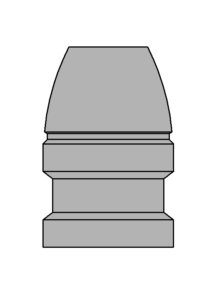
Shop drawing of bullet #43-215C, courtesy of Accurate Molds
Those loads were used in our Lever-Gun Match in January where I placed second in that month’s Lever-Gun Match. The bullets performed quite well. I know that isn’t the best test for the bullet but let me say that it pleased me.
When the bullets from the mold for 43-215C are compared to Accurate’s #43-205C, the only difference is some added length to the bullet’s nose, just .04” longer. This means the seating die must be re-adjusted for the slightly longer bullet. No real problem there, just do it. The slightly heavier #43-215C should have some advantages, and in time to come we might see more of those advantages rather clearly. For now, I am quite pleased to have one of Accurate’s most popular bullet molds.
Historically, the .44-40 was often loaded with bullets that weigh a bit more than the standard 200 grains. The .44-40 Marlin load used a 217-grain bullet and so did the loads for the Colt Lightning rifle. So, certainly the 215 grain bullets fit right in for shooting with the .44-40s in both rifles and revolvers.
While the shooting and testing for this story might not be the most revealing, you can easily believe me when I say preparing the data for this story was the most fun. And while this story must have a conclusion, my shooting with black powder and updating loads for the .44/40 will go on.
One thing I did with the 215-grain bullets, to use Accurate’s description for the bullet weight, was to chronograph those loads to compare them with the loads using the 205-grain bullets. In this testing, ammunition for both bullet weights was newly loaded and the powder charge was nearly 35 ½ grains of Swiss 3Fg. The slight raise in the powder charge was not actually planned; that’s just the way it worked out.
Velocities, out of the 30-inch barreled ’73, were the highest I’ve seen with the 205-grain bullets, with an average of about 1,380 fps. After shooting just five shots to get an average, the ammo was switched to the 215-grain bullets and those were about 50 feet per second slower. That much difference between the two bullet weights is not really surprising but, given a bit more time, I will run a similar test again but with more carefully measured powder charges, although the powder of choice will still be Swiss 3Fg.
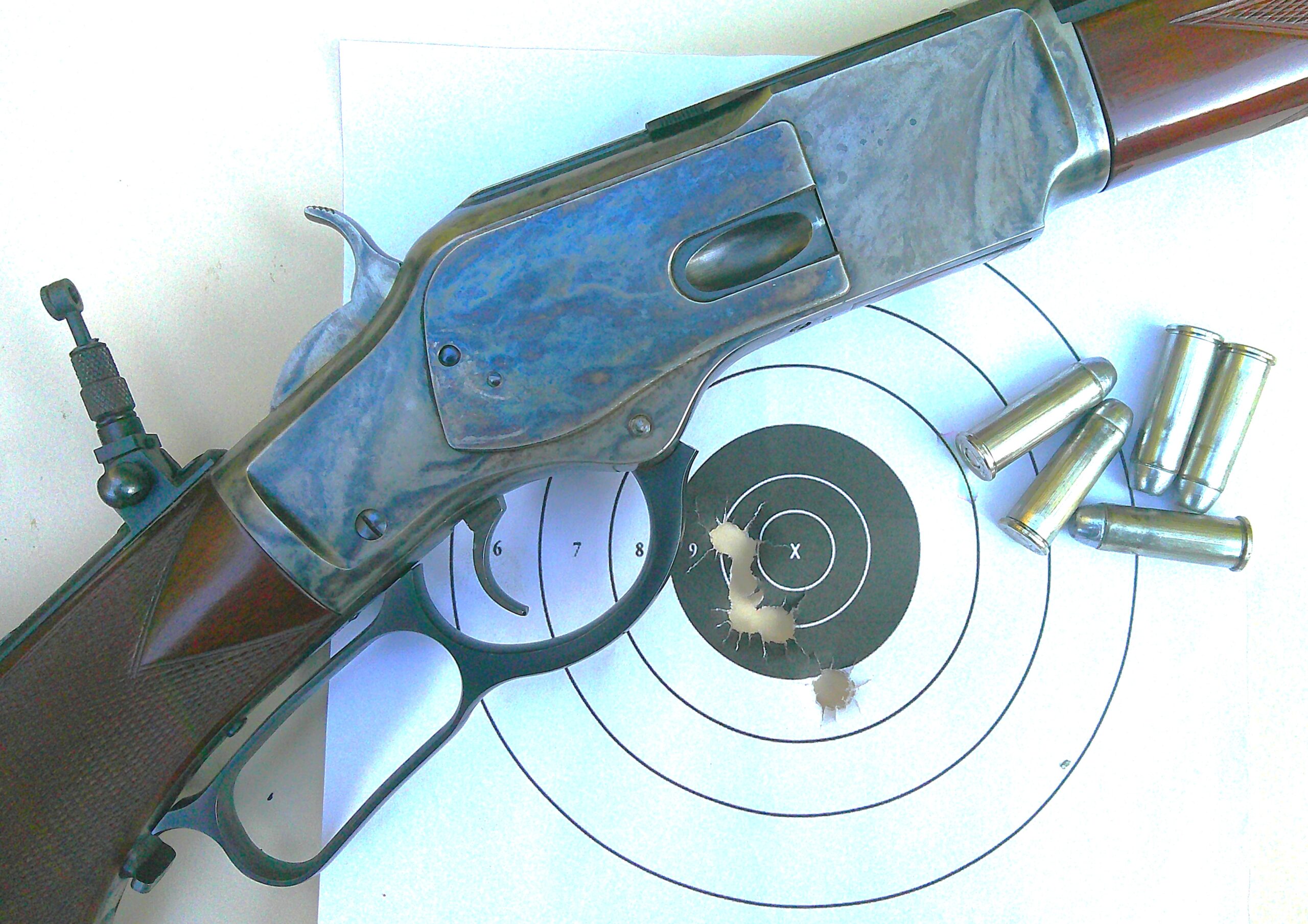
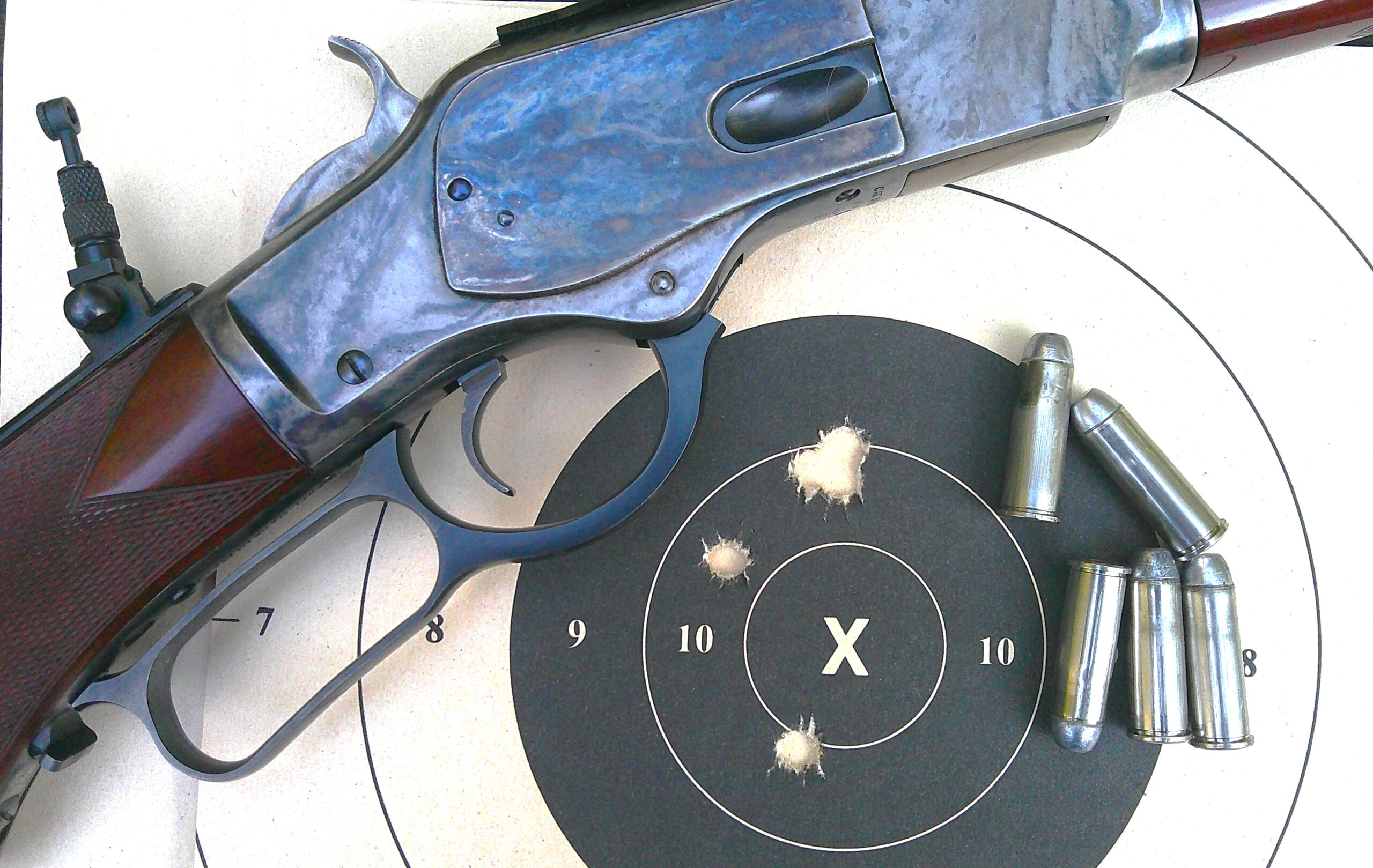
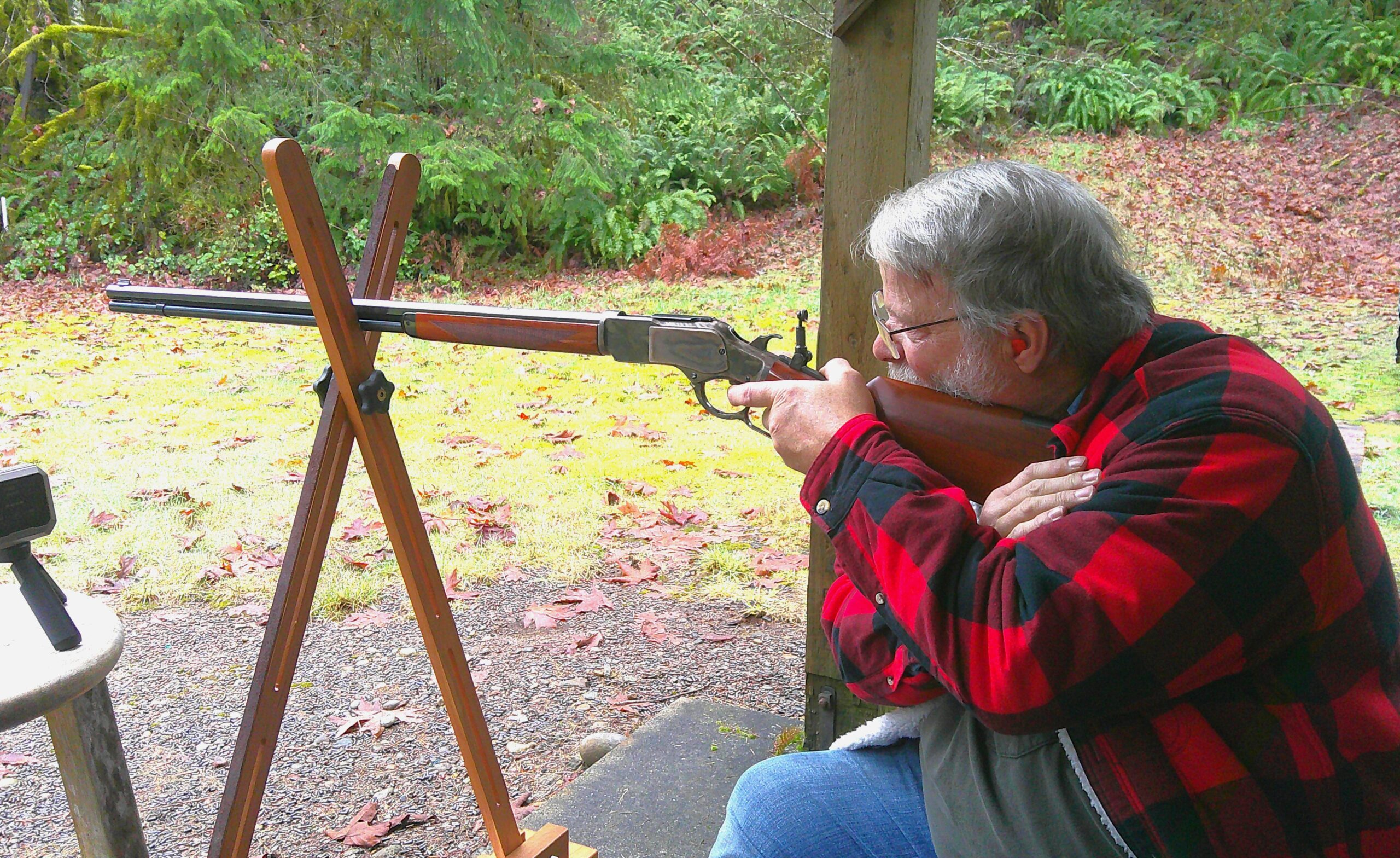
The accuracy with the 215-grain bullets was very pleasing. Only five shots were fired at a bullseye target which was posted out at 50 yards. Shooting was done from the sitting position while using cross-sticks for barrel support. Those five shots were all 10s, with three of them clustered high in the 10-ring and almost going through the same hole. It is that group which is much more interesting than the velocities those shots gave and now I need to cast more of the 215-grain bullets.
One other point to mention, this shooting was done shortly after doing the re-sighting-in that was talked about recently. My targets, which were both shot while doing the chronograph testing, both showed how the windage setting on my sight was just where I want it to be. That was just another plus, kind of a back-up confirmation on how the sights are where they should be.
The small bullseye target, which shows the best group as well as the good windage, was shot just to check the point of impact at 25 yards. Our bunch of shooters, when firing in our Lever-Gun Matches, usually have a turkey head target at that distance which is shot at from the offhand position. I shot this small target from the bench, with the 205-grain bullets, and find the results quite pleasing.
My greatest conclusion gained from this short test of shooting is that the famous old .44/40 was and still is a great black powder rifle cartridge. I’ll be doing a lot more shooting, using the rifle with the 30-inch barrel the most, so further reports of loads and possible achievements might follow. While the majority of my black powder rifle shooting might be done with a Sharps or a rolling block, my ’73 in .44/40 will always be close at hand.