By Mike Nesbitt | Contributing Editor
Reloading black powder cartridges has become one of my enjoyable pastimes, and these reloading shortcuts, which I’ve learned over the years, should work for all straight-walled black powder cartridges.
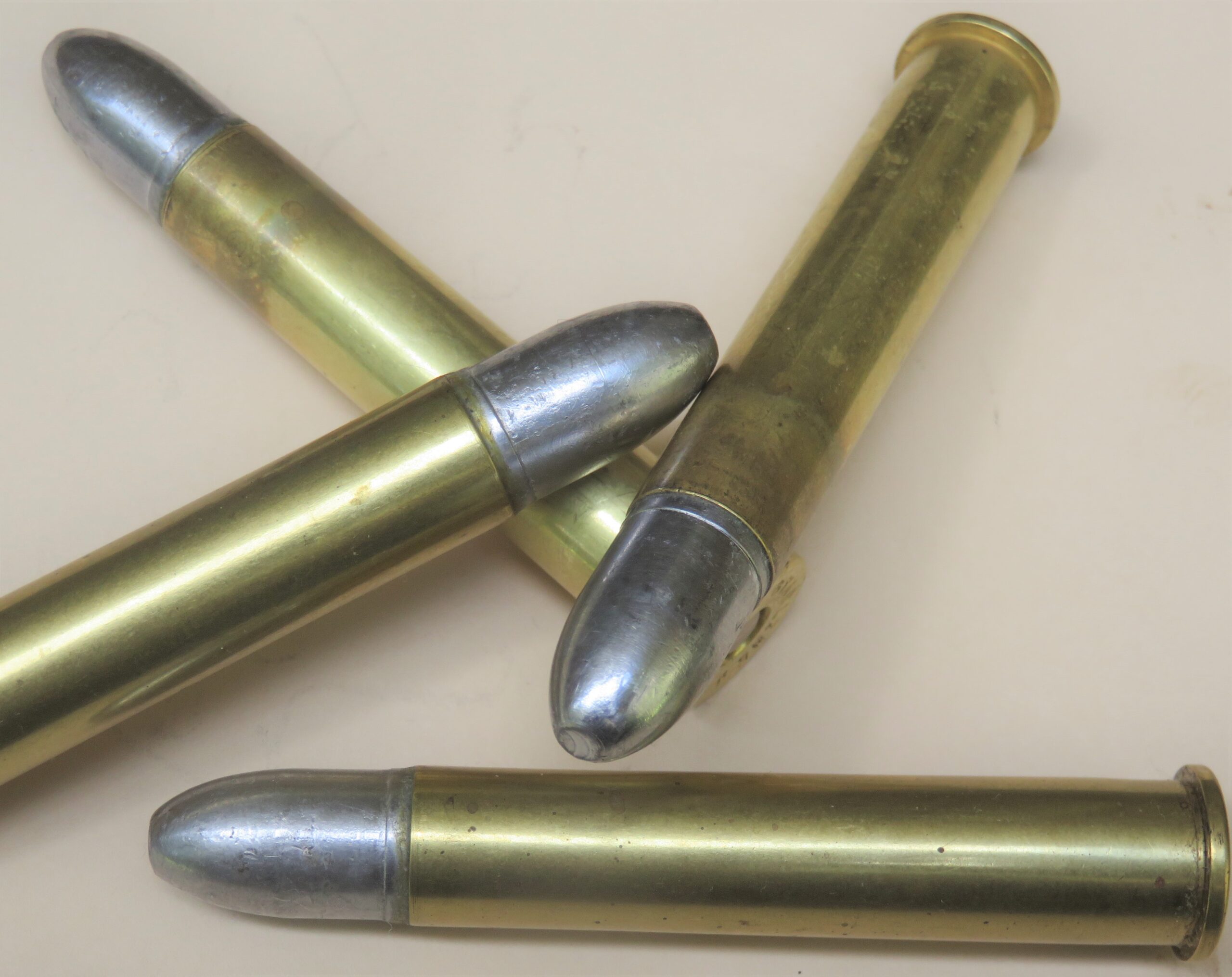
I’m relating this article to the .45-90 simply because that is the cartridge I use for this method of making my reloads. And, to put things very simply, the shortcuts involved were mainly eliminating steps in the reloading process which can be , and were, skipped.
The first step which was skipped was resizing the cases. In general, the cartridge cases do not require resizing if the reloaded ammunition will be fired in the same gun. That is why “neck sizing” was so popular for so many years, with hand tools such as the Lyman 310 tool and the older hand-held loading tools which preceded it. Those tools did neck size the cartridge cases, mainly so the bullets would be firmly held in the cast after seating. More will be said about neck tension on the bullets later and, as long as the ammo will be fired in the same gun, resizing can be skipped with, usually, no disadvantages.
Of course, there are additional considerations. While I am still referring to this subject in general terms, some specific things will be mentioned.
A lot of my shooting with the .50-70 has been done while using handloads with un-sized cases. But my use of several different .50-70 rifles meant either keeping segregated ammunition for those different guns or, more simply, resizing the brass while reloading. In addition to that, one of my best .50-70 rifles is a rolling block and the ammunition for that rifle is usually prepared with resized cases because the rolling block actions have no “camming” at all when the breech block closes, which means the cartridges must completely chamber with no restrictions. In other words, cartridges being chambered in a rolling block need to be able to drop into the chamber.
Shooting with lever-action repeaters, such as the Model 1894 Winchester, is usually very easy to do while using reloads with unsized cases. Currently, I’m doing a lot of shooting with my new Cimarron copy of the Winchester ’94 in .38-55 and I prefer the unsized cases for seating the somewhat oversized cast bullets in .380-inch diameter. Those work very well.
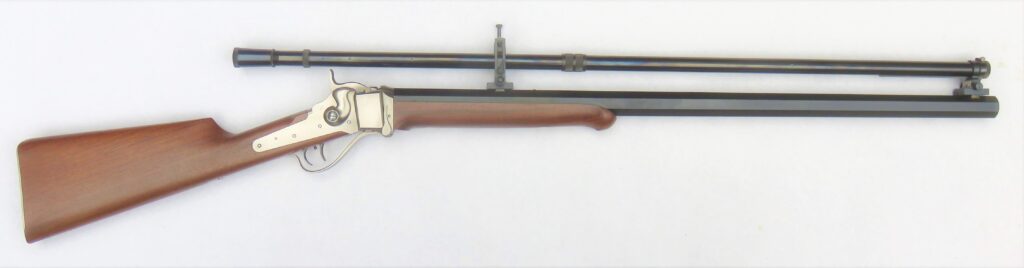
My reloading procedure, focusing back on the .45-90 Sharps again, the first step was to run the fired, de-primed, and cleaned cases through the expander die. This was done to make sure the cases were ready to receive the bullets. If an empty case had been slightly deformed, to become out of round, the expander die would quickly correct the situation. In addition to that, the mouth of the case will receive the “bell” needed for easier insertion of the base of the bullets.
After all of the cases which were scheduled for reloading had been run through the expander die, they were then primed, using large pistol primers for my black powder loads, which made them ready for receiving the powder and the bullets.
With the loads I am using in the .45-90 Sharps, a powder charge of only 70 grains of Swiss 1½ Fg powder is used. More powder could be used, that is simply my preference and not a key to the reloading which I’m describing. When a case is charged with powder, a fiber wad is added over the powder and then the case is run though the expander die again, using the standard expander die as a compression die, forcing the wad and powder down inside the case to make room for seating the bullet.
The depth of compression could be stated more specifically but that could and would change with other calibers or even other bullets. So, I’ll keep suggesting things in the general sense. The bullet I’m using is the Hoch 550-grain slug and I compress the powder enough that the bullet can be seated with all lube grooves inside the case, just barely. I will add that the expansion die, in my situation with this particular bullet, needs no adjustment for expanding the cases and then for compressing the powder charge and wad. That is probably rather coincidental and if you try this with your own ammunition, using an expander die for the two steps of expanding the brass cases and compressing the charge of powder, special adjustments will probably be required.
This does mean that I was running my .45-90 cases though the expander die twice, and the thought did occur to me that both steps could be done at the same time, using the expander die just once. To follow through with that, at the next reloading session, I began by priming the un-sized cases. Then the powder measure was set, for 70 grains of Swiss 1½ Fg again, and the cases were charged with powder which was compressed under the fiber wad with a trip through the expander die. The cases were “rounded out” and the mouths of those cases were “belled” at the same time.
Then, just as before, the bullets were seated into the cases just with fingertips and following that the loaded cartridges were run through a taper crimp die to hold the bullets in place. Using this method of reloading, shortened by one complete step, gave me fifty-five reloaded cartridges for the .45-90 in a shorter length of time. This ammunition was boxed and made ready for a silhouette match which was only a day or so away. That was where the cartridges would be “field tested,” so to speak, and I could look for any short-comings which might have surfaced because of the reduced step in preparing the ammo.
On the morning of the silhouette match, I met my partner, Mike Holeman, on the way to the range. He was just as ready as I was. That silhouette match, by the way, was only lightly attended, with Mike and I arriving, the number of shooters rose to only nine of us… With these few shooters, it would be a shorter match than usual but there was nothing wrong with that. However, speaking for myself, I found a number of things went wrong, and I’ll tell you about the comedy of errors that followed. But I must say, there was nothing wrong with my ammunition.
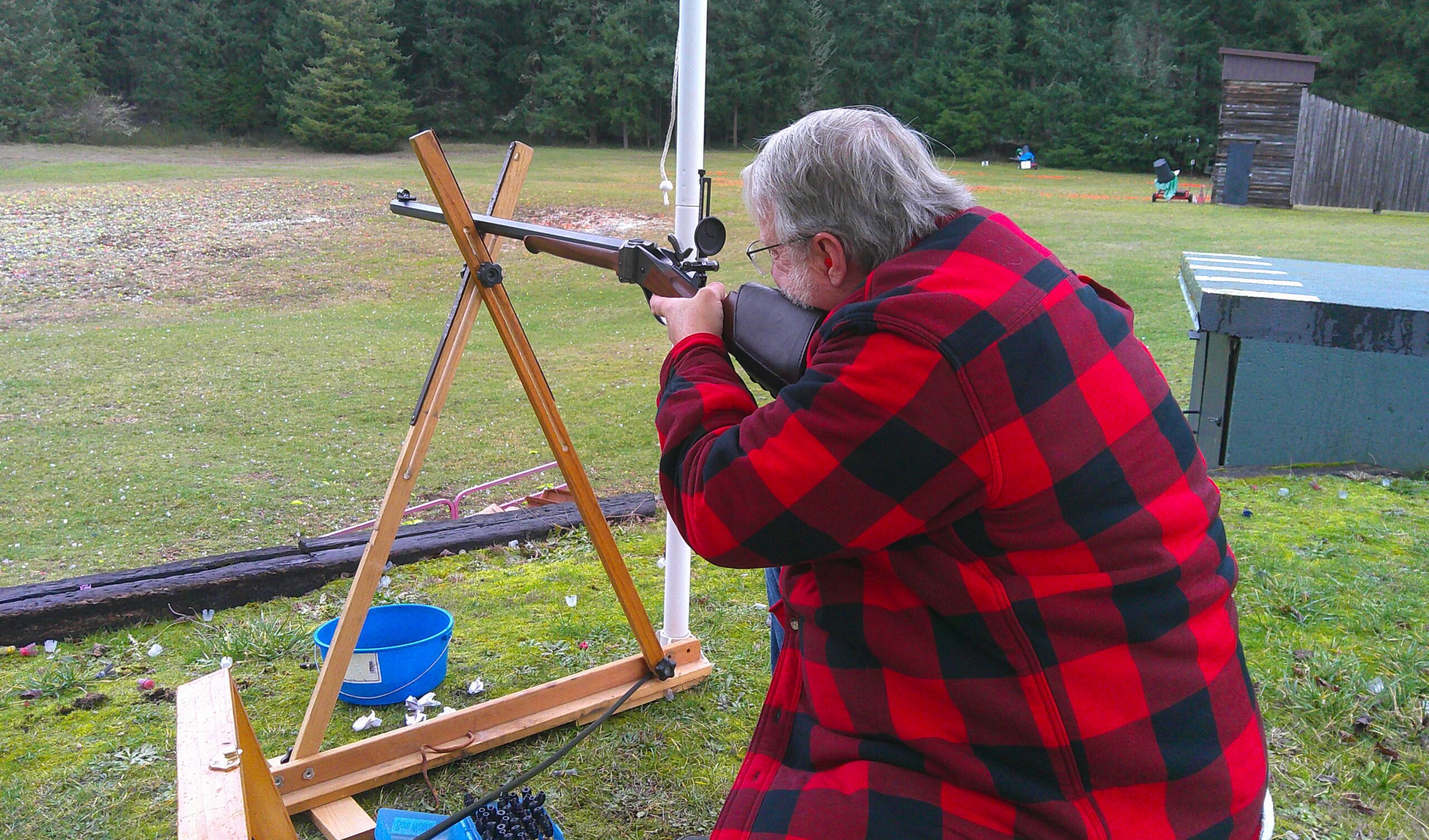
In this lightly attended match, Mike and I were given our choice of where we wanted to start. We agreed to start on the chickens, little chicken silhouettes out at 200 meters, or, to put it in more familiar terms, approximately 220 yards. Those are shot at from the offhand position and we wanted to tackle that while we were still fresh.
So, I opened my sight settings book in order to determine a good place for beginning at the 200 meters. Then, while I must have been giving attention to some other detail, the breeze turned the page of my book without my noticing. When I looked back at the book, the sight setting for 200 meters was read and the Vernier sight was adjusted for that elevation. That should have meant that I was all set and ready because I was to shoot in the first relay.
Somehow, in some way, when we were given the range command to “Fire,” I aimed at the sighter target and hit it. Perhaps that was done with a ricochet… Anyway, with that good hit to give me confidence, I told Mike that the next shots would be for “score” and stood on my hind legs to take that offhand shot. The bullet struck the ground several feet in front of the target. Mike reported as such and recommended that I raise the rear sight several minutes. I didn’t think that was necessary so I took a shot at the second target, with the same results.
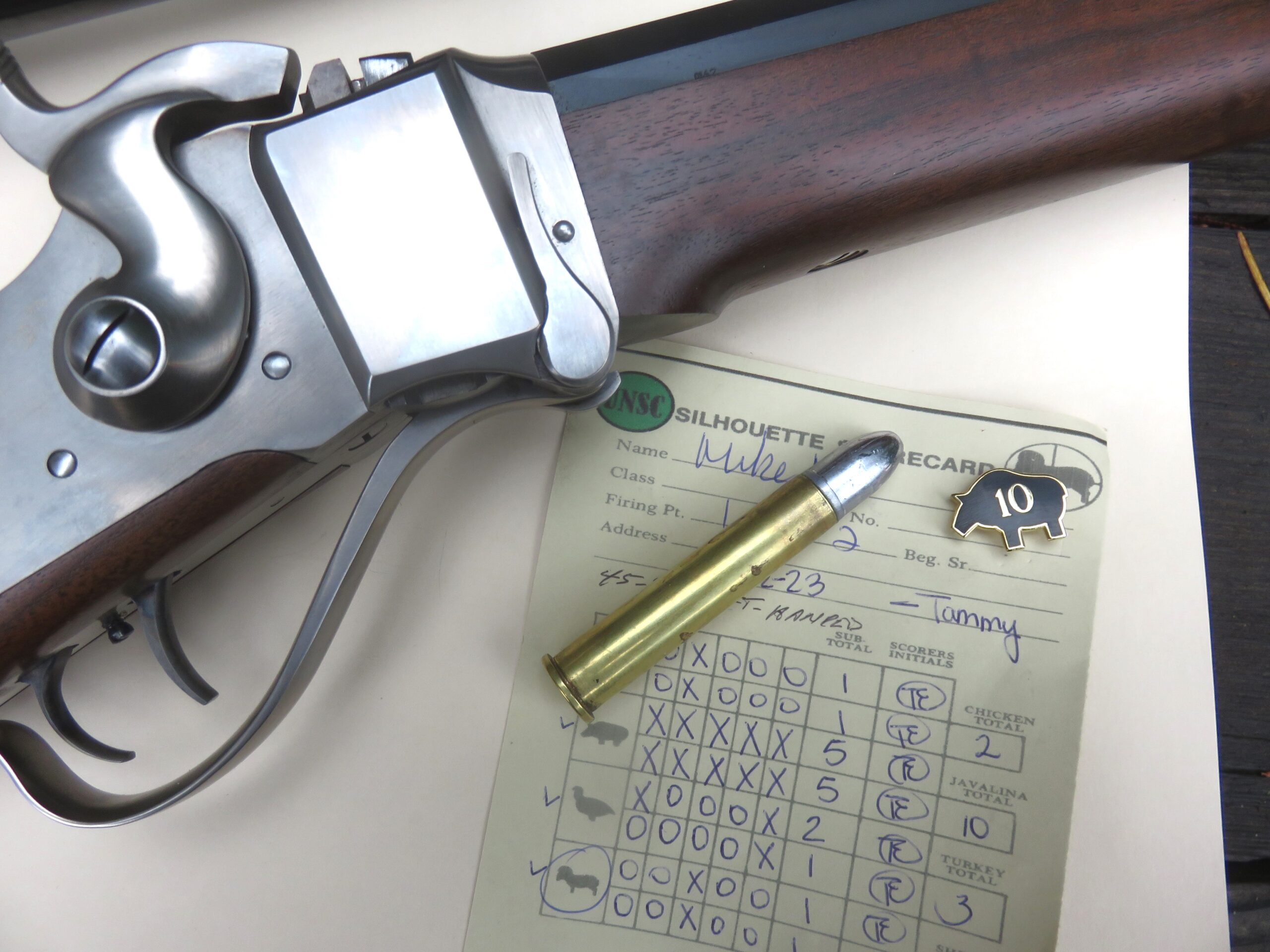
Then I began to raise the rear sight. And raising the elevation was continued after every shot for targets 3, 4 and 5 during the first half of the relay. By then my rifle’s sight setting was on about 15 minutes, being raised from 6 minutes. And, of course, my scorecard was showing no hits…
At least by then, I was missing more closely. To me, getting a chicken (or two) in a silhouette match is a treat. Those are tough targets to hit. And while my missing with close shots continued through the second half of that first relay, I had a perfect “0” for score when my shooting at the chickens concluded.
It was then, after going back to our staging area, where the rifles are cleaned to prepare them for the following relays, that I noticed my sight book and how it was opened to the wrong page. And I thought I knew what I was doing…
Mike Holeman shot in the second relay and he proved to be a very good partner by not hitting any chickens either…
For our next batch of “animals,” we shot at the pigs, out at 300 meters (or about 330 yards). I expected to clean up on those, as I have done in the past. But this time my close misses almost prevailed and my “cleaning up” on the pigs amounted to just six hits. It was during my shots at the pigs that the Garmin chronograph was used, just to check the speed of those heavy 550-grain bullets. They were doing fine, with an average speed of 1160 feet per second.
Moving on to the turkeys, out at 385 meters (or close to 420 yards), things began to get worse. My two shots at the sighting turkey, which did not count for score, were both very good hits. But then things turned for the worse and I missed the next four shots in a row. Why? As was determined a little later, my forward scope mount was loose. That is something which has plagued me before and, because my scope mounts are attached in the barrel’s dovetails, I expected that a trip to the shop would be necessary to correct it.
In the final relay that I shot in, shooting at the rams out at 500 meters (almost 550 yards), my shots were very erratic. There was no point in making sight adjustments because with the lose scope mount, the bullets simply went wherever they pleased. I finished the match with only eleven hits out of my forty shots for score.
One other shooter also had loose scope mounts but he was able to correct that at the range and, in fact, he placed third for the day.
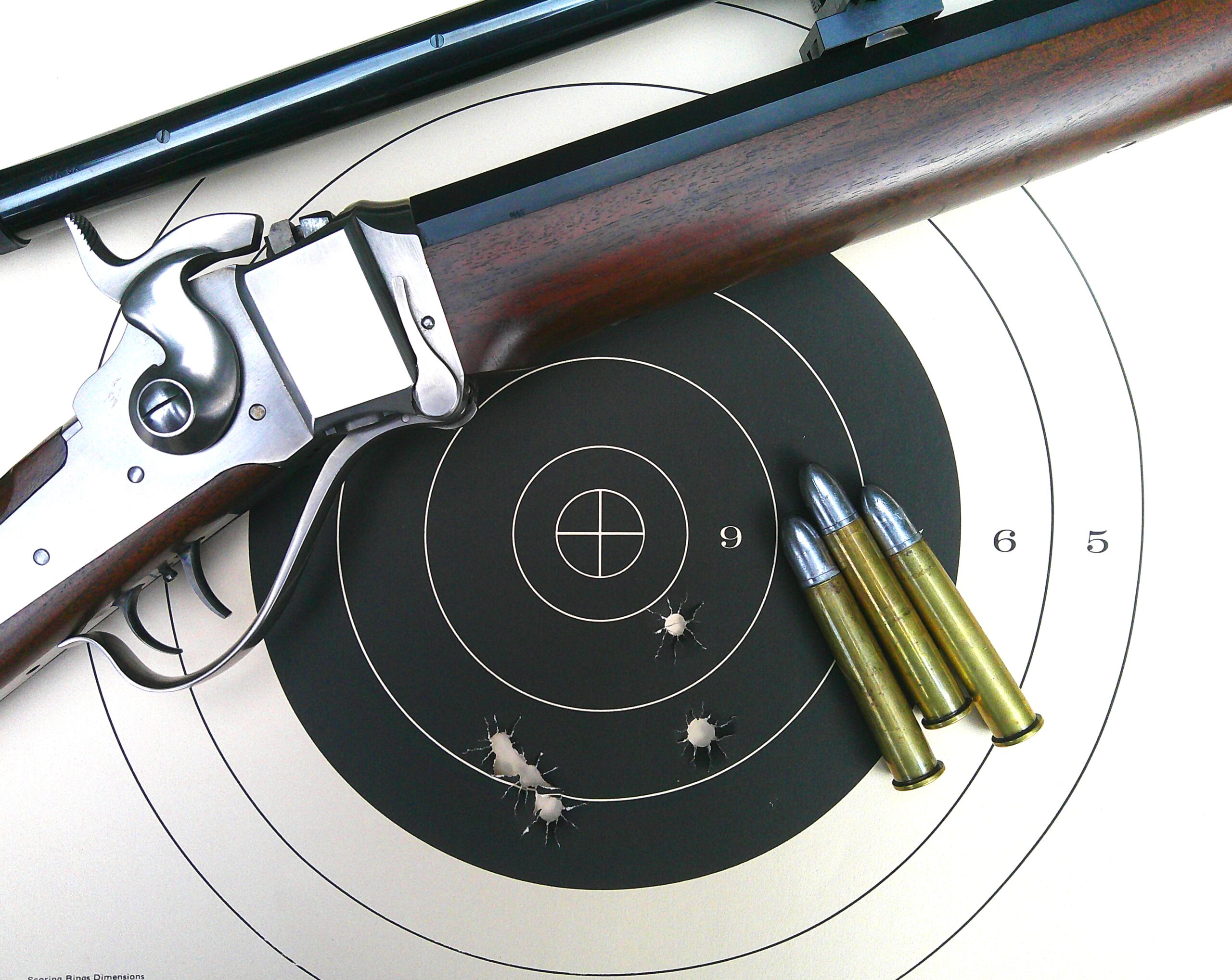
Now, back to my ammunition, that was the bright spot in my shooting. That ammo worked very well, I had no cartridges that were difficult to chamber and I will quickly say that any or all of my missed shots were either my fault or results of the errors and unfortunate happenings which I have just mentioned. But I still had a few rounds left and at first opportunity they were taken to the range, after the scope was secured again. Five shots were fired at 100 yards and the group, while it could be tighter, was still pleasing. More of this ammo will be used in another couple of days in another match, with the scope adjusted a bit better for the elevation.
So, the performance of this ammunition is satisfactory. I’ll be loading more of these black powder .45-90s while taking advantage of the short cut that was described. Then, as long as I do my homework and keep the notebook pages in order and keep the scope tight, better scores will be made.