By Mike Nesbitt | Contributing Editor
When the buffalo harvest really got going, when their hides became marketable, the Model 1869 Sharps was ready for action.
The most “buffalo” of the chamberings offered in that rifle were the .44-77, identified by Sharps as the .44-2 ¼”, and the .50-70, often identified as the .50-1 7/8”. It was the .50-70 that became the real ‘old man’ of the buffalo guns. Like the old buffalo hunters said, nothing kills quite like a .50.
The Model 1869 Sharps actually saw only a limited production, especially in sporting rifles. It was replaced rather quickly and quietly by the rifle that became known as the Model 1874, even though the ’74 was introduced a couple of years before that date. But as the Model 1874 it lives on and this is the Sharps that became the legendary rifle of the buffalo hunters.
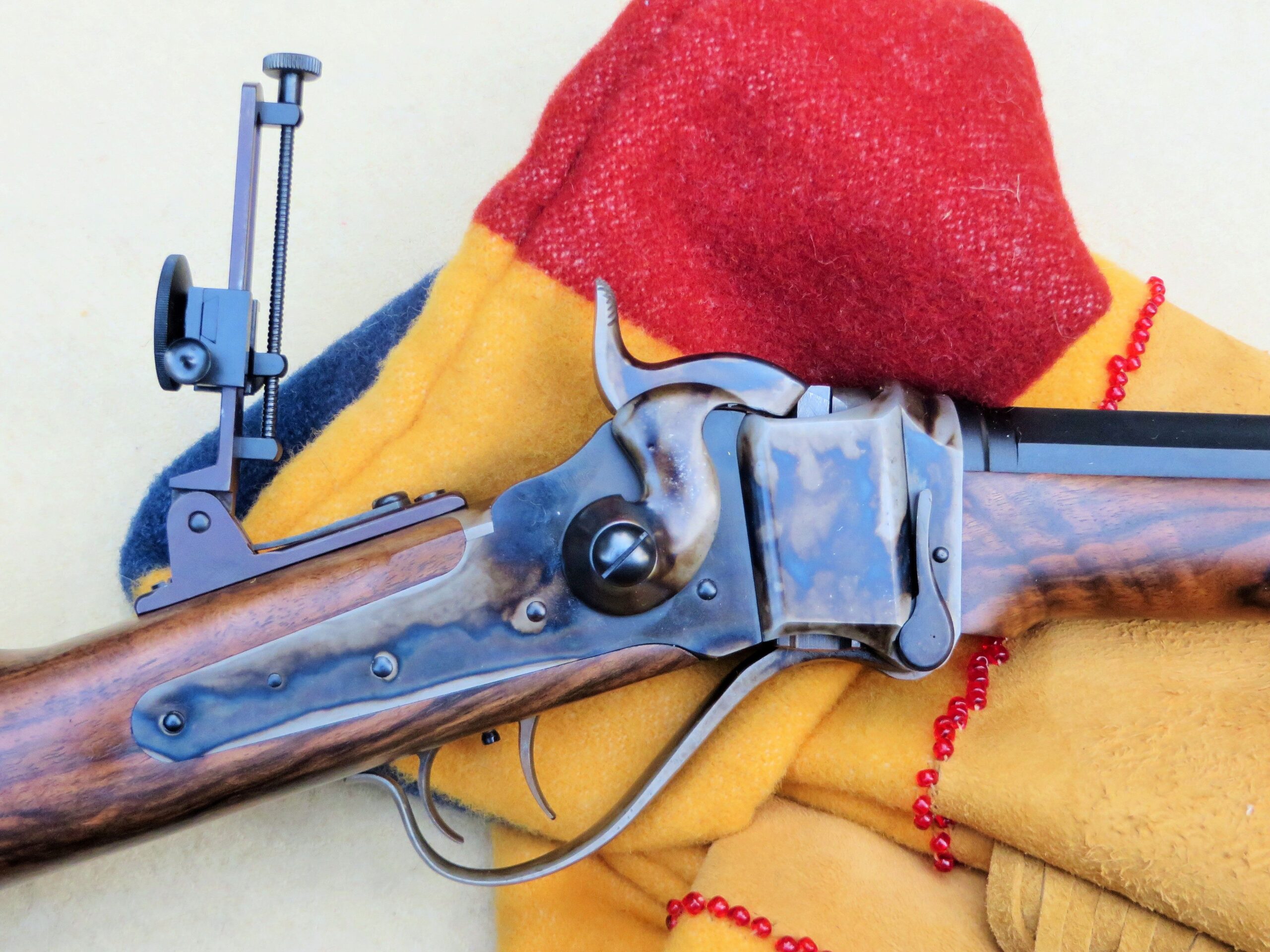
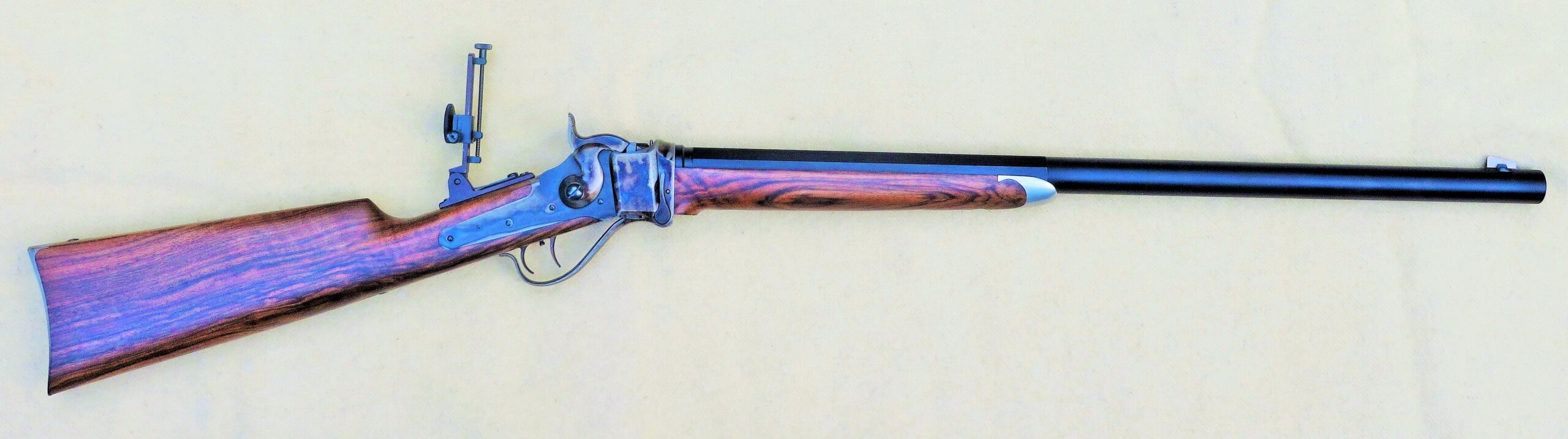
My first .50-70 Sharps, because since getting it, I have gotten others, was a new rifle, made by C. Sharps Arms in Big Timber, Montana. While I already had a few very good Sharps rifles, this Model 1874 Sporting Rifle in .50-70 caliber was impressing me more than I expected it to do. And I’m not complaining. This rifle topped the list of my favorite rifles and for a time, I was shooting it more than the others. But my story about this rifle must begin with why I got it.
A quiet voice inside my head roared so loudly that it couldn’t be ignored, telling me that I needed to get one more single-shot Sharps rifle. That was even before any solid considerations were made about what configuration or what caliber the rifle might be. It put me in the persona of an old buffalo hunter in the mid-1870s putting together an outfit before heading out to the frontier. With good buffalo guns already in hand, those being one heavy .44-90 plus a lighter sporting rifle in .44-77, this next Sharps had to be something different. To help my persona make proper decisions for the 1870s, a copy of the 1875 Sharps Rifle Company catalog was consulted from Cornell Publications.
(Several old gun catalogs are duplicated by Cornell Publications.)
The .50-70 chambering was selected without a second thought. It was actually a true favorite in the old days and with the exception of long-range shooting it can keep up with the other black powder rifle cartridges very nicely. In addition to that, shooting a .50-70 is often more comfortable than the other heavy black powder calibers because it has somewhat a bit less blast and recoil.
One idea this old buffalo hunter had in regard to getting another rifle was that this new Sharps needed to be as inexpensive (for 1875) as possible because it was being purchased with the last of the budget in gold and silver coins for his outfit. Let’s say the rest of the outfit was already bought with the cook and the skinners all ready to go. Getting this new rifle and the ammo for it was the last thing to be done and it had to be done with rather limited funds.
Rifle Prices Back Then
The old Sharps sporting rifles were priced according to barrel length and barrel style. The standard-length barrels ranged from 26 inches in length out to 30 inches and the 26-inch barreled rifles were $3.00 dollars cheaper than the 30-inch barreled versions. Each 2-inches cost another $1.50 which seemed like a big difference to me. In 1875 the price of a 30-inch octagon barreled Sharps sporting rifle was $38.00 before any options were added.
Such a “high price” was just too much for this old-timer so sporting rifles with half-octagon barrels were looked at with greater interest. The half-octagon (or half-round if you prefer) were priced $2.00 cheaper than the full octagon models in those days. That gave a half-octagon 30-inch barreled rifle a price of $36.00 and when that barrel was shortened to 26 inches the price fell to $33.00. So, the short-barreled rifle with a half-octagon barrel was my immediate choice.
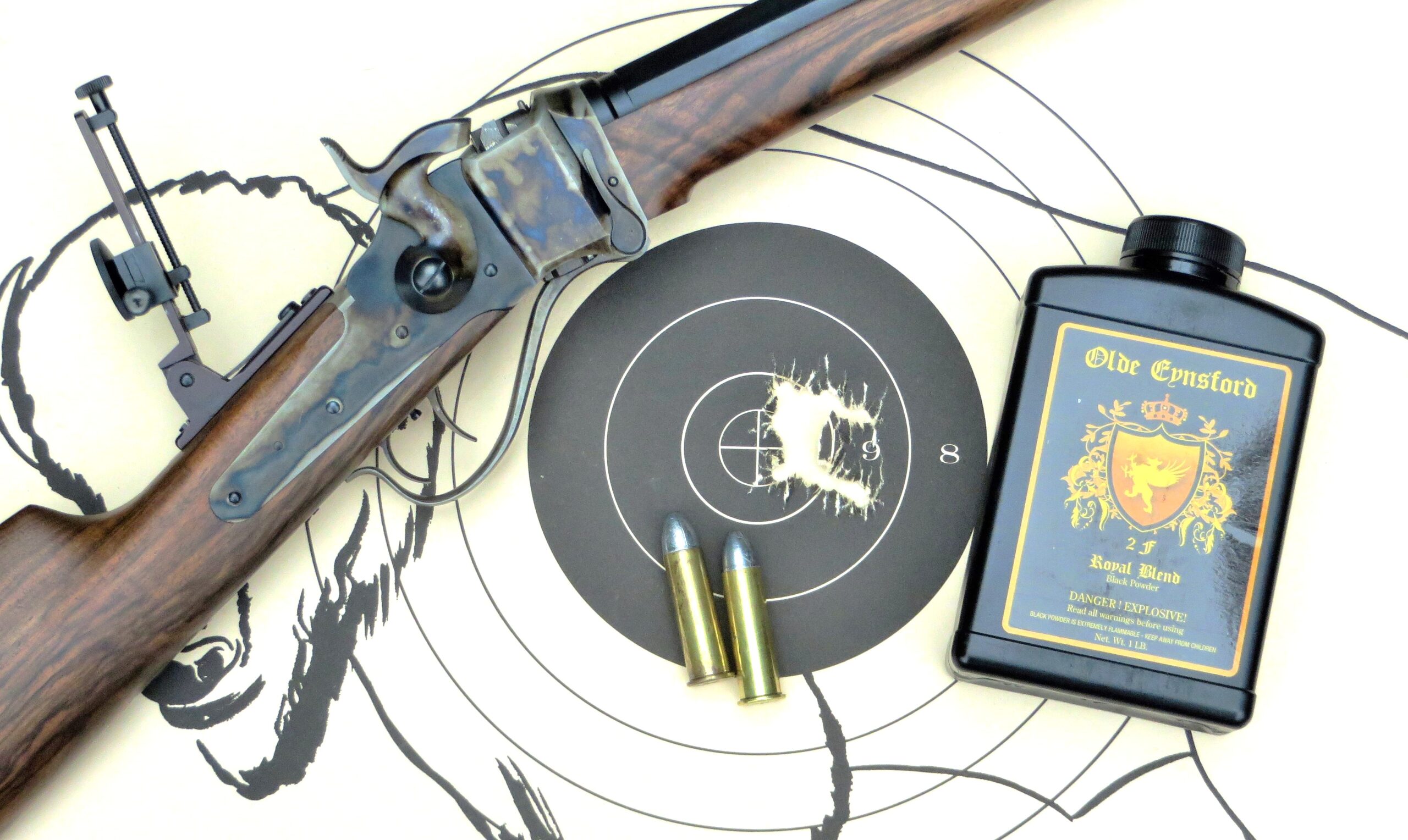
Then a couple of options were added. First, double set triggers to me were a must and in the old catalog those added $4.00 to the cost of the rifle. Next, because my eyes are simply not as comfortable with open sights on rifles, an adjustable peep sight was added to the rifle’s tang which raised the price another $5.00. A globe front sight came along with that peep sight but for my tastes the blade front sight was retained. Those options raised the price of the rifle to $42.00 according to the old catalog and with that the old-timer had enough cash left over to buy some ammunition and a bullet mold.
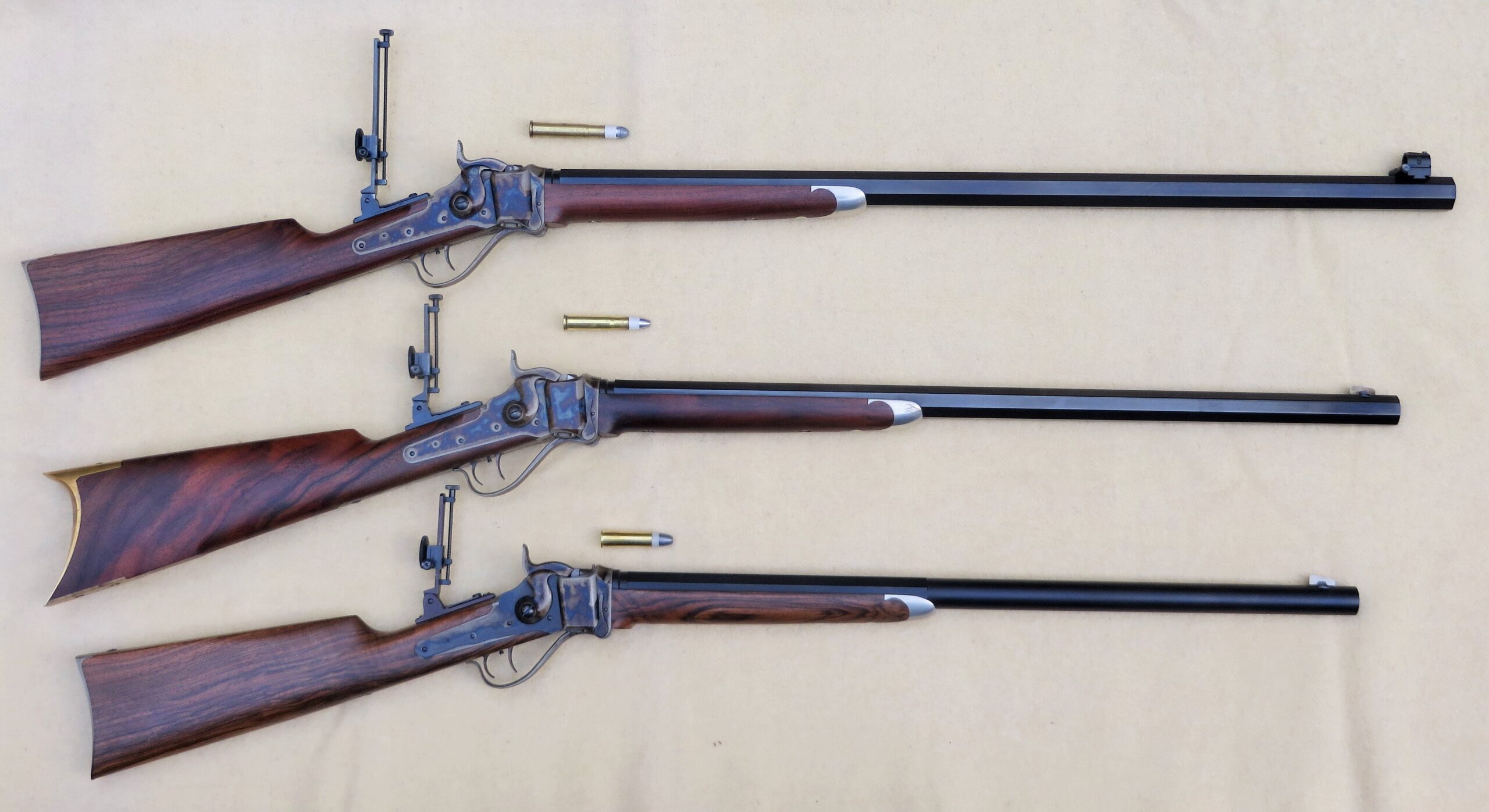
Let me bring you back to the present for just a moment to remind you how that was simply the price paid by “my persona” in 1875. The costs of today are certainly far different and we’ll review some of those in just a little more detail. First of all, standard barrel lengths on the C. Sharps Arms 1874 Sharps Hartford Models are all the same price, in the standard or #1 Heavy weight. A ’74 Hartford, with a standard barrel and standard stock, begins at $2,999.00. We just know that, as with other price increases, to be part of these times. (A new C. Sharps Arms Bridgeport Model of 1874, with characteristics common to Sharps rifles made after 1876, begins at $2,699.00.)
We might say that starting price was only the beginning because my .50-70 has a half-octagon barrel and that option does add $100 to the cost of the rifle. The rifle’s sights are not included in the starting price and my rifle also has a pack-hardened receiver and butt plate plus it is fitted with extra-fancy walnut both forward and aft. Those added cost options are all listed on the C. Sharps Arms website and the total price for this rifle doesn’t need to be specified because all custom orders are individual. You can get a very good idea about what this or a similar rifle might cost by visiting their website at http://csharpsarms.com. I will add that a visit to their website can really be a very interesting trip.
Start Shooting
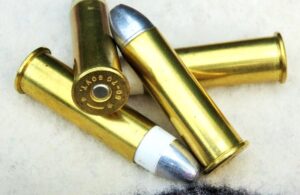
Now for some shooting; this rifle got to like what became favorite loads. This .50-70 ammunition used Star Line brass with GOEX’s Olde Eynsford powder. The load most used combined a 450-grain “Government style” bullet cast from Accurate Molds’ #52-450L2, sized to .512” diameter and greased with Vigilante Bullet #1 Lube. That bullet is seated, by hand in an un-sized fired case, over a 65.0 grain charge of Olde Eynsford 2F powder which is compressed under a vegetable fiber wad from John Walters. After the bullets are seated, they are “taper crimped” in the sizing die, just enough to hold the bullets in place.
That is my best grouping load and it sends the 450-grain bullets out of the 26-inch tube at about 1,200 feet per second. While this load would be very effective for hunting, I will refer to it as my target load. It has given me clover leaf groups at 50 yards, it can keep ‘em in the 10-ring at 100 yards, and the bullets seem to know their duty at 200 yards. If I needed to pick just one load for the .50-70, that would be it.
But I also have what I call my hunting load for the .50-70. This load uses 70 grains of Olde Eynsford 1 ½ F powder compressed under a card wad, then a 3/8” thick “grease cookie” of lubricant goes over the wad, and another card wad goes over the lube. Finally, a 473-grain paper patched bullet completes this load. Those bullets are cast from Accurate Molds’ #50-470T. The paper patched bullets are always the best looking and they also speak of the old times the very loudest. And the good part is that these paper patched loads group into the same area as the grease groove bullets, just about as tightly. If and when I get to take this .50-70 on a hunt, for deer, antelope, or even for buffalo, the paper patched bullet loads will get the job.

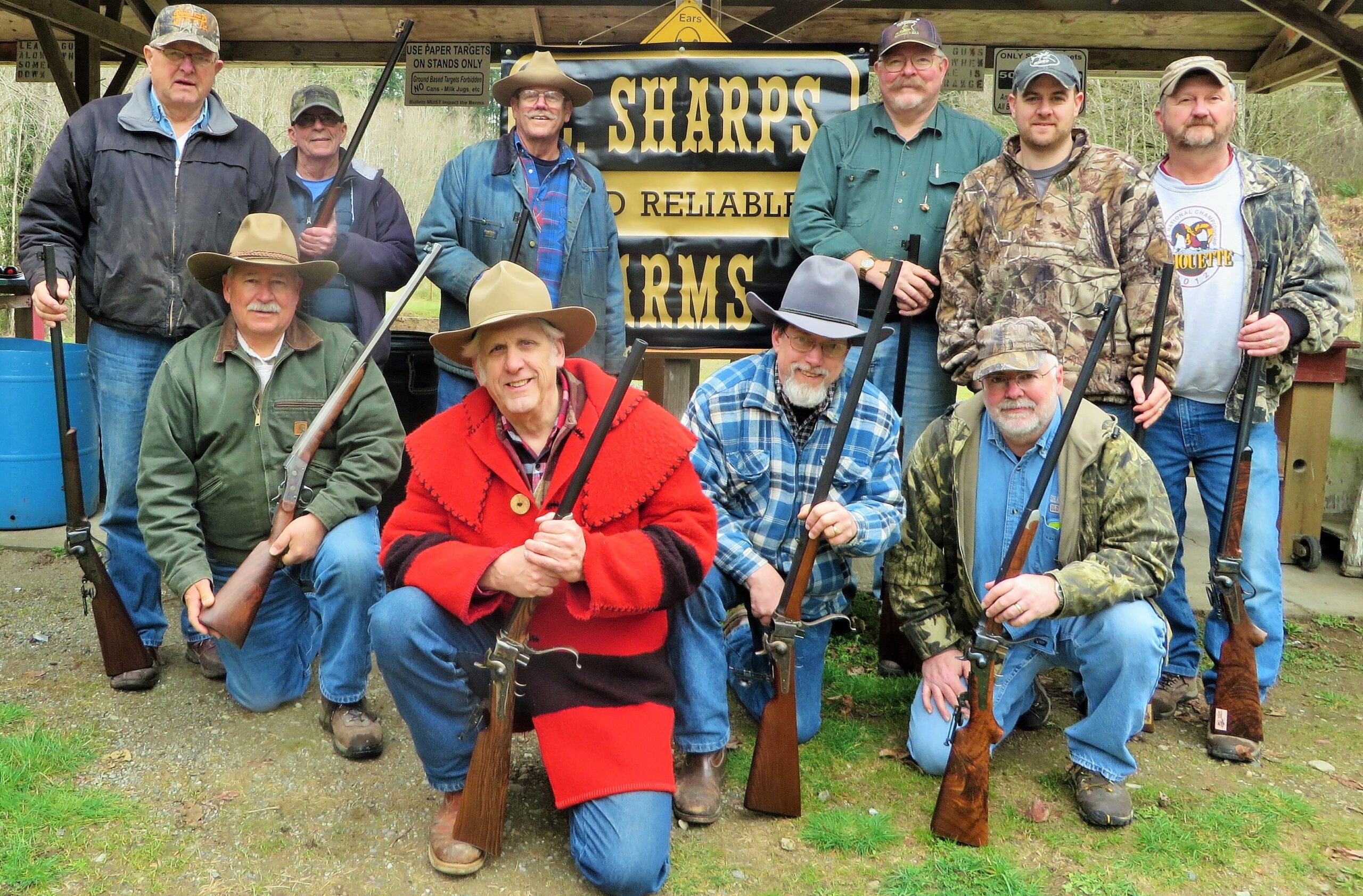
The front sight on this .50-70 rifle is the standard silver blade. That might have had something to do with a group I shot at 100 yards in a small match with some other Sharps shooters. The match was held on a range which faced a different direction by the compass than the range I usually practice on. Our match consisted of 10 rounds fired, over cross-sticks, at 100 yards followed by a second series of 10 rounds fired at 200 yards. I wanted and expected to get scores of 90 out of 100 or better at each distance.
We started our match at 100 yards and I felt very good about my group on that target, right up until the moment I saw it. My group was a good one but a few inches to the right. All ten of my shots were in the black, just over at 3 o’clock, which gave me a score of 88. My thought is that having the sun on the other side of the front sight pulled my shots to the right.
Some quick adjustments were made on the mid-range deluxe tang sight on the rifle wrist, moving the sight about four minutes to the left in addition to being raised for the elevation needed to lob the big bullets out to 200 yards. The elevation was adjusted to be about 10 minutes higher, not a huge adjustment at all. Then it was back to the cross-sticks in the sitting position to send the next 10 rounds down range. In between those shooting relays, the rifle’s barrel had been cleaned as well.
The .50-70’s group at 200 yards was a bit wider, we can expect that. And it was centered quite nicely on the target with only two hits creeping out of the black. The score for those 10 shots was 92 out of 100 and that pleased me nicely. That actually gave me the average score I had hoped for 180 out of the 200 points possible. With that score I placed 4th for the day and the .50-70, in my opinion, had earned its keep in grand style.
Now this 26-inch barreled .50/70 is still a real member of my family, although it is now relaxing while a new Sharps, also in .50/70, is taken to the firing line. That newer rifle has already been mentioned several times and that’s the one I call “Moonbeam.” Right now, the older 26-inch barreled Hartford is resting in its blanket gun cover while I consider heading out to the buffalo range with it.