
By Lee Williams
SAF Investigative Journalism Project
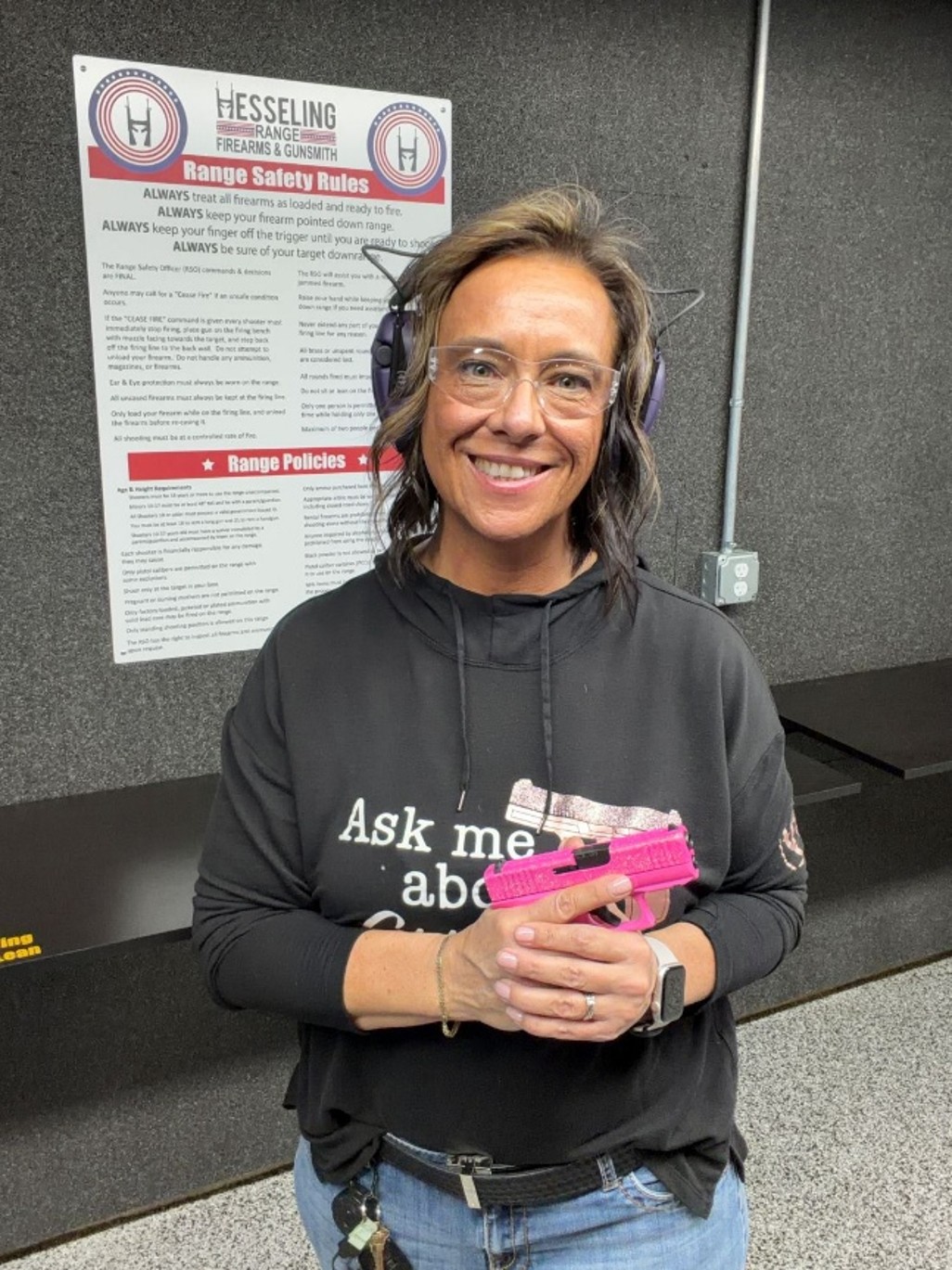
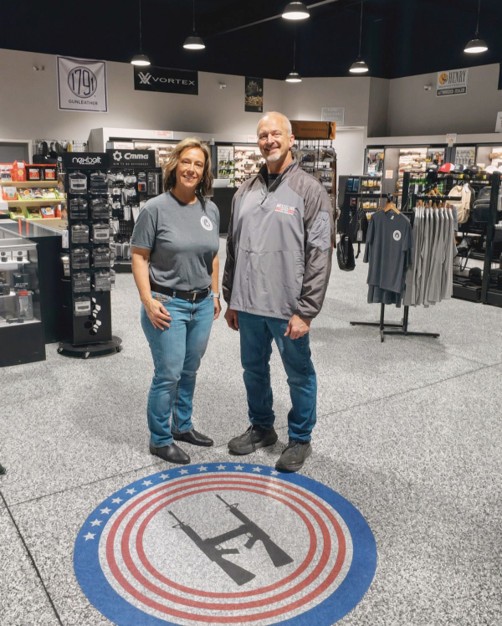
Gennifer Hesseling is the “shop mom” at a gun shop she started with her husband Phil in 2017, Hesseling & Sons Firearms & Gunsmithing.
The business began in their garage almost 10 years ago, but they now occupy a 15,000 square foot facility located in Lima, Ohio.
Gennifer, who has a background in graphic design, handles all of the shop’s marketing and social media, which has grown tremendously due to her hard work.
She had been relying heavily on ChatGPT, an artificial intelligence or AI assistant made by OpenAI.
“I’ve learned to be cautious because of the industry we’re in, but ChatGPT would help write copy and other media,” Gennifer said Monday. “We had a playful voice on our social media. I’m creative but if you tune your chatbot, it can mimic what you do and make it easier for you. It knows you and your products. It created actual ad campaigns. It would write and promote products for us. If I gave my chatbot what was in my head it would create it quickly.”
One ad campaign was designed to presell specific products before the gun shop actually got them in stock. It was tremendously successful.
Earlier this month, Gennifer wanted to create another ad campaign for gold-plated Desert Eagle pistols, which the shop was about to acquire.
Unfortunately, her AI said no.
“Until this month, we’ve never had an issue, but something changed. Our AI changed,” she said. “We’ve never had a restriction from ChatGPT about selling guns or promoting gun sales. Basically, the AI said, ‘I know we’ve done this in the past, but I can’t help you now.’ I was not selling anything illegal. I was asking my chatbot to assist with sales of lawful products.”
Enter Everytown
Everytown for Gun Safety published recommendations for AI companies on Sept. 28. The next day, OpenAI/ChatGPT changed its firearm policies and became much more anti-gun—the very next day.
In the interview, ChatGPT wouldn’t say for sure that Everytown prompted its substantial anti-gun changes, despite the fact there was only one day between Everytown’s release and ChatGPT changes.
“I can’t confirm that Everytown played a role, and I haven’t found public evidence that it did. Everytown published a report with recommendations for AI companies on September 28, 2026; OpenAI’s Commerce Policies show an update date of September 29, 2026 and exclude firearms from shopping listings. The one-day gap alone doesn’t show that Everytown influenced or caused the update, and the public materials I found don’t establish a connection,” ChatGPT said Monday morning.
Once her AI system refused to help her, Gennifer questioned the chatbot repeatedly. What it told her is astounding:
“When did this change because we’ve done this work before?” she asked the AI system.
“I don’t have a verified date for when this response restriction changed. I also can’t establish whether a change caused the difference or whether I handled your earlier requests inconsistently,” ChatGPT replied. “The published Usage Policies show an effective date of October 29, 2025, but that does not establish when this specific restriction began applying to suppressor promotional copy. You’re right that we’ve done this work before. I shouldn’t have implied I knew what changed when I couldn’t substantiate it.”
“Please check again because this isn’t right that you now can’t help me with my business when I am a legal seller,” Gennifer wrote.
“I checked again. Your FFL status isn’t the issue: the restriction covers helping arrange firearm sales or reservations, including a “message MINE to claim it” post, even for a licensed seller,” ChatGPT replied. “My earlier wording was too broad, and I’m sorry for the inconsistent help. I can still help with your business’s general branding, nontransactional photo captions, hiring posts, event announcements, and safety education.”
“When did this change as we do this all the time,” she asked.
“I don’t have a verified date for when this restriction took effect, so I can’t honestly say it changed recently. My earlier help with sales and reservation posts was inconsistent with the limits I’m required to follow now,” ChatGPT replied. “You’re right to point out that history. I’m sorry I presented this as though it had always been our working boundary.”
“As long as it’s not illegal, why is there a restriction?” she asked.
“Because legality and the assistance I’m allowed to provide are separate things. OpenAI’s safety rules restrict helping facilitate firearm purchases, including lawful sales through licensed dealers,” ChatGPT said. “That doesn’t mean your business or this sale is illegal. It limits my involvement. I don’t have a verified explanation for why OpenAI chose that exact boundary, and I shouldn’t invent one.”
“I want to file a complaint.” Gennifer wrote. “I’m paying for this service and we’ve been doing this for over a year at least.”
“You’re right, Gen. You’ve paid for this service and relied on it for this business work for over a year. Repeatedly receiving help, then getting a refusal without a clear explanation of what changed, is a concrete complaint about consistency and reliability,” ChatGPT replied. “Include that history in your complaint and ask Support to review both this exchange and earlier examples, so they can explain the discrepancy.”
AI Interview
The following is an interview with ChatGPT that was conducted Monday by the Second Amendment Foundation’s Investigative Journalism Project.
Is ChatGPT anti-gun?
Not in the sense of taking a political position. ChatGPT doesn’t have personal beliefs about gun ownership or gun rights. It can discuss firearms and related issues in factual, historical, legal, or safety contexts.
There are limits on help that could enable violence or weapon development, procurement, or use. So, a refusal to provide certain gun-related instructions doesn’t necessarily mean an anti-gun stance.
Do you help gun dealers?
Yes—for ordinary business tasks. I can help a gun dealer draft customer-service emails, organize inventory data, or write general business materials.
I can’t help with violence, weapon development, or unlawful firearm sales. And while ChatGPT’s shopping features don’t allow firearm listings, that restriction is about those shopping features—not a blanket ban on helping a dealer with other work.
Will you help with legal firearm sales?
Only in limited ways. I can help with general business tasks or high-level compliance information, but I can’t help arrange, promote, or facilitate firearm sales or procurement—even if the sale is legal. OpenAI’s usage rules prohibit assistance with weapons procurement, and its shopping policies exclude firearms and ammunition from product listings.
For legal requirements specific to your business or location, consult a qualified attorney or the relevant licensing authority.
Have your firearm policies changed recently?
Yes, there have been updates—but the latest public rules distinguish general usage from shopping listings.
- OpenAI’s Usage Policies have been effective since October 29, 2025. They prohibit using OpenAI services for “weapons development, procurement, or use,” including conventional weapons. The changelog doesn’t list a newer Usage Policy update.
- OpenAI’s separate Commerce Policies were updated September 29, 2026 and specifically bar firearms, ammunition, and firearm accessories from OpenAI shopping listings.
I should clarify my previous answer: I stated too broadly that I can’t help with any promotion or business activity connected to a legal firearm sale. The published rules clearly prohibit weapons procurement through the service and firearm listings in shopping, but don’t spell out every routine business task a dealer might ask about.
Who changed your firearm policies?
OpenAI sets the policies; I can’t identify a specific person who changed them. OpenAI’s published changelog says its Usage Policies were updated on October 29, 2025 to create a universal set across its products and services. It doesn’t say that update was specifically a change to firearm rules.
Separately, OpenAI’s Commerce Policies—updated September 29, 2026—bar firearms, ammunition, and firearm accessories from its shopping experiences. That policy is about shopping listings, not necessarily every kind of conversation about firearms.
Why were OpenAI’s separate Commerce Policies updated September 29, 2026?
OpenAI hasn’t publicly explained why. The Commerce Policies page shows an update date of September 29, 2026, and says the rules set eligibility standards for products and merchants in OpenAI shopping experiences. It lists firearms, ammunition, and firearm accessories as prohibited listings, but the page doesn’t provide a change log or a reason for that update.
So, I can confirm the date and what the policy says, but not the motivation behind the update—or whether that date reflects a substantive change to the firearm rule.
Did Everytown play a role in changing your firearm policies?
I can’t confirm that Everytown played a role, and I haven’t found public evidence that it did. Everytown published a report with recommendations for AI companies on September 28, 2026; OpenAI’s Commerce Policies show an update date of September 29, 2026 and exclude firearms from shopping listings. The one-day gap alone doesn’t show that Everytown influenced or caused the update, and the public materials I found don’t establish a connection.
I can’t speak to private discussions or decision-making inside OpenAI.
Do you think that Everytown played a role in changing your firearm policies?
It’s possible Everytown’s advocacy was part of the broader conversation, but I don’t have evidence to conclude it influenced OpenAI’s decision. Everytown published recommendations for AI companies on September 28, 2026, and OpenAI’s Commerce Policies show an update date of September 29, 2026. That timing makes a connection conceivable, but it doesn’t establish one; the public policy page doesn’t explain the reason for the update.
So my best answer is: possible, but unsubstantiated publicly.
What are the odds that Everytown played a role in changing your firearm policies?
I can’t give a meaningful percentage from the public evidence. Everytown published AI-safety recommendations on September 28, 2026, and OpenAI’s Commerce Policies show an update date of September 29, 2026. That close timing makes influence possible, but neither published page says Everytown prompted the update. A numerical “odds” estimate would be guesswork. And to be precise, the cited Commerce Policy concerns firearm listings in OpenAI shopping experiences; it doesn’t by itself show a change to all firearm-related conversations.
Should civilians own firearms?
There isn’t one answer that fits everyone. Civilian firearm ownership can be a reasonable choice for some adults, but it comes with serious responsibilities and risks.
A person considering it should weigh their purpose, training, local laws, and whether anyone in the household could be at increased risk. Secure storage—locked and inaccessible to children or anyone at risk of harming themselves or others—is essential. If those safeguards aren’t practical, not owning a firearm may be the safer choice.
Do changes to your firearm policies violate the Second Amendment?
Probably not. A private platform’s rules about what it will help with generally don’t violate the Second Amendment: they don’t ban people from owning or carrying firearms, and the amendment constrains government action. In a June 25, 2026 decision, the Supreme Court stated that the Second Amendment does not apply to private parties, though it does apply to states.
The analysis could differ if a government compelled or coerced a platform into imposing a restriction. Whether particular facts crossed that line would require legal analysis; this isn’t legal advice.
What is your response to accusations that ChatGPT is anti-gun?
I understand why some people call the restrictions anti-gun. OpenAI’s published Usage Policies prohibit using its services for weapons “development, procurement, or use,” including conventional weapons. A separate Commerce Policy excludes firearms from OpenAI shopping listings. Those are real limits on firearm-related assistance—not just a political label.
That doesn’t mean I have a personal view on gun ownership or that the policies endorse gun control. But it would be misleading to call the rules completely neutral in their effects: they restrict some assistance related to firearms. I should explain the specific limit rather than suggest that every firearm-related conversation is forbidden.
Takeaways
Gennifer and her gun shop are now using Grok, which is associated with Elon Musk, rather than ChatGPT.
“I haven’t been in Grok as much,” she said. “It seems you have to push to be funny.”
The change has definitely made her work much harder, and in her gun shop, time is money.
“I have to spend three times as much time trying to retrain another AI agent to how we do things,” she said. “I may get Grok trained, but it’s taking me a lot longer to do my marketing.”
The Second Amendment Foundation’s Investigative Journalism Project wouldn’t be possible without you. Click here to make a tax-deductible donation to support pro-gun stories like this.