By Mike Nesbitt | Contributing Editor
It was in the mid-50s when I got my first Winchester Model ’94, a .30-30 carbine, bought second-hand for the price of $45, and I believe I’ve had a ’94 almost within arm’s reach ever since. (New ones were $60 back then.)
That was about the same time that President Eisenhower was given the Model 94 with the serial number of 2,000,000. Now I hear there have been over 7,000,000 made, including the guns made these days in Japan that carry the Winchester name. There can be no doubt that the old ’94 is the world’s most popular hunting rifle.
Considering those very high numbers and that extreme popularity, I was surprised when Cimarron announced their Uberti-made copy of the Model 1894. My thoughts were; why not just buy a used one?
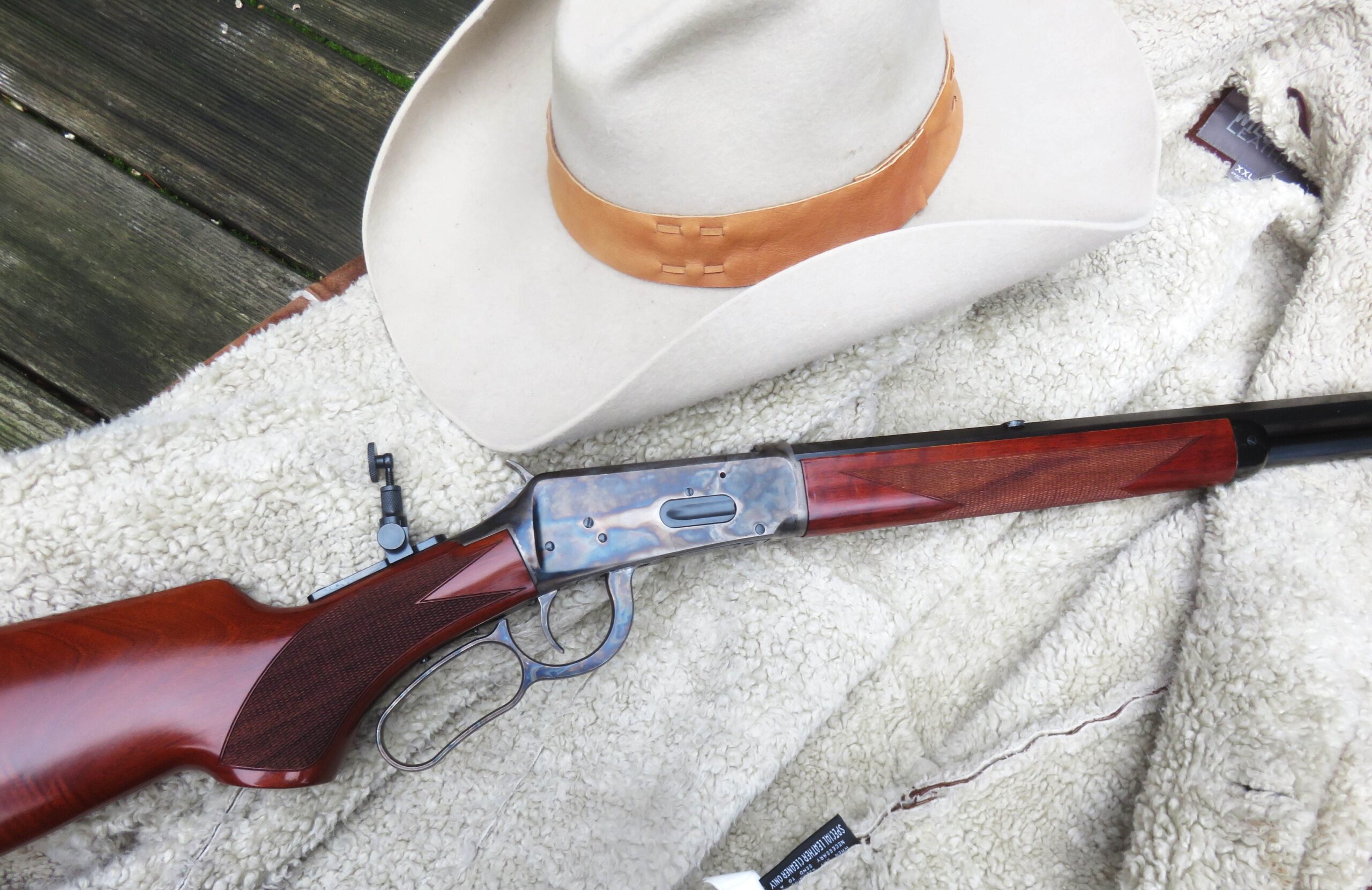
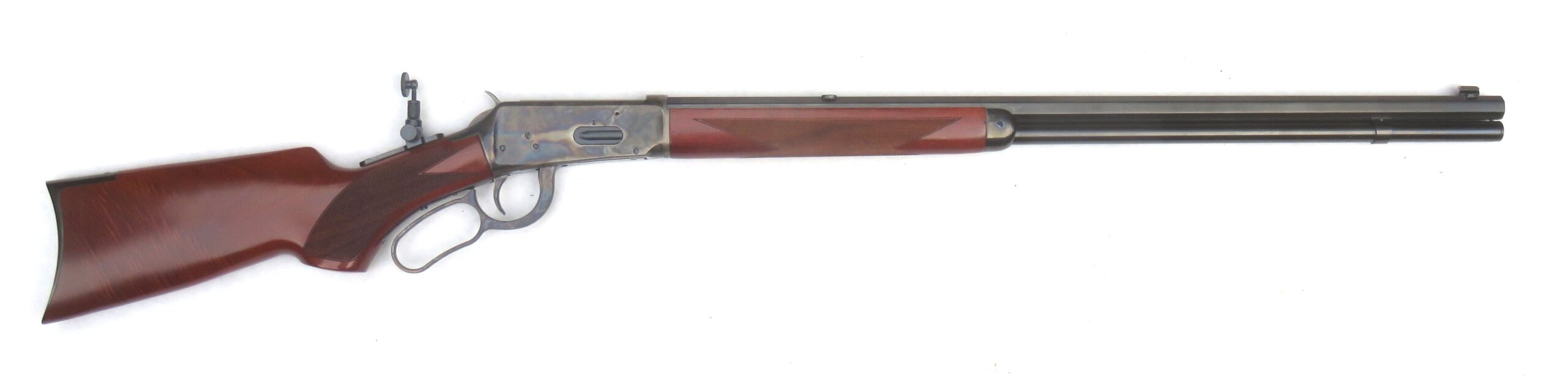
Then I saw their Model 1894 Deluxe rifle with the 26-inch octagon barrel, pistol grip stock, color casehardened receiver, and with checkering on the forearm and the wrist. All of those features would have been special order items on the 1894 and finding an original with those features would be hard to come by. That was what made me decide to get one. Of course, I’d want mine to be in a black powder caliber so the .38-55 was quickly my choice.
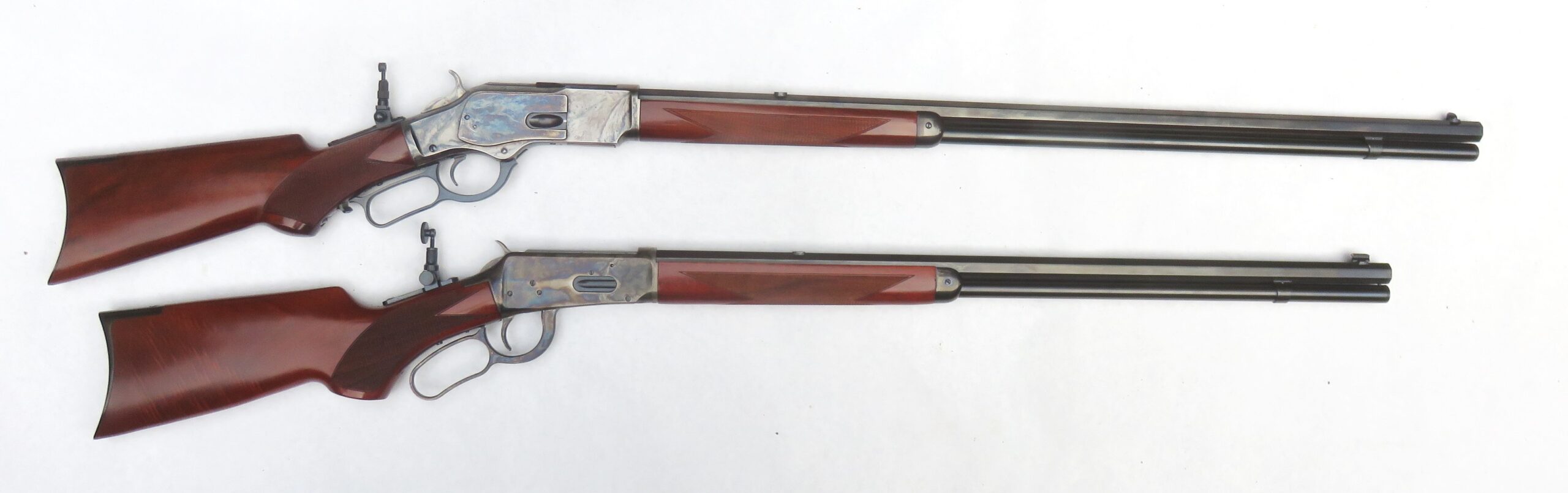
Another small factor was considered, the 1894 Deluxe would be a good companion piece to my long barreled 1873, also by Cimarron, in .44-40. That ’73 satisfies me very well and if the Model 1894 would perform just as nicely, I knew I’d really like it.
Cimarron’s Model 1894 is available in four (or five) different versions; a 20-inch barreled carbine, short rifle, standard rifle, and the deluxe rifle, and in two calibers; 30-30 and .38-55. (The “or five” version is the Trapper carbine which is made only in .30-30 caliber, with a short 16 1/8th -inch barrel.) More versions and maybe other calibers might be added as time goes on but I won’t try to speculate on that. And while the rifle is being offered in those multiple versions, I will only concentrate on one version for now, in just one caliber. Of course, they offer their rifle ‘94s in .30-30 caliber, I can ignore that, but what I will tell you about is this gun in .38-55 caliber, and we’ll be shooting it only with cast bullets and black powder loads.
The .38-55 cartridge is quite famous as a short-range (100-300 yards) black powder target cartridge when used in single shot rifles and has a fine reputation as a “meat maker” when used in repeating or single shot rifles for deer and black bear hunting. We won’t be doing any hunting in this story but that doesn’t mean we won’t be thinking about it.
Before getting this rifle, I had already received an important accessory which would be absolutely needed to go along with it. Of course, I already had the reloading dies and bullet molds but those were for .38-55 caliber rifles in general, but this rifle from Cimarron needed one specific piece of equipment to achieve the performance I was wanting. That was a bullet sizing die for the cast bullets I’d be shooting out of it. On the Cimarron website they show the internal specifications for their .38-55 barrels as having a rate of twist at one turn in 18-inches, with a bore diameter of .373” and a groove diameter of .379”. That means the typical .38-55 bullets of .375” diameter or even .377” would be slightly too small. So, a bullet sizing die for .380” was purchased, ready and waiting before I got the gun.
Another accessory needed for making good black powder loads is a wad punch for making card wads in .380-inch diameter. Those wads are placed over the powder inside the case before the powder is compressed. Then the bullets are seated over the wad which protects the base of the bullet from being disfigured by the granules of powder which will be forced against it while the bullets are being accelerated toward the muzzle. The source for that .380-inch wad punch is Buffalo Arms Company.
For a good black powder load, I fell back on my previous experience with the .38-55 cartridge and loaded Lyman’s #375248, which weighs 255 grains when cast with a 16-1 lead-tin alloy (I weighed just one of them), over 45 grains of Swiss 2Fg powder. That powder must be compressed in order to make room for the bullet in the case and a card wad, punched from a milk carton, was put over the powder prior to compression. Then the cast bullets, sized to .380” and lubed with Vigilante #1 bullet lube, were seated over the powder with the top bearing band within the case to give the cartridge an overall length just short enough to be worked through the ‘94’s action. The other ingredients for that load included the Federal large pistol primers which were used for ignition and everything was contained in new Winchester “W-W” cases.
Crimping the bullets really isn’t necessary with the case full of black powder but the “bell” at the mouth of the case, formed by the expansion die, should be straightened back out for easy chambering in the rifle. On my ammo that was done with a CH4D taper crimp die.
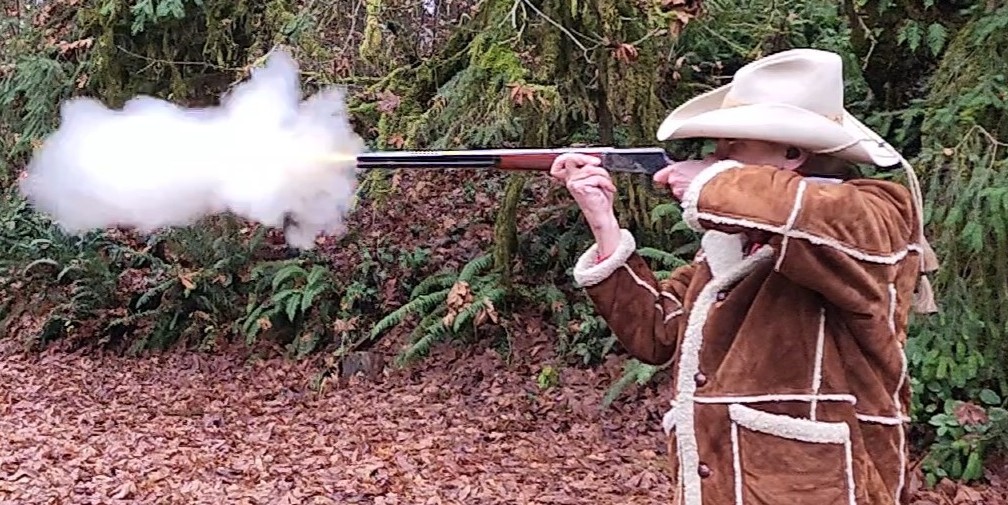
The old factory loads for the .38-55 for repeating rifles held just 48 grains of black powder, when loaded in solid-head cases, and the muzzle velocity was listed at 1320 feet per second. I was eager to compare my loads with the listing for the old loads. A total of fifteen shots was fired over the chronograph, with my 45-grain loads while going for groups on targets, and those shots averaged 1335 feet per second, 15 fps faster than the old published velocity. That certainly pleased me and my black powder handloads grouped very well.
One thing that must be mentioned is this rifle’s trigger pull. All too often the guns from Uberti, some of Cimarron’s models included, had trigger pulls that are simply way too harsh. Not so with this Model 1894. It is advertised as having a 4 ½-pound trigger pull and while I have not tested my rifle with a trigger-pull scale, I’d guess that is about right. It is a very good trigger to shoot with and my compliments certainly do go to Cimarron for insisting that it was made that way.
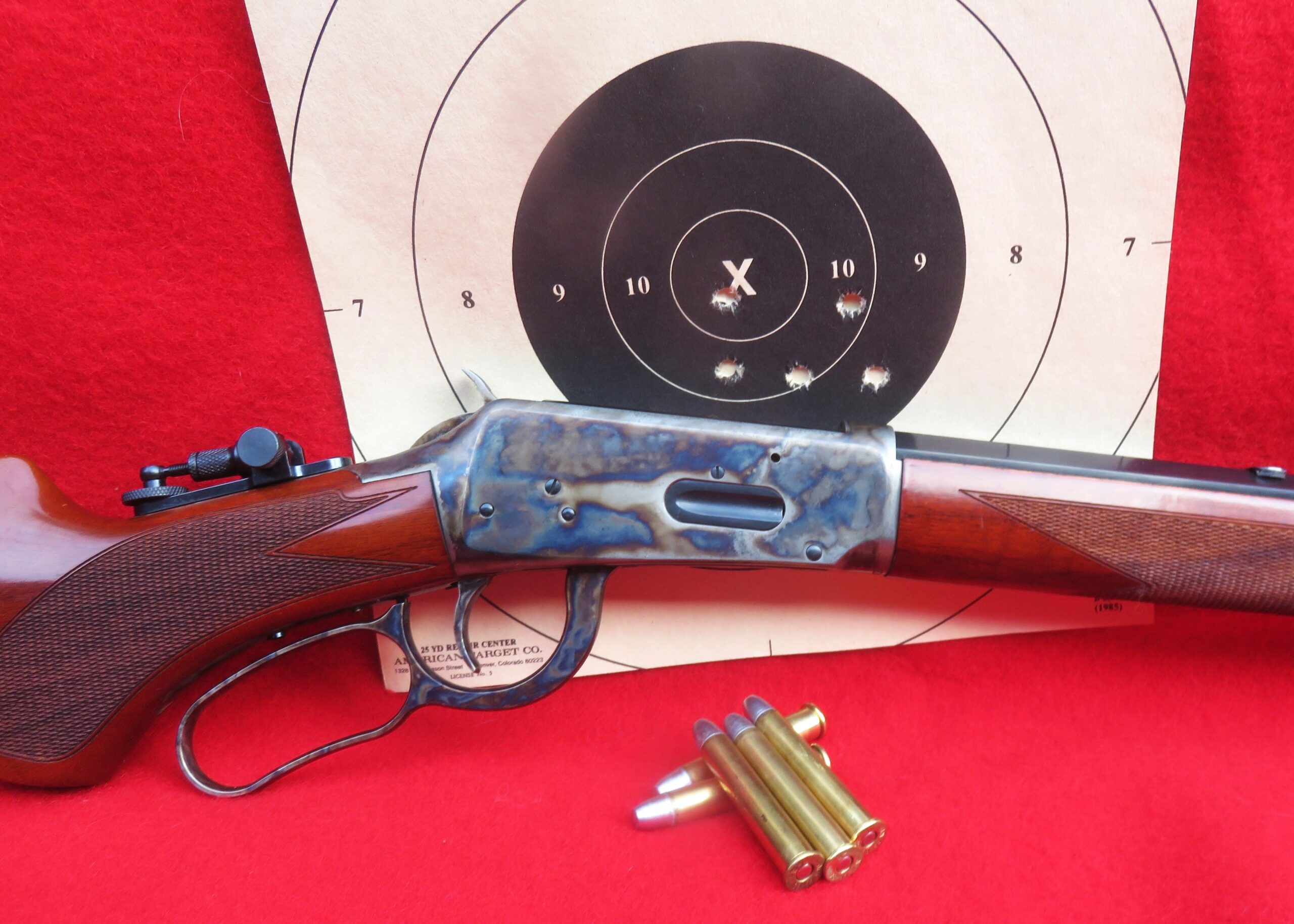
While talking about this rifle’s characteristics, I must add that my rifle has a Marble’s tang sight mounted to the wrist and a brass bead front sight in the forward dovetail. The rear dovetail on the barrel is filled with a slot blank. This rifle comes from Cimarron with open sights on the barrel and a blade front sight. I wanted (and needed) the aperture tang sight for good shooting.
During my first shooting session with this gun, the rifle’s bore was wiped after every shot. I’m a believer in “breaking in” a new barrel with black powder loads and the bore gets wiped between shots for just 10 to 20 rounds. As it happened, I fired just 17 rounds on my first outing with this rifle and the bore was wiped after every shot. Doing that seems to let the bullet’s lube coat the bore which allows the rifle to be fired in longer strings of shots later on, as well as being easier to clean after the shooting is done.
Cleaning the rifle after those seventeen rounds were shot, of course, was very easy because the bore had been wiped after every shot. So, only one more cleaning patch with some Three Rivers black powder solvent (from The Gun Works, thegunworks.com) was needed. That was followed by an oiled patch which was the only thing needed to prepare the rifle for more shooting, other than loading more ammo.
A note about the bullets from Lyman’s #375248 are certainly in order. My bullets were cast from a 16-1 lead-tin alloy and one of them was weighed. That bullet balanced my scale perfectly at 255 grains, just what I was hoping it would do.
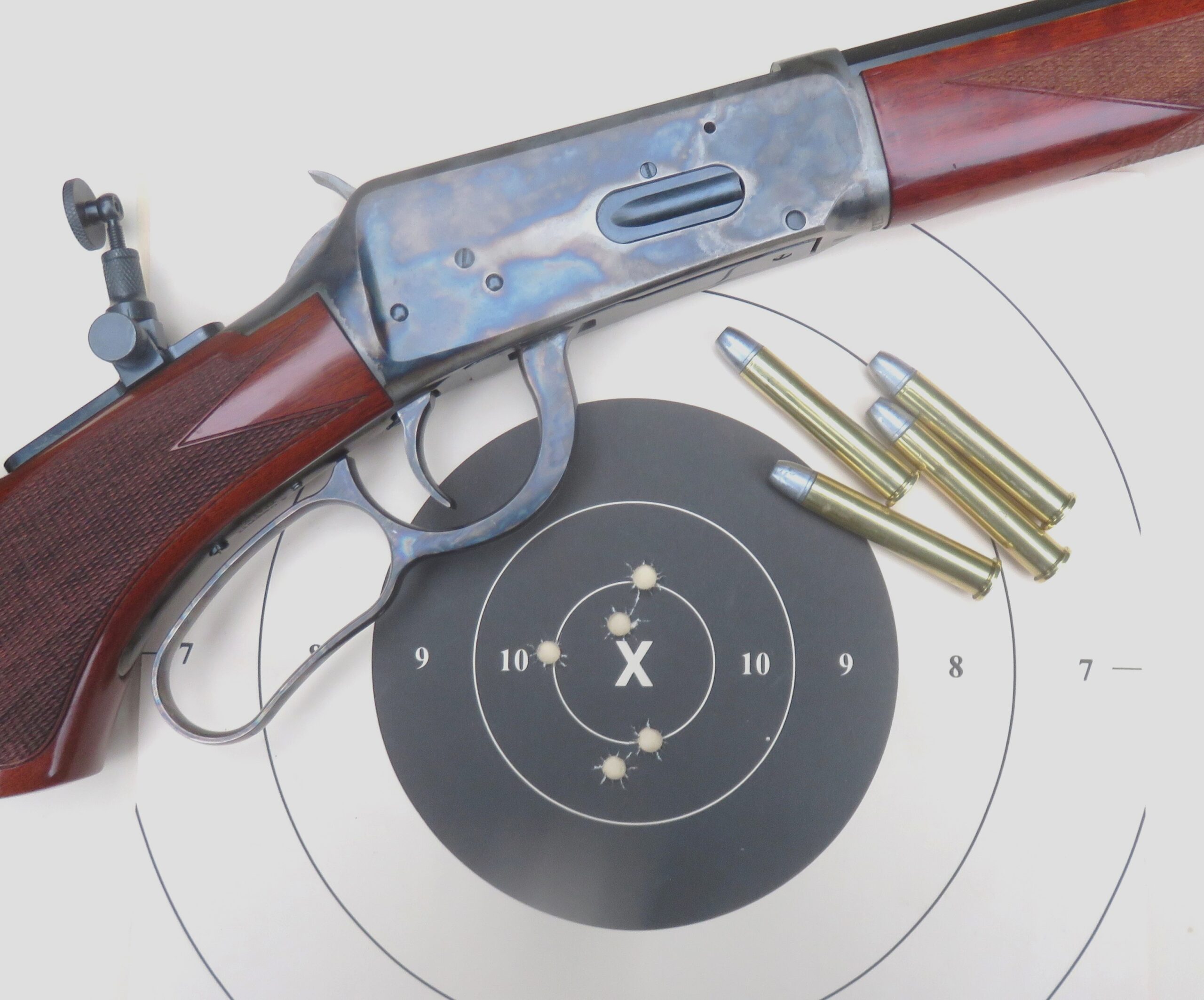
It only took one shot to discover that the Marble’s tang sight was not elevated enough for my shooting with black powder loads. The target was posted at just 50 yards but even so, the first shot, and then a second for confirmation, went through the target right at the bottom. No real problem there, just raise the sight. That was done, more than once, which produced a target showing bullet holes climbing up the target as more and more elevation was adjusted while searching for the target’s center.
While those sight adjustments were being made, some getting used to the rifle was also being done. Everything was very pleasing. I could say that this rifle, made by Uberti, acted just like an old Model ’94 which was just what I was hoping for.
And more ammo was prepared using the same loading as described above. While shooting those first shots, I found no reason to change the load. The bullets were printing well on the targets and the load had a ‘snap’ to it in the “muzzle report” that suggested it was doing rather well.
That next trip to the range was five days later. Again, I posted a target, took my seat at the benchrest, and began to burn up the fresh ammo. Things were going quite well and the rifle gave me a good group just below the ten-ring. In order to raise the point of impact just an inch or so, for tens and maybe Xs, the tang sight was raised to what I thought might be just enough. It almost was enough and the next group held the five slow shots plus the five higher shots, all in a good close gathering.
Those ten shots were fired without wiping the bore. So, I posted another target to shoot another group of five shots. Because of the two low shots in my second string of five shots on the first target, I raised the rear sight just another touch. That was maybe pretty good because I got four shots inside or cutting the X-ring and one 10. That’s the kind of shooting I was expecting and that does delight me.
We might say this review and report about Cimarron’s Model 1894 Deluxe rifle in .38-55 caliber is a bit incomplete but I certainly do plan on doing a lot more shooting with this rifle which might give me more opportunities to write more about it. Please don’t be surprised if that actually happens.
For now, this rifle simply delights me. I do believe it would easily please other fans of the .38-55 but be sure to remember about the .379” groove diameter in the gun’s barrel. I haven’t tried any of the jacketed bullets with smokeless powder loads, and after the way this rifle is performing with cast bullets over black powder, I’ll probably just stay with the cast bullets and continue “burning charcoal.”