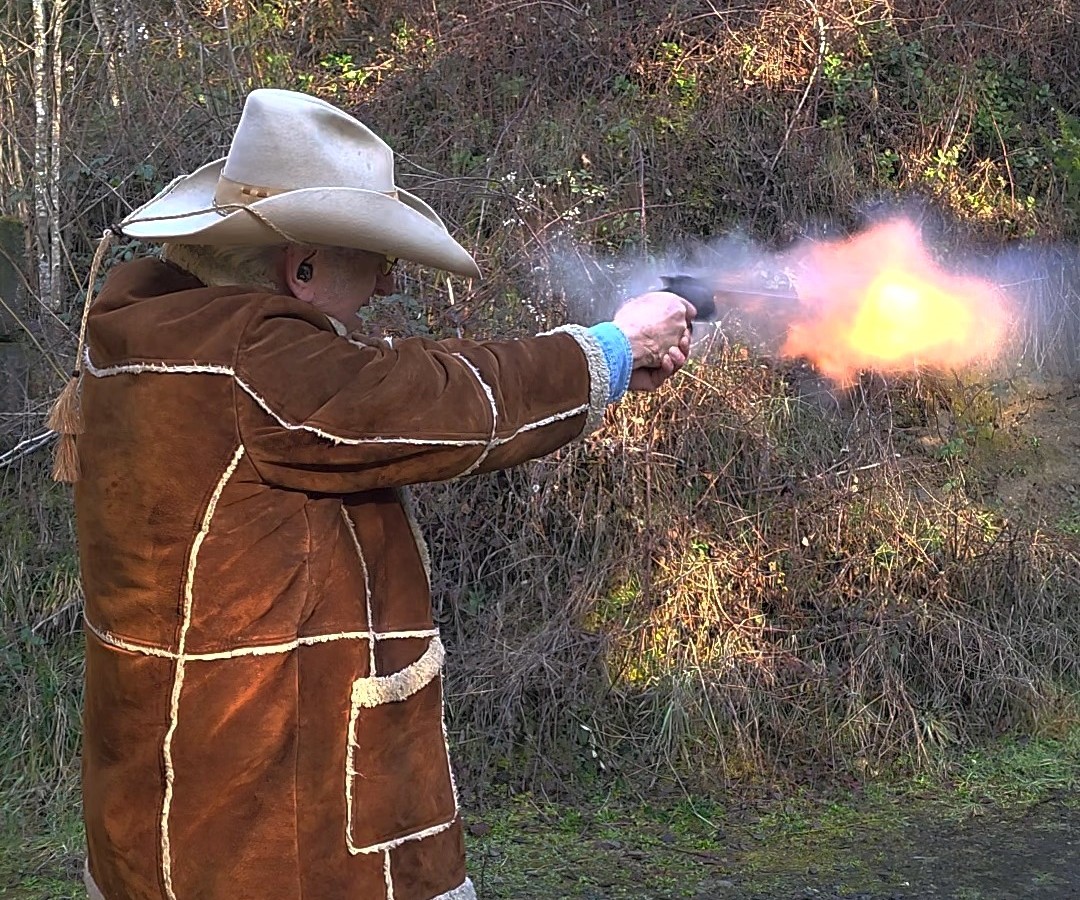
By Mike Nesbitt | Contributing Editor
Cimarron Fire Arms Company has added another replica of the Smith & Wesson top-break single action revolvers to their list of fine reproductions.
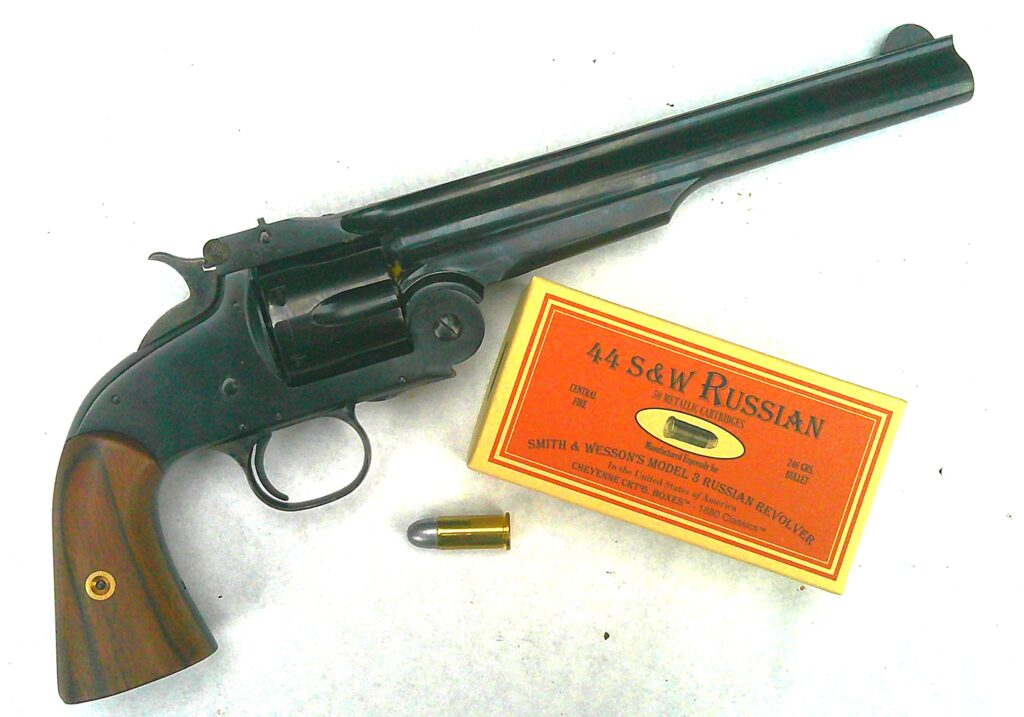
This one replicates the first of the S&W large frame Number 3 revolvers, generally known as the “American,” which was introduced and adopted by the U.S. Army in 1870, purchasing 1,000 of them, in .44 Smith & Wesson American caliber. This replica is stamped with “U.S.” on the top of the frame.
More specifically, the new Cimarron version copies the first model of the American revolver but it does have the frame interlock at the top of the hammer. That is most generally identified with the second model American but it is also found in transition versions of the first model. This interlock simply prevents the frame from opening while the hammer is down, or all the way forward. Other small characteristics all identify this replica as a clone of the first model American. Originally, the first models were available in only .44 S&W American caliber, although a few of them were chambered for the .44 Henry rimfire cartridge.
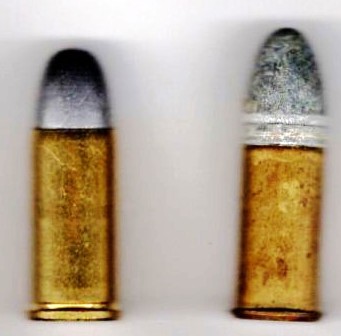
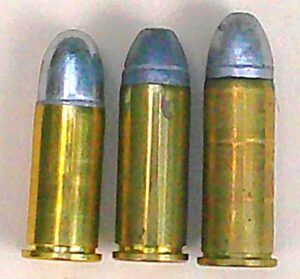
The .44 S&W American is considered a bit of an oddball today but back in 1870 it fit right in. This cartridge used a heeled bullet which had a diameter about the same as the cartridge case (.434”, 218 grains), with “outside” grooves for lubrication. The chambers in the gun’s cylinder had no shoulder marking the chamber area for the cartridge case, like the .22 Long Rifle. When the Russians took a liking to the S&W Number 3 revolver, they did not like the .44 American cartridge.
The Russians had Smith & Wesson develop a new cartridge for this top-break revolver, which was appropriately given the name “.44 Russian”. This cartridge uses a bullet of .429” diameter, seated well into the cartridge case with the lube grooves “inside” the cartridge. That is simply a better way to do it and the great majority of centerfire cartridges used bullets with “inside” lubrication from then on.
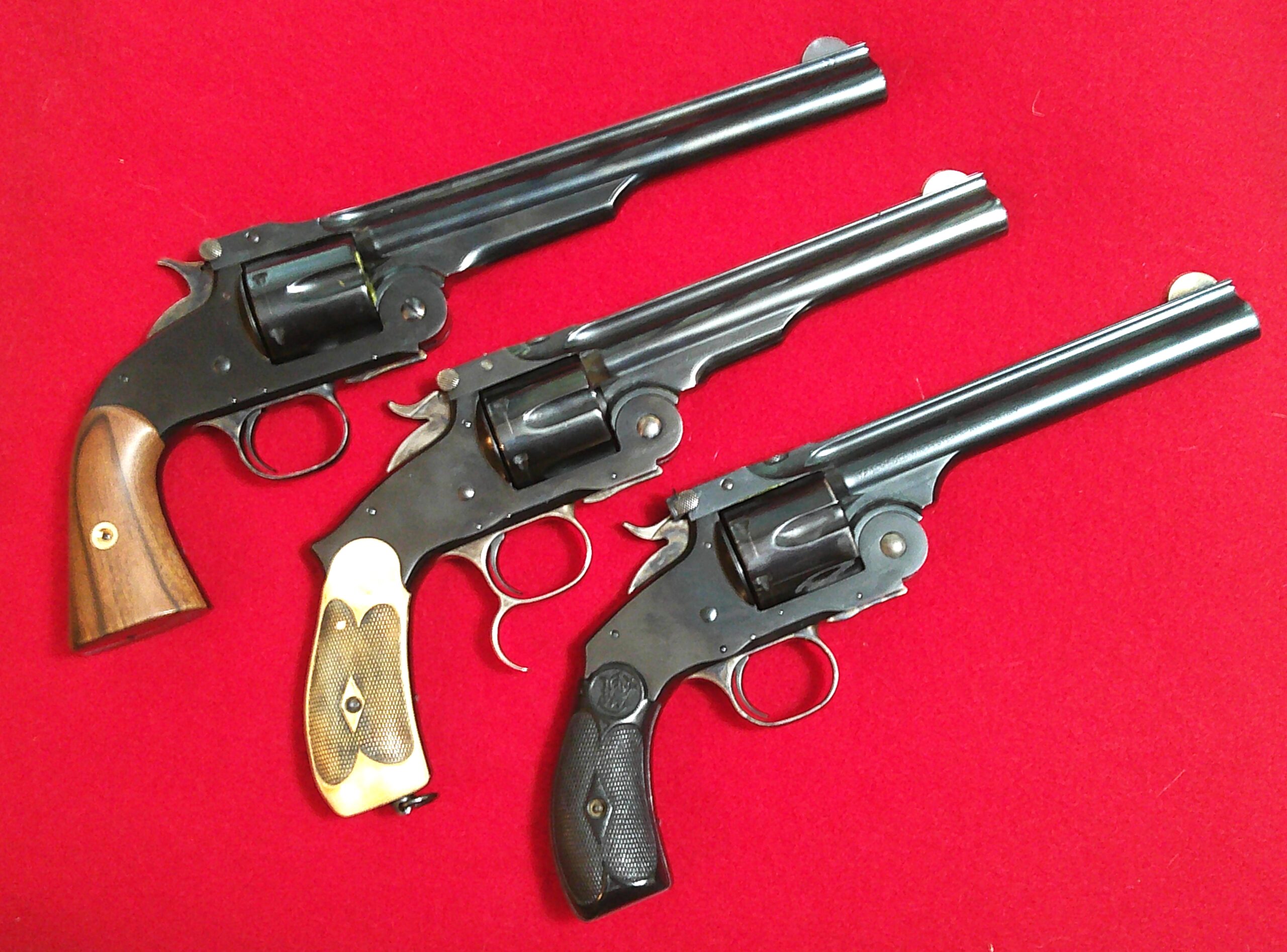
And the first model of the revolvers for the Russian contract were the same in profile as the American revolvers. The more distinctive “Russian Model” didn’t appear until the second version was put together, as well as the 3rd version of the Russian Model. This, in my opinion, makes getting one of these new replicas by Cimarron very authentic in .44 Russian caliber, although to be completely authentic it should be a second version of the American.
Of course, Cimarron wants their American to appeal to a wide range of shooters so they made this revolver available in .45 Colt, and .44-40, as well as the .44 Russian. The gun I have is marked “.44 Colt & Russian S&W Special” which reminds me of how Colt used to mark some of their guns shortly after the .44 Special was introduced with “Russian & S&W Special .44”. The .44 Colt of today is simply a bit shorter than the .44 Special, and usually loaded with lighter bullets, and, of course, the .44 Russian is shorter yet but all three cartridges can be fired quite nicely in the .44 Special chamber. My use with this gun will more than likely be fired with mostly .44 Russian cartridges, mainly because I favor that cartridge’s performance.
The .44 Colt that is mentioned is the load of today, with the Star Line cases and inside lubricated bullets, and not the older original .44 Colt loads with the larger diameter outside lubed bullets.
To make this new replica revolver adaptable to all of those calibers, the cylinder is slightly longer than what the originals had. This is certainly excusable and hardly noticed unless it is compared right next to an original. And this revolver is nicely finished with a deep dark blue plus the color casehardening found on the trigger guard. The European walnut grips are held in place with a single screw, through brass escutcheons and the grips on this gun are very attractive with a nice dark line of grain adding some individuality to the profile.
Looking back into the 1870s again, the Smith & Wesson Model 3 (which identifies the frame size) American revolver was rather popular. Wyatt Earp was known to have one and the same for John Wesley Hardin. Texas Jack Omohundro used one (Cimarron apparently has Texas Jack’s old First Model American gun that might have been the gun Uberti used to copy) and Dallas Stoudenmire carried a pair of them as a peace officer in El Paso. Of course, this gun had a three-year jump on the Colt Peacemaker and a number of shooters favored the quicker ejection of the empties which meant an empty gun could be loaded and put back in action with fresh loads much faster than the well-remembered Colt. Of course, the simultaneous ejection of the empty cases applies to all of the versions of the Smith & Wesson top-break single actions and double actions.
To prepare this brand-new gun for shooting with black powder loads, the first thing done was to remove the cylinder and apply some good grease to the gun’s base pin, which the cylinder revolves around. This was done to help prevent black powder fouling from getting inside that important area where it could bind things up, making the cylinder very difficult to turn. On the forward part of the base pin, there is a short-threaded area and those threads should be filled with grease. All black powder revolvers need this kind of attention.
After shooting and cleaning the gun, be sure to add grease to the base pin again. The grease I favor is usually a good black powder bullet lube or a muzzleloader’s patch lube. October Country’s “Bumblin’ Bear Grease” works very well.
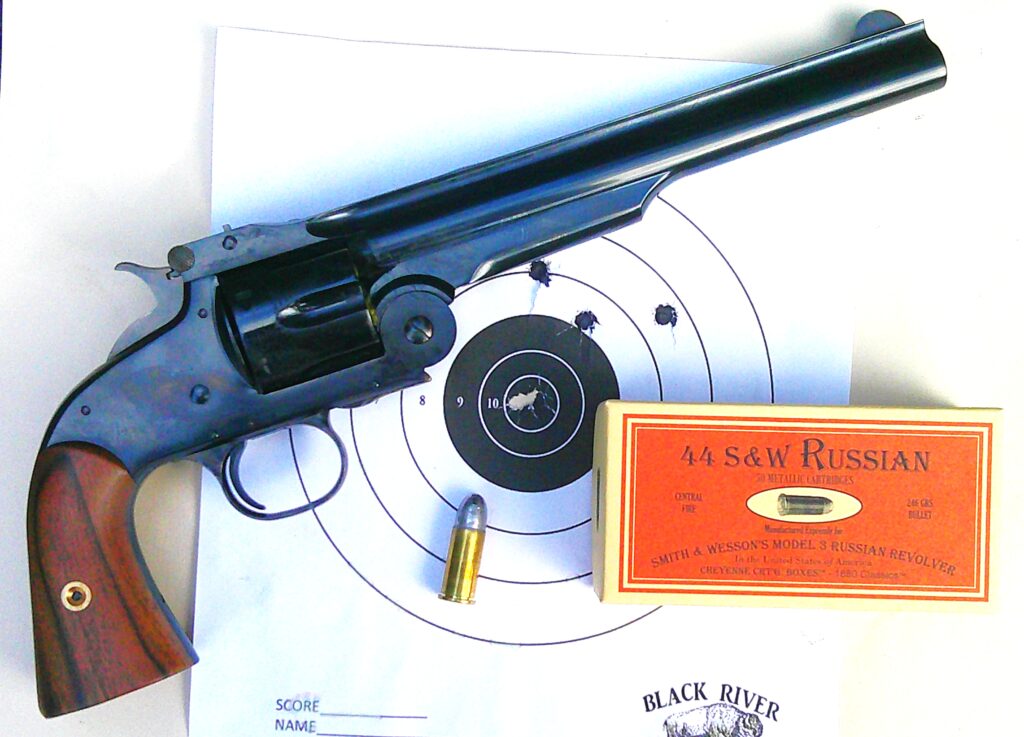
With a box of ammo prepared, using the .44 Russian cases loaded with 18 ½ grains of Swiss 2Fg powder under 250-grain round nose bullets, the American was taken to the range for those first shots. To begin with, a fairly large target was posted at just 10 yards and the revolver was fired over a rest, from the bench. This was done to test the gun, to see where it was hitting.
The first shot was fired with the gun’s sights held right on the X in the middle of the bullseye. That was right where it hit! Before taking that shot, I began aiming at 6 o’clock on the black, the typical hold for target shooting, but I do prefer my revolvers to hit “dead on,” right where the sights are pointing. Just before the shot was fired, I changed my hold to the middle of the target and I’m very pleased that was done. This gun hits right where I’d want it to.
That shot was followed by the other four cartridges which were loaded in the gun’s cylinder, making a 5-shot group. And that group deserves a description; the first shot clipped the X-ring, at about 7 o’clock, followed by two 10s to the left of the X, and then a 9 and an 8, both to the left. I don’t recall which order those shots were fired in but the group, including the fact that all shots were somewhat to the left, wasn’t bad at all.
Of course, the first target was quickly replaced and another 5-shot group was fired, at a smaller pistol target. The hitting to the left disappeared and the group became well centered. That was followed by another target for shooting another group. Those two targets held groups that scored 48-2X for the first one and 40-3X for the second. Then Mike Holeman, my shooting partner on this day, fired five shots at one more target and his group scored a 48-2X. There is really nothing wrong with the way this gun shoots.
One more target needed to be shot and a small bullseye target was posted, again at 10 yards, to try the gun offhand. This was the target which is shown in the photos and after the first shot, I threatened to quit! That shot went right through the X, almost dead centered in the middle, it could not be improved upon. But more shots were taken in order to complete the 5-shot group. Within those following four shots, one more went through the X while the other three bullets printed just outside the small bullseye, somewhat high and to the right. Needless to say, the shooting at those targets did please me.
But there is one thing about this revolver which I will criticize. That is the hard trigger pull.
While my height is about 6’6” and I tip the scales at just under 235 pounds, I’m simply “too little” to shoot a gun consistently with a trigger pull like this one has. That trigger pull can be lightened with some careful tuning, primarily with the trigger spring and the bolt spring, which both bear on the trigger. Of course, I won’t do that until I’m sure this gun will be mine.
More shooting will be done, naturally, at some longer distance targets, especially those metal targets on our club’s trail-walk. I’m pretty sure you will be hearing more about the shooting done with this revolver.
While I’ve mentioned the listing of calibers this gun is available in, I do want to include a statement from Cimarron. They say the Number 3 American revolver will be available only from Cimarron Fire Arms Company. And, as they say, “whether you are into the real Old West, or the “reel” (Hollywood) West, you’ll enjoy owning a Cimarron.” To see more about this gun plus the other offerings from Cimarron, check out their website at Cimarron-Firearms.com.
With the way prices seem to be climbing, we often don’t see prices listed when we read about a new product. So, I’ll put it this way, right now the list price for one of these revolvers is $1,473.75. That price is shown for all calibers and both barrel lengths for the American.
To conclude this story, I’ll say how the Cimarron Model Number 3 American is certainly a great gun to shoot. With the black powder loads I used in the .44 Russian Star Line cases, it is pleasant and very accurate. And I favor the 8-inch barrel on this gun, which was found on most of the original No. 3 Smiths. Versions of this gun with shorter barrel lengths were made but not in large numbers. I’ve mentioned the trigger pull and how that will be fixed. I’ll be using this gun again real soon. Right now, I could tell you more about it but I need to get busy and reload more ammunition for it.