By Dave Workman
Editor-in-Chief
The future for the Citizens Committee for the Right to Keep and Bear Arms (CCRKBA)—one of the nation’s leading grassroots run rights organizations—is about bringing people and organizations together, and create better ways for organizations to communicate and collaborate.
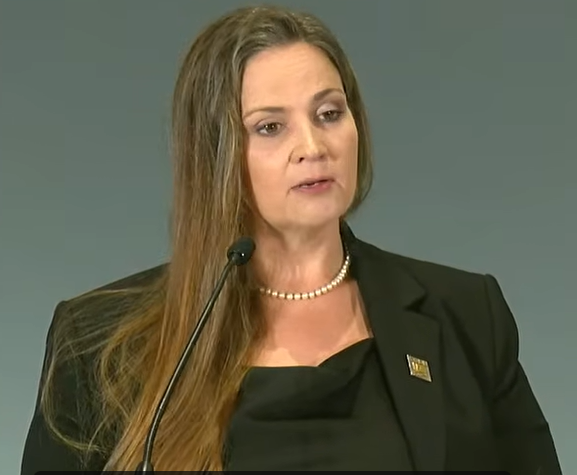
That was the vision shared by Holly Sullivan, a CCRKBA Board member and president of the Connecticut Citizens Defense League. She has already seen the beginning of this effort, when CCRKBA brought together activists from six New England states for the first-ever New England Firearms Advocacy Conference. It was attended by representatives and members of regional state organizations at Chicopee, Massachusetts this past May.
Explaining this grassroots movement, Sullivan observed, “When we talk about the future of the Citizens Committee for the Right to Keep and Bear Arms, I think we have to talk about where the strength of this movement really .comes from. And it comes from the people. It comes from the men and the women who show up at the state capitol on a Tuesday morning. It comes from the volunteer who stays up until midnight sending an email alert because a committee hearing was suddenly scheduled. It comes from the attorney preparing the next legal challenge. It comes from the person testifying before the legislature for the very first time. It comes from the state organization fighting a bad bill, the local activist organizing their community, and the citizen who decides that protecting a constitutional right is important enough to stand up and do something about it.”
The May conference brought together attorneys, legislators, advocates and industry voices, she recalled. There were also content creators, state leaders and others who discussed “legislation, litigation, lobbying, communications, elections and grassroots advocacy.”
That weekend event was not just a one-time affair. Sullivan revealed another regional conference is on the planning schedule, to be held in Georgia. This will bring together people from the Southeast states.
“Here’s something we learned,” she said about the May gathering. “The states may be different but the challenges rarely stay within state borders. A bill introduced in one state can become the model legislation in another. A legal theory developed in one courtroom can appear in another circuit. A successful grassroots strategy in Connecticut may contain an idea that helps an organization in Massachusetts, and something that works in Maine might help advocates in New Hampshire.
“And,” she observed, “an organization in Georgia may solve a problem that an organization three states away hasn’t even encountered yet. We should not have to reinvent the wheel 50 times.”
Sullivan also said the future of CCRKBA “is about bringing people together.”
“For more than four decades,” she said, “CCRKBA has been part of a national conversation surrounding the Second Amendment, and the Gun Rights Policy Conference has become an important part of that tradition.”
Adhering to the grassroots nature of CCRKBA’s mission, Sullivan stated, “Not every battle is national, in fact, many of the most consequential battles over the Second Amendment are happening hundreds or thousands of miles away from Washington, D.C. They’re happening in Harford, in Boston, in Augusta, Providence, Atlanta, in state houses, courtrooms, city halls and communities across this country. And the people closest to these fights understand them better than anyone else.
“So the question we begin asking ourselves is simple,” she detailed. “How can CCRKBA better support the people who are already doing the work? Our answer is not to replace state organizations. It’s not to compete with them, and it certainly isn’t to tell them how to run their states.
“Our vision is to help connect them,” she said, “to give them opportunities to learn from one another and give them access to resources, to bring attorneys, legislators, advocates and communicators and grassroots leaders into the same room and then get out of the way and let great people share great ideas.”
Sullivan’s organization in Connecticut is the main plaintiff in the upcoming Supreme Court battle over whether modern semiautomatic rifles are protected by the Second Amendment.
“When an organization discovers a better way to recruit volunteers, to communicate with members, raise money, testify effectively, work with lawmakers, engage younger people, and respond quickly to legislation,” Sullivan counseled, “that knowledge has value far beyond one state. Our movement has become stronger when experience becomes shared knowledge. And that is the idea is behind the next chapter of CCRKBA.”
Translation: The grassroots organization which has remained often in the background, frequently overshadowed by its sister organization, the Second Amendment Foundation, is expanding its frontier.
“We don’t want to build the same conference over and over again,” she said. “We want regional conferences that actually reflect the regions that they serve. We want to listen first.
“Sometimes,” Sullivan acknowledged, “it’s putting two people in a room who should have met five years ago, because relationships matter and trust matters. And there is tremendous knowledge within this movement that too often remains isolated.”
“We are simply the current stewards (of the gun rights movement),” she noted, “and someday somebody else will inherit what we leave behind. So our responsibility isn’t merely to win today’s fight. Our responsibility is to leave the people who come after us with something stronger.”