
By Lee Williams
SAF Investigative Journalism Project
Deep inside the hills near Martinsburg, West Virginia, on a government base with incredible security, lies what may be one of the most impressive firearm collections in the entire world. It contains more than 17,000 individual firearms of nearly every type—from Oerlikon cannons, cane guns, internally-suppressed pistols, gold-plated AKs and thousands of machineguns to one or more examples of nearly every model of rifle, pistol and shotgun ever produced. This base houses ATF’s National Tracing Center, and the collection is called the National Reference Gun Vault or simply “The Vault.”
Those who have actually been inside the massive structure—at least the real gun guys—talk about it in hushed tones, for hours. They recall every firearm they saw, touched or picked up and especially those they had never seen before.
In the past, the vault was staffed by a half-dozen armorers most of whom had retired from the U.S. Marine Corps. They bore the title: ATF Firearms Enforcement Officer. Their job was to answer questions from ATF agents in the field. If they didn’t know the answer, they had more than 17,000 examples to check.
Not too long ago, for reasons unknown, the ATF decided to radically increase the number of Firearm Enforcement Officers, or FEOs, and station them not in the vault but at several regional ATF offices across the country.
Unlike Special Agents, FEOs are technical specialists rather than sworn law enforcement officers. They have no arrest authority; only supporting enforcement through technical expertise. They work closely with ATF special agents and local law enforcement to identify firearm-related evidence found during search warrants and investigations, classifying the crime guns to build legal cases.
This is where the problem starts. ATF answers directly to the Attorney General, who is the top law enforcement official in the country, and the Attorney General answers directly to the President. ATF cannot afford to have the FEOs give an opinion which differs from the position or feelings of the White House on firearm hot topics such as braces, forced-reset triggers, bump stocks or solvent traps, so FEOs are coached, if not ordered to provide an opinion in their reports, which aligns with those of the administration–especially an anti-gun administration.
This practice has been in place for so many years of anti-gun administrations that it has become the norm.
FEOs provide guidance to agents, who commonly need it because of their lack of training–when encountering anything beyond a modern firearm which bears markings indicating manufacturer, model, caliber, and serial number engraved on it—results in a need for further guidance.
Agents then take this guidance as reliable and accurate information to judges, who issue a search warrant based on this information. The agent then takes what is found in the search to a federal prosecutor who, knowing only what the agent tells them, files charges against the person who was searched. Obviously, the information provided to an agent by an FEO carries a lot of weight, and can have a serious negative effect on people’s lives if it isn’t accurate.
There are many examples of FEOs taking an oath and then testifying to supposed facts that they know to be untrue. The most recent was in ATF’s case against Rare Breed Triggers, whose triggers the FEOs claimed for four years was a “machinegun.”
These new FEOs will say anything and do anything that the ATF administrators want, and unfortunately, they’re used far too often. Any case that goes beyond a simple firearm calls for an FEO. Never mind reality or fairness. They aren’t impartial at all.
This, friends, has been going on for decades.
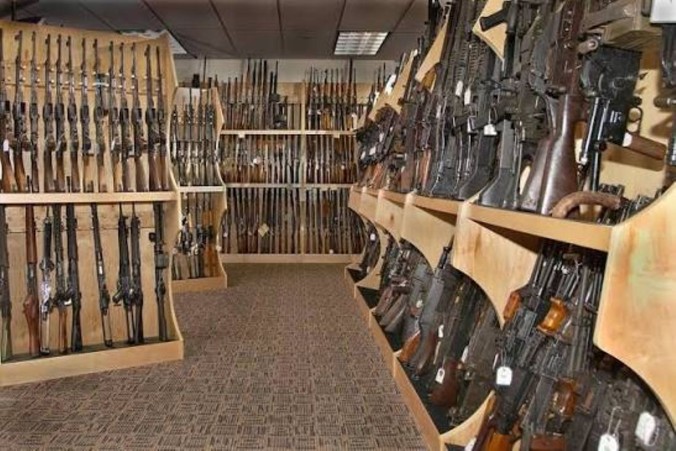
On paper, the FEOs, are “firearm experts trained in all aspects of firearm operation and identification.”
“They support multi-agency police responses to violent crimes across the country. FEOs work closely with ATF special agents and investigators, other federal agencies and local law enforcement to identify firearms-related evidence found during search warrants and investigations,” the ATF claims.
In actuality, the new FEOs will stretch the truth while under oath to support the agency’s bad investigators and their bad investigations.
They are a symptom of a much larger problem within the organization: ATF agents do not know or even understand guns, according to one former senior ATF official who has seen enough.
“The ATF would not need many FEOs if they would start teaching their agents what they need to know to be competent in the field,” said Daniel G. O’Kelly. “They don’t teach their people over half of what they need to know about guns, so ATF agents must rely on the FEOs. The FEOs get directed by the politically motivated, which results in people like Tate Adamiak sitting in jail for no reason. The ATF has had some people sitting in jail for no reason since 1992, when they became an agency.”
O’Kelly’s theory is simple: If ATF special agents were given a proper amount of firearm training, rather than the three days they currently receive in the academy, they would know guns well enough to recognize all violations and to not overlook violations and their agency would no longer need as many FEOs. These FEOs could be used merely as tutors that an agent could call upon for minor clarification when an obscure issue or firearm is encountered. Very little should be an obscure issue to the gun police in the most gun-prolific country in the world.
After all, O’Kelly estimates that 95% of what the ATF agents will do during their career is related to firearms. The remainder—alcohol, tobacco and explosives—amounts to only around 5% of an agent’s career.
“During my 23-year career I assisted with one tobacco case, never had a single alcohol case and did around 10 arson and bombing cases,” he said.
O’Kelly joined the ATF as a Special Agent in 1988 after serving 11 years as a police officer. He became a legend within the agency, including a stint as the lead instructor of Firearm Technology on staff at the ATF National Academy. O’Kelly is one of the country’s leading firearm experts, and a staunch Second Amendment supporter. After he retired from ATF, O’Kelly raised the bar of firearm knowledge nationwide, among police, the firearm industry, attorneys and the public by founding the International Firearm Specialist Academy, training thousands of law enforcement and industry professionals worldwide.
In an interview, O’Kelly said that ATF agents only receive three-and-a-half days of firearm training. If they understood firearms better, the agency could get rid of its FEOs, many of whom would not be needed.
On paper, FEOs are part of the ATF’s Firearms and Ammunition Technology Division, whose mission is, “to serve as ATF’s technical authority relating to firearms and their classification under Federal laws; to respond to law enforcement agencies requests to test, evaluate, and provide expert testimony on firearms and ammunition; and to provide technical services to the firearms industry and other members of the public.”
As stated, ATF considers its FEOs—not its special agents—the real “technical authority” on firearms and gun parts, who provide “expert testimony.”
In actuality, FEOs turn non-firearms including toys into firearms—even machineguns—and then testify, sometimes falsely, about their findings.
O’Kelly’s fix would be simple. He would rewrite the agents’ basic training to add more firearm training. Existing agents would go through additional in-service firearm training to be able to independently recognize what’s enforceable and what’s not, without the misdirection currently being given by FEOs. O’Kelly would be willing to teach the agents himself or help develop a new training curriculum.
“The biggest problem with the ATF is that agents do not receive enough training,” O’Kelly said. “None of this Tate stuff would have happened if they knew firearms as well as they could.”
‘Tate stuff’
The ATF’s case against Patrick “Tate” Adamiak was led by two Assistant U.S. Attorneys, but their main witness became the real reason why a jury found Adamiak guilty, and a federal judge sentenced him to 20 years in prison, which he is currently serving.
To be clear, Adamiak was utterly railroaded by ATF Firearms Enforcement Officer Jeffrey R. Bodell, who works out of the ATF office in Martinsburg.
Bodell claimed to have worked for Lebo’s Gunsmithing in Shippensburg for 10 months, Legendary Arms Works in Harrisburg for 16 months, and then he ran his own gun shop called Bodell Custom, LLC, for 17 months in Shippensburg. After closing his own gun shop, Bodell went to work for the ATF.
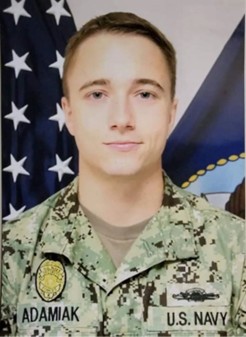
Adamiak, who is now 31, was just 28-years-old and an active-duty E-6 in the U.S. Navy prior to his arrest. He enjoyed firearms and ran a private website that sold gun parts—not guns. He was always extremely careful about what he sold. After all, he had to protect his naval career, which was doing extremely well.
Adamiak was unprepared for Bodell or his allegations, which have become almost legendary. Bodell actually turned toys into firearms and legal semi-autos into machineguns.
When he took the stand to testify about what he did to Adamiak’s firearms, Bodell had been an ATF employee for less than two years.
Most damning was the fact that this was the first time Bodell had ever testified at any trial.
Bodell told the jurors about how inserted a real STEN action and a real STEN barrel into Adamiak’s toy STEN submachinegun and got it to fire one round, even though the toy’s receiver wouldn’t accept a real STEN magazine. Bodell actually classified the toy, which are very popular, as a machinegun.
Bodell fired five of Adamiak’s very expensive and extremely collectible legal semi-autos, which fire from an open bolt. All the ATF technician could achieve was semi-auto fire, but that didn’t stop him. He classified all five highly sought after firearms as machineguns, despite the fact that publicly-known ATF Rulings in 1982 grandfathered these models as “not machineguns.”
Bodell ruled that several receivers (which don’t qualify as receivers according to the ATF written definition at that time) that had been cut in half were actually machineguns. The same parts are still legally sold online and do not require an FFL or any paperwork.
The worst thing Bodell told the court were his misconceptions about two inert RPGs, which Adamiak had purchased at a flea market in California.
Bodell took the inert rocket launchers to the ATF’s lab and added missing fire-control components including a firing pin from a functional RPG from the ATF’s collection. He also added a sub-caliber training device that resembles a warhead, which can fire 7.62x39mm rounds on its own without even loading it into an RPG. So, he inserted a firearm into a non-firearm, then called the non-firearm a rocket launcher.
“He fired a 7.62x39mm rifle cartridge through it utilizing the sub-caliber training device, which is a standalone rifle that can be fired independently on its own,” Adamiak said in a previous interview. (Adamiak is now being held in a Pennsylvania county jail and was not available for comment.)
Bodell testified that the missing parts didn’t matter, legally.
“It doesn’t matter whether it fires or not, and if it’s missing some component parts, it wouldn’t be relevant to the classification of a destructive device,” Bodell told the court, which is not what the statute or case law state.
Bodell even made a video of him and an assistant firing one rifle round from Adamiak’s heavily converted RPG.
“An RPG is a very simple and crude device,” Adamiak previously said. “Taking a piece of metal pipe and hose clamping a fire control mechanism to it would effectively duplicate what Bodell did in his testing.”
Bodell’s six-page Curriculum Vitae is loaded with long lists of the firearms on which he was trained, but it is also chock-full of nonessential information, including legislation he has studied, historic information he received, museums he has toured, and trade shows he attended.
How to fix the ATF
O’Kelly’s plan for fixing the ATF should be required reading. Almost all of it is common sense. It calls for efforts affecting special agents, restructuring the agency and much more training.
Some highpoints include:
- Focus on the prevention and investigation of violent crime. End the weaponization of the agency. Become anti-crime, not anti-gun ownership toward law abiding citizens.
- Support and educate the firearm industry and the public, rather than persecuting them.
- As in ATF’s original position, stop treating items such as solvent traps and fuel filters as silencers, unless there is actual evidence of intent to use it to diminish the report of a firearm. Stop treating Forced Reset Triggers as machineguns, as they do not satisfy the statutory definition, and as in ATF’s original position, stop prosecuting braced-pistols as Short Barreled Rifles.
- Abandon the false narrative that “ghost guns” are evil and support the right of otherwise non-prohibited citizens to make and possess a privately-made firearm. Abandon the false narrative that buy-build-shoot kits are firearms, as they don’t satisfy the statutory definition.
- Stop treating gun parts which do not satisfy the statutory definition as firearm “receivers,” such as AR-15 lowers and FAL uppers.
- Stop pretending that the occasional sale of a firearm to enhance one’s collection is “dealing without a license” and allow the occasional sale to enhance one’s private collection.
- Start allowing Agents to do actual “police work” and abandon the Mon-Fri 8am-4pm mindset. Begin having them work various hours, like police officers, so they can actually catch violent criminals.
- Stop the false narrative about “ghost guns” (PMFs). Pre-1968 shotguns and .22 rifles have no serial numbers either and cannot be traced, yet ATF never rails about them because it would expose the falseness of the issue. The fact is that PMFs can only be prosecuted in State courts, and ATF needs federal statistics to justify budget increases.
- ATF has historically refused to teach their employees what they need to know to be fully competent about firearms. Begin teaching all Agents and Industry Operations Investigators a comprehensive program so that they are fully competent in the field.
“The fix is simple,” O’Kelly said. “All that’s needed is for ATF leadership to admit they dropped the ball. Once they do, they need to train existing agents and get their people to an acceptable level, so we could go back to the eight FEOs in the vault. We would no longer need these ‘liars for hire’ that the FEOs have become.”

Takeaways
Few believe we will see the same level of anti-gun zealotry by the ATF now the President Donald Trump and ATF Director Robert Cekada are in charge that we experienced when Joe Biden and Steve Dettelbach were calling the shots.
Still, elections happen every four years, and the ATF has proven to be overly accepting of presidential suggestions. Therefore, professionalizing the entire agency should be the goal.
We have all seen the horrors that can happen when ATF follows unlawful orders emanating directly from the White House.
Dave Adamiak, Tate’s father, has spent the past four years worrying about his son’s safety and trying to get him out of federal prison.
“You would think that this miscarriage of justice would have been fixed by now. Four years is a long time to advocate for something that hasn’t happened yet,” he said. “The ATF should know what it’s doing at the very least. They should be going after criminals, not creating them.”
The Second Amendment Foundation’s Investigative Journalism Project wouldn’t be possible without you. Click here to make a tax-deductible donation to support pro-gun stories like this.