By Jim Dickson | Contributing Writer
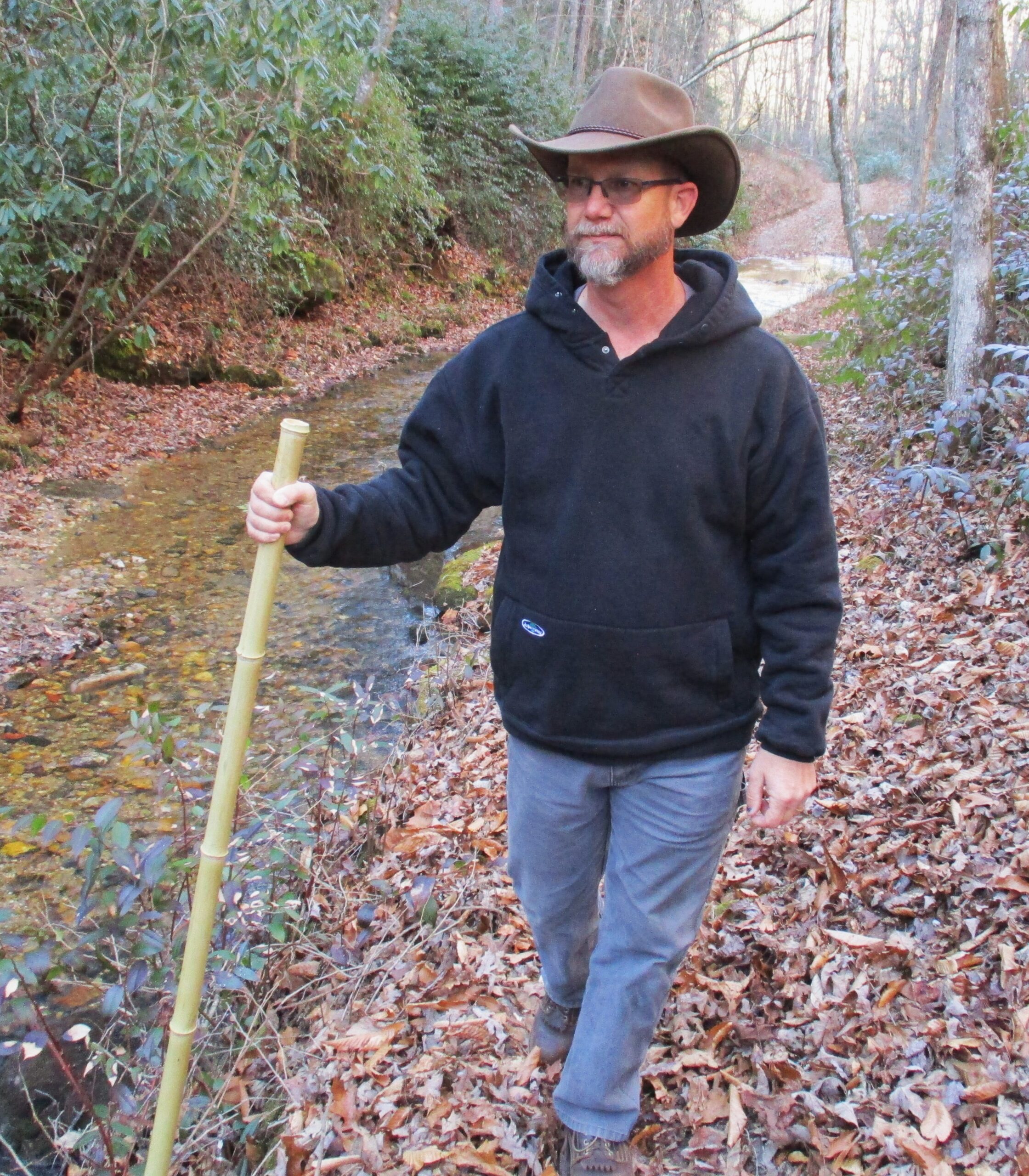
Like many of the long hunters of his day, Daniel Boone often carried a hiking staff in addition to his long rifle.
The reasons were simple and direct. A staff can easily be grasped while holding the fore end of the rifle thereby offering a steadier aim.
My neighbor, David Jones often hunts the mountains with a short staff made from a stick with a fork at the top enabling him to sit down and rest the gun in the fork for a more precise shot. Even more important, the staff could prevent falls that could result in a broken bone that could be a death sentence deep in the wilderness.
Pioneers and explorers like Boone often hunted alone with no one to assist them if they were injured so they had better not get injured. People who don’t live in the woods may assume that such things are not necessary but things change with the seasons. A steep slope covered with a thick loose carpet of dry, new fallen leaves in the fall can suddenly be as slippery as a bar of soap dropped in a bathtub to step on. Ice and snow need no elaboration. Anything that will roll whether it is a section of tree limb or a pine cone can shoot out from under your feet in a slope just like stepping on a roller skate.
A creek that you can easily traverse by hopping from dry stone top to dry stone top in the dry season becomes an entirely different proposition when there is a layer of water and slick moss on it in the rainy season. Wet leaves deposited on top in a recent heavy rain just add one more layer of slippage to an already slick situation. Many men have slipped on a steep slope and twisted or sprained their ankle because they did not have a staff to fall back on. It is your third leg and the difference between falling down the mountain side and keeping your footing in these instances.
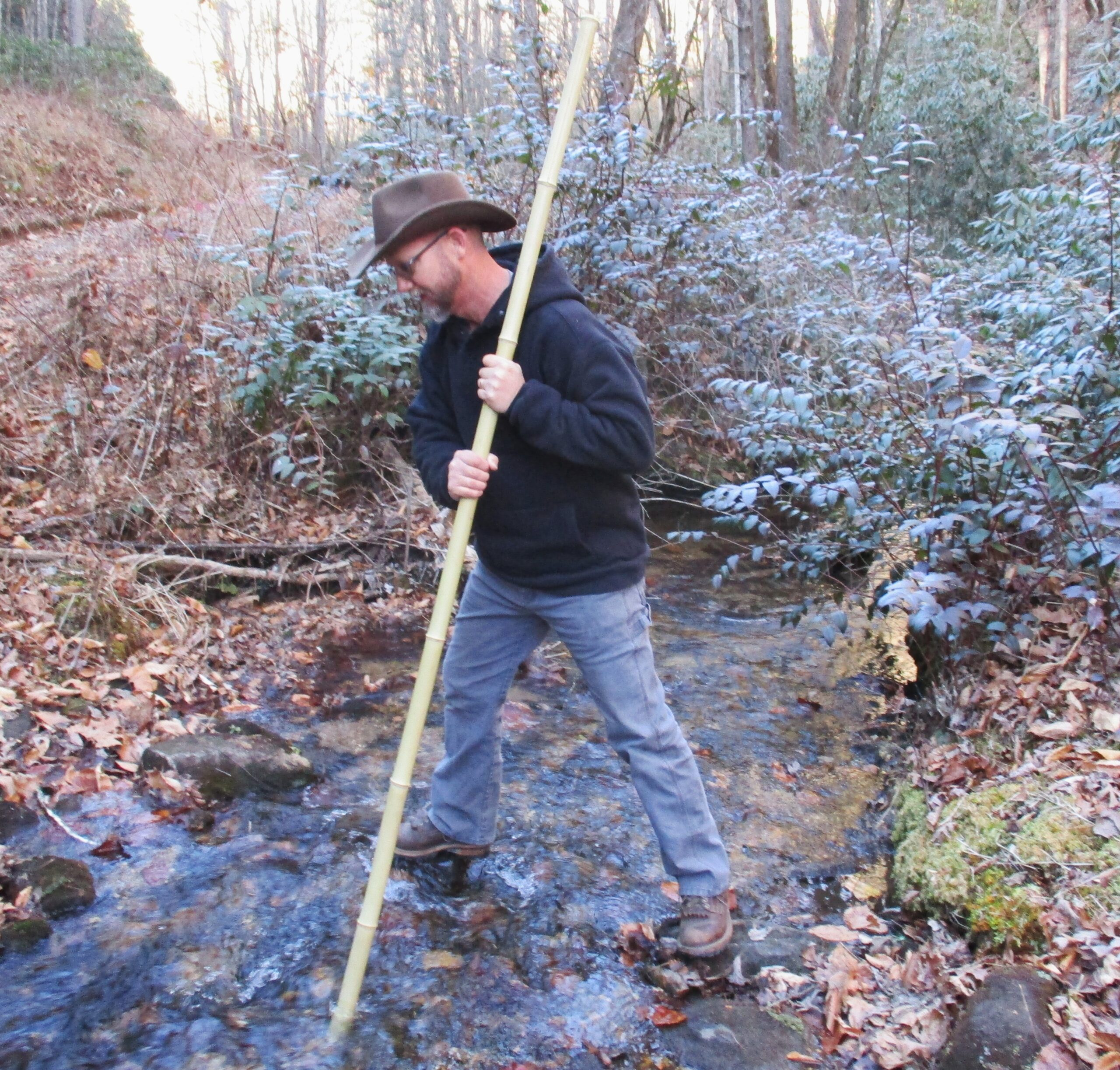
Some may question how they are supposed to carry a rifle in one hand and a stick in the other. Well, the long hunters managed but modern hunters have the advantage of slings on their rifles that enable them to sling the gun on their back and use both hands on the staff if needed or to swap sides with it depending on the lay of the land that they are traversing so this should not be a problem.
I like to hunt as far back in the woods as I can get and I have often explored terrain that was hazardous to cross, to say the least. Particularly dangerous are stretches of steep mountain sides. Sure you can go across them without a staff but for how long before the law of averages catches up with you and you take a tumble. As a kid I used to walk a tight rope and, even harder, a loose rope for fun. Obviously I have good balance yet there are times I will not be without my staff.
For example, there is one steep bank I have to go up regularly that absolutely cannot be climbed without one or preferably two staffs when it is covered with ice and snow. For two staffs you can substitute ski poles or the walking version of these made with a rubber tip instead of a spike. The alternative here is to get down in the ice and snow on all fours to climb up and that can be a wet mess if the snow is partially melting.
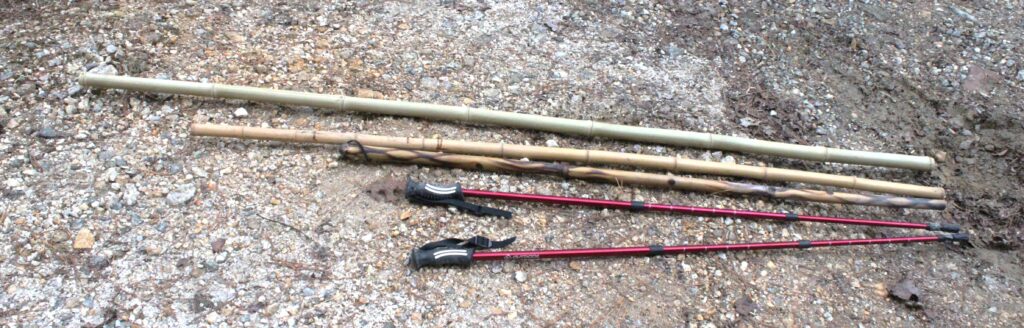
Quarterstaff
Some people may want a proper quarterstaff as it is a useful weapon should the need arise. These are of necessity bigger and heavier than a mere walking staff with the originals largely made of ash but in the New World we have hickory which is even better. Diameter is 1¼ inch or thicker. Proper length for a quarter staff is 8 or 9 feet long. To measure your ideal height traditionally you take the highest point that you can reach with your hand overhead and then add enough extra to allow a comfortable grip with both hands for attack and defense which will usually put the length at around 8 or 9 feet long. The quarterstaff in skilled hands is a fearsome weapon but if you have a pistol you may opt for a lighter and shorter staff.
The proper length for a staff not intended for use as a backup weapon should be one that is exactly one foot taller than the user. This enables you to use it on steep slopes without the end of it constantly pointing at you where you could hit it in a fall yet it is not so long as to be a nuisance always hanging up in the brush overhead. It can be of very lightweight material as it is only going to support your weight and not be used to bash man or beast like a quarterstaff.
I have two stout bamboo staffs that I cut on my Aunt Dell’s farm when I was a teenager. We won’t go into how long ago that was. The point is that stored inside the house they are still as good as new. I have another one I keep on the back porch made from the lightweight wood of the poplar trees that shoot up high in a year’s time. It is still plenty strong for my 200 pounds yet weighs far less than normal hardwood or softwoods. Despite being over an inch in diameter it was easily cut through with a pair of lopping shears.
People going to the souvenir shops along the beach may encounter rattan hiking staffs typically about 5 feet long. These are cheap, strong, extremely light, and excellent for more level areas.
Regardless of the material a staff should be kept dry, and preferably indoors. Wood is subject to warpage, mold, mildew, rot, insects etc. and will not last long otherwise.
Additional Uses
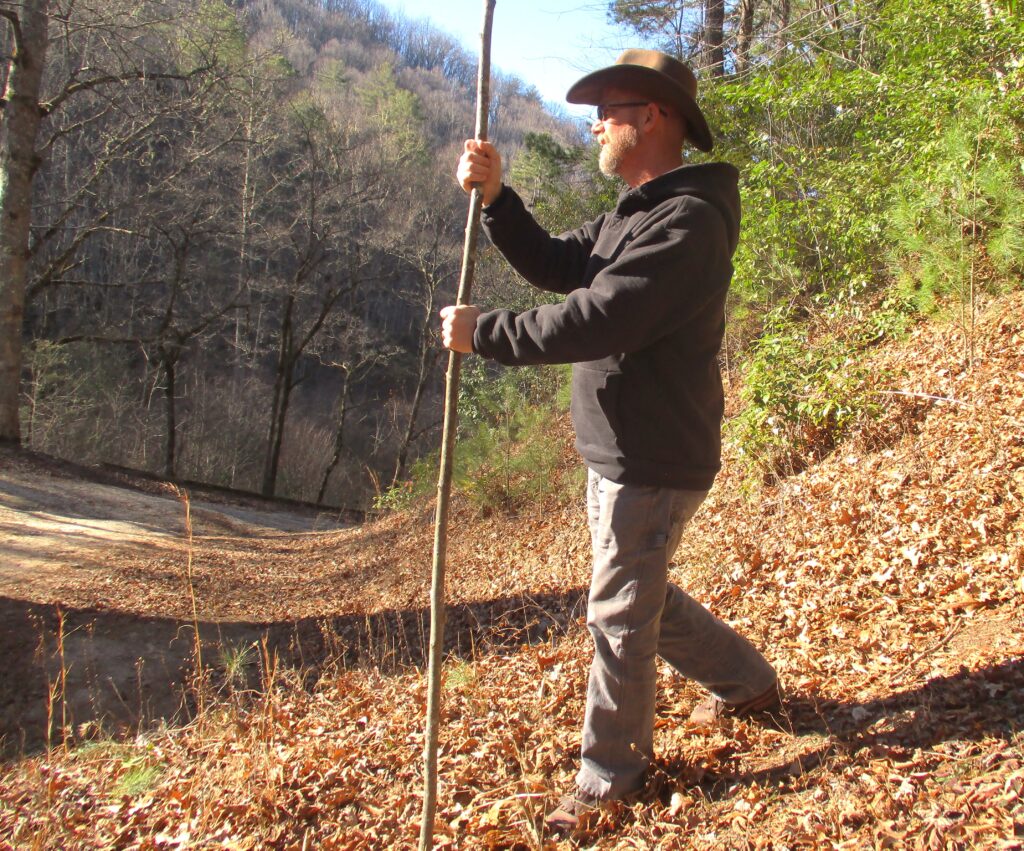
While the use of the staff may seem obvious there are some things worth passing along. When going up or coming down a steep and slippery slope take the staff in both hands and firmly plant it directly in the ground in front of you BEFORE you take each step. You can use it to pull yourself up hill and hold yourself back when trying to go downhill under control, which may not always be as easy as it seems. People from the flat lands may think it’s fun to hurry down a slope. The problem is that you can quickly build up more momentum than your feet can keep up with resulting in a fall.
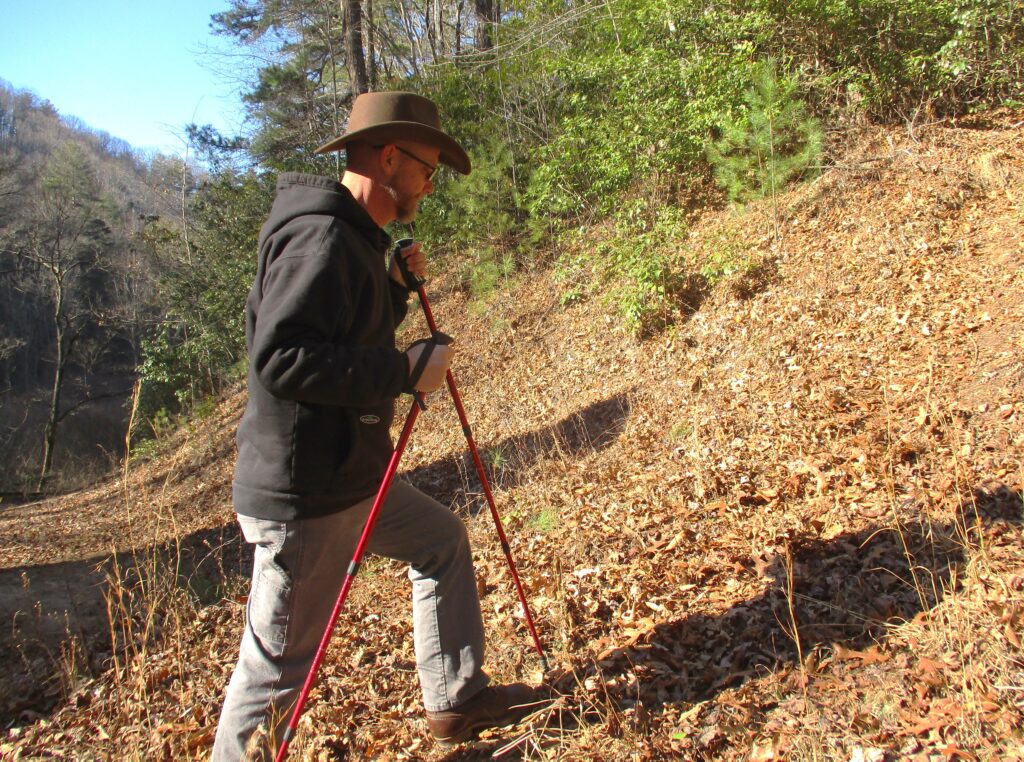
Always have the staff on the downhill side on a slope ready to catch your weight if you slip. This is why you don’t want a short staff in the mountains lest the end, being lower, spear you in a fall. Again, plant the end firm and square into the side of the mountain because if you knew when you were going to stumble and need it you could probably avoid it. You don’t know and that’s the point.
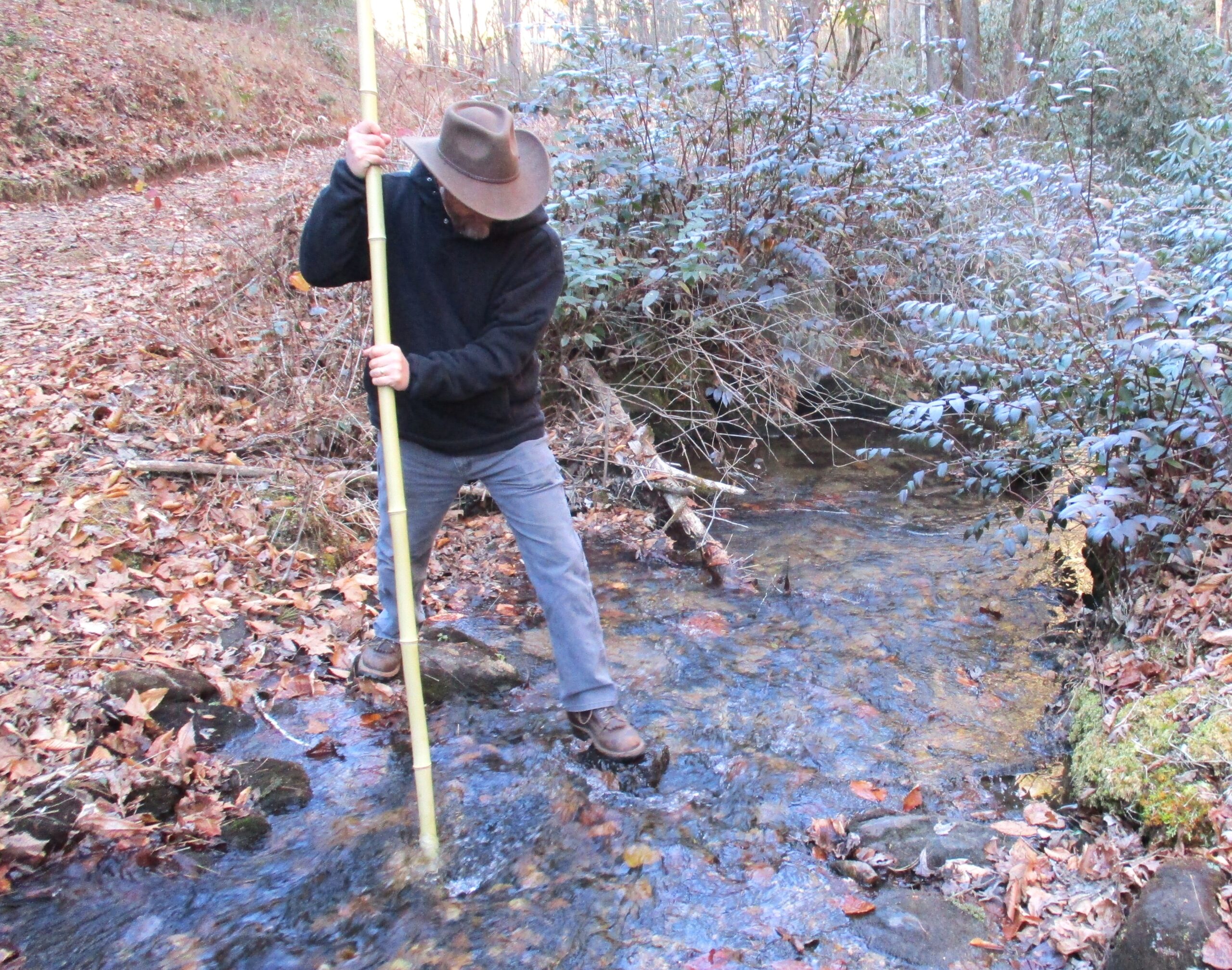
When jumping from rock to rock crossing a stream plant the staff firmly and securely in the stream bottom so that you can put weight on it turning yourself into a tripod that is much less likely to fall in should you slip on a wet moss covered rock. If you are facing a fierce current Alaskan stream just do not cross as some of these have big rocks tumbling through them that won’t just knock you down they will also break your leg. I remember one that I used to throw rocks in and watch how far the rock was carried downstream before sinking. People who have never seen such a thing may dismiss it as a tall tale but it’s true regardless.
When the going is easy you may want to give your arm a rest and simply carry the staff. You don’t always need it, however, when you are really tired and worn out it does help you to get along.
Two short staffs, a pair of ski poles, or a pair of rubber tipped walking poles made otherwise like ski poles may be preferred in snow and ice. There are times when the ice and snow makes them mandatory where I live. Always make sure both are planted firmly before each step for snow and ice didn’t get their reputation for being slippery through a Hollywood ad campaign. Some people may prefer them on steep mountainsides but you have to be careful to push the handles away from your body if you go down so you don’t fall on them.
There are many times when you don’t need a hiking staff but there are also times when you really need one. It’s good to have one and to know the proper way to use it then.