By Mike Nesbitt | Contributing Editor
Most of the time when I enter discussions about black powder cartridge rifles, the subject leans toward the guns of the old buffalo hunters or the target rifles of today.
Those were (or are) the guns that are quite heavy and while the heavy weight was preferred by the buffalo hunters, it isn’t what we like to carry in our hands for most deer or bear hunting in these times. So, with just hunting in mind, I’d like to pass on some suggestions for a good black powder cartridge hunting rifle.
There will be considerations, of course, to be weighed which need to include the type of game which will be hunted as well as what kind of an area where the hunts might take place. If hunting in the brush or thick timber, a “brush gun” will easily do but if hunting in more open areas, then considerations for a rifle capable of longer shots need to be addressed. While our black powder cartridge rifles and calibers will all have limits to the velocity of the bullets, we can still increase the practical limits to their effective range by picking sights or scopes which will aid in shooting at longer distances.

My first concern is for the weight of the rifle to be carried. I’d love to take game with my “Hefty Hannah,” the heavy .44-77 Sharps that is one of my favorites, but that rifle weighs over 15 pounds. It is fitted out like an old buffalo gun. I wouldn’t last long trying to pack that anchor around. That gun gets heavy just carrying it to the firing-line…
Easy Carry
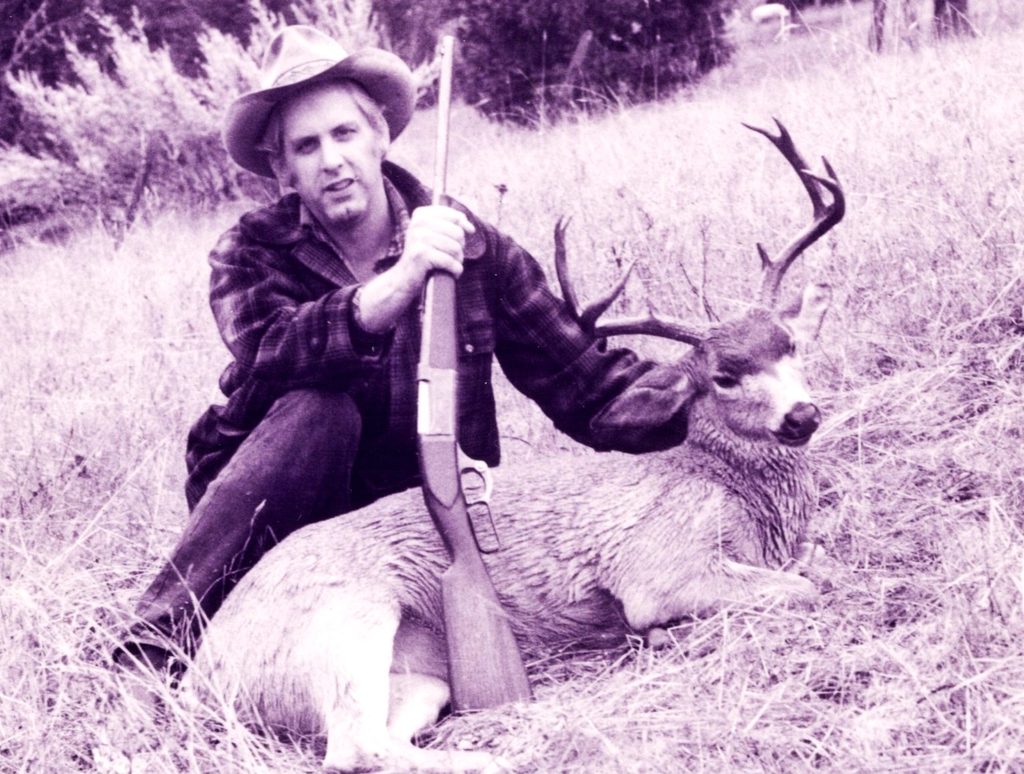
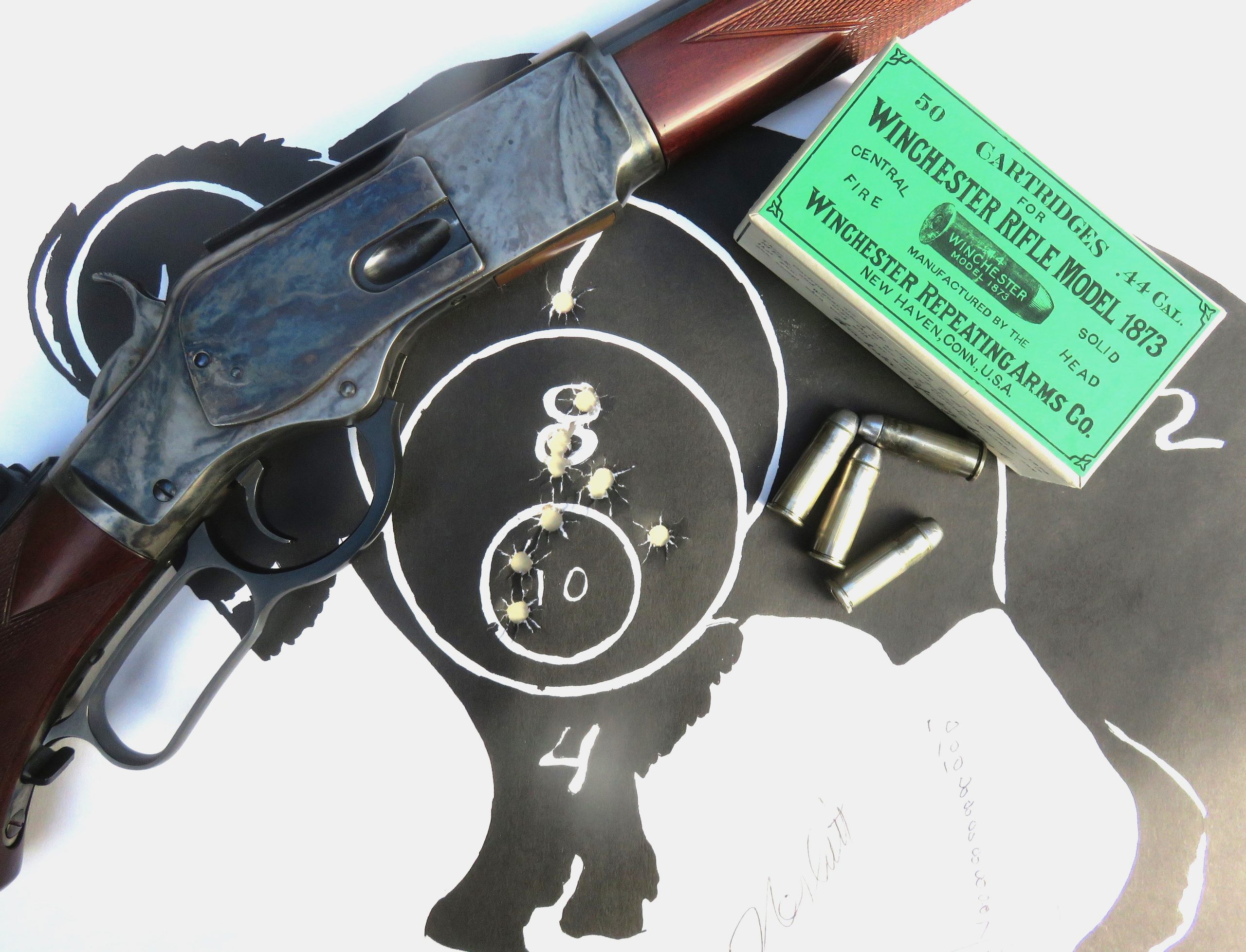
For an easy to carry rifle for hunting, one that I’ll give some credit to right at the start of our conversation is the good old Winchester Model 1873, or copies thereof, in .44-40. That’s pretty light, speaking of both the weight of the rifle and the powder of the cartridge, I know. About 40 years ago, I took one deer with the .44-40 (although not a black powder load) with a cast bullet, a neck shot. The bullet broke the neck and there was no more to it, the deer was taken instantly. That was done with a Model 1892 carbine and the ’73 carbine is easily in the same class, and rifle versions of the ’73 or ’92 are still quite portable.
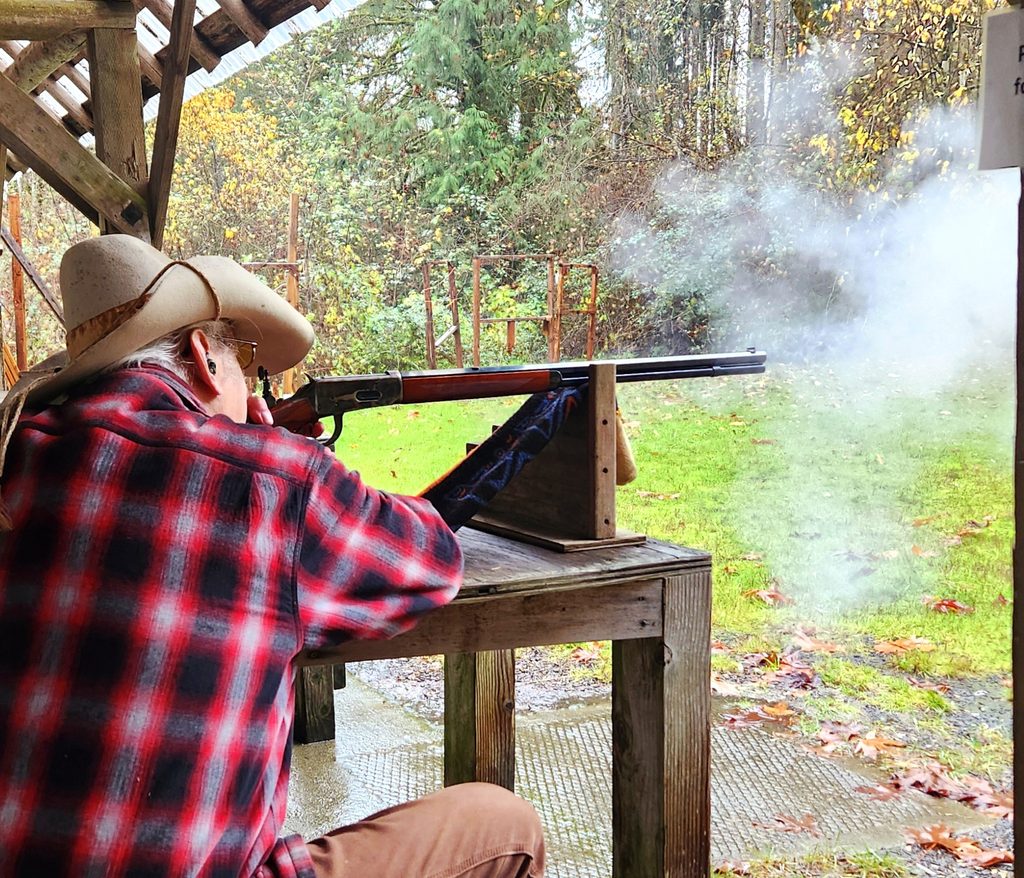
Some might ask why go deer hunting with a rifle, black powder or otherwise, that is so far down on today’s muzzle energy lists? We could ask the same question about archers who go hunting big game with their bows and arrows. They hunt that way because they want to. That question could easily be extended to hunters who use muzzleloading rifles, they want to hunt big game like our forefathers did, depending more on hunter’s skill than modern ballistics. When using muzzleloaders or bows and arrows, the hunters try to get close enough so that sure hits are made. Modern hunters who use handguns fall into this same bracket, the style of hunting and the shots that are taken are made with considerations which favor the more limited range of the guns, or bows, being used.
Speaking about the .44-40 again, some hunters might question the general lack of penetration with the .44-40’s 200-grain bullets. That can be a factor, especially if bone is hit. Keep that in mind while placing a shot.
And while we might be mentioning specific calibers in this conversation, our real subject actually is the rifles that these calibers are available in. After all, it’s the rifle which must be carried on those hunting trails. So, our main concern must be about those rifles that are easy to carry. Making the shot, therefore, is secondary, after getting to the place where the shot can be taken.
But thinking about bullet penetration also leads us to the next rifle/caliber combination I’d like to mention. That’s the good old .38-55 which, with its 255-grain bullets, will break bones and penetrate better than the .44-40 and similar cartridges.
‘Perfect Rifle?’
Years ago, a good friend of mine bought what he considered to be the perfect deer rifle. It was a Model 1894 Winchester carbine in .38-55 caliber, an old one but in very fine condition. Then he hunted with it and brought in some very massive bucks with outstanding wall-hanging racks. The way he hunted was certainly productive, he’d scout an area before the season opened, then go back after opening day and sit in a tree-stand where he could watch the deer trail of his choice. That .38-55 was a real deer-anchoring gun and I don’t think he took a shot over 35 yards away, and he kept on using the original Winchester carbine rear sight that came with the gun. He wasn’t using black powder at the time but the performance of the .38-55 bullets should be just about the same, regardless of the type of powder being used.
Let me follow his example just a little bit. In the 1980s I got fine buck with a .38-55 at a distance of 104 paces. That was a one-shot kill, although the buck did not drop in its tracks. He didn’t go far and he was easy to find. The .38-55 did the job very well.
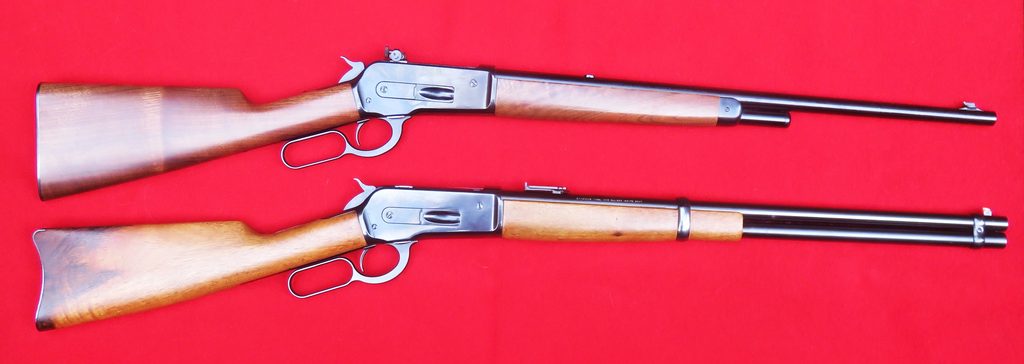
My old .38-55 was a Savage 99 Saddle Gun with a 22-inch barrel. Another rather easy to carry rifle. Today good handling .38-55s are easy to find. Cimarron is importing modern-made copies of the old Model 1894 Winchester, made by Uberti. I personally don’t care for their carbine, because the front sight is not made or attached like the old ones, but that doesn’t take anything away from the handiness of the new guns.
Such tastes have led me to get one of the new Cimarron ’94 rifles, the deluxe model with checking and pistol grip, with the 26-inch barrel. That is still handier than a heavy single-shot and I’d take that rifle deer hunting any time. Mine is equipped with a new Marble’s tang sight and a bead front sight too, I’ll be doing some good shooting with that rifle. Cimarron also offers the carbine with a 20-inch barrel plus a Short Rifle with the same barrel length as well as at least two different sporting rifle versions with 26-inch barrels.
The Winchester
Winchester can’t be left out of our discussion because they currently offer several versions of their ’94 with 20 or 26-inch barrels, including a 20-inch barreled Short Rifle take-down. And the new Winchester ’94s are all the “angle eject” type which means they can be scope mounted with ease. Years ago, back in the 1980s, Winchester made the Wrangler II carbine available in .38-55 with a 16-inch barrel, that was handy for sure.
Currently, my favorite load for a repeating .38-55 uses Lyman’s #375248 bullet, about 250 grains, over 45 grains of Swiss 2Fg powder. That’s a snappy load and it would be sure to put meat on the table with any good hit for deer, elk, or black bear.
Next, let’s talk about what is probably the most hunted-with black powder cartridge of them all, the famous .45-70. But, once again, we’ll be talking more about the rifles available for this historic cartridge than just the cartridge itself. And, as you probably already know, there are several good hunting rifles made for this round today.
Marlin, now made by Ruger, offers a carbine version of their modern Model 1895 lever action which has a 19-inch barrel. That, we might say, is a modern-made carbine, made for today’s hunters, without trying to recreate the past. There’s nothing wrong with that even though my personal tastes do favor the rifles that more closely duplicate the guns of the late 1800s.
This brings us right back to Winchester and currently they do offer the newly made Model 1886 carbine in both .45-70 and in .45-90. The .45-90, with its 300-grain bullets over about 90 grains of black powder, would be just as terrific a hunting rifle as it was back in 1886 when Winchester brought out their ’86 rifle and the .45-90 cartridge. The proper cast bullet for the .45-90 is Lyman’s #457191, which was available until just recently. Another mold I’ll recommend for hunting with the .45-90, or the .45-70, is the 300-grain bullet from Accurate Molds, #46-300B.
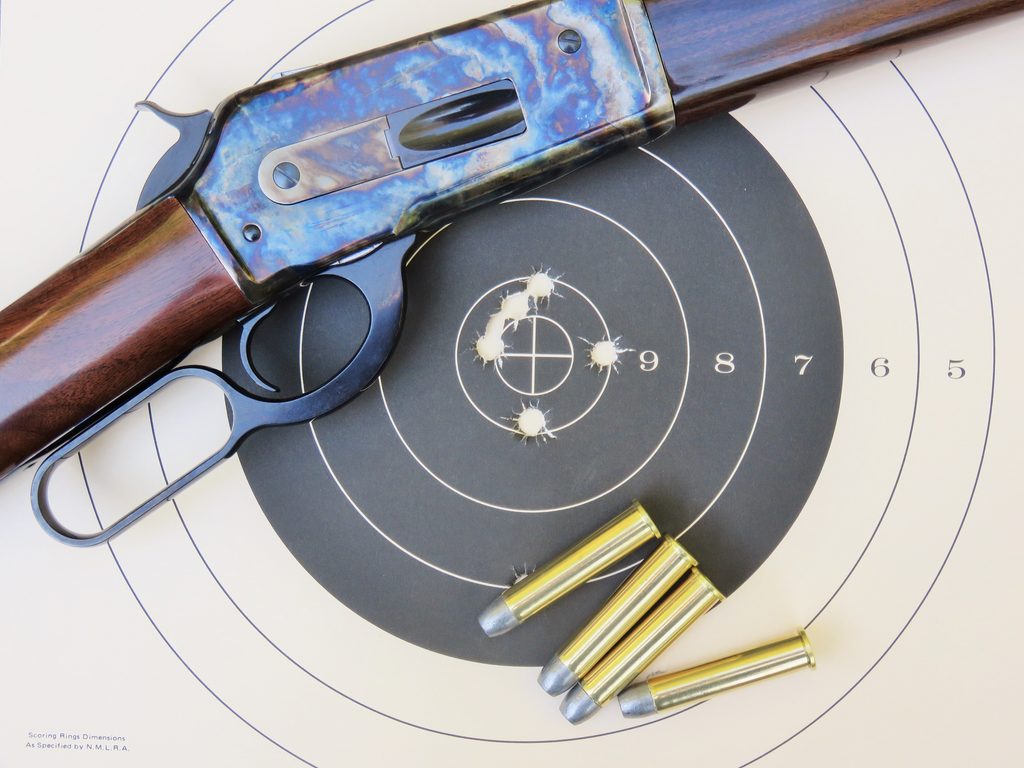
One reason for recommending a 300-grain bullet for the .45-70 is for the reduced recoil that it has with black powder loads, which can be a factor for consideration in lightweight hunting rifles. Especially for the Model 1886 Extra Lightweight version which weighs less than 7 ½ pounds. I have one of the Extra Lightweight rifles from Winchester, with the short magazine, and that makes a dandy hunting rifle. From my own experience, the heavy recoil of the light rifles is not felt while taking shots on the hunt but they are uncomfortably felt while sighting-in those rifles.
And a 300-grain bullet is certainly more than enough for deer-sized game.
Cimarron Fire Arms also offers a copy of the Winchester 1886 carbine but the rifle from Cimarron that appeals to me the most for a hunting rifle is their version of the Winchester Model 71, which Winchester made only in .348 W.C.F. caliber. Cimarron makes their Model 71 available in Classic or Deluxe versions in .45-70 as well as the big .348.
Sharps Big Bore
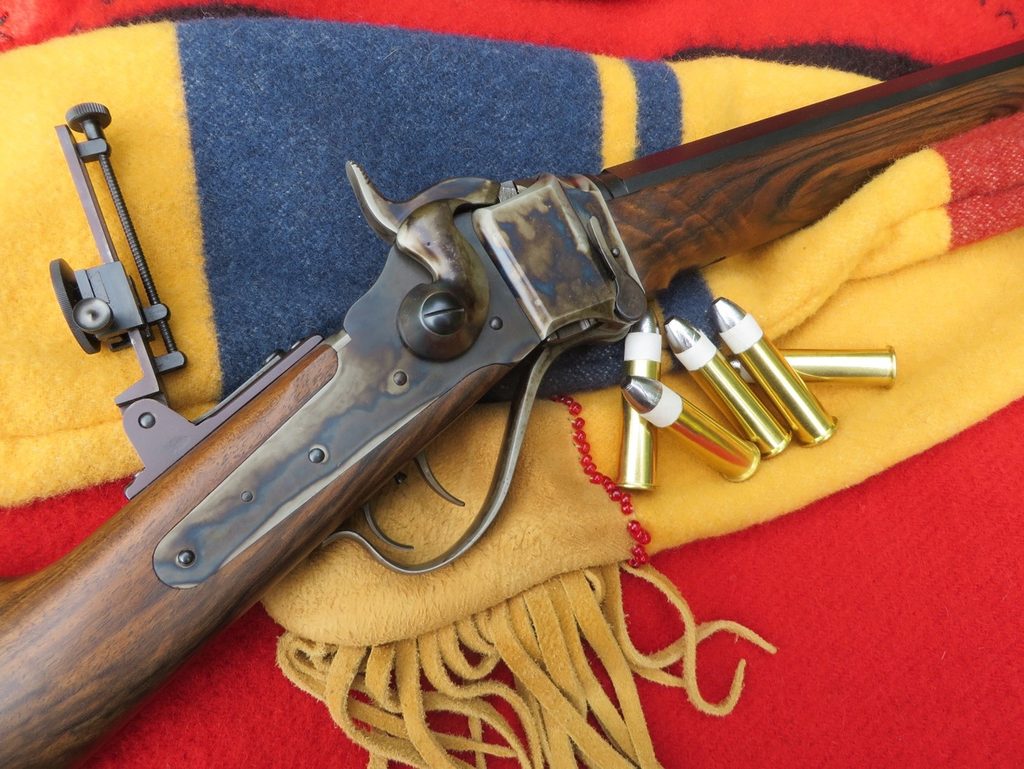
So far only repeating rifles have been mentioned and some folks might think I was saving the best for last. That really wasn’t the intention but this last rifle and caliber is surely a very good one. The caliber is the .50-70 and the only rifles made for this cartridge are single-shots. My choice for a hunting rifle using this caliber is the Sharps Model of 1874, with specific details.
Just over ten years ago I wanted a Sharps as a hunting rifle, where weight and handiness were given serious considerations. What developed out of that was a .50-70 caliber sporting rifle with a half octagon barrel, 26 inches long. C. Sharps Arms also makes a ’74 Hunter’s Carbine which has options for barrel lengths of 22, 24, or 26 inches but the sporting rifle I ordered differed from the Carbine by having a half-octagon barrel while the carbine barrel is round. And on that rifle, I had a mid-range tang sight mounted but left the silver blade front sight in the forward dovetail. A sporting tang sight might have been somewhat better for hunting but the mid-range sight is more easily adjustable, which made that .50-70 more adaptable for target shooting in addition to being a hunting rifle.
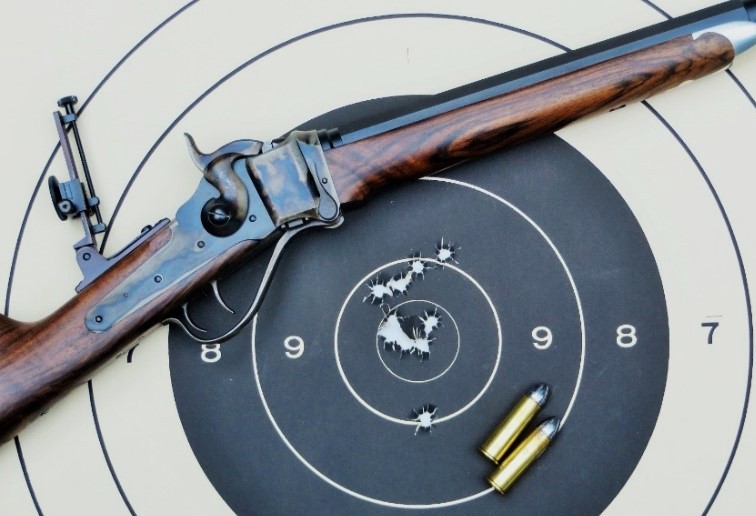
That .50-70 weighed an even 10 pounds, right about at the top of the “weight limit” I had set for a rifle I might try hunting with. I’m actually sorry to say that I never did hunt with it even though it was shot a lot and used in some shooting matches too. That rifle went with me on several trips but it never did get used to “make meat.” Maybe there is still time.
The rifles that were mentioned here are often available in other black powder calibers. I only focused on what might be considered the best calibers for those different guns. And regardless of the caliber, also including the more modern smokeless cartridges, the real key to a good hunting rifle is how well it can be carried. After all, we might be carrying that rifle for several hours even on a one-day hunt, but no matter how long we carry it, we’ll only be shooting it on a hunt for a few limited seconds of time. And the rifles that can be carried easily will be shot on the hunts far more than a rifle that is too heavy to be hunted with.