By Dave Workman
Editor-in-Chief
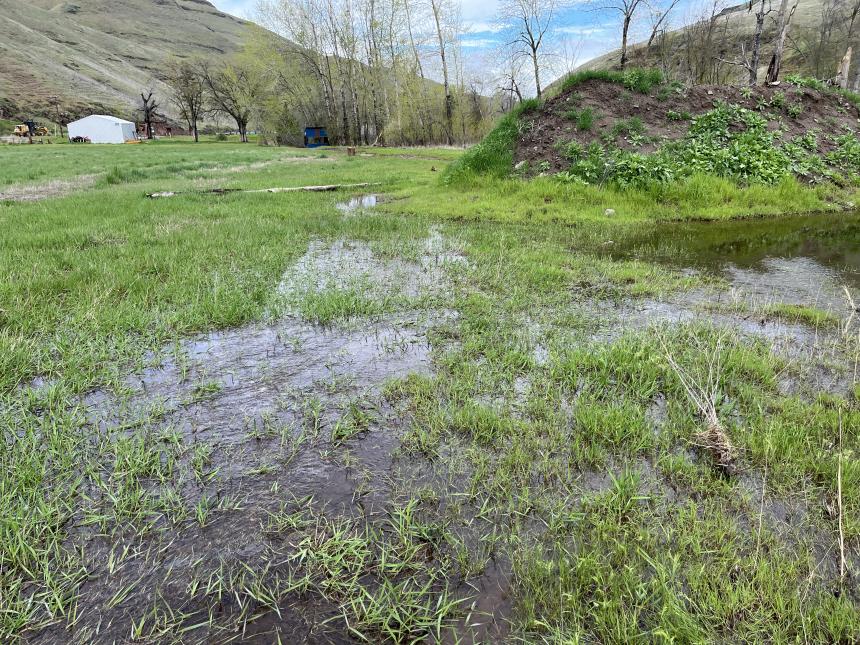
When the Washington Department of Fish & Wildlife (WDFW) announced several days ago that it was seeking public comment on a State Environmental Policy Act (SEPA) about permanent closure of a shooting range on the Asotin Creek Wildlife Area south of Clarkston in the state’s far southeast corner, March flood damage was blamed.
But at least one frequent user of the very basic 100-yard range thinks something else is underfoot. Kenneh Parker, a resident of Clarkston, asserts this closure is part of something bigger.
“They’re just trying to get us to stop being able to shoot,” he told TGM in a telephone conversation. “Because we’re run by a liberal government. They want to take our shooting ranges away…that’s gonna lead to not being able to shoot. They took away our bear season…between the wolves, bears and cougars, our elk and deer numbers have plummeted.”
It is no secret that the Washington Legislature, dominated by Democrats, has passed increasingly restrictive gun control laws in recent years. Governor Bob Ferguson, also a Democrat, has pushed gun control and gun bans as the former attorney general.
But Bob Dice, manager of the Wildlife Area, told TGM via telephone that March flooding was very bad, and Asotin Creek changed course as a result. In the WDFW news release Dice commented, “Unfortunately, the cost both financially and environmentally to put the creek back where it was to protect the range would be astronomical. The work required also exceeds typical land management approaches for land acquired primarily to provide habitat for fish and wildlife.”
But what about shooters who have used the range?
Dice said they could visit “a nice range” 21 miles from Clarkston and neighboring Lewiston, near Lapwai, across the Snake River in Idaho.
Or, Dice suggested, “There’s no law that says (shooters) can’t go and shoot in a dispersed fashion,” somewhere else along the Asotin Creek canyon, “as long as they do it safely.”
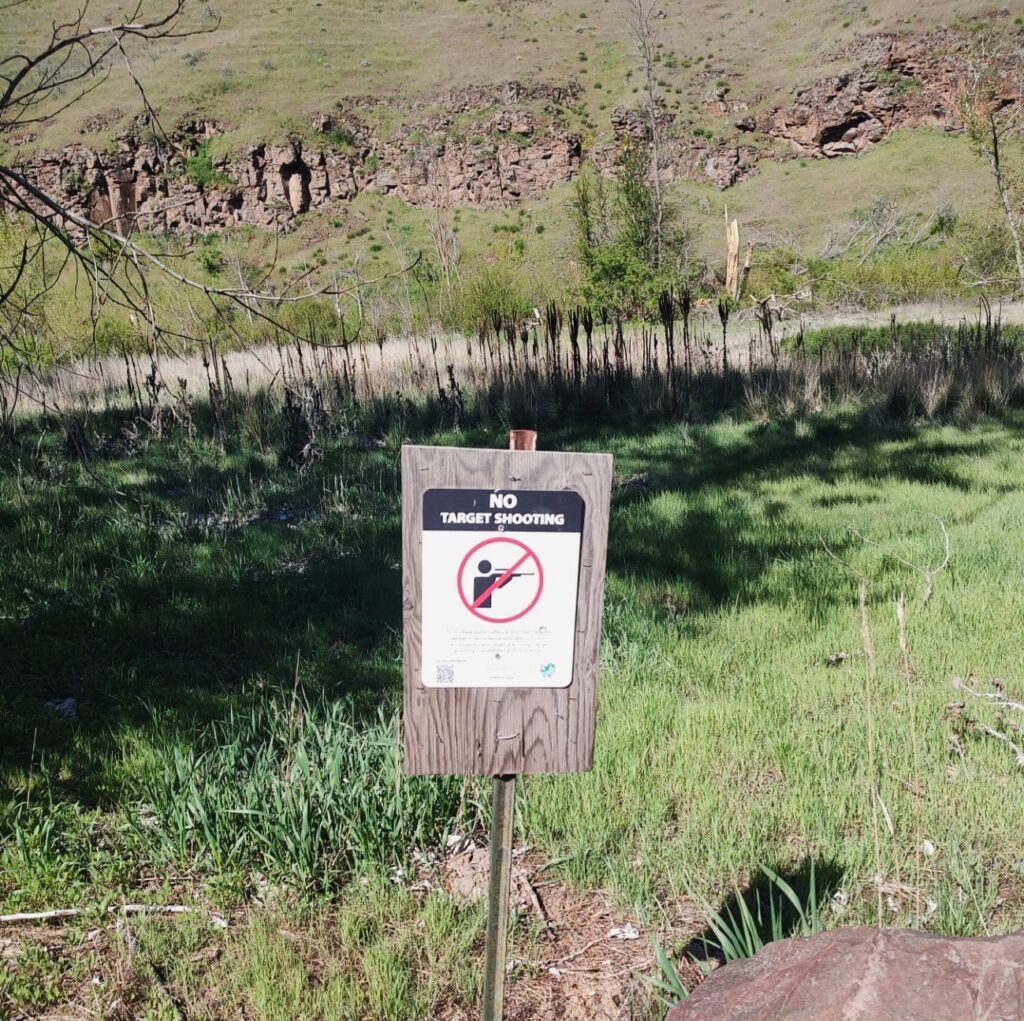
But Parker says many places have been posted against “dispersed” shooting, and he sent a photo as evidence.
Dice, in the WDFW release, cautioned about trying to change the course of the creek.
“When humans attempt to change this and force water bodies into unnatural channels, it can cause a creek or stream to become disconnected from its’ floodplain and result in degraded habitat and water quality,” Dice said. “In addition, we also often find out that nature has other plans, and the creek or stream returns to its’ natural course over time.”
According to WDFW’s release, “Due to the topography of the area, funding constraints, and proximity to private homes, the Department has been unable to identify a feasible or practical area to relocate the range to on the wildlife area. Over time, the range site will be rehabilitated into habitat by planting willows and cottonwood.”
“We understand that this is a loss to the public as the shooting range is very popular and there aren’t many alternative shooting sites in the area,” Dice said in the release.
Parker, on the other hand, contends the creek has overflowed before, and when the water receded, the range area remained accessible.
“The gun range is used by a lot of people,” Parker said. “I think they’re just trying to close the range.”
WDFW’s news release says, “After reviewing the documents posted on WDFW’s SEPA webpage, members of the public can comment on the state environmental policy act (SEPA) determination for the proposed closure through the Public Input comment portal links at Asotin Shooting Range or by emailing AsotinShootingRange@PublicInput.com. Comments can also be submitted by mailing to Lisa Wood, care of WDFW, at P.O. Box 43200, Olympia, WA 98504-3200. Comments must be received by 5 p.m. on May 18, 2026.