By Dave Workman
Editor-in-Chief
Forget about what the grouse hunting “purists” have said—that it’s not fair chase to pop fool hens with a .22-caliber pistol—and keep this in perspective: do these birds stand a better chance dodging a cloud of No. 6 or 7 ½ shot, or a single 36- or 40-grain lead bullet before disappearing into the forest?
September is upon us, and for guys like me living in the western U.S., this means grouse hunting seasons are open, or—in Washington state, where the Fish & Wildlife Commission a few years ago moved the opener back to Sept. 15—are about to open and bird hunters are out in force.
I’ve taken a lot of grouse over the years with shotguns, using either a 12-, 16- or 20-gauge smoothbore, and they all tasted great. However, I’ve also put a fair number of birds in the bag with a .22-caliber rifle or pistol and you know what? They tasted just as good, and I didn’t have to worry about biting down on a pellet.
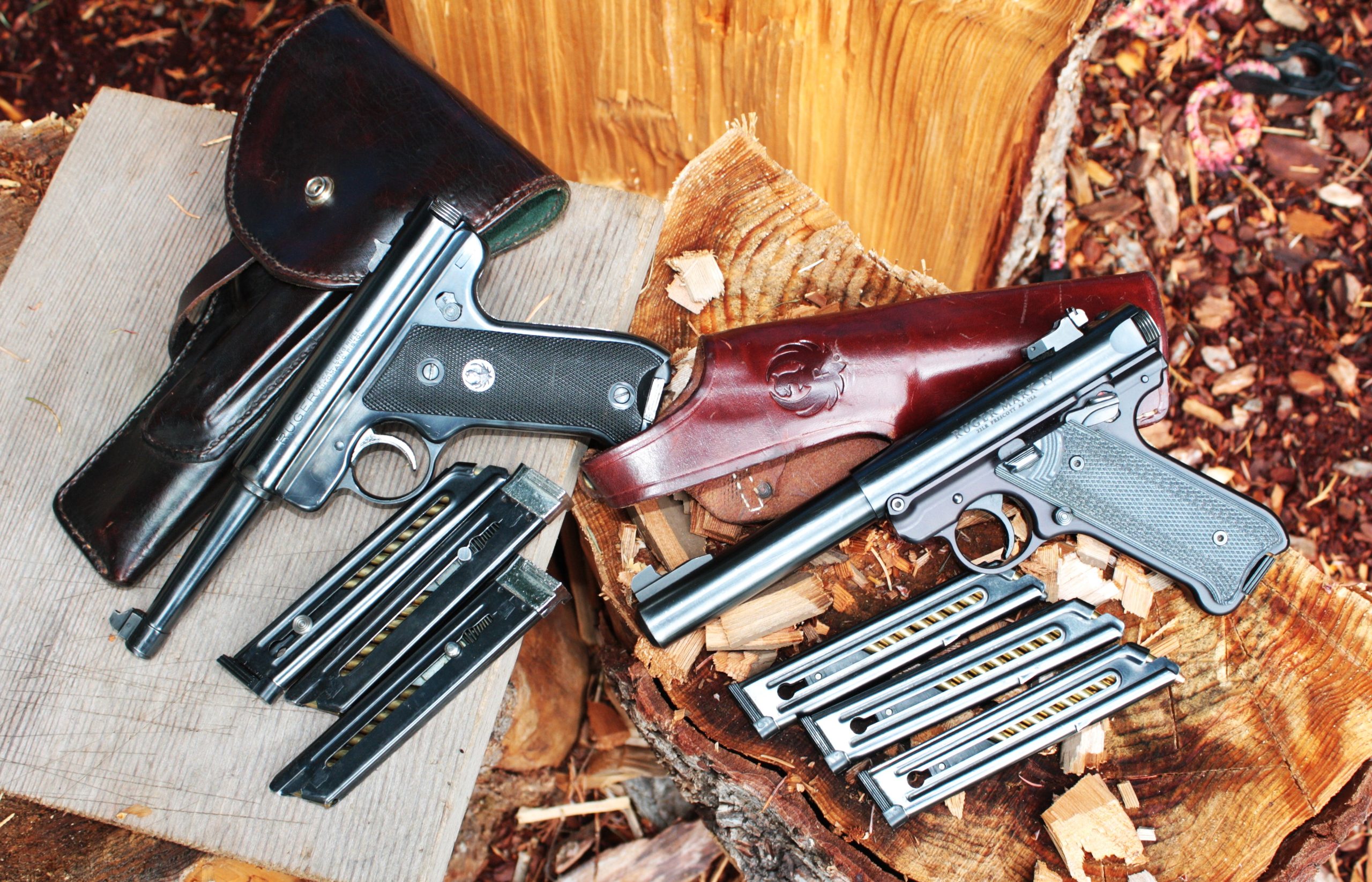
Lately, I’ve been cleaning up my two Ruger semi-auto pistols, one an original “Standard” (the first Ruger pistol and predecessor to the MKI) with fixed sights, and a MKIV, with a 5-inch target/bull barrel and adjustable rear sight. Both are deadly accurate and have accompanied me on many treks afield.
My favorite loads launch either a 36-grain hollowpoint or traditional 40-grain RNL, and either pill will put the hurt on even the biggest grouse. I have only lost one grouse hit with a .22, so I’m not sure just how hard it was hit, while I’ve had to search for a few birds I’m pretty sure were hit with a shotgun spread but they managed to disappear.
Honestly, being able to shoot a grouse with a pistol is no small feat for a lot of people. Even for me—and I’ve been bonking blue grouse with pistols for decades—it remains a challenge, and once, about three years ago, I wrote an article for the online edition of American Handgunner in which I acknowledged having “talked myself into” shooting grouse that fall with one of my Rugers, and after having plugged my first bird on the first day of the season, I “talked myself right back out of it” and went on my merry way.
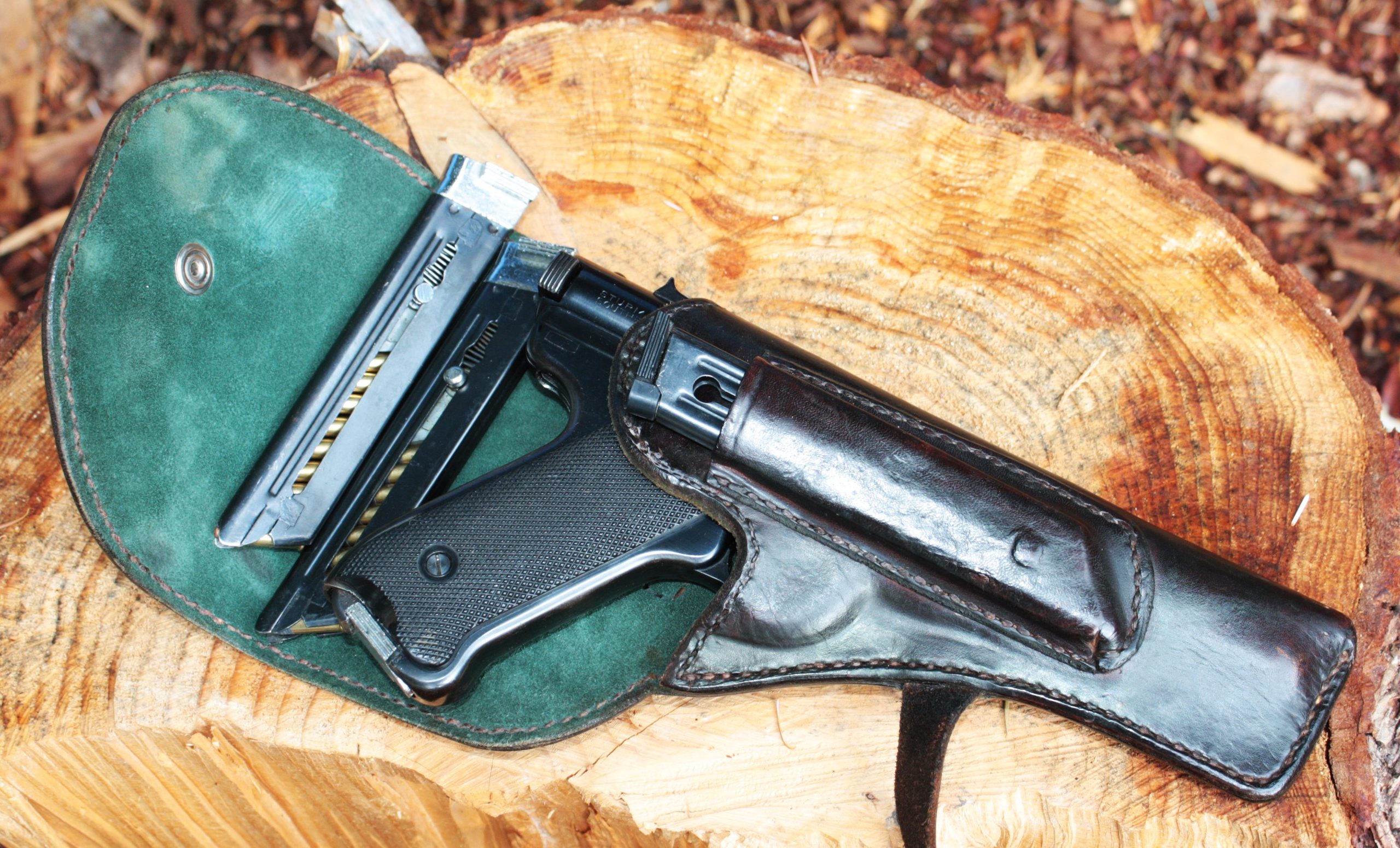
A little history is in order. When I was a kid, I had a mentor who took me along on several raccoon hunts. He carried a Ruger Standard pistol on a cartridge belt, and he was pretty good with it. Years later, maybe about 12 years ago or more, I found one of those original Standards at a gun show, and it was in almost pristine condition. The original bluing was still nice and deep, the grips showed no abuse, and aside from needing a good cleaning and having a small nick on the butt, plus only one magazine, I plunked down the asking price, sent my son around the show to find a spare magazine, which he promptly did, and later that day, I headed to the range, where I was delighted to learn this pistol was “dead-on” at 25 yards.
The following September, I used that pistol to pop my first blue grouse of the day at about 20 yards as it crept into the timber just off an old logging road. I followed the sucker into the brush—if you’re familiar with blue grouse, they sort of “badoop” along with their heads nodding back and forth—and when I had a good shot with a tree trunk in the background, I fired.
My other two birds that day tumbled to a 20-gauge double.
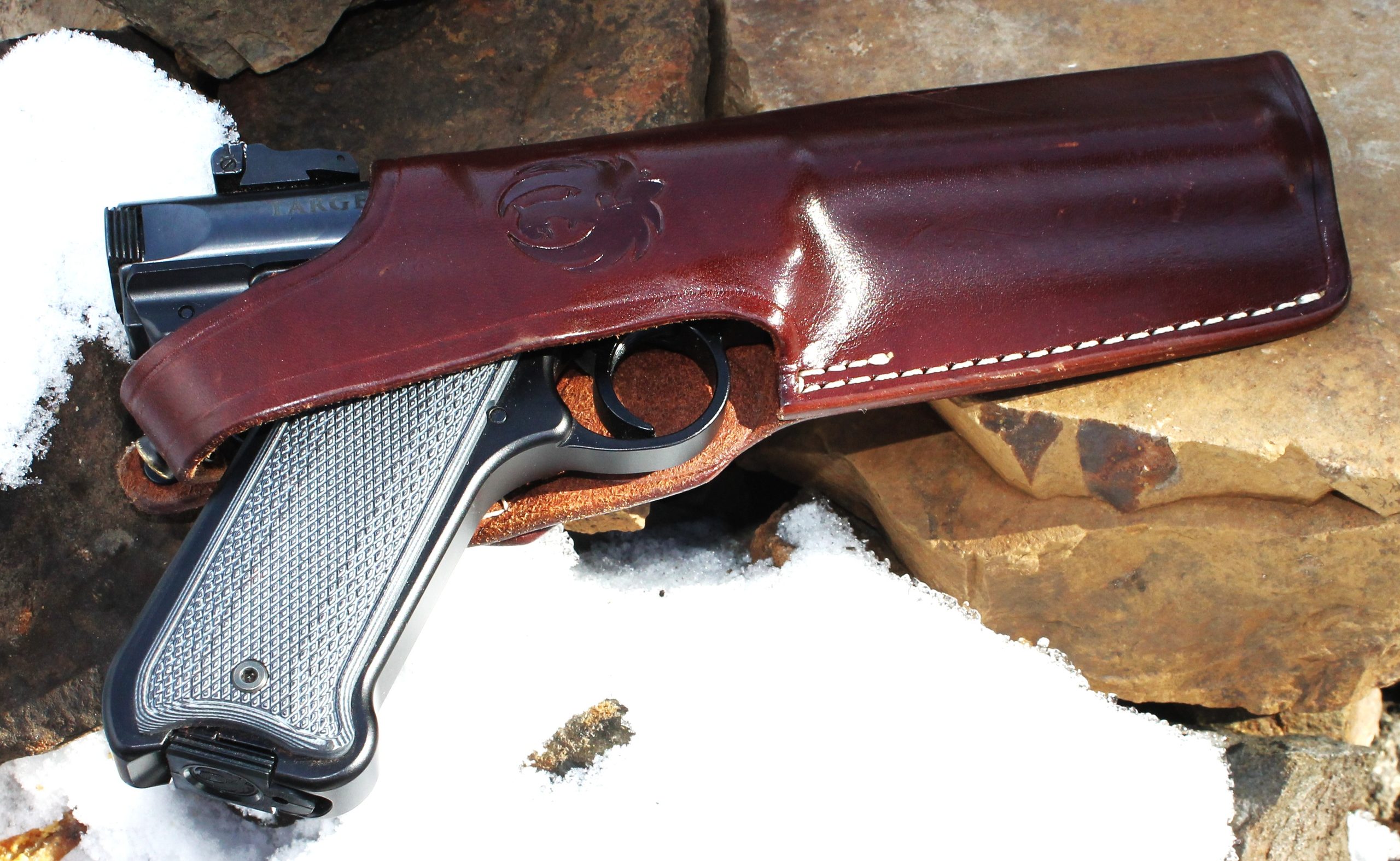
A few years ago, I was quick to buy a new MKIV, on which I was doing a field test, because of its re-design that allows the pistol to be taken down for cleaning without having to monkey with the grip frame. Out of the box, I think it took about a dozen rounds to zero that pistol at 25 yards, and it came with a holster made by Triple K, which is a dandy.
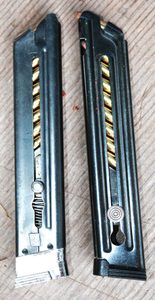
Among the distinct differences between the two pistols is the way magazines are ejected. In the early model, the European magazine release is on the butt, while on the MKIV, the more traditional American release on the left side of the frame behind the trigger is used. Also, you’ll notice that magazines on early models had a thumb button on the right side to guide the follower, while on the MKIV, it’s on the left side.
The Standard magazine holds nine cartridges. The later MKIII and MKIV magazines hold ten rounds.
Practice
Lately I’ve been participating in a grouse hunting conversation on a popular hunting forum, and my advice to people wanting to try shooting these birds with pistols—a tradition in the western states—was to start practicing. Half-gallon water-filled milk jugs, some self-sealing rubber targets made by Champion, paper targets, bottle caps and clay discs; they all make good targets. Another tip: be ready to do a lot of shooting.
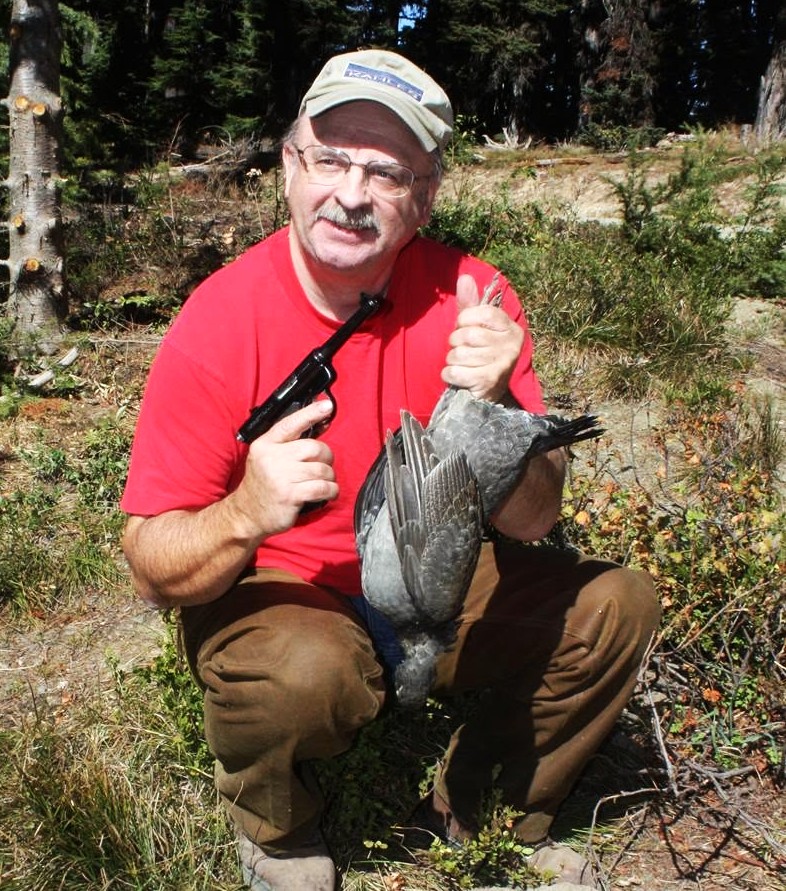
Fortunately, .22 Long Rifle cartridges are still very affordable, and shooting rimfires can be a lot of fun, while helping the shooter to reach his/her goal of being able to hit the target.
It’s not just grouse in the mix.. Later in the fall, and through the winter, there are rabbits and snowshoe hares worth hunting, and they make great holiday season table fare.
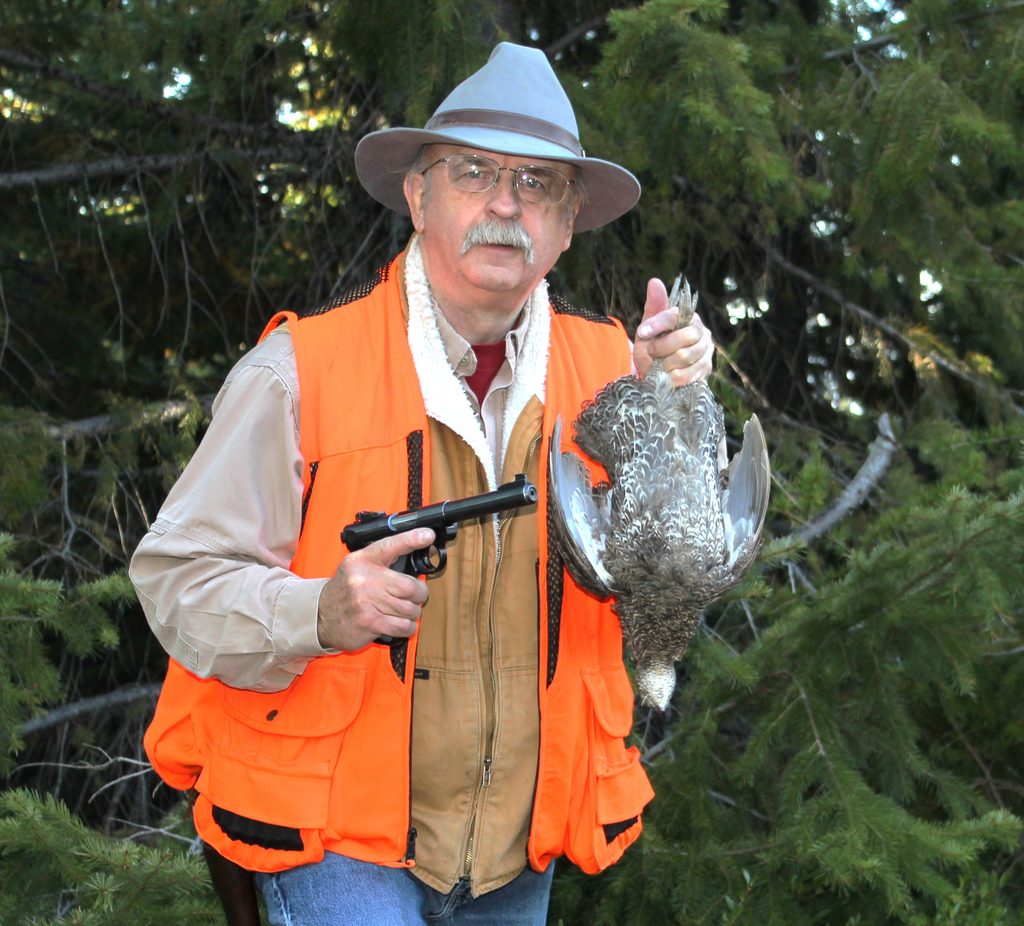
The .22 Long Rifle is actually a superb cartridge. Bullets from the ammunition I typically use will leave the muzzle at more than 1,200 fps. They shoot flat, hit small game hard and don’t make a mess of things.
Start off shooting from a solid rest. This way, you’ll have a steady sight picture and, if your gun has a decent trigger, the first shots will provide a good idea about where the gun shoots. If you have an adjustable sight, shift it accordingly, up/down or side/side.
By the time you’re through a 50-round box, you should have determined where your rounds are going and have the sights aligned to put them there consistently.
Be willing to reduce the size of your target as your accuracy improves. From water-filled milk jugs down to empty shotgun shells or even bottle caps; the progress you make is up to time and effort. Take my word for it, if you can hit empty shotgun shells at 20-25 yards, you will have absolutely no trouble hitting a grouse or rabbit at that distance!
For each of my pistols, I’ve got four magazines. This will keep me shooting for quite a while. If your rimfire is a revolver, just load up a cartridge belt or keep ammunition handy in a pocket.
Either way, once you’ve become proficient with a .22-caliber pistol, you just might find a whole new world has been opened up.
Good hunting!