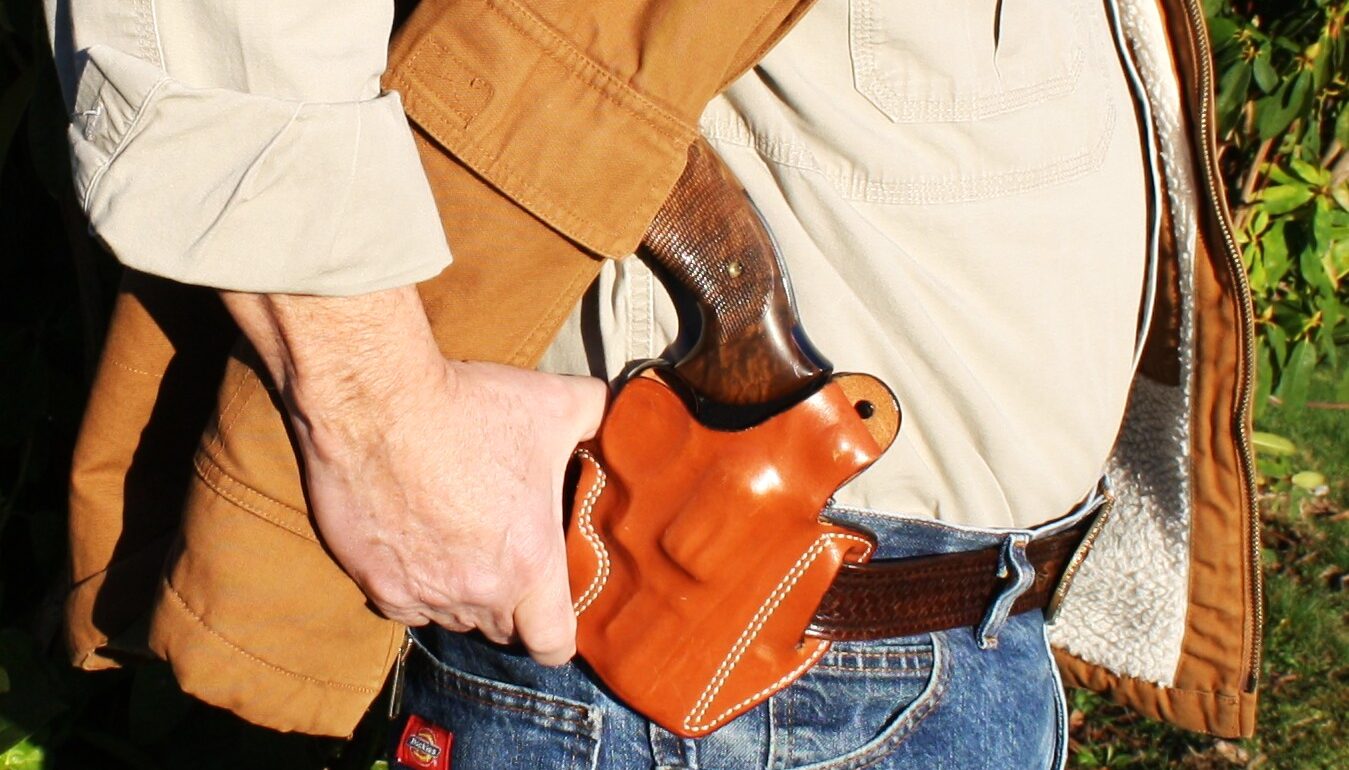
The Second Amendment Foundation and Citizens Committee for the Right to Keep and Bear Arms have submitted an amicus brief in the case of Johnson v. Jacobson, challenging Minnesota law which does not recognize concealed carry licenses issued by other states.
They are joined by the National Rifle Association, California Rifle and Pistol Association, Second Amendment Law Center and Minnesota Gun Owners Caucus.
Later this month, SAF and CCRKBA will co-host the 41st annual Gun Rights Policy Conference in Dallas, Texas.
Plaintiff Jeffrey M. Johnson, Sr., is a long-haul truck driver who holds carry permits from Florida and Georgia, but when he drives rigs into Minnesota, neither permit is recognized. Under the current law, he must apply for a Minnesota permit. The Eighth Circuit Court of Appeals has upheld that requirement. In their brief, SAF, CCRKBA, NRA and the others maintain, “The Second Amendment protects “the general right to publicly carry arms for self-defense.” That right, enshrined in our Federal Constitution, cannot tolerate each state having the power to force individuals from every other state to jump through time-consuming and costly hoops before it deigns to allow them to carry a firearm within its borders.”
“Americans should not need a stack of state licenses and thousands of dollars to exercise a constitutional right just because they cross an imaginary line,” said SAF founder and Executive Vice President Alan Gottlieb. “The Supreme Court should grant this petition and make clear that shall-issue permitting, even if a state may require it of its own residents, does not authorize a state to ignore the permits of every other state.”
“The right to carry does not stop at state lines,” said SAF Director of Legal Research and Education Kostas Moros, counsel of record on the brief. “A truck driver who already holds permits from Florida and Georgia should not have to fly to Minnesota, appear in person at a sheriff’s office, pay another set of fees and complete another training course just to exercise the same constitutional right he already has. Our historical tradition offered travelers more leeway than residents when it came to the right to carry. Minnesota’s scheme turns that tradition on its head.”
“The Constitution doesn’t become optional every time an American crosses a state line,” said CCRKBA Executive Director Andrew Gottlieb. “Minnesota is willing to recognize some carry permits issued by other states while rejecting others, forcing lawful gun owners into a confusing patchwork of government mandates.
“Americans should not have to navigate fifty different bureaucracies to determine whether exercising a constitutional right will turn them into a criminal when they cross a state border,” he continued. “That is exactly the kind of undue burden the Supreme Court should eliminate.”
The brief details the practical burden of the current patchwork: California nonresident permits can cost $500 to $2,000 and take months or years, some states still refuse nonresident applications altogether and one couple documented more than $12,800 in fees to assemble permits covering 46 states and D.C. It further notes that licensed carriers are overwhelmingly law-abiding. Florida, for example, has revoked only 0.36% of more than 6.6 million permits issued since 1987.
The amicus brief also discusses the historical treatment of travelers from the colonial period through the 19th century, when “traveler’s exception” laws exempted visitors from certain concealed-carry restrictions imposed on residents. CCRKBA and the other amici argue this historical tradition conflicts with Minnesota’s refusal to recognize permits issued elsewhere.
The high court will convene on the first Monday in October.