By Jim Dickson | Contributing Writer
Upon getting the call from Reeves Ace Hardware in Clayton, Georga that the big bore Smith & Wesson lever action rifle for review had come in, I made the long trip into town to pick it up.
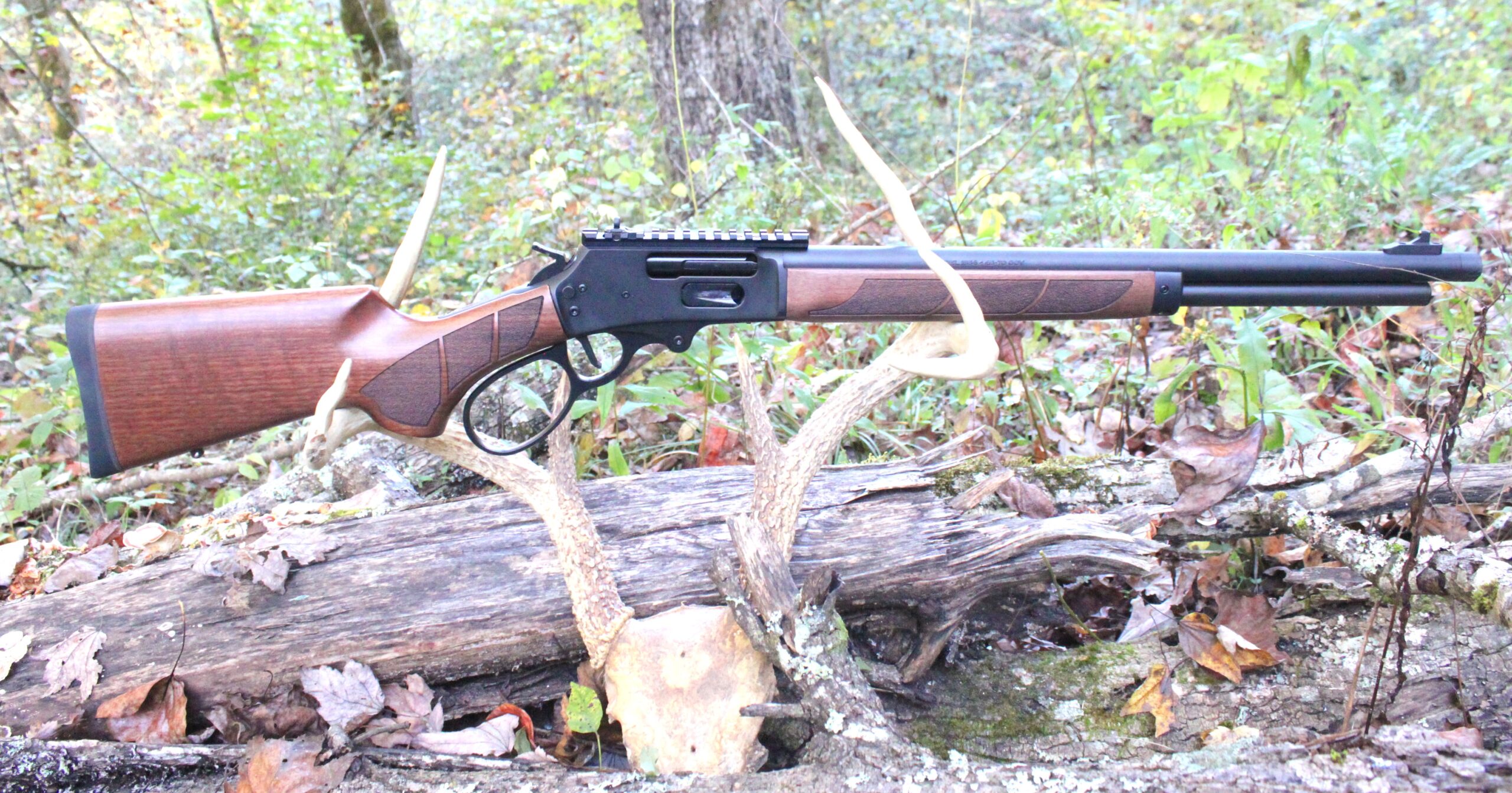
Like most modern .45-70 rifles, this one is based on the Marlin action with its solid receiver top facilitating scope mounting.
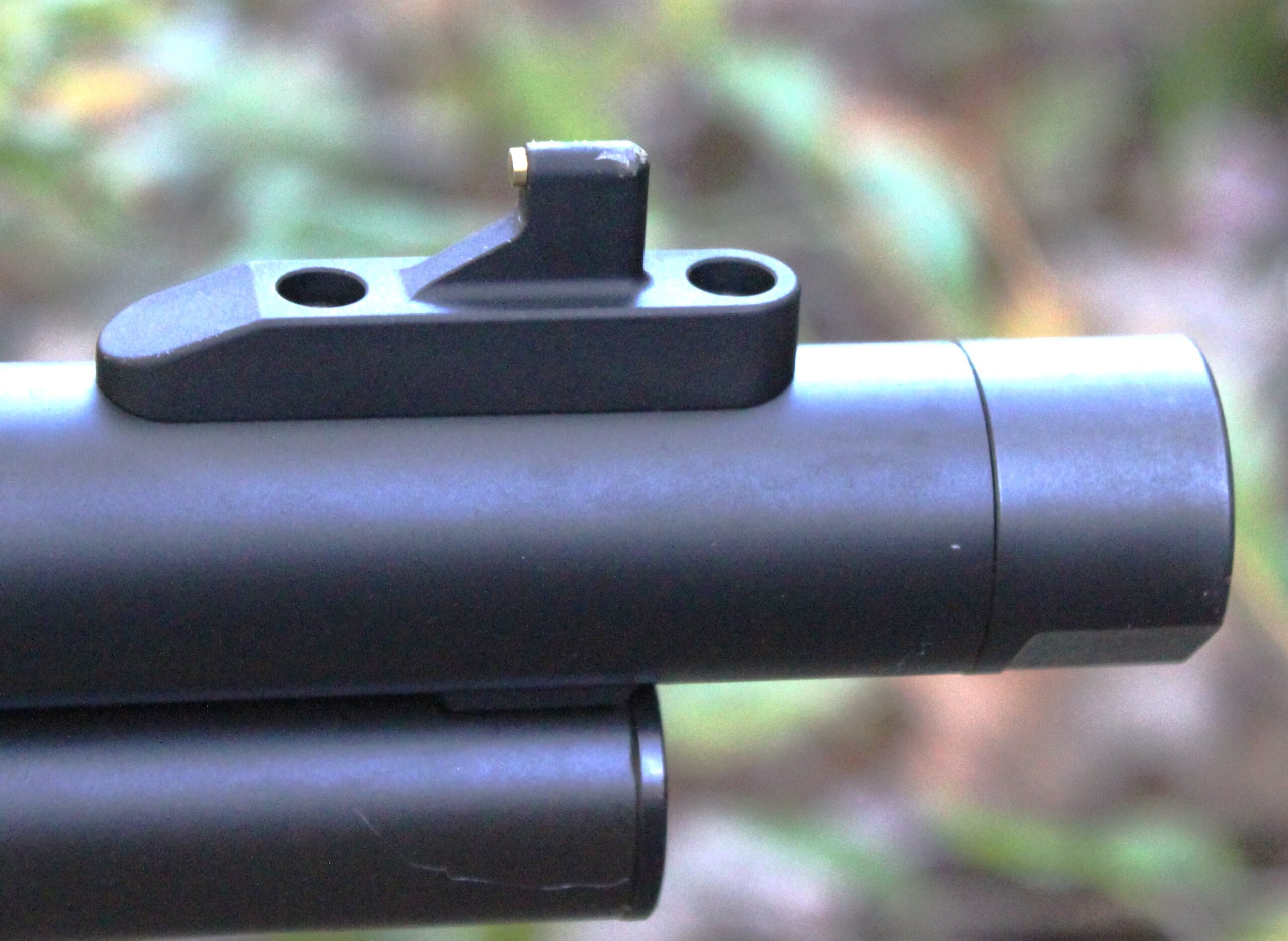
S&W takes this a step further than most having a Picatinny Rail for easy scope attachment. There are excellent iron sights consisting of an adjustable ghost ring rear sight and a gold bead front sight. Just the thing when you need to shoot fast in thick cover.
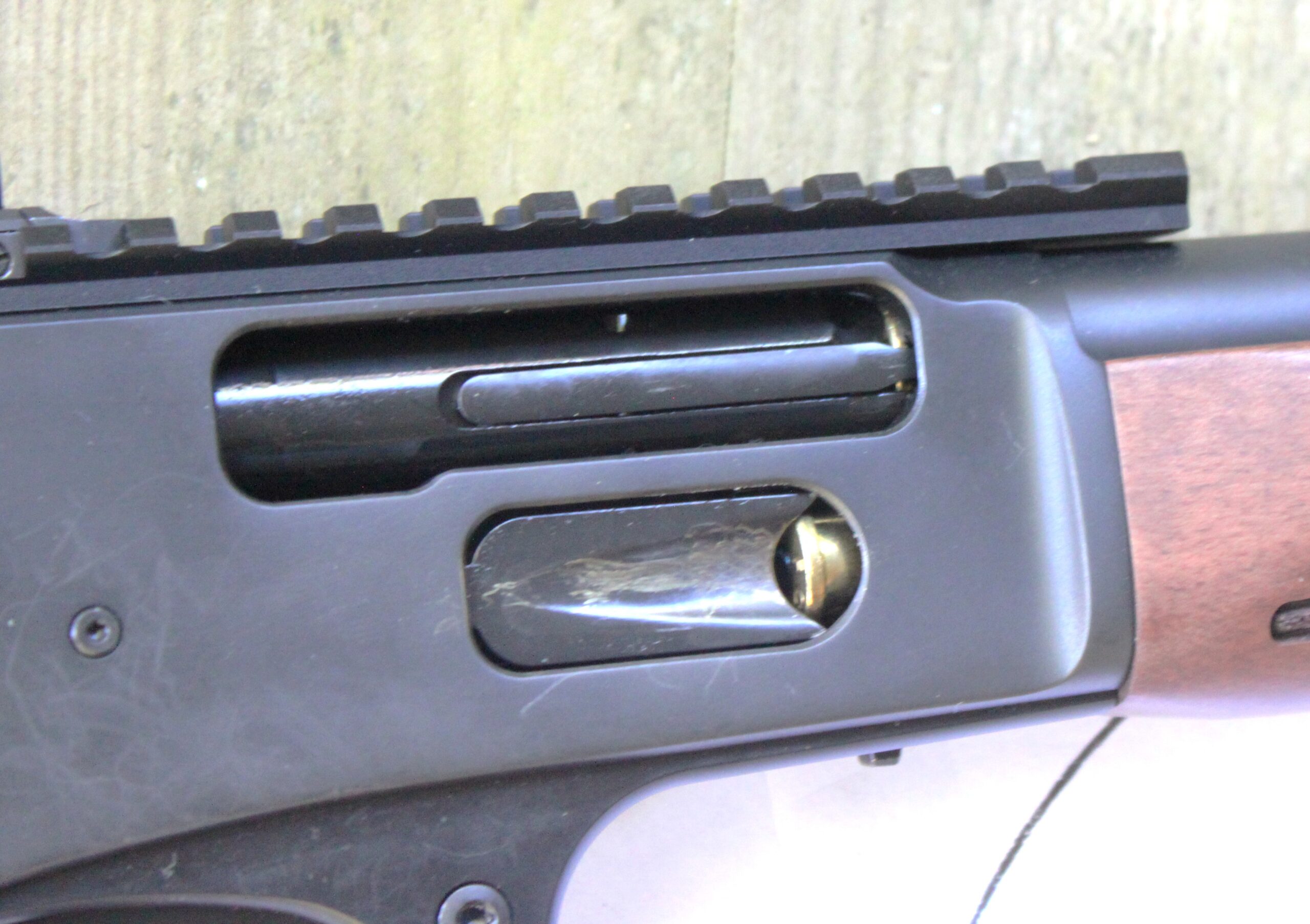
One important improvement is that the receiver is a 416 stainless steel forging and the barrel is made from 410 stainless steel. Both the barrel and receiver are black thanks to an Armorite finish, which adds to the corrosion resistance while preventing the gun shining and spooking game. This pleases me as I have long advocated finishes on stainless steel as opposed to leaving them in the white. I am a big believer in stainless steel for guns as corrosion is something that happens all to easily to working firearms.
Like most 45-70 rifles, the 20-inch barrel is round and the weight is 7.1 pounds. If the barrel were octagon and weighed an extra pound the rifle would hang far steadier for offhand shooting. As suppressors are becoming more popular as more hunters seek to protect their hearing, the end of the barrel is threaded 11/16 X 24 and the threads are covered by a thread protector.
Rifling features eight grooves with one turn in 20 inches on a right hand twist. The bore is smooth and bright, unlike some current manufacture guns that I have inspected which were rougher than they should be. That can make a big difference in how long it takes to clean the bore after shooting.
The tubular magazine holds six .45-70 cartridges, and with one in the chamber, a hunter has seven quick shots available.
S&W designed the lever with a modern large loop profile that better accommodates gloved hands and the action is slick and smooth.
Trigger pull, as measured by a Lyman mechanical trigger gauge from Brownells Gunsmithing Supplies, is a crisp 6 pounds and the trigger is made flat with a small hook at the end to allow better control when shooting.
The rifle is very compact, measuring only 37.8 inches overall, a true carbine length.
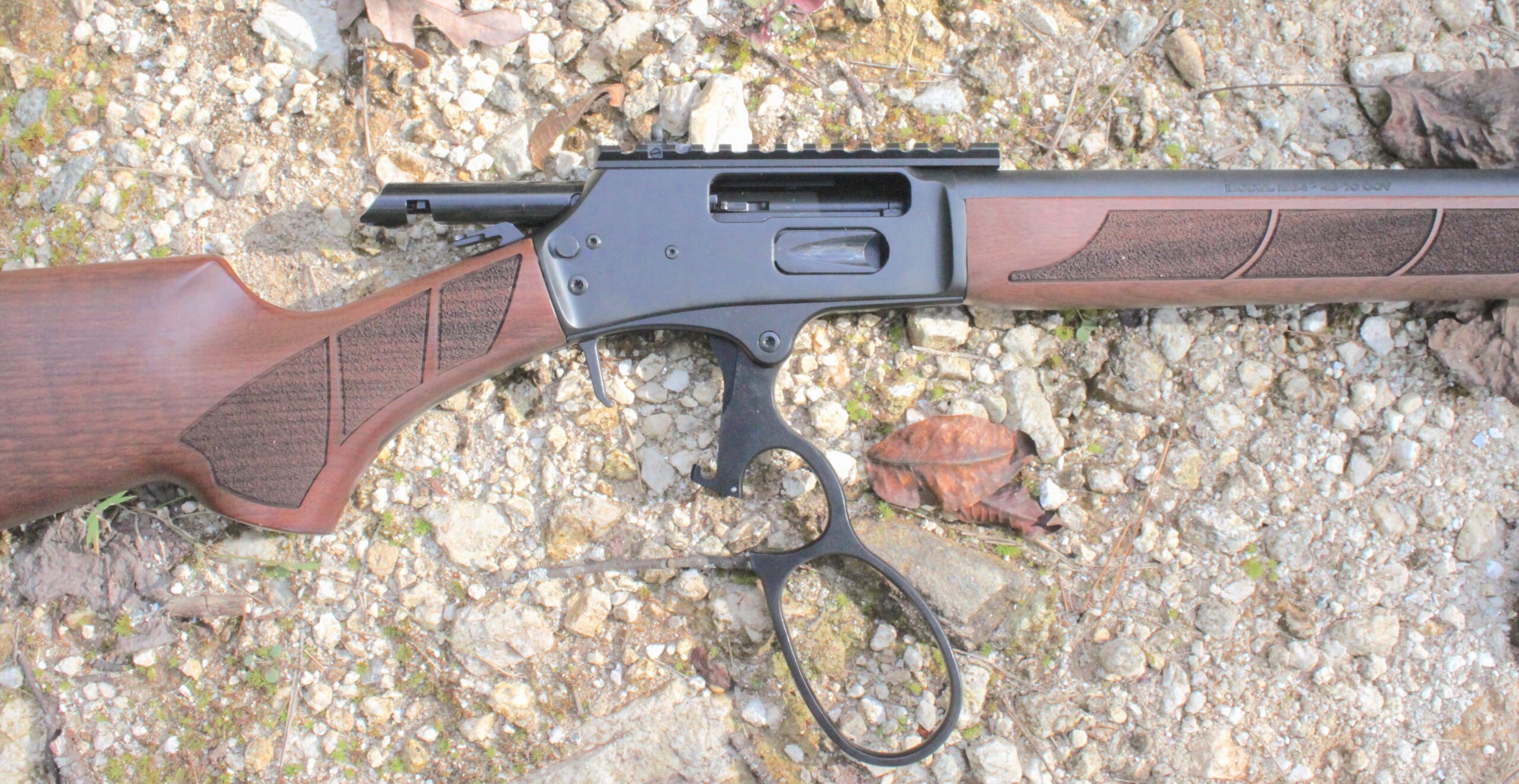
Crafted from walnut, the stock features textured grip panels and the sample gun had a faint fiddleback grain to it. Length of pull is 13 inches, a bit short for my preferences. At 6 foot 2 inches, I take a 15 9/16 inch length of pull, but all the factories make shorter stocks. If you go to have a gun fitting at Purdey, John Dickson & Son, or Holland & Holland, you will find 13-inch length of pull stocks are only for shooters 4 ½ feet tall and under. That’s about the size of a 10-year-old boy but there is no changing the American firearms factory’s ideas of standard stock lengths.
Like most lever actions today the S&W comes equipped with a manual cross-bolt safety. Apparently the various companies have lawyers who aren’t satisfied with the old familiar half cock safety but at least this gun has a half cock. There are times when having a gun on safe or worse, with an empty chamber can put your life in extreme danger. Most surprise bear attacks are close range affairs and a rifle is often knocked aside before it can be used. That is why pistols are statistically more effective in these attacks because you can draw and fire a handgun even if the bear has you down. Anyone who thinks that they have time to take off a safety or jack a round into the chamber has little or no experience in these attacks.
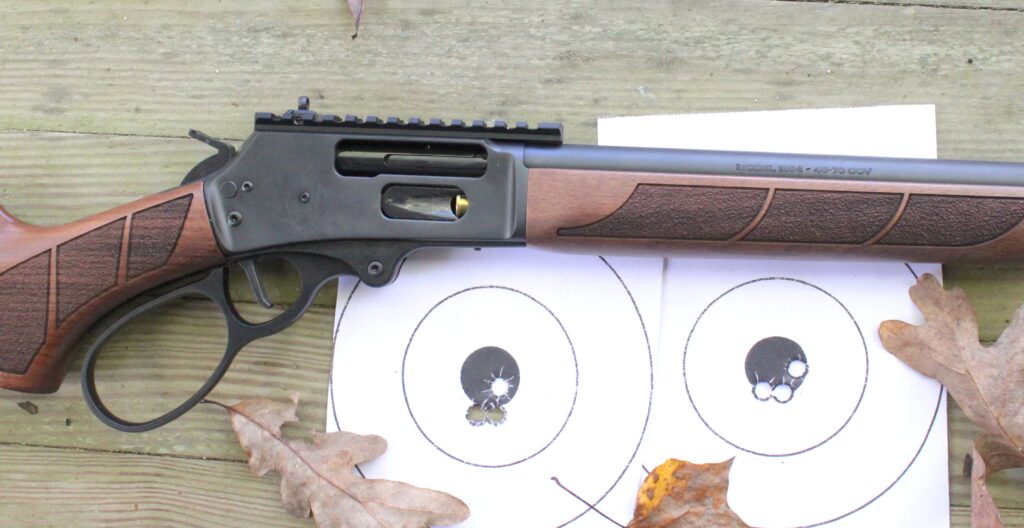
I found the rifle to be fast handling and smooth functioning. I had 470 rounds to fire through it consisting of:
- 100 rounds of Black Hills 325-grain Honeybadger at 1,933 FPS, with a Taylor Knock Out Value of 41.10 (a 300 grain .375 H&H Magnum only has 40.4 Taylor Knock Out Value). The Honeybadger is a deep penetrating solid that leaves a wound channel like an expanding bullet thanks to the tapered flutes in its sides that concentrate the blood and tissue of the game it pierces like a garden hose forcing them out 35% faster than the bullet creating a broad wound channel as it goes through.
- 40 rounds of Remington 405-grain Core-Lokt at 1,600 FPS, with a Taylor Knock out Value of 42.39 (again more than a 300-grain .375 H&H Magnum). This is the old reliable load well proven on grizzly bears (grisly, as in “grisly murder,” is the original spelling of this bear’s name and it sure earned it).
- 10 rounds of Steinel 777-grain Lucky Ram at 1,050 FPS with a Taylor Knock Out Value of 52.89, (a
- .400 Jeffery only has 48.5 Taylor Knock Out Value). This is a real grizzly stopper. It’s enormously heavy projectile has a steeper trajectory and a rifle sighted in for regular .45-70 ammunition will shoot about a foot low at 50 yards with the 777-grain bullet.
- 20 rounds of Steinel hard-cast 500-grain at 1,485 FPS with a Taylor Knock Out Value of 48.5, (a 300 grain .378 Weatherby Magnum only has 46.3 Taylor Knock Out Value)
- 20 rounds of Steinel soft-cast 500 grain at 1,485 FPS. (Same Taylor Knock out Value as the hard cast version above.) Both of these loads are excellent stopping loads and give good results on moose and bear.
- 180 rounds of Armscor 300-grain JHP at 1,900 FPS. (Taylor Knock Out Value 37.29; a 300-grain .338 Winchester Magnum only has 34.6 Taylor Knock Out Value) This is a fine deer load and each box of 20 contains four boxes of five cartridges so you can fit spare ammo in any pocket.
- 100 rounds of Hornady Leverevolution 325-grain at 2,050 FPS. (Taylor Knock Out Value 43.59, also healthier than the .300 grain .375 H&H Magnum). The soft plastic ballistic tip of the Leverevolution cartridge gives a good aerodynamic shape without chancing accidental discharge in a tubular magazine. This round is dramatically flatter shooting than the rest.
My test rifle happily digested all types of ammunition and shot them all accurately.
After firing, the bore was cleaned with Shooters Choice bore cleaner followed up with Ballistol oil for the whole gun. Ballistol is the best for a working gun out in the elements as when it encounters water it forms an emulsion with the water and as long as the emulsion is at least 5% Ballistol the water will evaporate without causing rust. Remember, stainless steel is rust resistant, NOT rustproof. It still needs the same care as carbon steel.
Of all the big game cartridges popular today, the .45-70 offers by far the most power for the least recoil. The big heavy bullet simply is not a kicker, yet the standard .45-70 load with a 405-grain bullet at 1,320 FPS velocity has more power at 300 yards than a 180-grain .30-06 has at the muzzle while the 777-grain Steinel has more Taylor Knock Out Values than the .400 Jeffery and its double rifle version, the .450-400.
Most .45-70 loads have a very negligible felt recoil as well. The added power can make the difference between you living or dying if you have to stop dangerous game fast. It also can make the difference between a deer escaping to die unclaimed or claimed by another hunter who put in the final shot as the deer made the 100-yard dash, even when shot in the heart. Deer don’t always go straight during this death run and 100 yards in all directions is a lot of ground to cover searching if tracking doesn’t work. Most modern hunters are not good trackers to say the least.
This ability of more power equating to less travel by the animal is one reason many of the professional hunters in old Africa shot everything with their heaviest rifle. Blaney Percival said it best when asked why he shot everything with a .600 Nitro Express.
“Game shot with a .600 Nitro Express doesn’t travel very far,” he said.
The other reason is the old Victorian hunter’s advice “Shoot everything with your big gun Laddie and count it practice for the day your life depends on it.” That also can apply to the American hunter suddenly coming face to face with a large wild boar, bear, or moose that decides to run at you instead of away from you. It happens, and that’s a bad time to be holding a .223 instead of a big bore with real stopping power. That’s when a .45-70 becomes your life insurance policy, the kind that keeps you living instead of just enriching your widow. That’s the best kind to have.