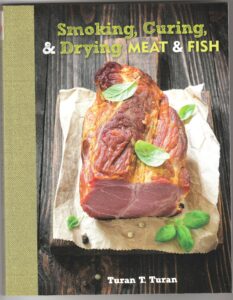
By Turan T. Turan
$29.95 plus $5.09 Shipping
Available From:
Globepequot.com
1-800-223-2336
It’s the time of year when game brought to bag must be preserved for the winter ahead.
While freezing is the most common method of preserving it today, a knowledge of other methods is desirable both for the flavor they impart and for the times and places where there is no electricity. That’s where this book comes in.
Whether your interest is as basic as a Cro-Magnon cave man or as complicated as a modern gourmet chef this book has you covered. The bottom line is how to preserve food without refrigeration and make it taste better in the process. All the methods of salting, brining, smoking, curing, and drying are laid out in detail along with how to make things like a homemade smoker.
It seems that every imaginable recipe for venison to salmon to duck and lamb to pastrami and European dishes I had never heard of are there.
I was particularly glad to see the South African favorite, Biltong, a type of thick jerky that I love, included. Of course ham and jerky are included as well as the almost forgotten salt beef. This was the meat that fueled American sailors in the days of sail. Loved for its taste and the fact that one grew strong eating it, this was also popular among the public in the days before refrigeration. You could buy it in bulk in 200 pound wooden barrels from the mail order houses like Sears Roebuck around the turn of the century and it was a staple food in many households back then.
People following the instructions in this book will open up a whole new perspective on how meat and fish are prepared and stored without refrigeration or freezing and they will find the taste superior to much of what they are used to.
If you live in a trapper’s cabin in the Alaskan interior you are probably already familiar with some of this but it will expand your horizons and serve as the Betty Crocker Cookbook for the bush dweller where game is concerned.
If you are concerned about no electricity during manmade or natural disasters, this is how you still keep eating well without resorting to canned food. In years past my wife and I knew country people who never got rural electrification and had to preserve everything by these methods. Nowadays about the only thing people treat this way is hams and that’s a culinary shame as so many things just taste better prepared in these old ways.
This is the most comprehensive book on the subject that I have ever read and this knowledge needs to spread. You may really need it someday.—Jim Dickson