By Dean Weingarten | Contributing Writer
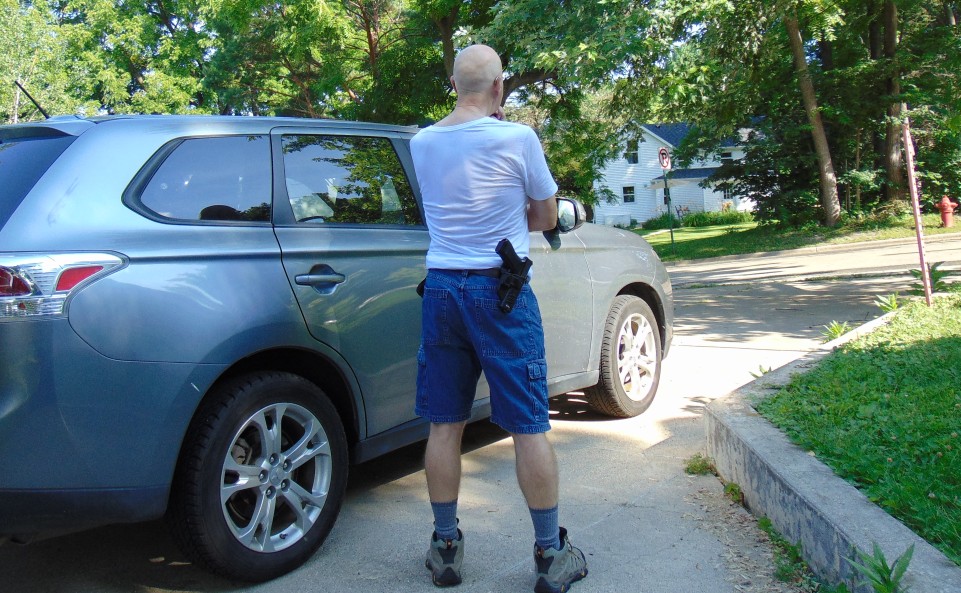
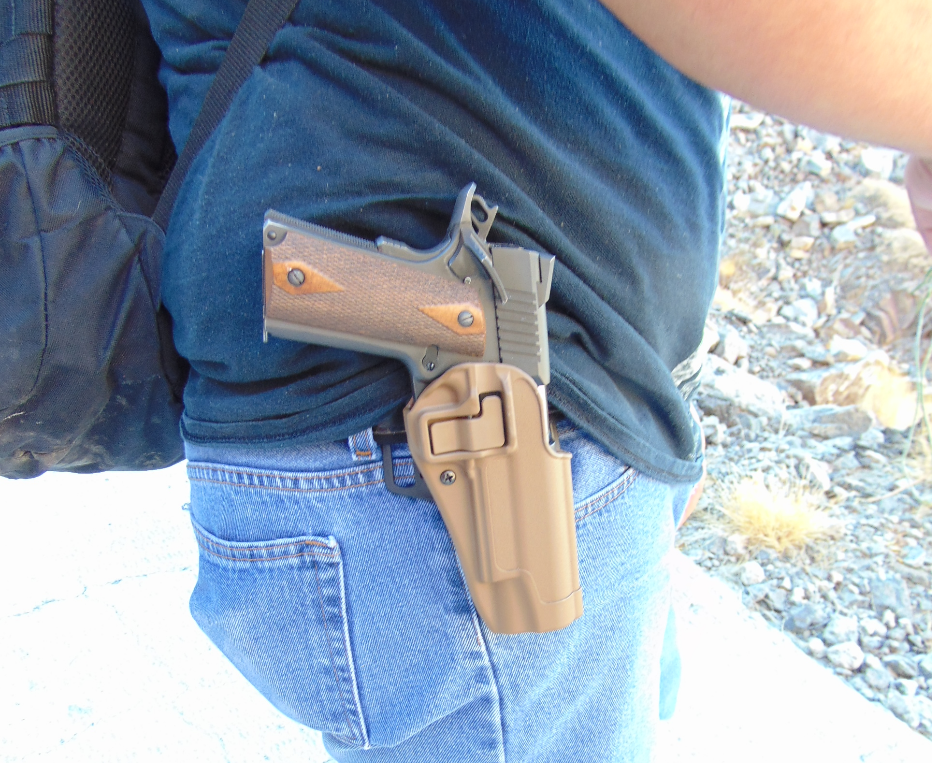
The state of open carry in the United States has definitely been changing, thanks largely to the efforts of open carry activists across the country.
In 2014 there were six states where open carry was generally banned. They were California, Texas, Illinois, Florida, South Carolina, and New York. There were 30 other states where you could open carry without a permit. In the 14 remaining states you needed a permit to open carry, even if obtaining a permit in Hawaii and New Jersey was very, very difficult.
Much has changed in the last dozen years, and one of the best resources for keeping up on the changes is a website called Handgunlaw.us. It covers all 50 states with important details on laws and regulations, including where and where not to carry.
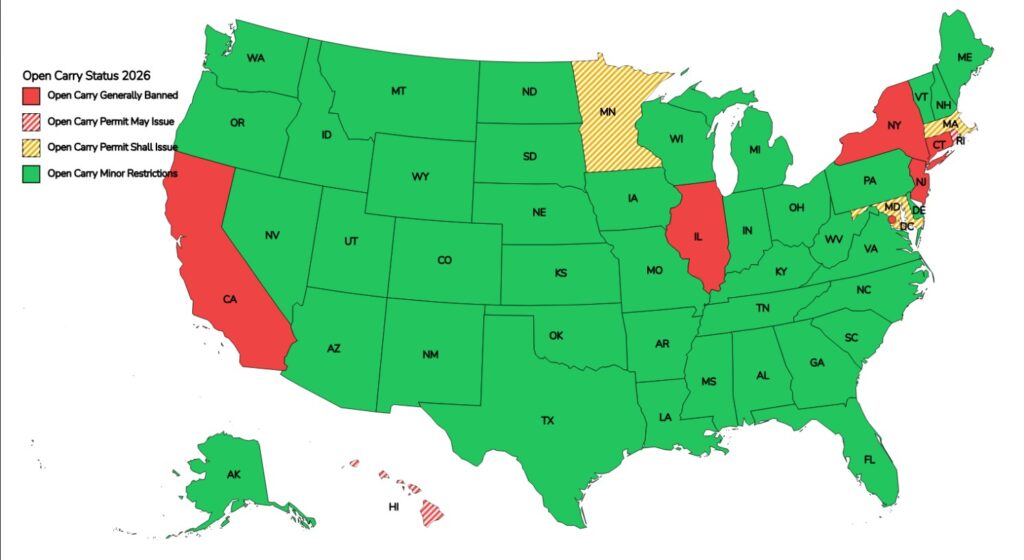
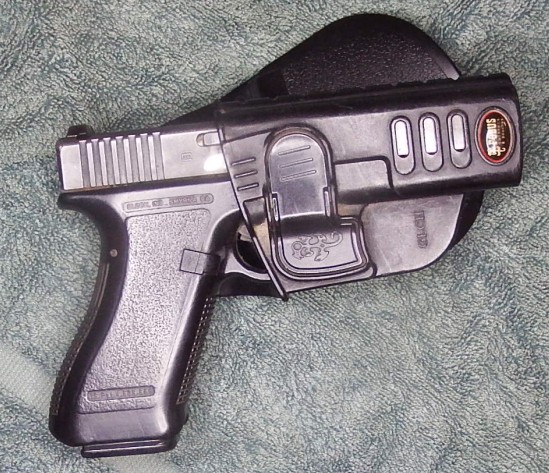
Texas passed open carry legislation in 2015. South Carolina allowed open carry with a permit beginning in 2021, and subsequently made open carry without a permit legal in 2024.
On the other hand, New Jersey banned open carry, even with a permit, in 2022, which follows along with this state’s other regressive gun control laws.
Connecticut banned nearly all open carry in 2023, while Florida’s attorney general declared the ban on open carry to be unconstitutional in 2025. The states where open carry was banned moved from 6 down to 4, then back to 6, and now back down to 5,with politics playing the determining role.
The populations in Texas, South Carolina, and Florida dwarf the populations in New Jersey and Connecticut.
There are now 40 states where people can open carry a holstered handgun without a permit. Of the ten holdouts, the states and DC with bans on open carry include California, Connecticut, Illinois, New Jersey and New York, which have a combined population of about 86.5 million, amounting to roughly 25 percent of the population of the United States, which is about 343 million. Those five states and the District of Columbia cover about 7.7 percent of the total area of the United States of America, so this translates to most of the country being “open” to open carry.
The states with “may issue” open carry (an effective ban) of Hawaii and Rhode Island have a population of 2.6 million, which is about .76 of 1 percent of the total U.S. population. The area of these two states is .21 percent of the area if the USA.
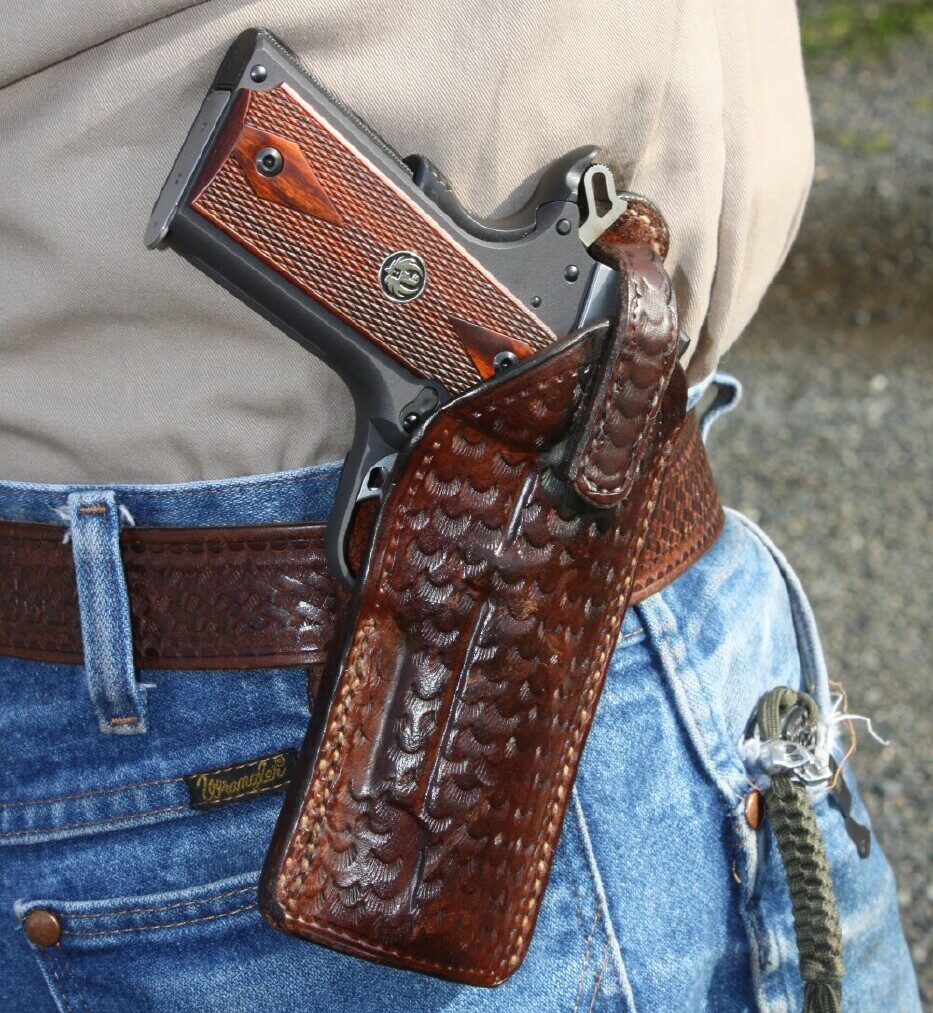
The shall issue open carry states of Minnesota, Maryland, and Massachusetts have a total population of 19.3 million or 5.6 percent of the population of the country. The area of these three states is 2.75 percent of the area of the US. While it takes some effort, most people in those states can obtain a license to carry, which allows them to open carry. Minnesota recognizes permits from about 29 states. Massachusetts and Maryland do not recognize permits from any other states (Illinois, Oregon and California also don’t recognize non-resident permits/licenses.)
No permit is required to open carry in states with 68 percent of nation’s population and 89.33 percent of area. Add the total population of the shall issue open carry states, and 74 percent of the population in the US has access to open carry. Those states cover 92 percent of the area of the USA.
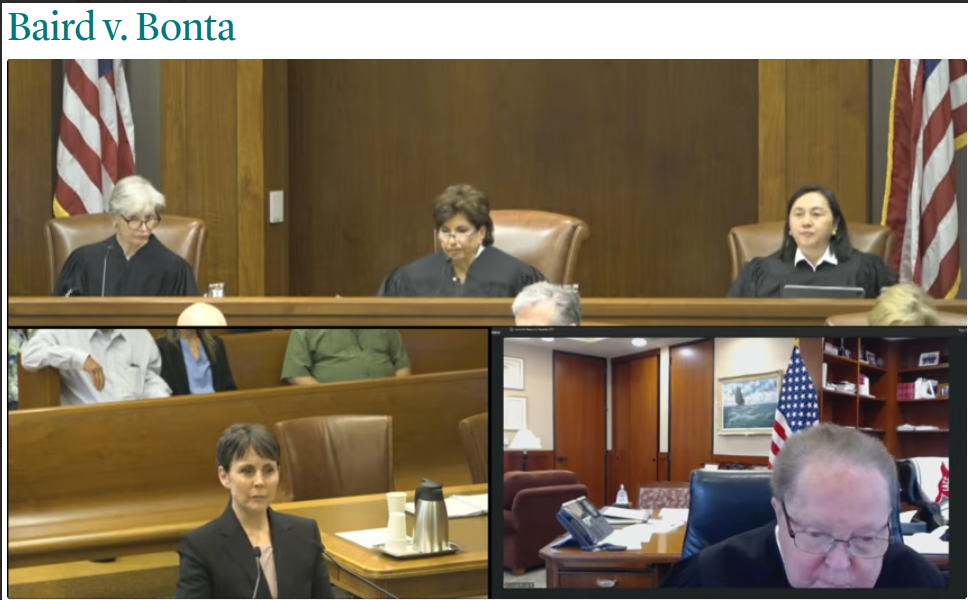
The California open carry case of Baird v. Bonta is currently before the en banc panel of the Ninth Circuit. The three judge panel found the open carry ban to be unconstitutional. Most Ninth Circuit en banc panels have ruled against the common understanding of the Second Amendment. The oral arguments before the Ninth Circuit en banc panel were heard on June 3rd, 2026.
The Wolford case involving open carry in Hawaii has been heard before the Supreme Court, and we are now awaiting a ruling. It is unclear if it will touch on the “may issue” nature of the Hawaii open carry permit. The opinion on the Wolford case will be issued before the end of this month.