By R.K. Bob Campbell | Contributing Editor
It is good to try new things and broaden your horizons.
In this report I am simply nibbling around the edges of sound suppression but I am beginning to find sound suppressors fascinating. A great deal has changed this year.
Previously the average applications for suppressor permits were around 2,500 a day. On Jan. 1, 2026 there were 150,000 applications! Contributing to the interest was the Big Beautiful Bill ending of the $200 dollar tax stamp. Once again our Republican president and congress have given gun owners a healthy handshake of friendship—not to mention injecting millions into the American gun industry.
Let me address some misconceptions. There were fears that the abolishment of the tax would overload the system. Despite unprecedented sales, approval has been coming in less than a month. A friend was approved in one day! My approval came in three days the first go around, ten days the second.
There is no tax these days and the system isn’t really different. Efficiency has simply been improved.
Step one is to find a dealer who handles sound suppressors. They must have the proper licensing, it isn’t just an FFL. They also must have the equipment to scan fingerprints and have the means to do good quality digital photos. The dealer creates an E form submitted with the application. This is known as submitting a Form 4. Once approved you fill out and sign the usual form #4473.
To the best of my knowledge there are eight people’s republics that do not allow suppressor ownership. There is always hope for these states. Hope is good and organization and voting better. And support the Second Amendment Foundation.
Dealers have considerable time and expense involved in handling sound suppressors. A stocking dealer will probably have a suitable unit on the wall or shelf. If you order your own and do a transfer the transfer fee is much higher than to transfer a firearm-and rightly so. A lot of work and licensing expense including fingerprint readers are involved. Just the same if you have done your research and wish to special order in your favorite suppressor, well, it is your money and you may as well be happy.
I have not found lines waiting or stocks depleted despite the current demand. Each time I visited the shop there was someone ahead of me in line, but never several individuals, and all went smoothly. It certainly pays to do your research as this isn’t a low cost project. Suppressors run from $499 to well over $1000.
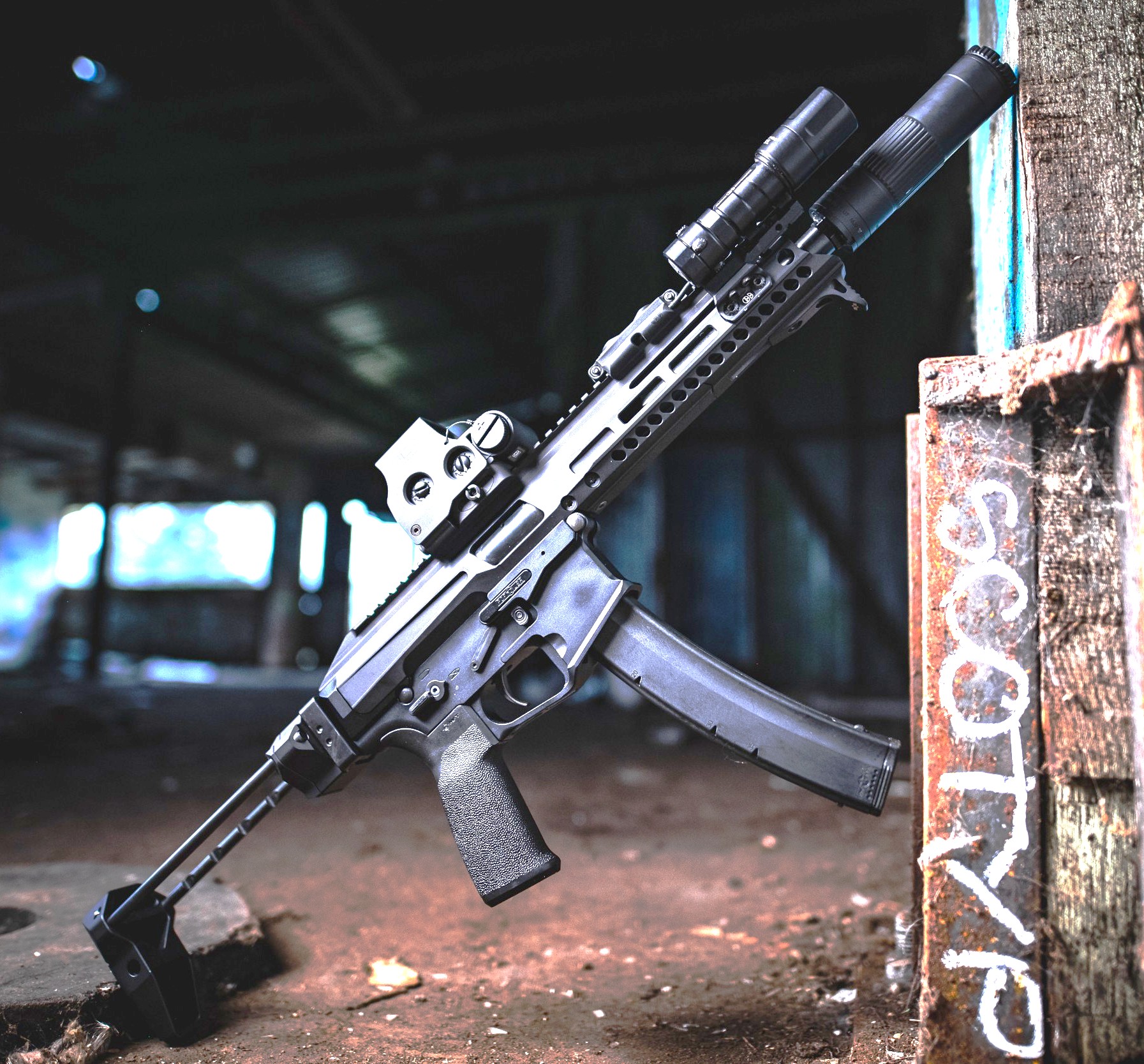
As you create your ATF account and password be certain to keep up with the password and make a copy of the user name. This shortens the process. While there have been moves in congress to eliminate the process and simply have the purchaser sign a #4473 this hasn’t happened yet. The initial steps are promising. Support the Second Amendment Foundation and vote!
Meanwhile- go through the process, sign the #4473, double check serial numbers and be careful that everything is properly completed and filled out. When traveling to the range keep a copy of the tax stamp with you and keep the original secure.
Choosing a suppressor
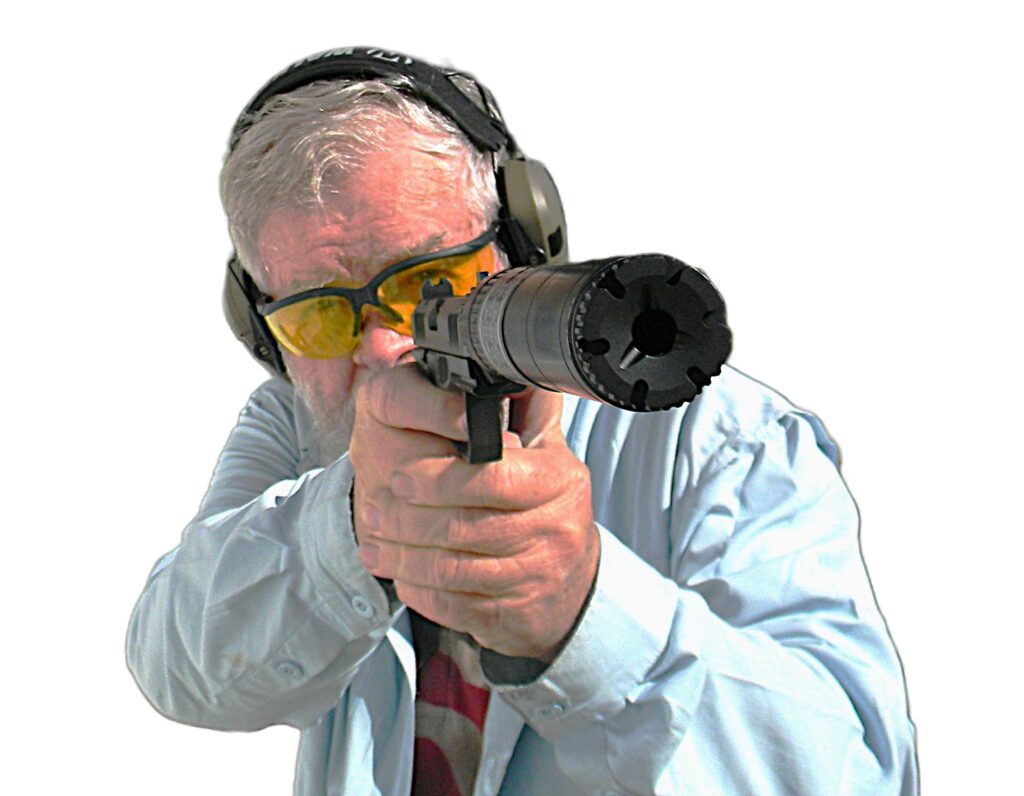
I began my journey into the world of quite shooting with the Dead Air Mojave 45, a titanium can with Triskelion Gas Management System. As delivered the suppressor was set up for the .45 ACP. I changed the booster and end cap to make the suppressor a 9mm compatible suppressor.
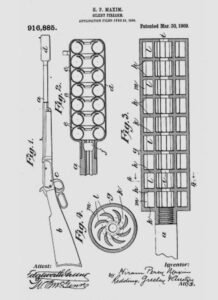
Interesting enough this “can” may be used as a full-length suppressor or a section screwed off to allow greater maneuverability. This is an interesting option that allows a great deal of versatility. While the full length option has greater sound suppression the shorter length is better suited for most tactical uses such as running a room clearing.
To sum up my findings, the full size Mojave 45 is less offensive in DCB rating than the shorter version, which is more maneuverable. Performance has been sterling. There are tricks such as greasing the buffer and using the proper ammunition. Here are the specifications—
Dead Air Mojave
Length: 8.6 inches (or 6.8in. with the front section removed.)
Diameter: 1.48 in.
Weight: Basic 12.7 ounce, (short option 10.44 ounce)
This is a first class suppressor and you may as well start at the top. When I began this journey I obtained proven, highly recommended gear. I am no expert on the suppressor with decades of experience; far from it. I know what I know and I am learning more.
I didn’t want to run into any hitches during my move to suppressors. Most importantly Dead Air has designed a suppressor that operates well on either a 9mm carbine or a locked breech handgun. The kicker or booster incorporated in the design helps give a bit as the suppressor fires and that allows the device to function with reliability when using a handgun. Keep the springs greased!
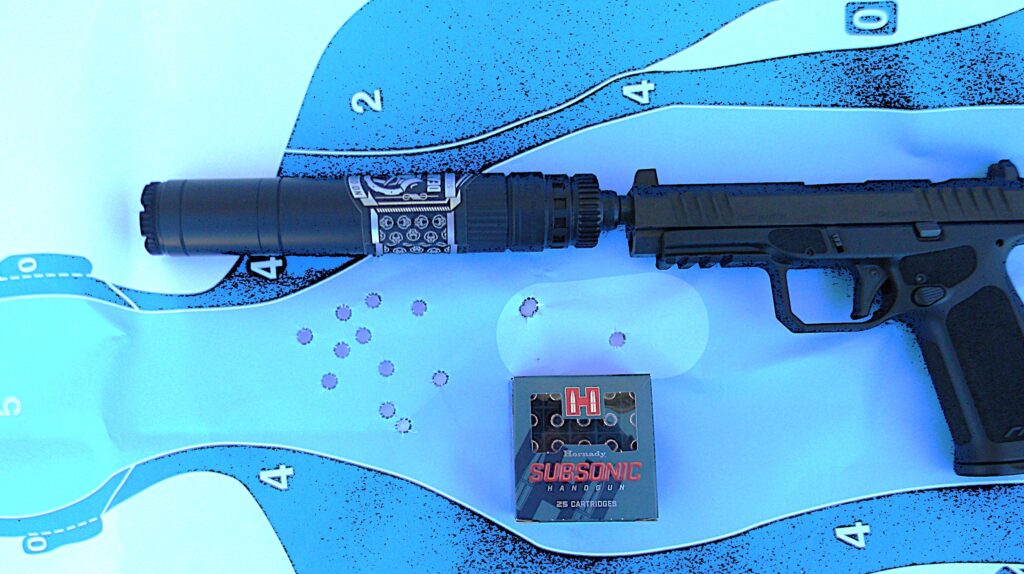
Ammunition choice is important. If the ammunition breaks the sound barrier you get a supersonic crack and the suppressor isn’t as effective.
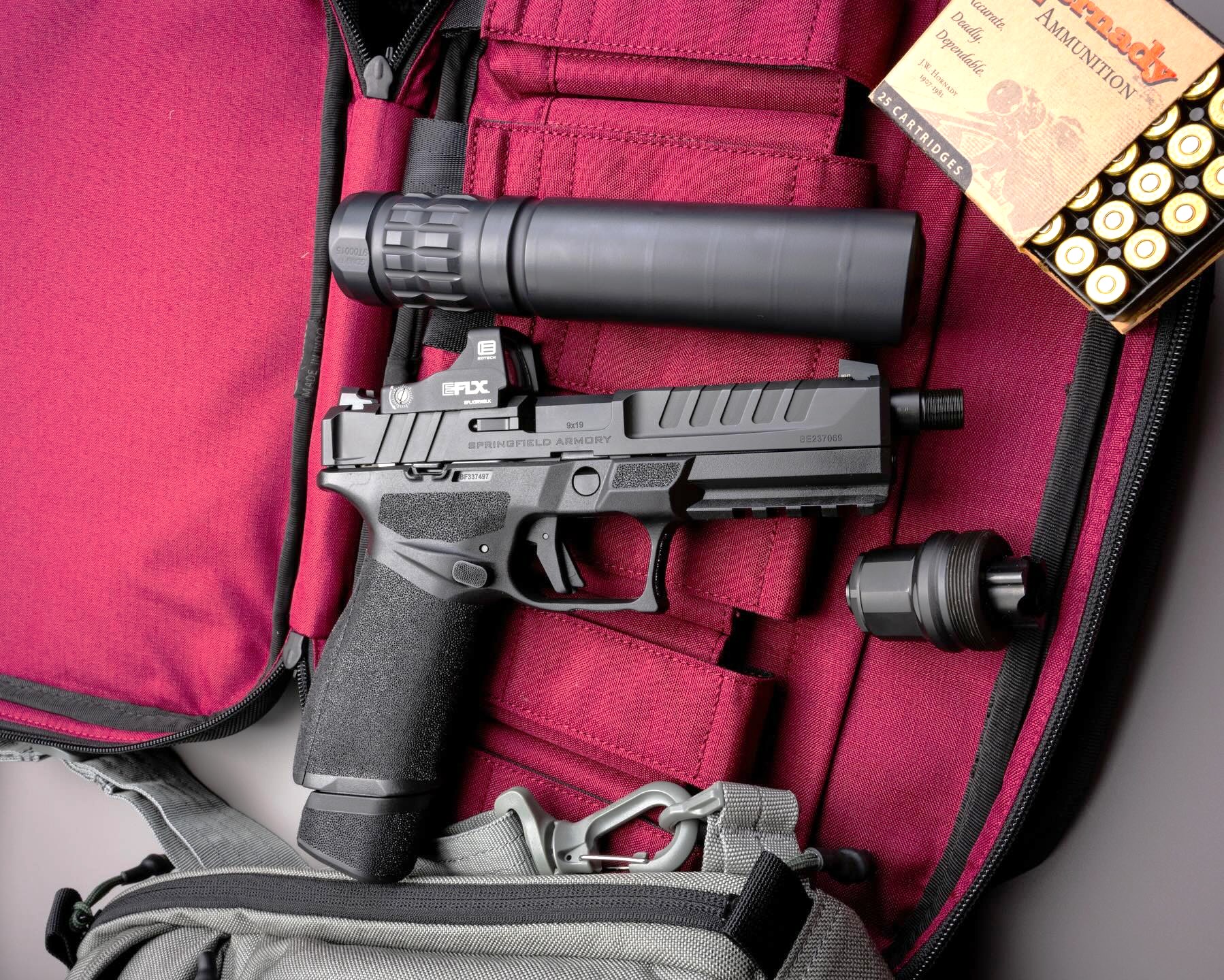
I have used threaded barrel 9mm handguns for the most part, all with good results. In long guns the Ruger PCC 9mm carbine. If there is a more reliable 9mm carbine I have not seen it. Plus as a bonus the PCC will put every round into a 1-inch group with practically any loading at 25 yards. This makes the PCC 9mm a great pest popper and home defender.
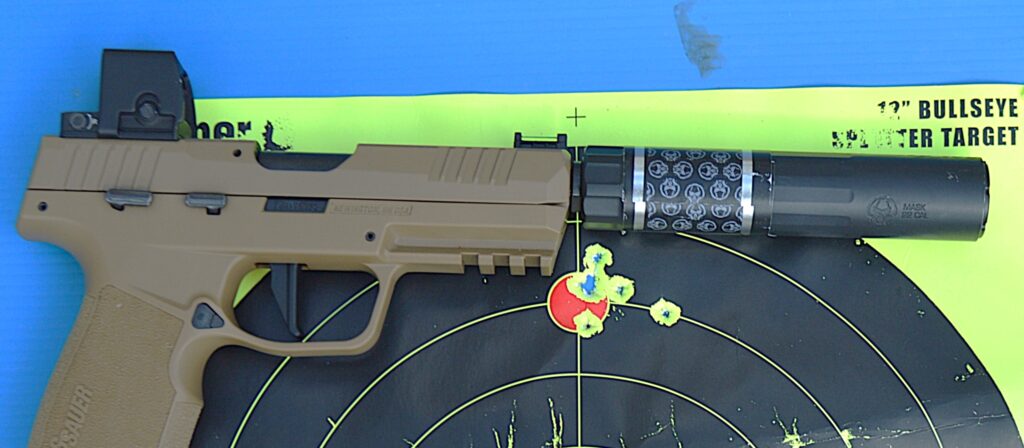
In short, moving to suppressors wasn’t a bothersome process, but simply took a couple of weeks and attention to detail. The process is a great deal simpler than just a few months ago.
As for my choice in suppressor, I could have spent more but I could have spent less. I am perfectly satisfied with what I have. Things of note: accuracy is unaffected. Recoil control is better due to the weight of the suppressor. Velocity is increased slightly when using a suppressor.
Average sound reduction
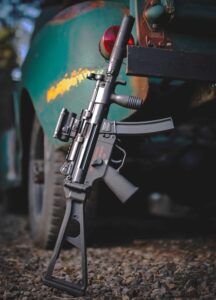
A 9mm carbine will average 160 DCBs with most 9mm Luger ammunition. A pistol such as the Shadow Systems MR 920 will break 167 DCBs.
Velocity and sound waves are affected by temperature. With the sound suppressor mounted, DCBs are reduced to 135 on average with 147-grain 9mm loads. This is comfortably below the threshold of 140 DCBs where hearing damage begins.
Sound suppressors have a great deal of practical value. They are fun shooters and easy on the ears. In the next installment we will look closely at .22 LR suppressors, which are even more fun and which have practical applications.