
By Dean Weingarten | Contributing writer
After obtaining an 1883 Reichsrevolver several years ago, this correspondent did some gun plumbing and got it into reliable working condition.
A dot mount was found which fitted the top strap without alteration. The 1883 revolver required gun plumbing. The author found an earlier 1879 Reichsrevolver. It was obtained for a reasonable bid on Gunbroker.
The trigger pull on the 1879 is very nice; crisp and about 3 lbs. It is about half the weight of the trigger on the 1883. There is always some variation from individual firearm to individual firearm, especially with guns over 100 years old.
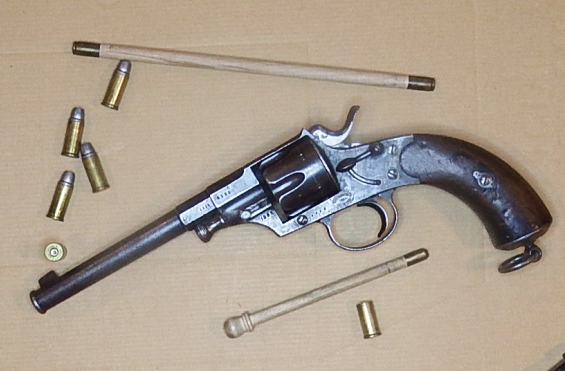
The 1879 is a much larger revolver than the 1883. It has a 7 1/8-inch barrel, a longer heavier frame, and a bigger grip with a heavy duty lanyard ring. It was originally issued with a separate ejector rod, kept with the ammunition. It weighs 47 ounces, about a pound heavier than the 1883 improved version. The top strap is the same. Both examples in hand readily accepted the adapter mount.
Several improvements make the 1883 a better design. The hammer has a well-defined and positive retraction notch. The cylinder pin release is improved on the 1883. Taking one pound off the weight is good for a revolver meant to be carried. Given those factors, the excellent trigger on my 1879 makes it much nicer to shoot. This particular 1879 seems to be more accurate than my 1883.
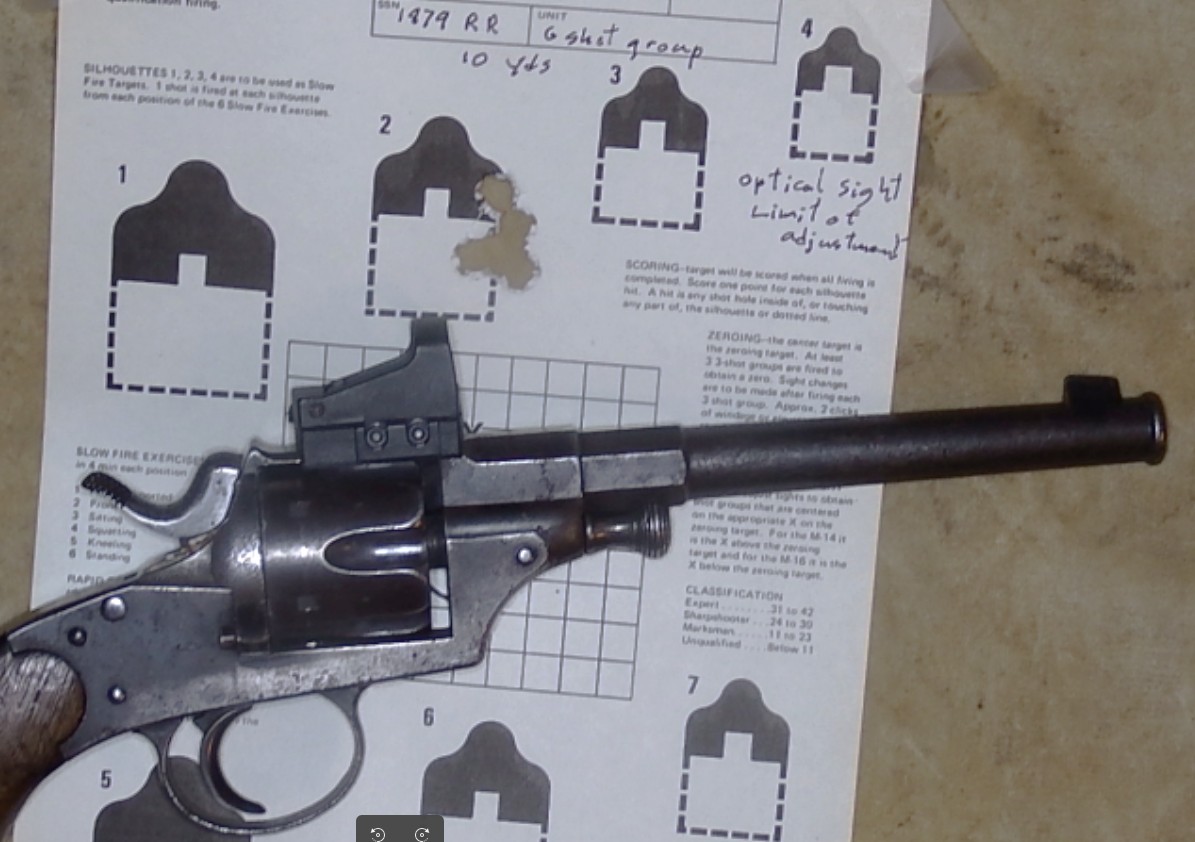
The 1879 Reichsrevolver shot well with either factory .44 Russian ammunition or with reloads. It seemed to slightly prefer 240-grain lead semi-wadcutter reloads. Reloading must be done with care. The preferred load of this correspondent was 4.1 grains of Accurate #2. These revolvers seems to be sensitive to crimping. A dedicated set of .44 Russian dies is probably the best solution to obtain a consistent and fairly heavy crimp.
Measured velocity of the load from the long barreled revolver averaged 787 feet per second. A Garmin Zero C1 Pro was used to measure velocities. The load is very close to duplicating historical .44 Russian ballistics. According to the loading manual information, it is running at about 14,000 psi, which is about 500 psi below the suggested maximum. This 10.6x25mmR/.44 Russian load is about the same as the .45 Colt maximum pressure standard.
The 10.6x25mmR/.44 Russian load is very close to the power of the .45 ACP. The bullet is a little slower and a little heavier. The load creates about 94% of the energy of a standard .45 ACP load. The load has about 105% of the momentum of .45 ACP standard load.
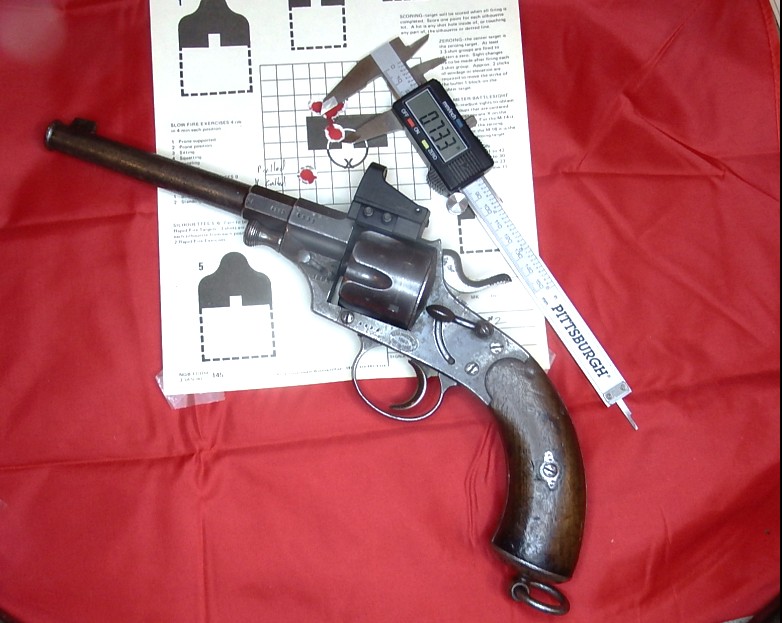
The load is meant to be fired safely in old revolvers. The Reichsrevolvers use better steel, a larger diameter cylinder – 1.75″, compared to the 1.65″ early Colt SAA. The 10.6x25mmR/.44 Russian chambers are a bit smaller than the .45 Colt. This correspondent expects the Reichsrevolver cylinders to be stronger than the old Colt revolvers. The solid frame, made of steel, is stronger than the top break frame of the older Smith & Wesson Russian model #3.
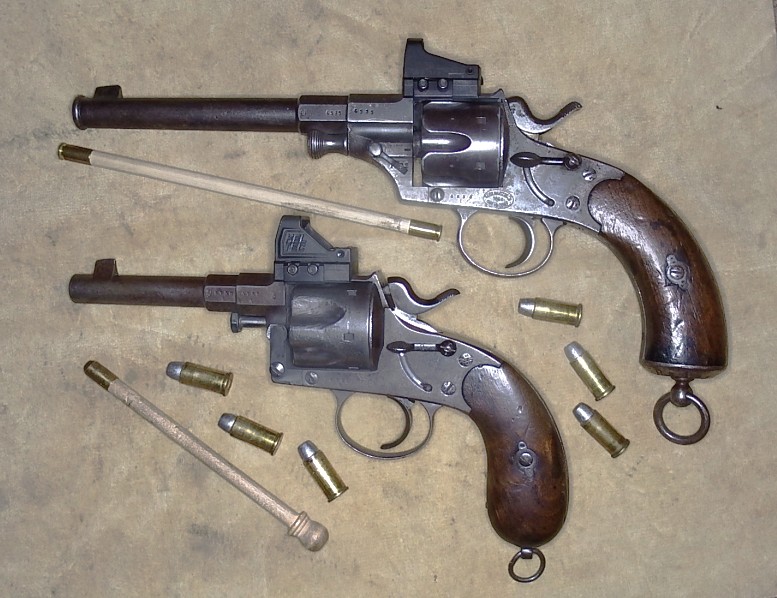
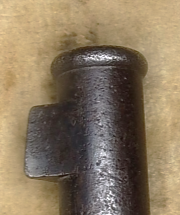
Reichrevolvers were regulated by design to shoot 350 mm (14 inches) high at 25 meters. The sights are rugged and fixed. It is more challenging to do precise work with a revolver when the sights are set to shoot 3 inches high at 10 yards. In a previous article this correspondent documented how an adapter for a Weaver rail fit well on the top strap of the Reichrevolvers, without any alteration to the revolver.
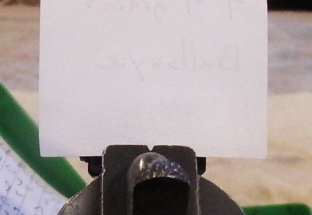
The sights would be usable if they shot to point of aim. As a field gun, regulating them to 25 to 35 yards means you are less than an inch off of line of sight to about 5 yards past the regulated distance. An adjustable dot sight allows precise regulation to the load and distance you want. With the dot sight, sighting to 45 yards means the load is sighted to be less than an inch off of line of sight to 50 yards, after the bullet advances beyond 3 yards from the muzzle. The calculated trajectory shows the revolver shooting about 16 inches low at 100 yards. The trajectory seems flatter for the dot sight because the dot sight is higher above the line of the bore than the iron sights.
There is a way to obtain more adjustment with these dot sights. A shim can be used to move the line of sight up or down a degree, which is about 15 inches up or down at 25 yards.
The JPoint commercial shim, made of Delrin, is relatively inexpensive and works well. Two or three can be stacked together.
The lower left shot on the 25 yard group was pulled and called. These were the last 240-grain reloads available at the range at the time. This is the reason for five shots instead of six. The light, crisp trigger makes shooting more enjoyable.
For antique revolvers over 130 years old, the Reichsrevolvers are the only ones I know of which can be fitted with a dot sight without alteration, at least so easily and inexpensively. These revolvers surprised this correspondent with their accuracy. For their time, they were extremely well made.