By Dave Workman
Editor-in-Chief
Beware of the man who owns only one gun, because he probably knows how to use it.
This adage has floated around for generations, in one form or another, and I’ve never known it to be terribly wrong.
Of course, we run into a snag when we encounter people who own several guns, and are pretty good with all of them.
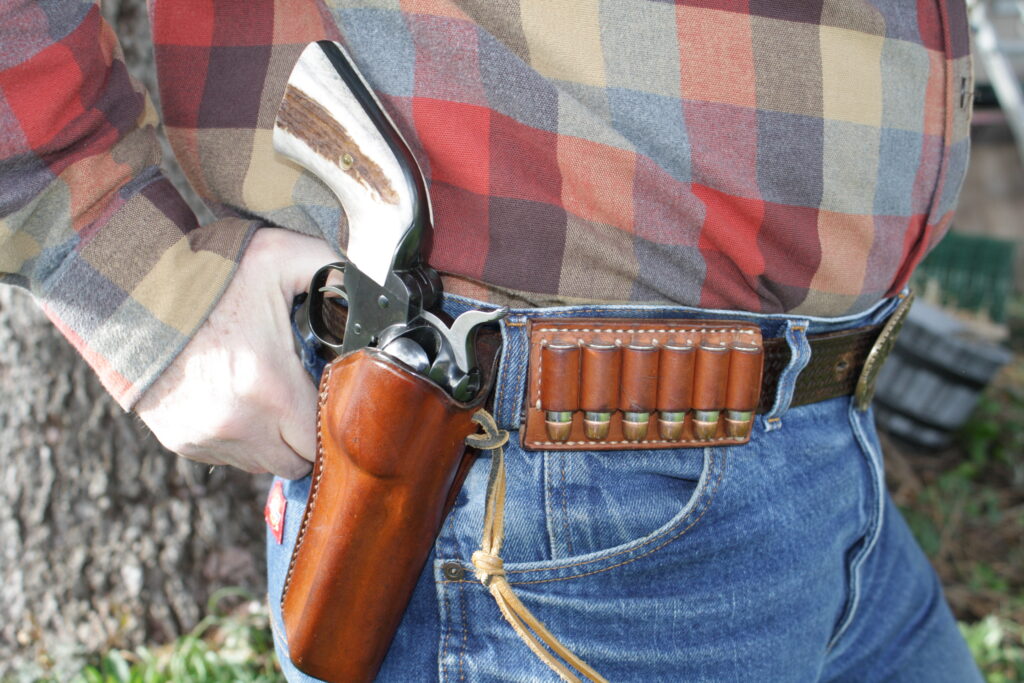
However, narrowed down to sidearms, the fellow who has a few but typically carries a revolver is someone who, a) Knows his sixgun and ammunition well, and b) Is probably good enough with it that he doesn’t feel the need to prove it.
Such people don’t practice “spray-and-pray.” They are well aware of the number of shots they can fire before having to reload, so they take their time and then don’t hesitate when the shot can be made.
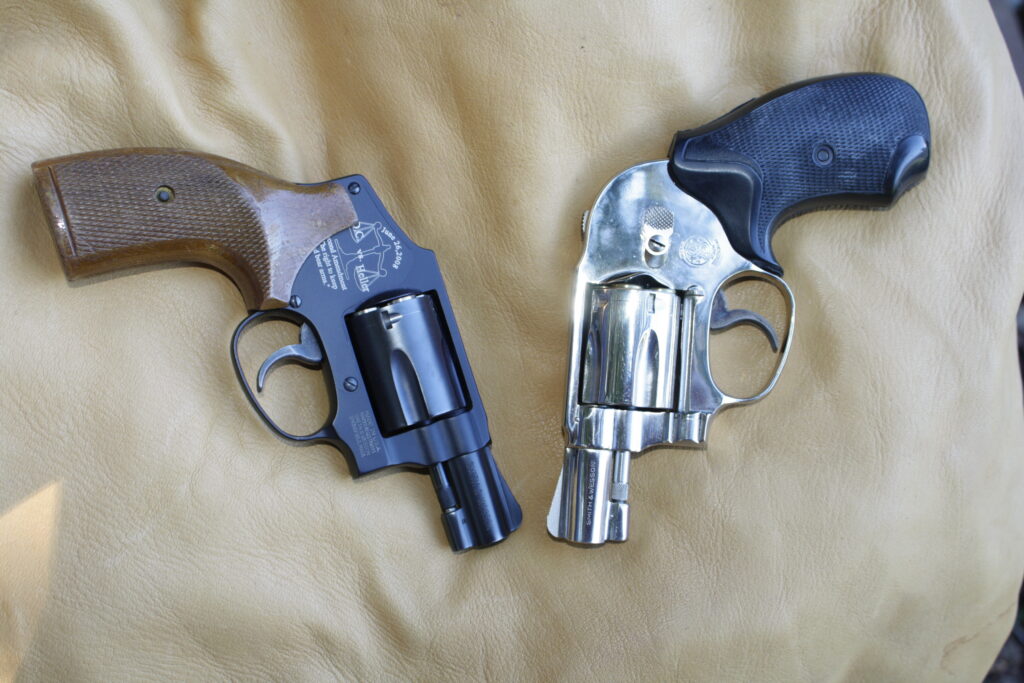
Early in life, I learned about making good shots with revolvers. It began with a .22-caliber double-action Harrington & Richardson—my dad’s “nine-gun,” and eventually worked its way up the ladder to include a pal’s Ruger Single Six in .22 Magnum, a J-frame Smith & Wesson in .38 Special, a couple of .357 Magnums, .41 and .44 Magnums and .45 Colt. In there somewhere were wheelguns in .32 H&R Magnum, .44 Special, 9mm (an idea I thoroughly dislike, although others think it’s great) and so forth.
I had the opportunity to field test at least two Ruger revolvers chambered for the awesome .480 Ruger cartridge, which delivered impressive accuracy without the nasty recoil I expected.
Over the years, I’ve met some people who have turned their sixgunning into a science. These guys might be considered obsessive, if not downright fanatical, about “getting it right.”
For example, when they reload their empties, not only will they tumble the brass, they measure each case and bring each one back to recommended trim length. It doesn’t stop there.
A couple of fellows tipped me to manually clean each primer pocket, assuring it to be as close to factory original as possible. This is critical for properly seating new primers and guarantees the best flash delivery to the powder charge.
Speaking of powder, these guys have found “the best” propellant for their tastes and they’ve stuck with it. A lot of folks rely on Unique, while others prefer 2400, H110, CFE Pistol or HS-6, or perhaps a powder I’ve never heard of, much less tried.
Why does this attention to cartridge cases become important? When one takes such care of individual empty cases, they can find split brass and discard it.
People who pack wheelguns for hunting or personal protection have taken the time to match their individual handgun with the most reliable, accurate cartridges and just because one revolver may do well with a particular load doesn’t mean a different gun of the same caliber, maybe even the same make and model, will perform equally well. I’ve had this experience, so it’s not just conjecture.
Once in my early teens, I was hunting with a couple of guys, one of whom worked for a private security company, and he was carrying a Colt Detective Special in .38 Special. He handed it to me and challenged me to shoot a skunk cabbage, which is a broad-leafed plant growing in the wild. It was several yards away and he wanted to see if I could hit it with his revolver.
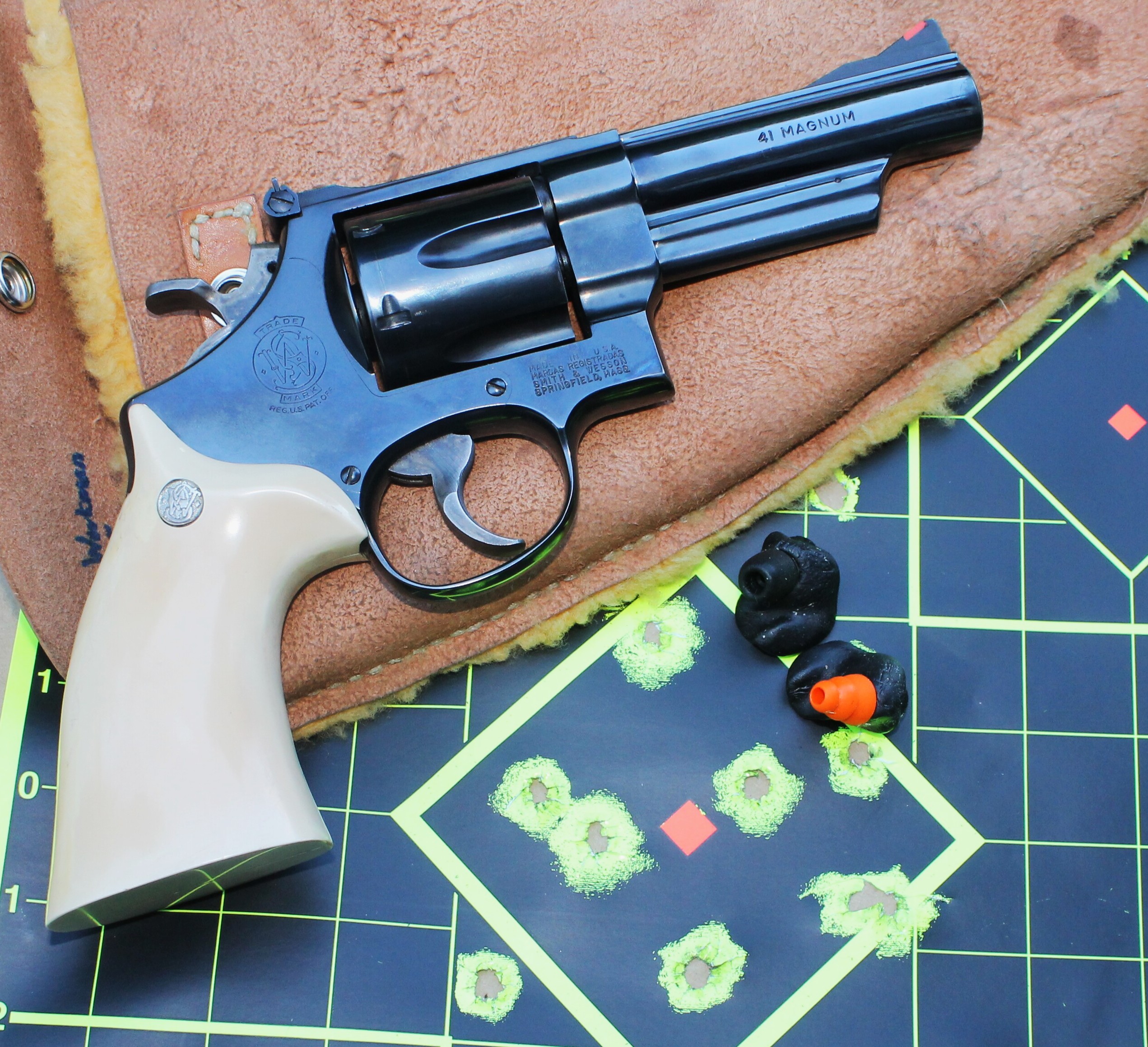
It probably occurred to me at the time he wouldn’t pack a handgun that didn’t shoot straight, so I obliged and whacked it dead center, so the broad leaf tipped over backwards. As I recall, he didn’t load his own ammunition, so he was using factory stuff, and in retrospect, I’ll bet he experimented with different brands and bullet weights before deciding on the most consistent.
Now we come to the individual touches; the modifications one makes to his or her handgun. This may be a simple swap of the grips from factory wood or plastic to something different.
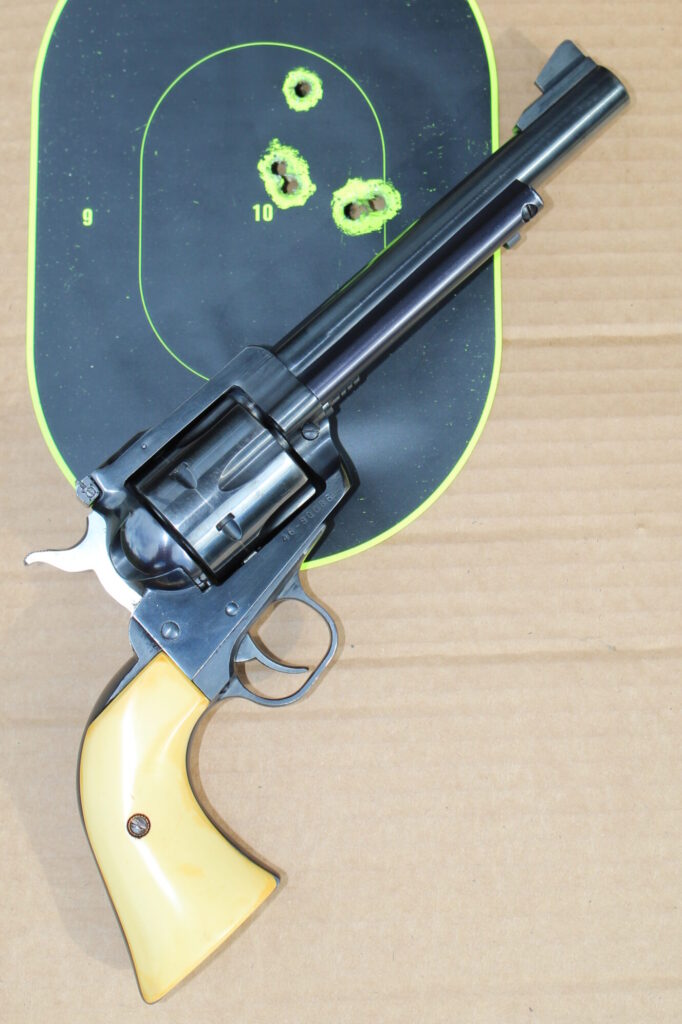
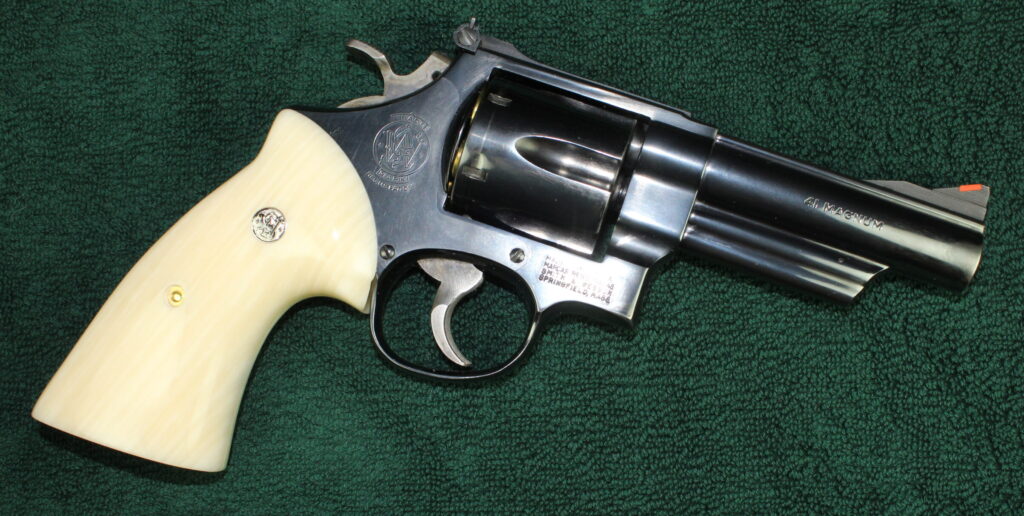
I’ve known fellows with genuine ivory grips on their revolver—the late Elmer Keith was famous for installing carved ivory grips on his N-frame S&W sixguns, whether in .44 or .41 Magnum, or .44 Special—and others opt for genuine stag, elk antler or giraffe bone.
I’ve got Kirinite grips—a rugged synthetic from Eagle Grips—on one of my .41 Magnums, but I occasionally switch them with American holly from Herrett’s, and in a drawer I have a set of “bonded ivory” grips purchased decades ago, which are—at least as explained to me—made from resin or polymer and genuine ivory dust salvaged from people who carved ivory for other purposes. They have taken on a marked patina over the years, so the details about the material seem legitimate. One of my single-action revolvers is decked out with grips made from Magna Tusk, a synthetic material used by Arizona Custom, which is tough and durable. At times I swap them out for a handsome set of elk antler grips from Eagle.
One guy carried a 4-inch Colt Python with zebrawood grips. Another used black buffalo horn.
Some folks swap out their adjustable factory sights for aftermarket sights, and I’ve known a few folks who had gunsmiths outfit their front sights with small brass or gold beads, set into the steel.
Others have action jobs done on their wheelguns, either by competent gunsmiths, or perhaps they, themselves, have the talent.
What a sixgun tells me the most about the person packing it is how well it is maintained overall. It is clean, well-oiled and housed in a good holster. When you run across someone with a sixgun like that, you’ve encountered someone who “probably knows how to use it!”