By Dave Workman
Editor-in-Chief
Never let it be said that discerning sixgunners don’t care what their sidearms look like, so long as they work properly.
It’s a fib, and we’re all guilty of trying to personalize our ‘Packin’ Pistols,” as the late John Taffin used to call them. If adding a little something which sets our shootin’ irons apart from the crowd—and even improves the comfort of that revolver when your hand wraps around it in the process—I’d have to say there is nothing wrong and maybe quite a bit right.

I’ve been carrying a sidearm since, well, several decades back into the previous century. From the time I added a set of Jay Scott imitation stag grips to an old Hy Hunter .22-caliber single-action to this very moment when I can say the majority of my wheelguns wear aftermarket grips from such stalwarts as Eagle, Arizona Custom and Herrett’s, my intentions were always twofold: Create a very comfortable feel in my gun hand, which helps immensely with my ability to hit what’s being aimed at, and to give my gat a little personality of its own.
As it has turned out, I’ve managed to find replacement grips to suit my needs, wants and the dimensions of my gun hand. They don’t always look alike, nor do they feel the same from one sixgun to another, but they all do what they’re supposed to do…with a bit of style.
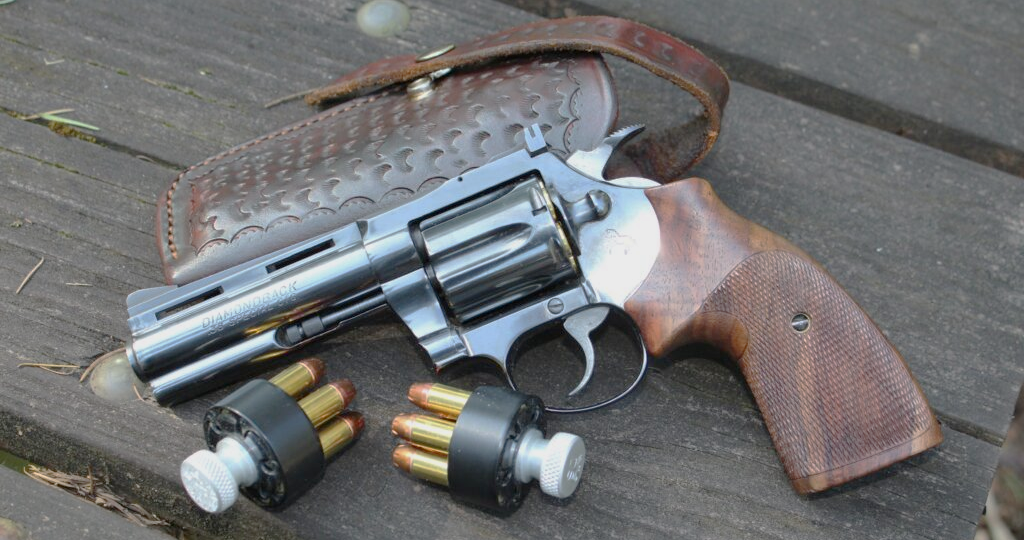
Allow me to be brutally honest about factory grips. They don’t fit all hands as well as they might, and in some cases, they simply don’t cut the mustard. Because of this, over the years I have experimented with Pachmayr rubber grips (and still use them in the winter months), imitation ivory from Altamont, Ajax and even crafted a couple of sets, one from walnut for a Ruger New Vaquero and the other from elk antler for a Ruger Blackhawk.
The grip is every handgunner’s physical link to the sidearm he or she is using. Whether checkered or smooth, or perhaps featuring some carved feature on the panel, such as the longhorn steer head on Elmer Keith’s .44s, the grip is what you have in your hand, so make the most of it.
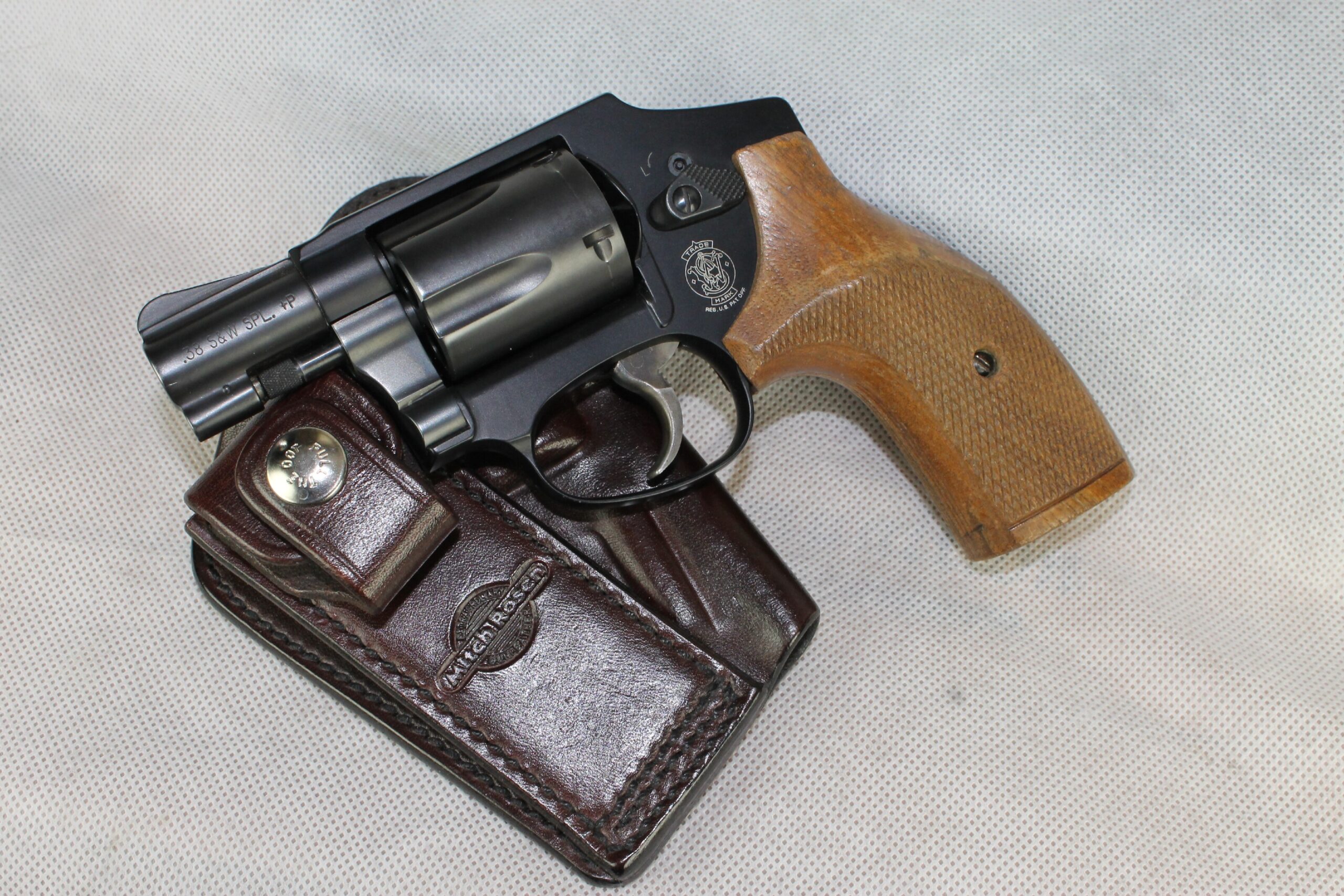
The grips on my double-action .41 Magnums both have slight palm swells, while the “plow handle” grips on my single-actions have no such feature. Of course, when shooting guns with elk antler grips, one accepts the surface as either rough or somewhat smooth, but that is the nature of the beast.
There are all sorts of materials for revolver grips, and even though genuine ivory is probably out of the question, one might still manage to find a piece of mastodon or walrus tusk, and with the availability of genuine Sambar stag sort of drying up, elk antler is coming on strong as a replacement, and some of it is downright handsome.
One opening day of grouse season about ten or more years ago, I actually came upon a complete set of shed elk antlers, all tangled in fence wire. The bull belonging to those antlers had obviously gotten messed up with some farmer’s fence in the valley about 1,500 feet below my location and had finally shed both antlers at the same moment. Good for him, and good for me.
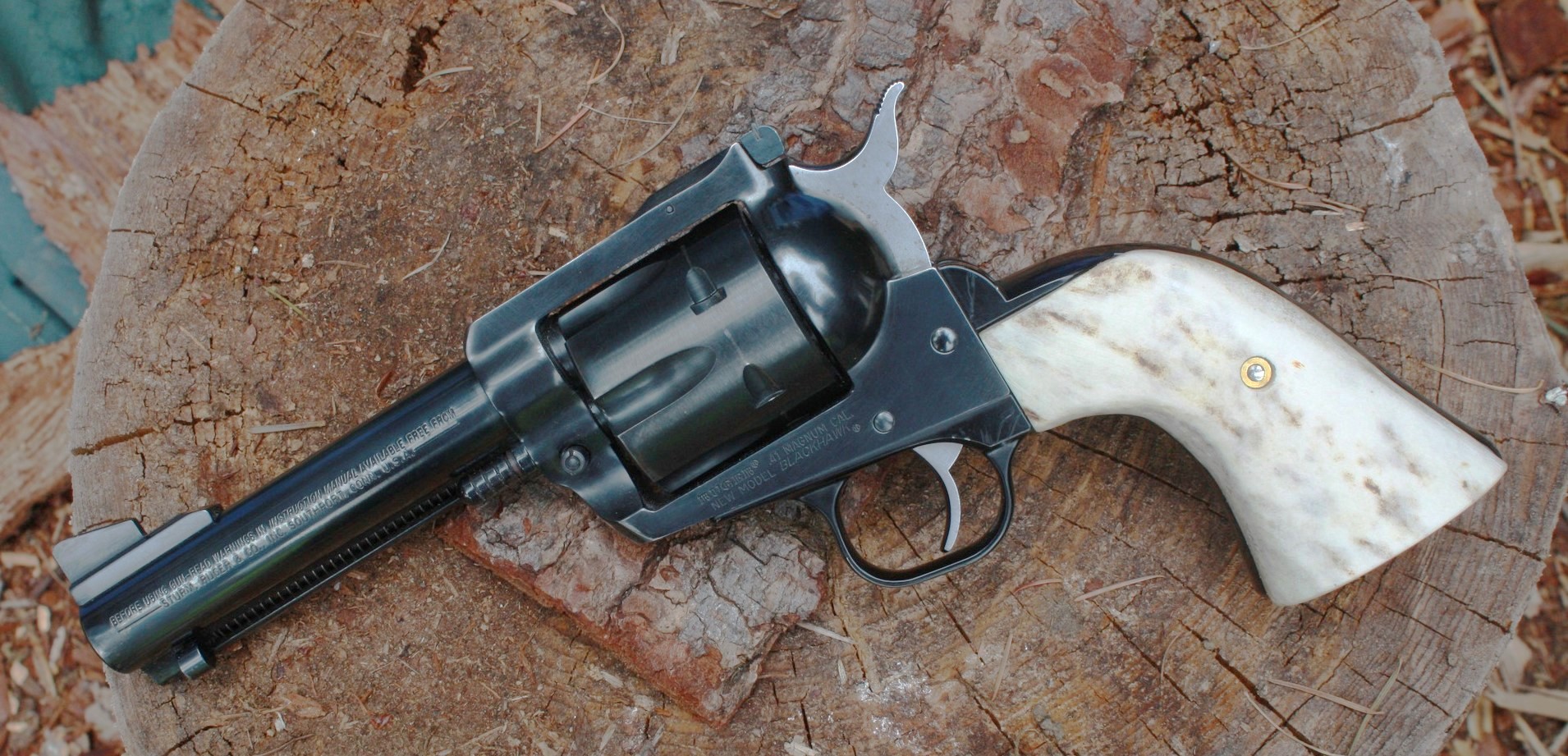
I kept those antlers in my workshop for a couple of years before starting work on the replacement grips for my Blackhawk. The worst part of this process is actually cutting the antler. It stinks! I carefully cut off a section near the base, sliced it down the center for two equal half-sections, used an original hardwood grip panel for my pattern and went to work. For the project, I used a Dremel tool, round file, lots of sandpaper and quite a bit of elbow grease. Eventually, the project was completed and my Blackhawk occasionally wears these grip panels, which have been buffed and waxed.
If a handgun grip doesn’t fit your hand, your shooting will suffer. One almost has to “marry” one’s gun hand to the revolver grip. It takes getting used to.
Some years ago, my pal Raj Singh, president at Eagle Grips, started making grips out of a material called Kirinite, which is also used for other things, including knife handles. The stuff is tough as nails and doesn’t warp.
Arizona Custom, on the other hand, uses a material called Magna Tusk, which I’ve written about in the past. This stuff is also tough, and company owner Davis Rand told me some years ago that he had actually struck a piece of Magna Tusk with a hammer. It took a couple of swings before he was able to crack it.
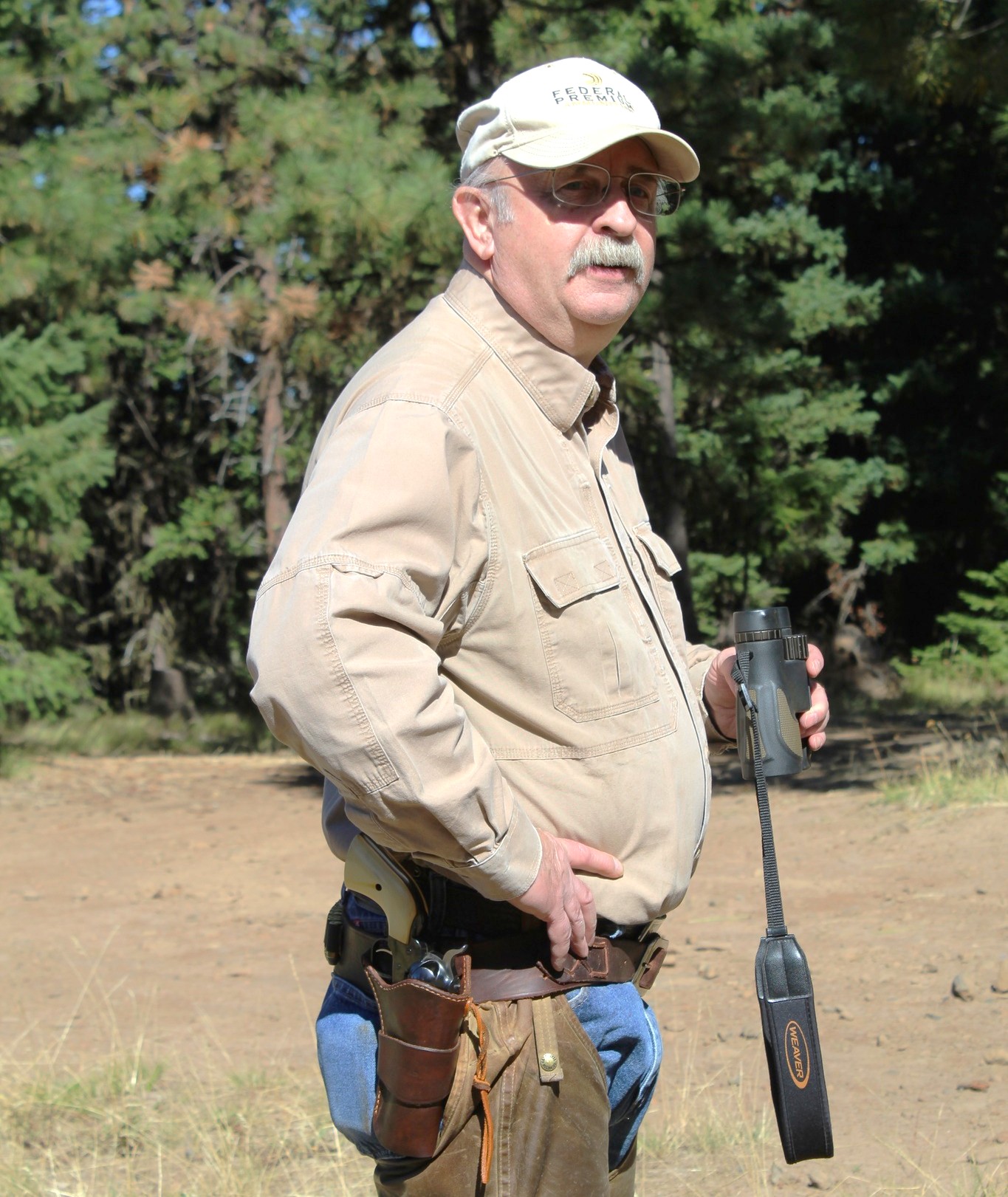
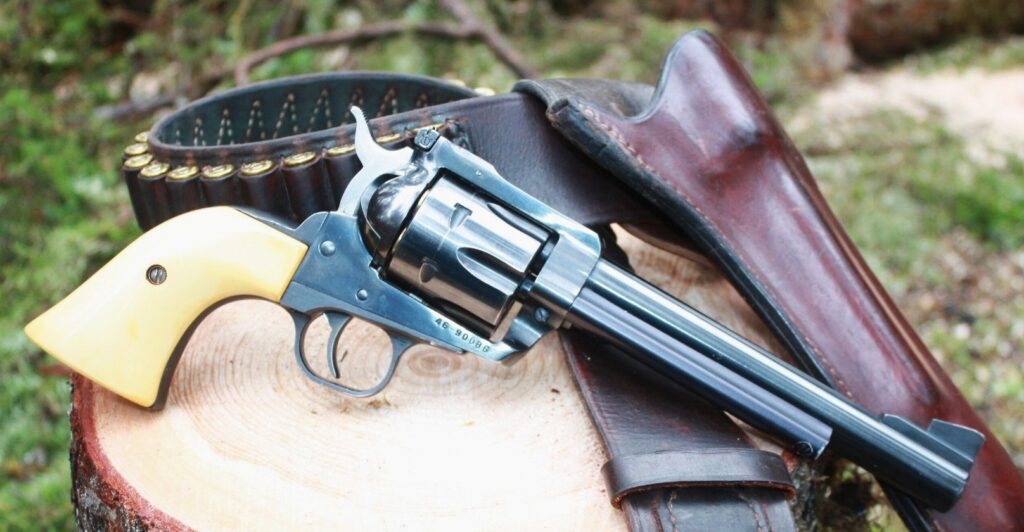
I’ve never tested the humor of the gods on that one, but I can say my Ruger New Vaquero with the Magna Tusk grips seen at the top of this story have withstood some nastiness over the years and they are still stroking along. I have no doubt they’ll last for a long time to come.
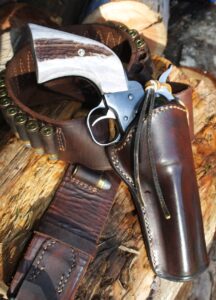
A person’s wheelgun ought to have some personality, a bit of style and a whole lot of functionality. It ought to carry well and look good in a holster (see image on the left, featuring a New Vaquero with a set of elk antler grips from Eagle). It needs to be well-maintained, and kept in good working order. While we’re not attending a fashion show out in the boonies, it’s not flamboyant to want your favorite smoke wagon to stand out from the crowd, especially of one puts in enough time to become fairly competent with it.
It simply says “This sixgun is mine. There may be others like it, but this one belongs to me.”