By Dave Workman
Editor-in-Chief
As far back as I can recall, there’s been a discussion—call it a debate if you prefer—about the value of an adjustable rear sight on a revolver.
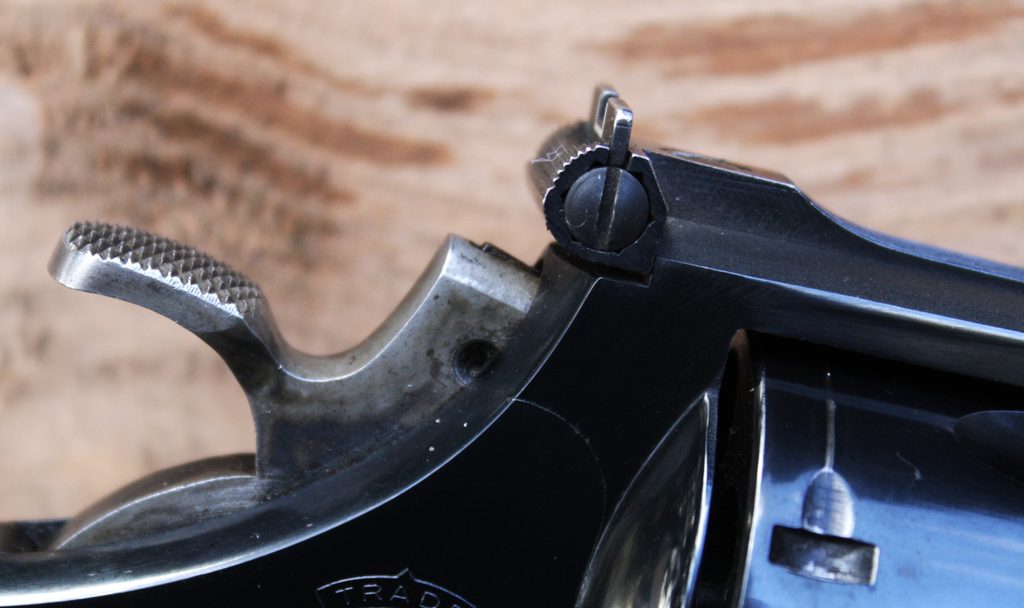
I happen to prefer an adjustable sight, especially on a magnum-caliber wheelgun, because they have “reach,” and it’s my experience that the adjustable rear sight allows a handgunner to fine-tune his or her particular gun. I’ve shot against women using double-action revolvers with adjustable sights, and take my word for it, their marksmanship is superb.
On the other hand, I have fired my fixed-sight Ruger single-actions in .45 Colt, and managed to hit targets out to about a hundred yards, but I’ve had a lot of practice.
But let’s look at this objectively. A revolver chambered in .44, .41, or .357 Magnum can send a bullet far downrange effectively and with lethal energy. Once years ago, just to demonstrate the accuracy of my Colt Python coupled with my own handloads pushing 125-grain Speer JHPs launched by a heavy dose of the old Hercules 2400, I fired off six rounds at a man-sized steel target 200 yards away. Shooting off a sandbag rest, as my pal David Gross of Minnesota looked on, I put all six rounds on that target.
When I started hunting with a handgun some 40 years ago, using a .41 Magnum Ruger Blackhawk with a 6 ½-inch barrel and adjustable rear sight, I spent a lot of range time tuning the gun to a specific load so I would be able to hit a mule deer buck at well over 100 yards.
As luck would have it, the deer I shot with that gun were both within 50 yards, but the bullets entered within an inch of one another on one buck, and the other time a single bullet finished the animal.
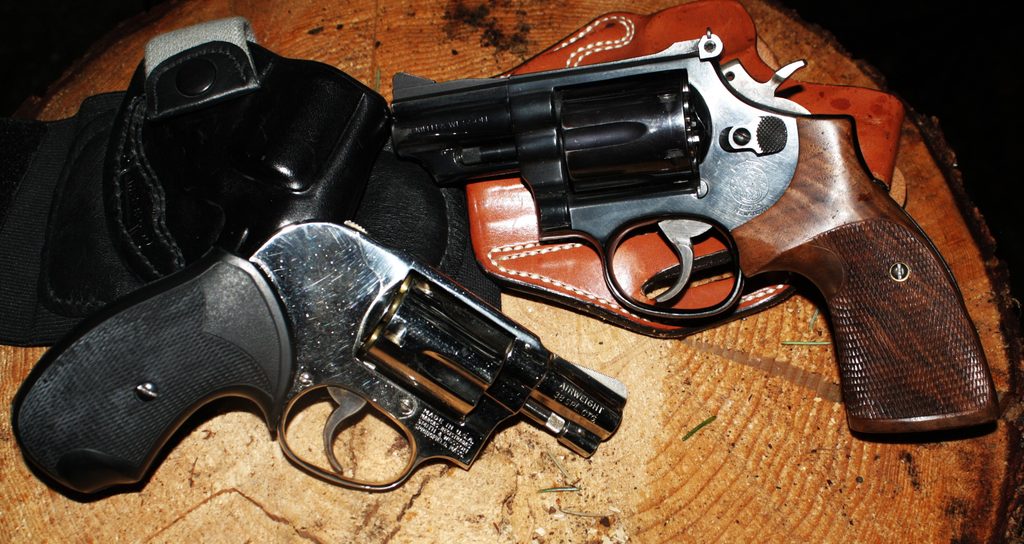
For close-up self-defense work, I can understand entirely why some folks think an adjustable sight would just get in the way on a J-frame or K-frame Smith & Wesson snubbie. At the typical gunfight range (within 21 feet/7 yards), there’s a lot of point shooting, and a human target is big enough that you’re not going to be trying for precision, you’re just trying to stop the fight.
Ask a long range handgunner who shoots steel silhouettes and they will almost invariably prefer an adjustable sight. After all, silhouette shooting is a precision game, and the guys who are really good at it rely on sights that are essentially set to coordinate with carefully-measured handloads to deliver shot after shot.
There are some downsides to having an adjustable sight on a revolver. Back in the previous century, I knew a lot of police and sheriff’s deputies who were all armed with wheelguns—the Colt Trooper and Model 19 Smith & Wesson pretty much dominated that arena—and every now and then, I’d hear from someone who banged their gun against something and either broke off part of the sight, or knocked it out of adjustment.
Last year, I repaired the rear sight on my brother’s Ruger GP100 after half of the sight blade somehow chipped off. It didn’t take long to make the repair, but afterwards, I spent time at the range re-zeroing that sixgun using 125- and 158-grain handloads.
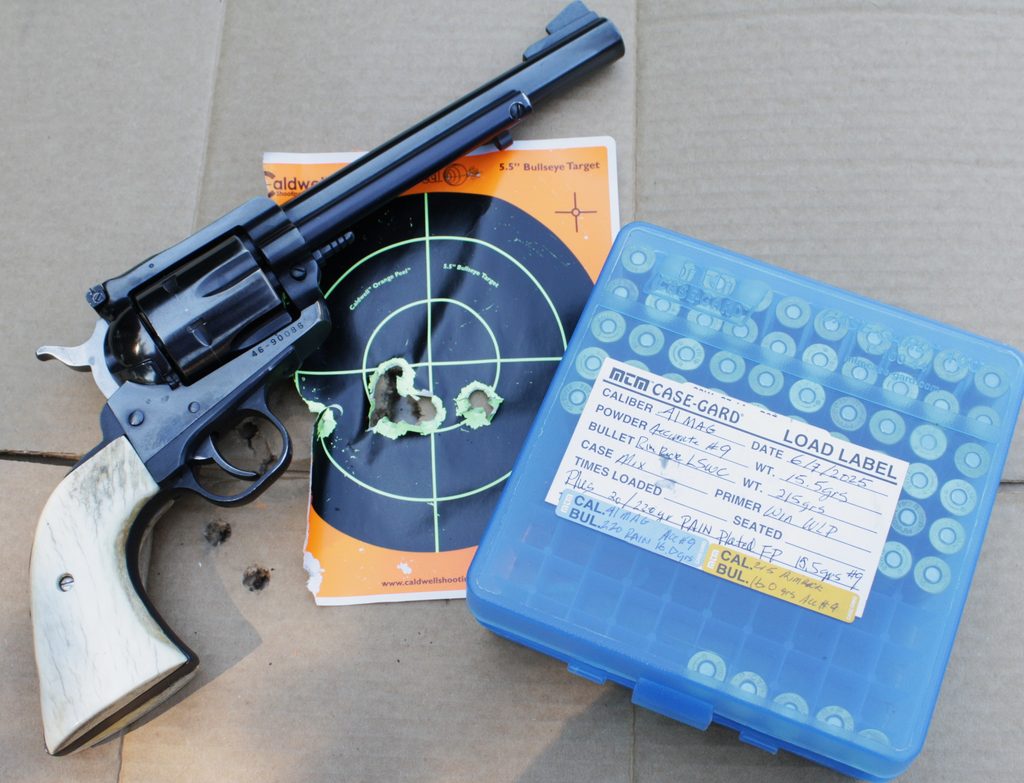
One doesn’t knock the rear sight out of adjustment on a single-action sixgun such as the Colt SAA or Ruger New Vaquero, because there isn’t one. When I bought my New Vaquero 20 years ago, I had to gently file and stone down the front sight blade just a hair because it shot low. Taking down the high blade on a Ruger should be done carefully and in increments because once the metal is gone, you can’t put it back.
My preferred load for the .45 Colt is a 255-grain Hornady RNLFP bullet propelled by either HP-38 or CFE Pistol, and both loadings are satisfactorily accurate against tin cans at 25 yards or so that I’m certain I can hit something bigger at that distance.
There are some downsides to fixed sights as well. My first revolver was a fixed sight .22 Harrington & Richardson Model 922. It shot high and slightly to the left, about the 11 o’clock position, so I had to hold the sights at 5 o’clock to put them in the black. I used that 9-shooter to kill a few raccoons, but I would have preferred a revolver on which I could have adjusted the rear sight to bring it into zero.
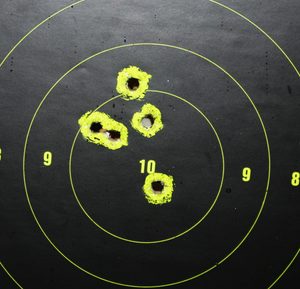
One of my favorite wheelguns is a Model 19 S&W with a 2 ½-inch barrel and an adjustable rear sight. It fires a .357 Magnum with a 158-grain JHP bullet I load over H110 powder and a magnum CCI primer, and I’ve managed to hit distant targets with that gun.
Some years ago, I field tested a Ruger Alaskan double-action revolver with a short barrel. Chambered for the powerful .480 Ruger cartridge, I was able to hit targets at a hundred yards, but only after spending the time to adjust the rear sight. Incidentally, the .480 Ruger is a delightful round, with a robust recoil, but not unmanageable.
What do you think? Are you comfortable with fixed sights, or do you prefer an adjustable rear sight, especially on magnum-caliber revolvers?