By Dave Workman
Editor-in-Chief
Some years ago, I worked with a young lady who early one Sunday morning at the office mentioned she carried a pistol in her purse, and being only mildly curious, I asked to see this gat, and out came this diminutive, little thing which, at first glance, appeared to be some kid’s toy.
Just shows how wrong someone can be.
What she showed me was a five-shot single-action mini-revolver from North American Arms, and I quickly counseled her against shooting someone with it except in a real close-up emergency, so as not to make ‘em mad.
However, as I recall, she quickly said it was a .22 Magnum, and while that may make considerable difference in terms of ballistics, I still reminded her this was not a target pistol, but a piece of emergency survival equipment.
Leap ahead about a dozen years. Into my life came a slightly larger five-shooter from NAA, this one resembling an older Remington pocket revolver from the late 1800s, and darned if it didn’t just impress the heck out of me.
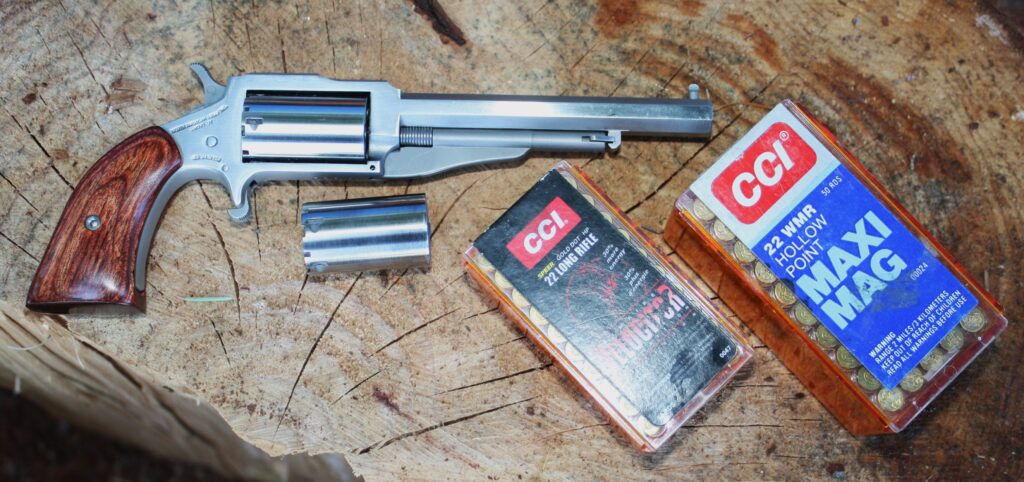
With two cylinders—one chambered for .22 Long Rifle and the other for .22 Magnums—this was more than a mere pocket rocket. With a 4-inch octagonal barrel, cut with what I believe is a 1:12-inch right-hand twist and topped by a post front sight, the NAA Earl has stainless steel construction and handsome rosewood grip. I tested it at the range, firing at a target placed 7 yards away, and discovered it is a moderately-accurate tiny handgun with an impressive muzzle blast, easily managed recoil and capable of launching bullets at magnum velocities.
The Earl might hardly be my first choice for a defensive handgun, but as it turned out, this handsome little revolver is a lot better than having no gun at all. By the time you’ve expended the five rounds, you’ll have gotten someone’s undivided attention!
.22 Magnum
Let’s talk about the .22 Magnum cartridge for just a moment. Depending upon the cartridge, the .22 Magnum is capable of devastating performance. Introduced in 1959, it became an instant hit among rimfire fans who used .22-caliber guns for small game hunting, varmint and small predator control. It can launch a 50-grain JHP at better than 1500 fps, and when one reduces bullet weight to 40 grains, those little projectiles can warp out of the muzzle at more than 1,800 fps. Stick a 30-grainer in the chamber, and you can, according to some data, expect it to sizzle downrange in the vicinity of 2,300 fps.
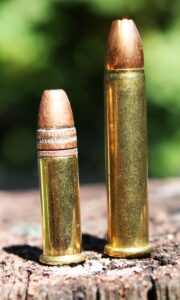
However, you are not going to get that kind of velocity out of the Earl’s 4-inch barrel, or any of the other NAA handguns. You’ll get some punch, but not in the velocity range you can expect from a .22-caliber rifle.
Still, there is not a coyote, raccoon, cottontail, snowshoe hare or jackrabbit, bobcat or fat squirrel that can take a hit from a .22 Magnum and complain about sissy impact. Indeed, they won’t complain at all!
Gunmakers have built rifles and revolvers around the cartridge, and I can recall when early in my teens I wanted a Ruger Single Six convertible with a 6 ½-inch barrel which I would always use with the magnum cylinder installed. I had visions of slapping on a set of Jay Scott faux ivory grips, getting a snazzy 50-round cartridge belt and holster, and packing that sixgun on raccoon or deer hunts, the latter being perfect for potting dumb blue grouse for camp meat.
Back in those days, .22 Magnum ammunition was affordable even for a kid on an allowance. All I needed was the wheelgun, but unfortunately, it was never to be. Let’s just say a couple of things got in the way: Handguns with bigger bores, a family and bills, a couple of shotguns and rifles, and, oh, did I mention, handguns with bigger bores?
Safety Notch
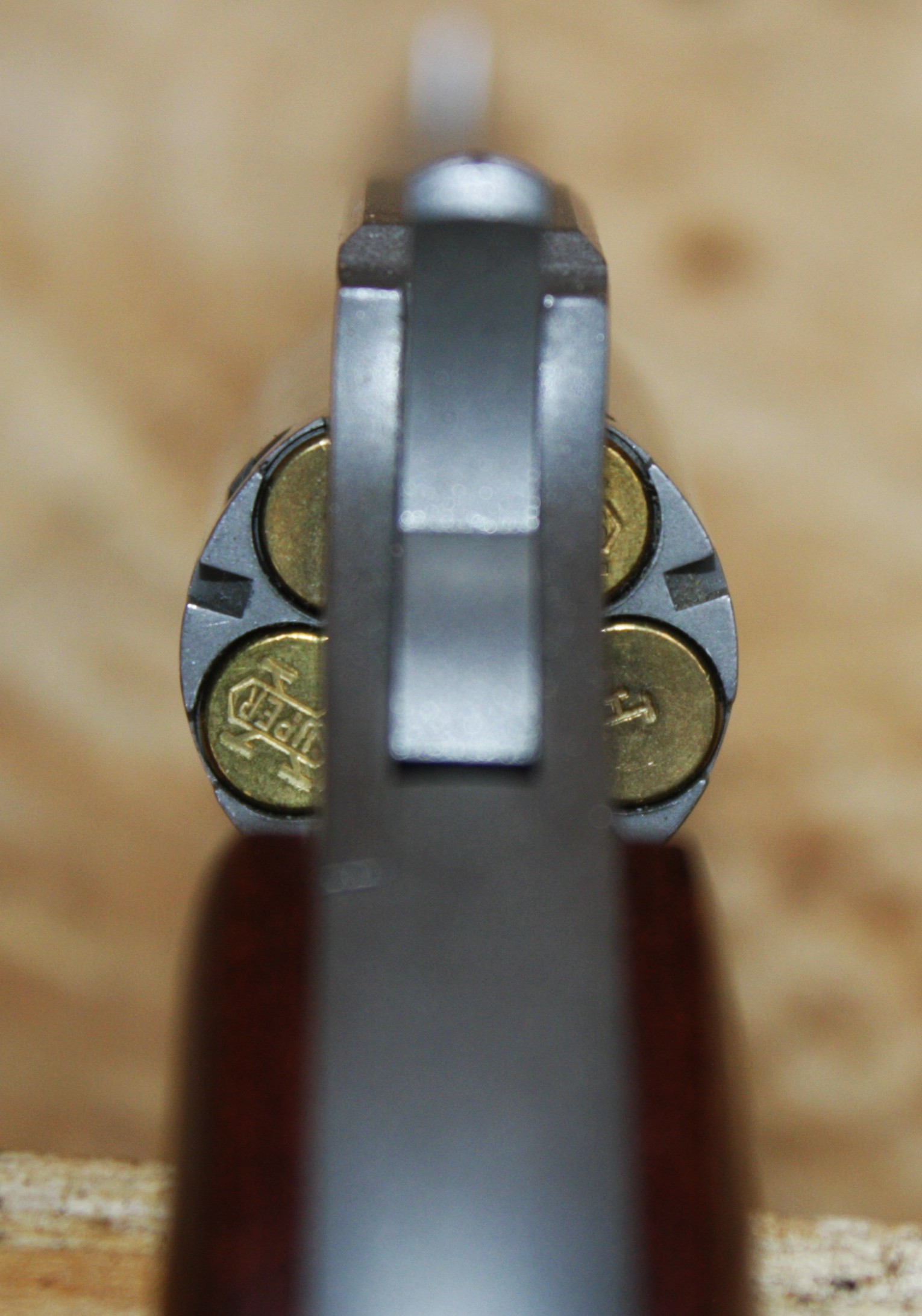
The Earl, and other NAA revolvers, is designed with notches between the cylinder chambers. This allows the hammer to be lowered safely with the flat integral firing pin on the hammer into one of those notches, so there is not a live round directly underneath. It’s actually not a bad system.
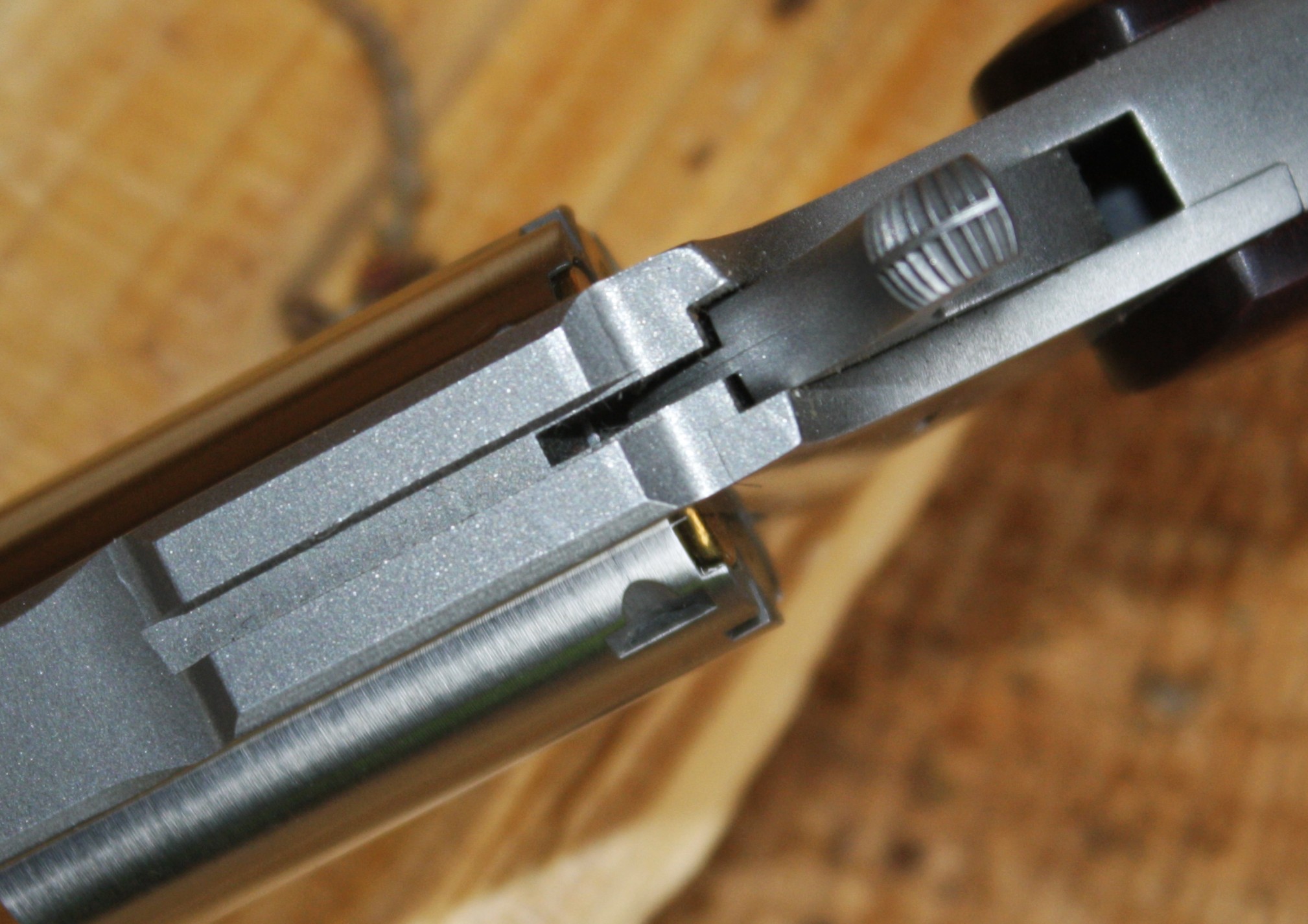
NAA designed this and its other mini-revolvers without trigger guards. That said, one must always keep their finger off the trigger until ready to shoot, anyway.
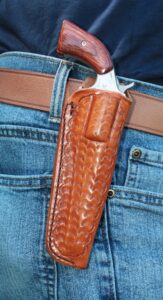
A few years ago, I had some scrap leather laying around in the workshop, so I fashioned a small holster for the Earl, building it so the top of the holster came up over the trigger. It has worked very well so far, and I see no reason to tinker with it further. I finished it in natural light brown with some leather dressing, and it actually looks pretty snazzy.
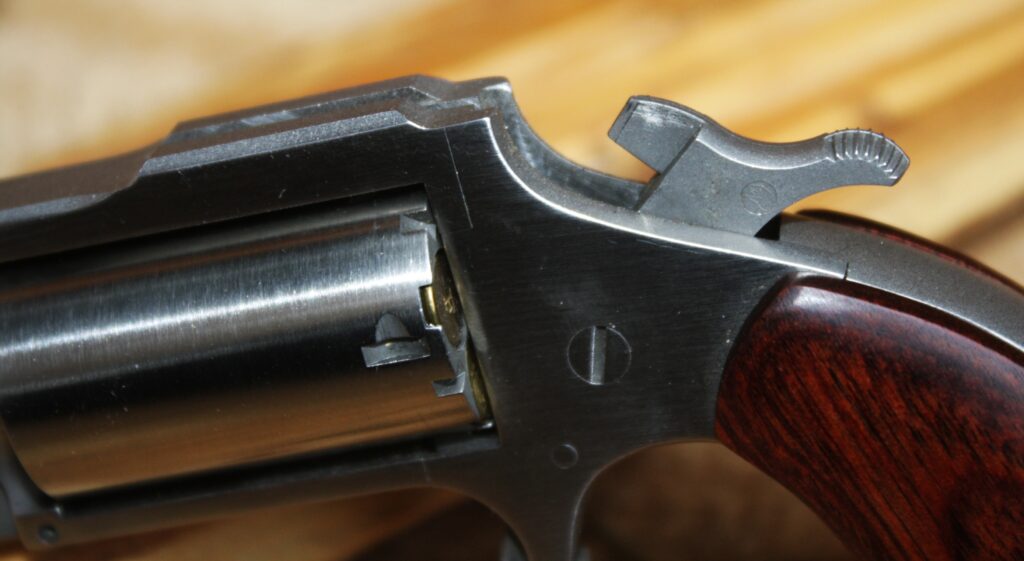
About the only downside with the Earl, or most other NAA revolvers that are not break tops or have swing-out cylinders is the reloading process. It’s rather slow. The cylinder pin must be removed out the front, and the cylinder must be pushed out from the frame and chambers individually emptied and reloaded. Then the cylinder is popped back into place, the pin reinstalled and you’re back in business.
While a cursory glance at social media reveals some critics of NAA revolvers, these little guns fill a niche, and do it rather well. And, they’re kinda cute.