By Dave Workman
Editor-in-Chief
The weekend deadly mass shooting at the Seattle (Washington) Center’s “Bite of Seattle” event serves as a stark reminder that violence does not happen on a pre-arranged schedule, and criminals—including 15-year-old suspects—do not call ahead to say they are coming.
Three people are dead including one of the suspected shooters involved in the incident, which occurred during what is ostensibly a “gun-free” event. The shooting reminded Evergreen State gun owners that none of the restrictive gun control laws adopted during the past decade by majority Democrats in the state legislature prevented the tragedy.
Now far-left Seattle Mayor Katie Wilson has announced “We are bringing in an expert in gun violence prevention.” So far, this person has not been identified, and as noted by TGM Tuesday, Wilson’s response to the Seattle Center tragedy appears to be to seek more gun control penalizing law-abiding citizens rather than hammering down on the perpetrators, even if they happen to be 15 years old, like the jailed surviving suspected shooter.
3 DEAD, 4 WOUNDED AT SEATTLE CENTER
So, what’s a private citizen to do about personal protection? For years, I’ve frequently carried a Colt Commander, but I have also frequently opted for a revolver for the sake of weight and concealability. Now is a good time to remind readers that “concealed” means exactly that; nobody in your immediate presence should know you are armed.

So, what are some good options? A lot depends upon the time of year and climate conditions.
For those in northern or midwestern states where temperatures drop and wearing a jacket, insulated vest, parka, heavy sweater or other heavy cover garment, the choices cover lots of bases. My personal favorites might include:
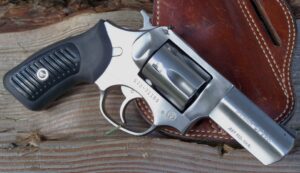
- A 2.5-inch Model 19 Smith & Wesson in .357 Magnum, or similar-sized wheelgun from Colt or Ruger, carried either in an upside-down shoulder holster or a pancake-style strong-side belt holster. The .357 Magnum is a proven fight stopper, especially when pushing a 125- or 158-grain JHP.
- A Ruger SP101 chambered for the .327 Federal Magnum, which is a blistering cartridge with lots of stopping power.
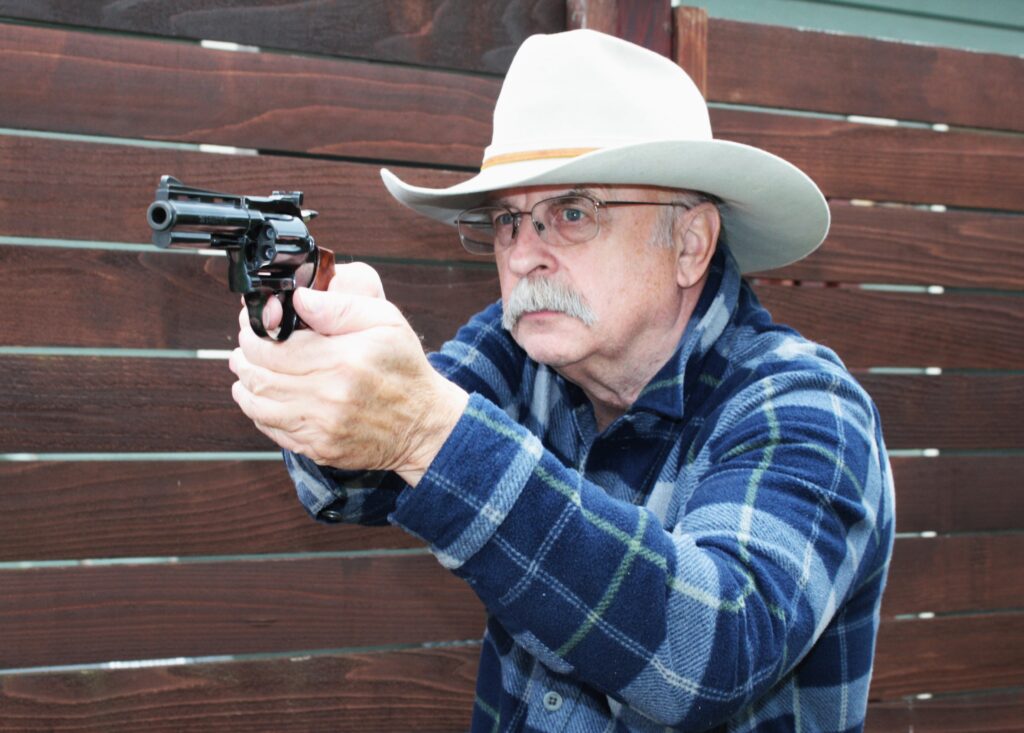
- If you have one, a Colt Diamondback in .38 Special, preferably with the 2.5-inch barrel, although mine is a 4-incher, and it is accurate when pushing 110- or 125-grain JHPs.
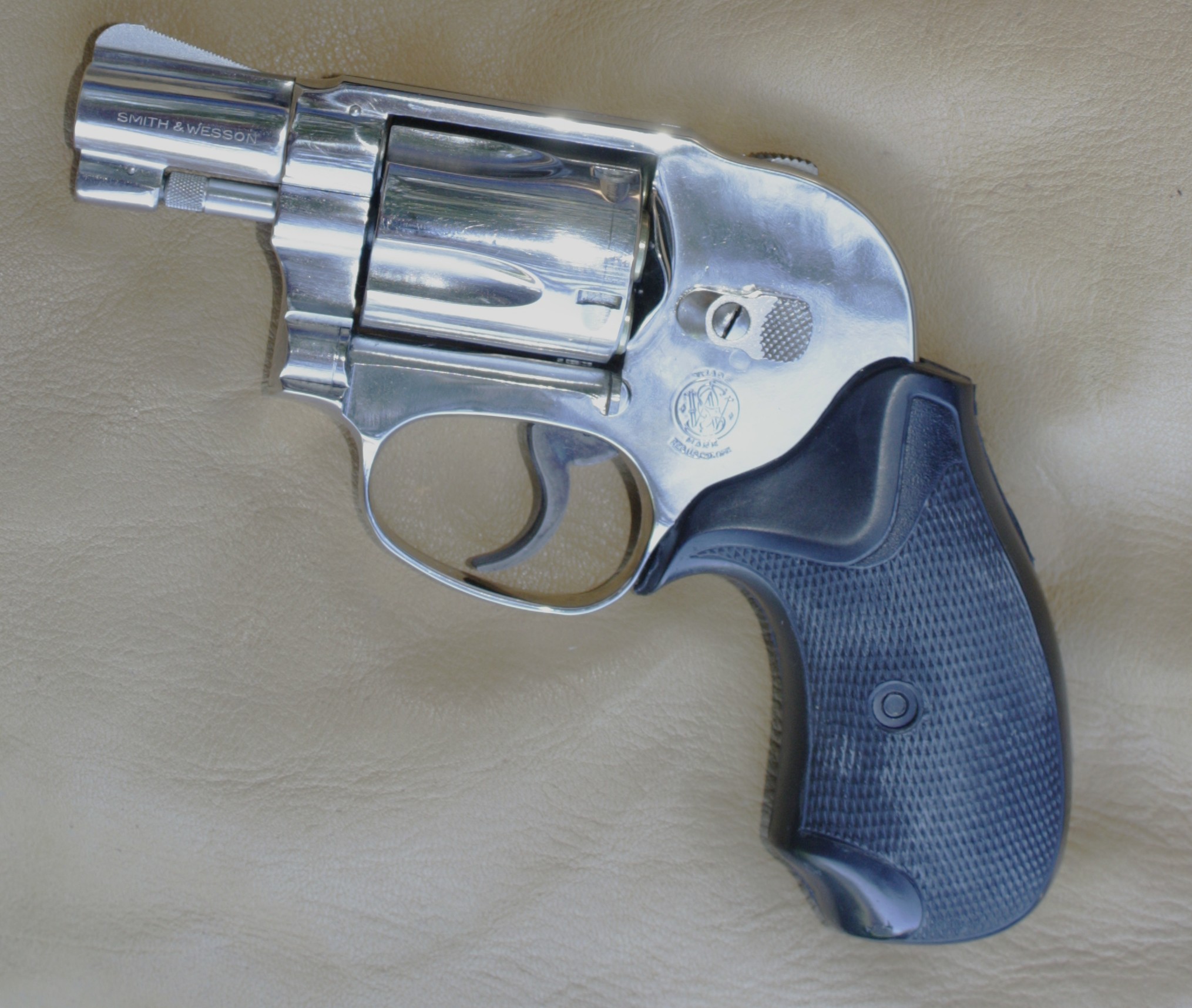
- Likewise, a Colt Detective Special, Cobra or other “snubnose” revolvers in .38 Special. With today’s modern factory ammunition developed for personal defense, any wheelgun in this caliber is going to acquit itself well, provided you do your part. The advantage Colts have over J-frame Smith & Wesson revolvers is that they carry six cartridges, instead of five.
- Charter Arms has an array of five-shot .38 Specials with 2-inch barrels, and they have always proven reliable when I’ve shot various models.
- As mentioned above, any S&W J-frame revolver, chambered either in .38 Special, or those chambered for the .357 Magnum round, are formidable defensive sidearms in the hands of someone who knows how to use them.
I interviewed someone a few years ago who had shot and killed an attacker, using one of the two J-frame .357s he was carrying at the time, one in each pocket of his jacket. Fortunately for him, the entire incident was caught on a security camera. He cooperated with investigators, no charges were filed as he was determined to have acted in self-defense under existing state statute. Three months later, his gun was returned after the investigation was concluded.
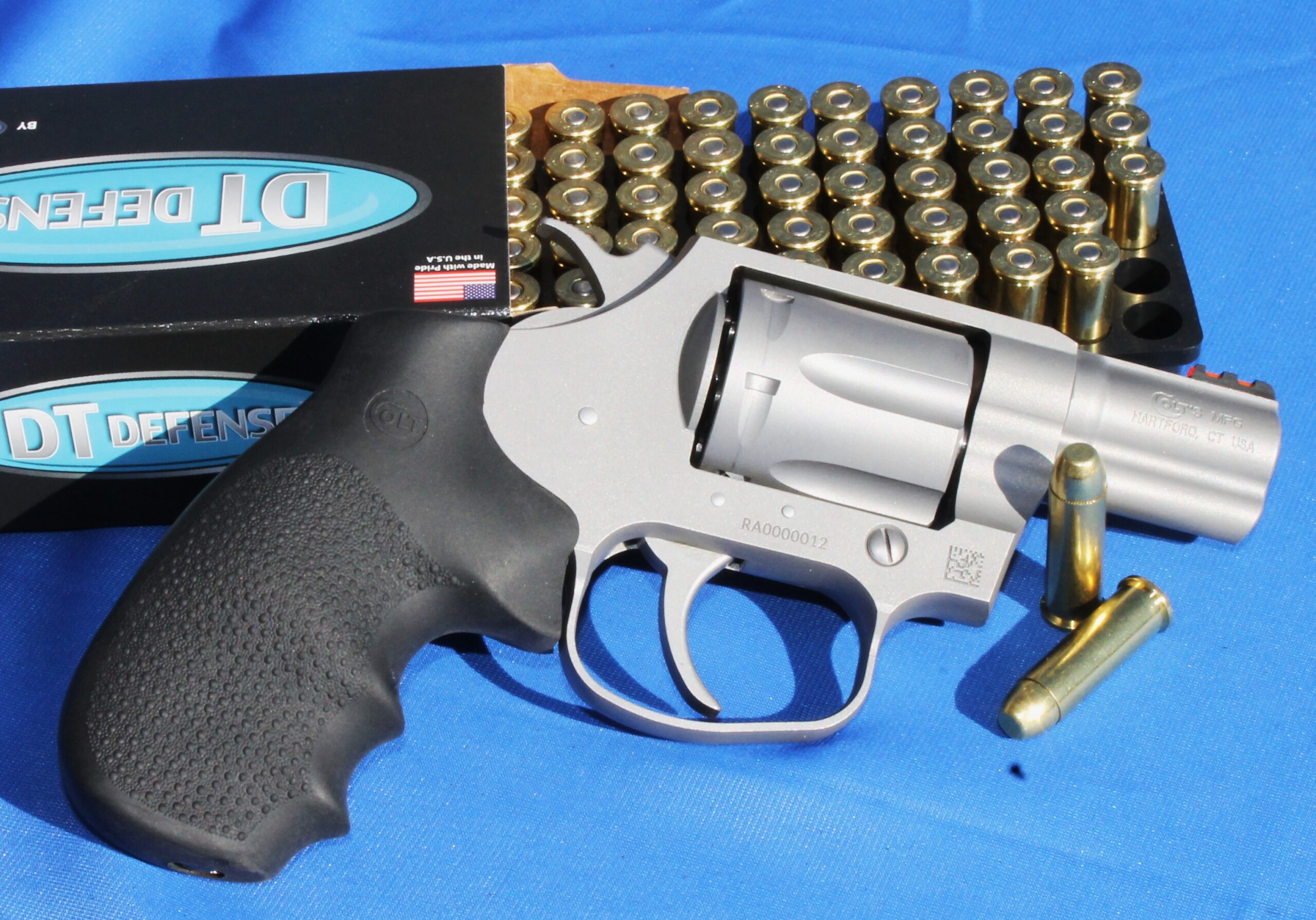
Yesterday, TGM reported a series of new .22-caliber snubbies from Charter Arms. There are defensive loads now offered in .22 Long Rifle and .22 Magnum, so the notion of using one in self-defense isn’t too far-fetched, although I’d recommend something with a bigger hole at the muzzle.
Charter calls this new series of revolvers its Walker series. Watch for an upcoming review of this wheelgun by TGM contributor Jim Dickson.
Getaway Guns
When carrying a revolver, or any sidearm, really, for personal protection, one should always keep in mind that the idea is to get away from the threat rather engage in a gunfight if at all possible. This isn’t Tombstone and you’re not Wyatt Earp (or Kurt Russell or Kevin Costner!), so the notion of engaging in a pitched battle with one or multiple thugs is not your mission. Getting away from the bad guy(s) should be your first priority.
That said, no handgun—revolver or semi-auto—does its own shooting, nor does it guarantee accurate bullet delivery. That’s your job.
Practice is important, and learning quick reloads is part of your personal training. When I pack a wheelgun, I carry at least two HKS speedloaders, and maybe six more rounds on a belt slide. In an emergency—say you’re caught in the middle of a natural disaster which could continue for several days with accompanying social breakdown—you want to have spare ammunition. You may not face bands of ne’er-do-wells or individual thugs, but the potential for facing roving, vicious dogs is a consideration.
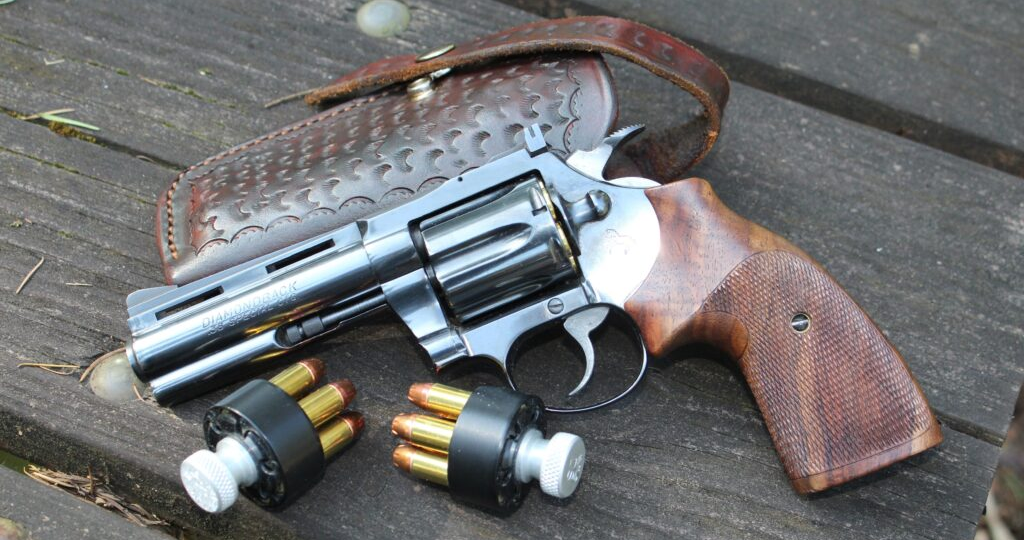
Back in the days I was competing with revolvers (S&W Model 19 or Colt Python), I used to spend lots of time at the range practicing reloads. Got pretty good at it, actually, and so can you. Start slow, and eventually you will get faster.
Ideally, you will never have to use your defensive sidearm in an emergency. However, as the good people attending last weekend’s event in Seattle learned dramatically, this is not an ideal world.