By Dave Workman
Editor-in-Chief
Watching an ammunition shortage has always been an educational and entertaining enterprise because one has to wonder two things:
- Where do people get all the money to buy cases upon cases of cartridges?
- What will they do with a basement full of expensive ammunition when the “shortage” comes to an end?
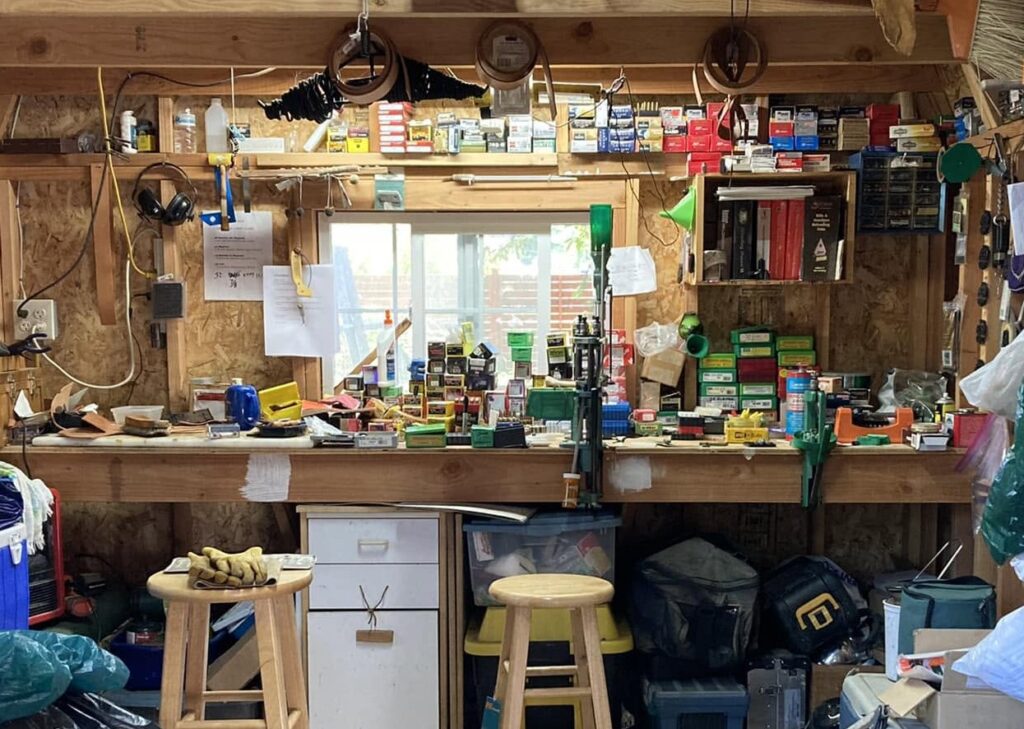
I don’t worry about that sort of thing because I reload my ammunition, and over the years I’ve managed to amass a good supply of components, which are kept in a cool, dry place, which is always ready for activity anytime.
I started reloading way back in the previous century. My first handloads were for my .300 Savage Model 99 and .38 Specials and .357 Magnums for my Model 19 Smith & Wesson. By today’s standards, they were probably not the best, but they shot well, and always kept me from going bankrupt buying factory stuff.
Eventually, as my personal armory expanded, so did the handloading. I graduated from reloading handgun cartridges on a single-state RCBS press to adding a second press with an RCBS Piggyback, which mounted on a single-stage Rock Chucker to become a progressive press. I’ve loaded thousands of handgun and rifle cartridges over the years, and no matter how much money I might have been saving—maybe not as much as I sometimes imagine—the real payoff is to be able to fire ammunition I personally put together which performs consistently in my firearms.
I have the gear to reload for eight or nine handgun calibers and at least six rifle calibers, from .223 to .30-06. I cannot recall the last time I actually bought a box of centerfire rifle cartridges, and it’s been probably five years since I purchased a single box of .38 Specials for a little writing project.
Getting started in reloading does require an initial outlay of cash. In the long run, provided you don’t get extravagant, reloading can save plenty of money, especially if factory ammunition is running $40 to $50 a box. Just learn to shop carefully, watch for sales of used dies, presses, tumblers and other equipment, and you might even hit yard sales or estate sales to pick up some bargains.
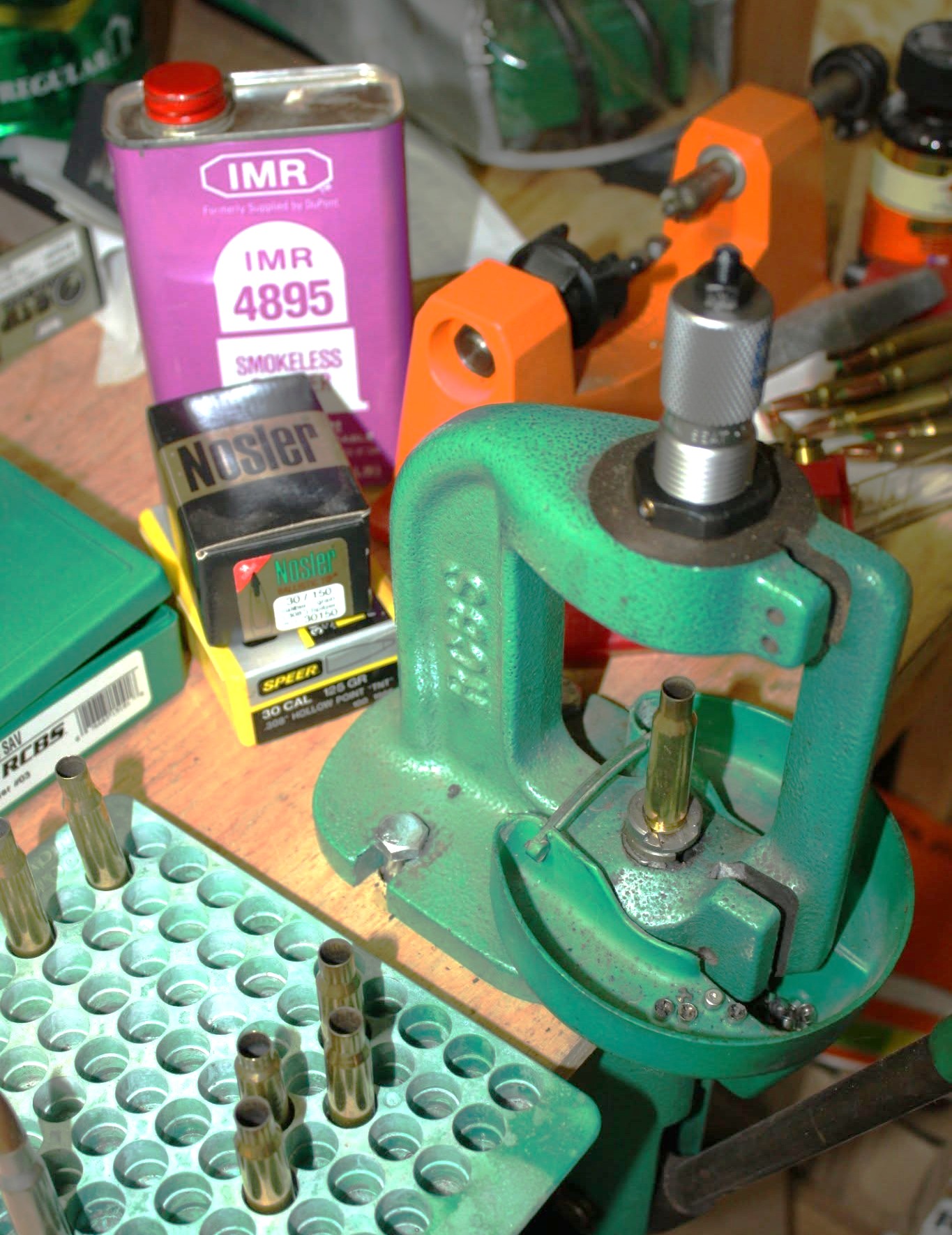
My advice to new reloaders is to find one or two consistent propellants for the calibers you use and stick with them. The late Bob Nosler, who sadly passed away last year, once told me in an interview that handloading is a “game of recipes.” He was right. I’ve spent lots of time trying to brew up bullet/powder combinations over the years for the most consistent performance, and when I find something which delivers the goods time and time again, I stick with it. My guns are tools, not test tubes, and I don’t subject them to punishment by trying to work up the most powerful load on the planet.
In the process, I’ve discovered that the most powerful loads aren’t always the best. I’m happy to lose maybe 100-200 fps if a reduced load proves itself more accurate in whatever gun I’m shooting.

As Wyatt Earp allegedly observed, “Fast is fine, but accuracy is final.”
For storing my handloads, regardless of caliber, I use plastic cartridge boxes from MTM (available at Bass Pro Shops, Cabela’s and other outlets) which are tough and do not succumb to weather.
Case Prep
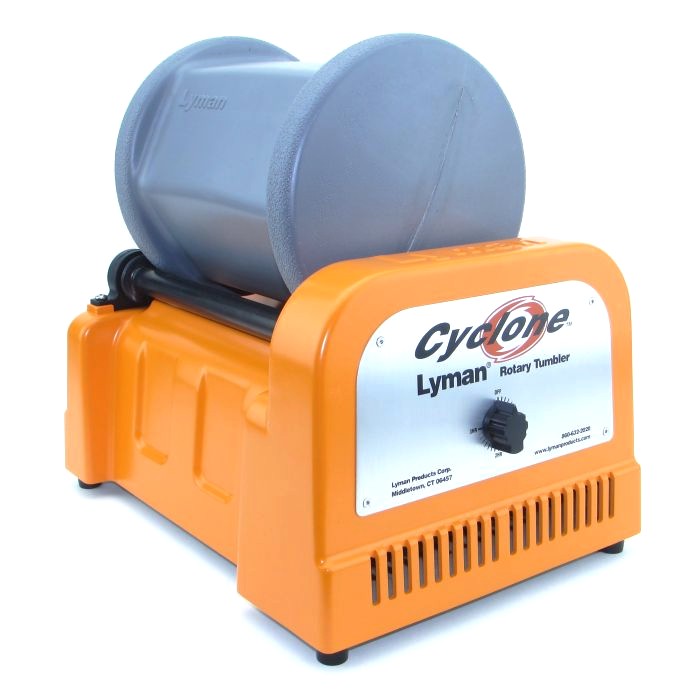
All the stuff leading up to reloading can be fascinating and fun. All of my spent cases are wet tumbled in a Lyman Cyclone rotary tumbler and allowed to dry over the course of several days. I de-prime rifle cartridges and during the re-sizing process, I will measure each case to see whether they need trimming. Once they’re resized and trimmed, make sure the primer pockets are also cleaned.
Some folks insist on annealing their rifle cartridge cases, which is not something I do, but to each his own. It is amazing to see how shiny tumbled brass can be when it comes out of the sudsy water inside the tumbler. It’s pretty much brand new.
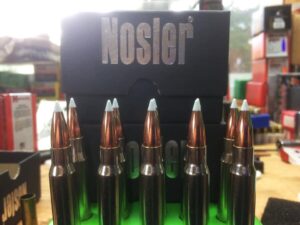
Over the years, I have used brass from Winchester, Remington, Federal, Starline and Nosler in rifle calibers, while my handgunning endeavors has also seen me use brass from these outfits, generally without complaint. I sometimes find a split case, but that’s to be expected when a case might have been loaded more than once. When I encounter a split case, it goes into the wastebasket.
I lube up my rifle cartridge cases for the resizing and trimming, and don’t try to wipe them off. Instead, they go right into a hot water bath for about three hours. And they sparkle!
I’ve got a couple of different drying techniques. Sometimes I’ll leave brass in the greenhouse. At other times, it will hang in a cloth bag next to the wood stove, sometimes for days. That way I know it is absolutely dry.
Primer pockets should always be checked to assure proper seating of new primers.
I weigh each powder charge separately when I’m doing rifle ammunition on a single-stage press, but when it comes to progressive reloading, I set my powder measure to deliver the same charge as each case cycles. The setup is simple. Just measure out ten charges and weigh them. Say you come up with 190 grains of powder. Divide by 10 and each dispensation of propellant will weigh 19.0 grains. I often interrupt my loading cycle to take a single measured powder charge to weigh it individually. They’re typically within 0.2-0.3 grains of each other and quite often they vary by about 0.1 grain.

I have an electronic scale from Lyman, along with a manual case trimmer. My loading dies come from RCBS, Hornady, Hornady, Lyman and Redding, and I’ve got two sets of dies for several different calibers. For all of my pistol cartridges, which are all straight-walled, my sizing dies are lined with carbide to preclude the necessity of lubricating each case.
Is all of this necessary? One might not think so until one runs short of ammunition, and that usually happens at the worst time. In my case, I don’t really sweat it if someone yells “Ammo shortage!” because all I need to do is head for the workshop, sit down at the reloading bench and brew up a fresh supply.
And here’s something to consider. Every deer I’ve tagged over the past two decades has been taken with a handload, including the ones I’ve shot with handguns. It doesn’t get more self-explanitory than that!
And keep shooting.