By Dave Workman
Editor-in-Chief
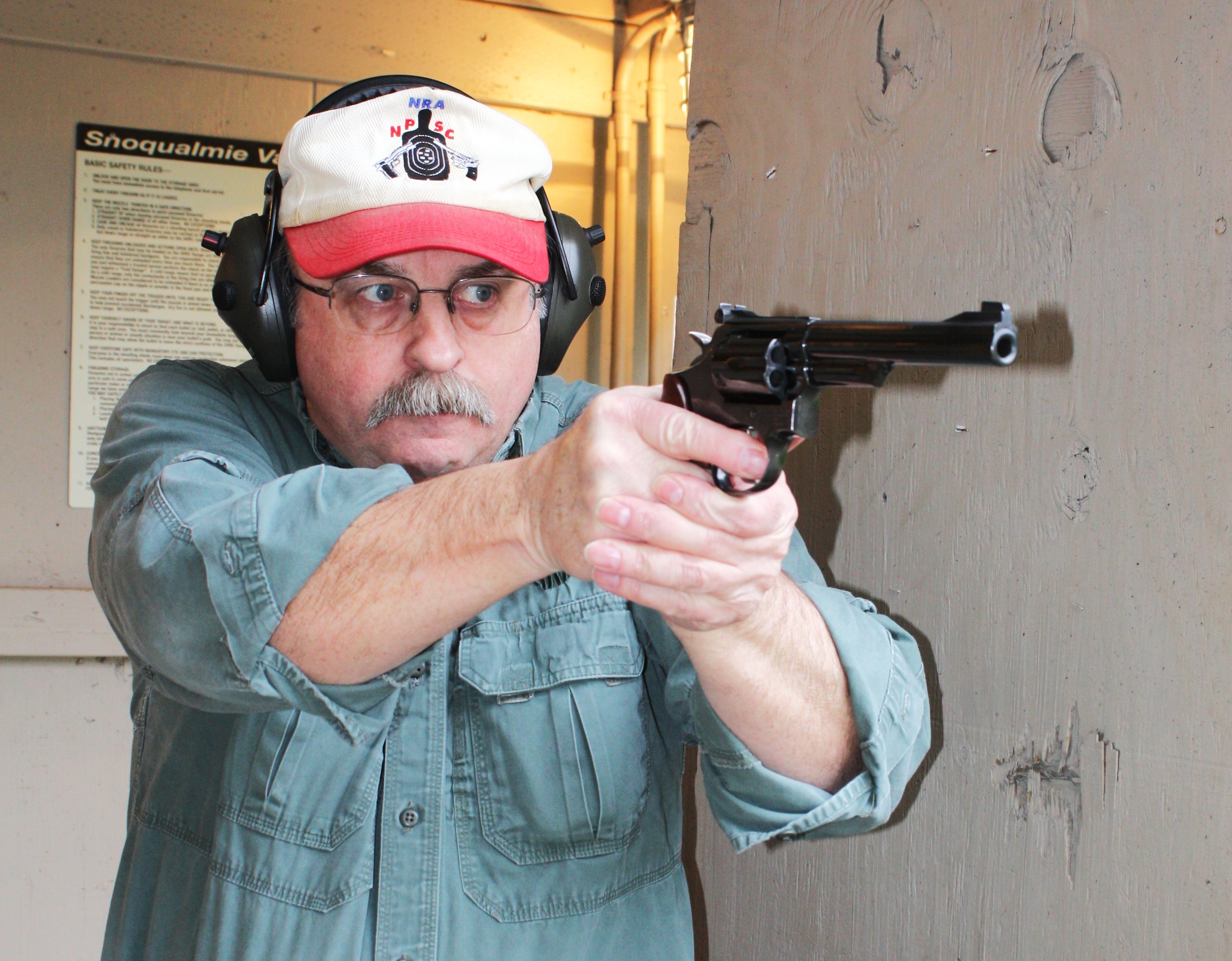
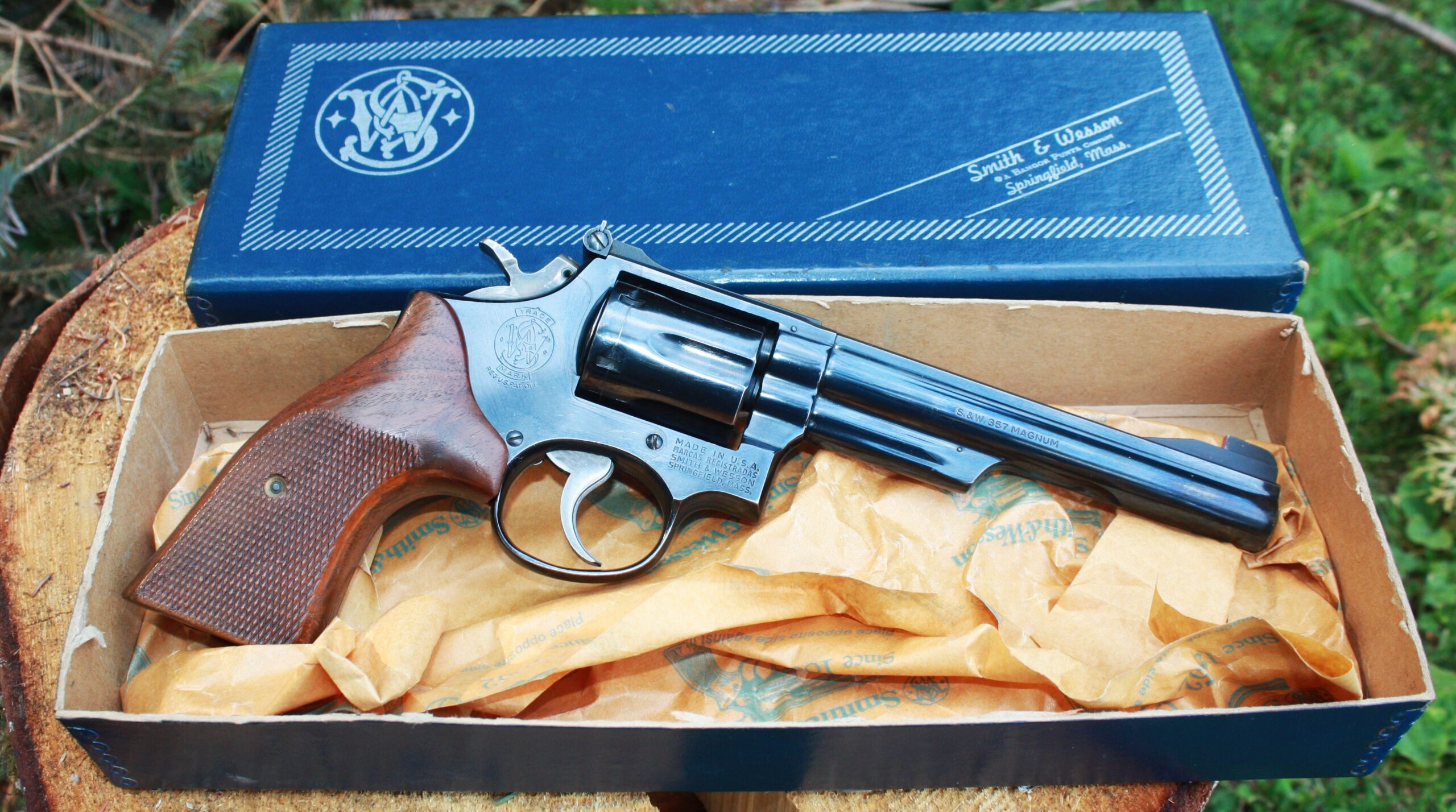
The Model 19 Smith & Wesson double-action revolver was a stroke of genius by S&W, and much admiration from Bill Jordan, the old Border Patrolman who was also one of the fastest guys with a sixgun who ever walked.
Jordan was a fan of the Model 19, and even consulted S&W during the revolver’s development. You can find out a lot about the Model 19 at Wikipedia, and in Bill’s book No Second Place Winner. The cover photo shows Bill with a drawn Model 19.
Chambered for the sizzling .357 Magnum cartridge—the first magnum, introduced back in 1935—the Model 19 was built on the “K” frame, bringing it down in size from the original “N” frame platform in which the .357 cartridge was first available.
My first magnum wheelgun was a Model 19, purchased back in 1973 or 74. It had a 6-inch barrel with a Patridge front sight and adjustable rear. The finish was superb; deep blue from stem to stern, with a pair of checkered target grips. I bought a Safariland shoulder holster for it, and later a belt holster which somehow got lost, I believe, on an elk hunt.
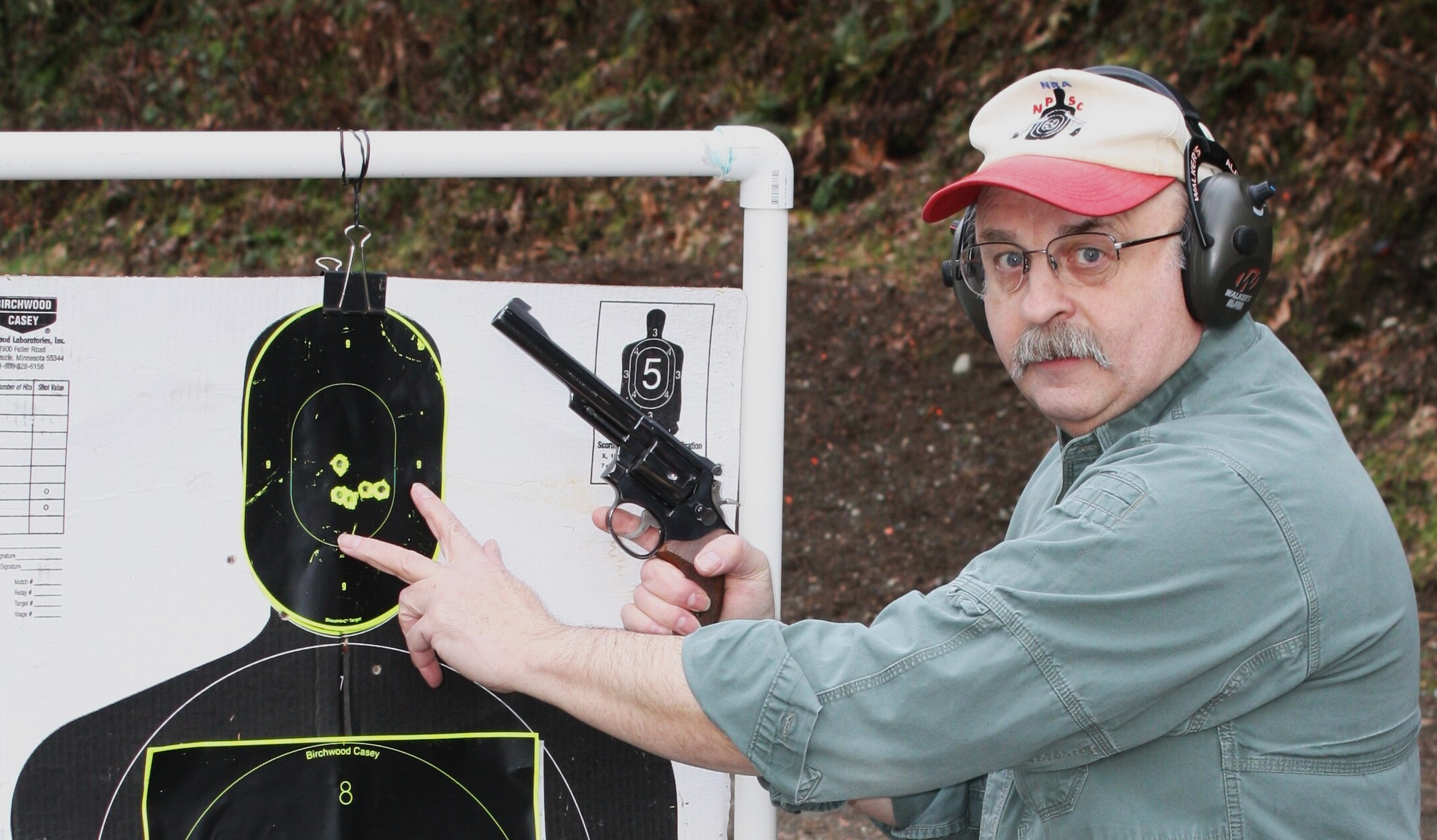
From the get-go, this revolver was dead-bang accurate. I fed it a mixed diet of .357 Magnums topped by 125-grain JHPs, because at the time that was the load carried by the local sheriff’s deputies and it had a good reputation for stopping fights. I also shot a lot of .38 Specials, both standard and Plus-P loads, and only had to adjust the sights slightly to keep ‘em in the black.
For a long time, the Model 19 shared the honors for being the standard issue sidearm for many law enforcement agencies, competing with the Colt Trooper, the Model 28 S&W, and those fortunate folks who were allowed to buy their own duty guns, and many opted for the 4-inch Colt Python.
In those days it was a mix of satisfaction for the guns and respect for the cartridge.
For several years, the 6-inch Model 19 was my constant companion. I learned to make long shots with that sixgun, and it was the first handgun for which I started reloading my own ammunition. I’m sure if it could tell stories, they would be occasionally colorful.
Once early in my career when there was a bank robbery in one of the smaller communities my weekly newspaper served, I raced to the scene and ended up talking to some of the sheriff’s deputies who were chasing leads pretty much in all directions, trying to find the bad guys. There was one report they had ditched their getaway car down an old logging road and one of the lawmen noticed I was driving a pickup and he asked if I’d take him down this road.
“Sure,” I told him and about halfway into this little jaunt, I asked him to reach down and grab the backpack off the floor. I pulled the Model 19 out and laid it on the seat between us. He never skipped a beat or raised an eyebrow.
This was the sidearm I carried on my first trip to Alaska almost 50 years ago.
I have no idea how many rounds have gone down the bore of that wheelgun, but it’s got to be well into the thousands. The cylinder still is in time, and I haven’t had a bit of trouble with it.
Snub Gun
Some years later, after changing jobs to write for a regional outdoors publication, the old John Jovino gun store in New York was advertising 2 ½-inch Model 19s for a very good price. My employer had an FFL and I fired off a check and an order after talking to a salesman long distance, and about a week later, in came my .357 Magnum snub gun.
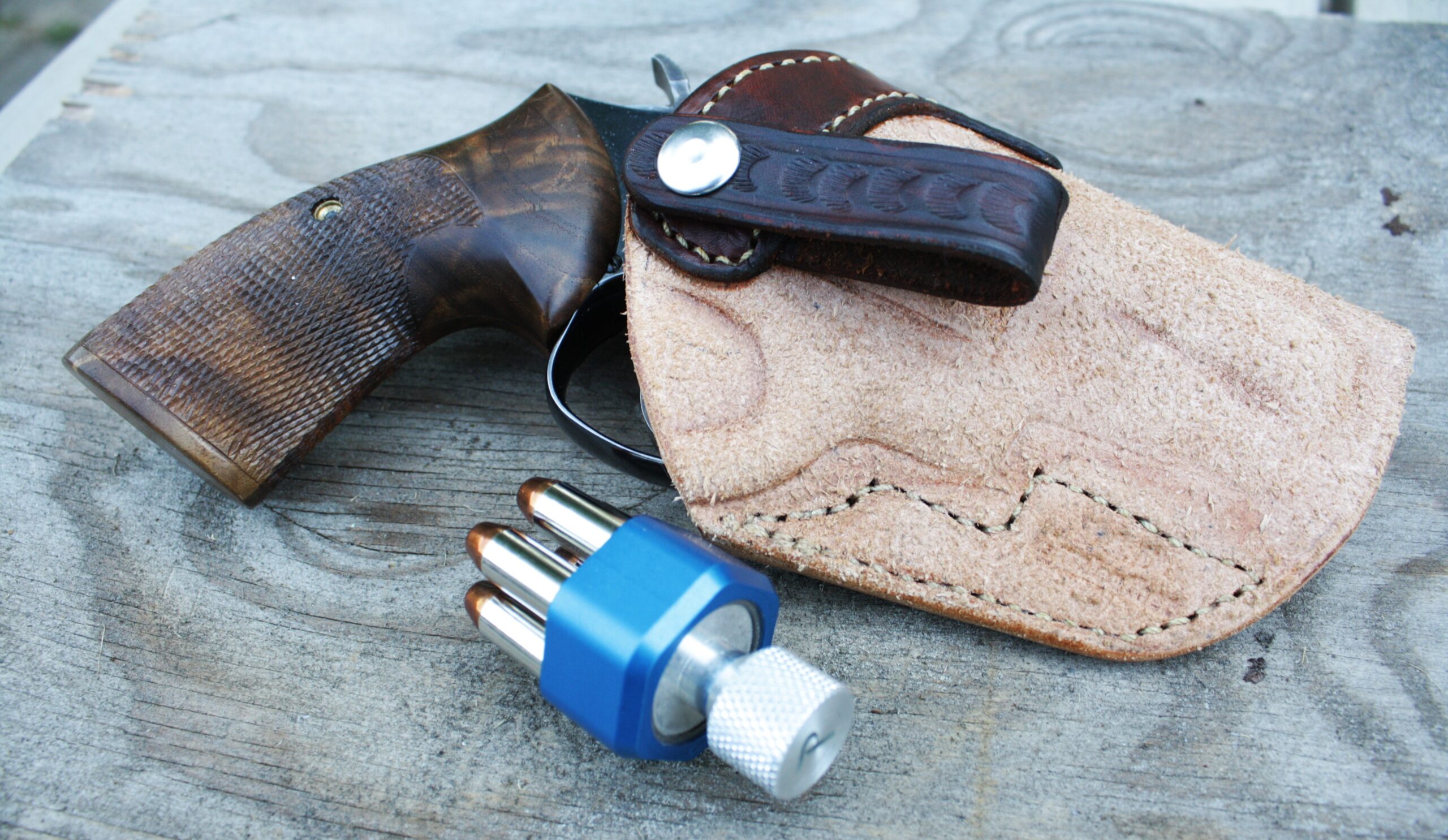
Like it’s sibling, this six-shooter was easily capable of handling full house .357 Magnums, and after work that afternoon, I grabbed a couple of boxes of shells—I think they were Winchesters—and headed for the range. This one shot high out of the box as I recall, so I adjusted the sights accordingly until I was putting them in the black at 10 and 25 yards.
I never cared for the small factory grips that came on this round-butt snub gun, so I first replaced them with a one-piece Pachmayr wraparound grip and carried the gun in an upside-down Safariland shoulder holster. Not surprisingly, shooting the short gun was more pleasant as the Pachmayr grips sucked up a lot of recoil. That setup lasted for years, until I was chatting with Rod Herrett one afternoon.
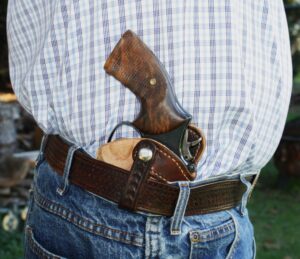
He mentioned he needed a holster for some handgun he owned, and I said what a coincidence, I needed a set of replacement grips. He asked me how much for the holster, I asked him how much for the grips and lo-and-behold, they miraculously shared the same price! I took great care hand-stitching that holster and boning it to the gun he owned, and hand-rubbed the rig with saddle soap before buffing it to a high polish.
By no surprise, the grips arrived and fit perfectly! They adorn my little magnum to this day. They are finely checkered, fit my gun hand very well, and above all, they look really snazzy thanks to a pattern in the wood.
Powerful Punch
My late uncle had a 4-inch Model 19, but before he passed, he apparently sold that sixgun to some guy he knew, so I don’t have a complete set of all the barrel lengths—I know there were some models with 8 3/8-inch barrels, but I never saw one—but I’m okay with that. My two Model 19 wheelguns have all the bases covered, and I actually carry the short gun in an old Bianchi Shadow pancake-style holster when I’m cutting firewood in the spring when bears with cubs just might decide they want to mess with me.
My preferred field load nowadays for the .357 Magnum is a 158-grain Hornady XTP over a sizzling dose of H110 from which I get better than 1,450 fps, depending upon which gun I’m shooting. (They get a little better muzzle velocity out of my 6-inch Python, but not much.)
Still, a 158-grain JHP leaving the barrel at that speed is going to get the undivided attention of whatever it hits. It is not as fast as my old loads pushing 125-grain Speer or Sierra JHPs, but I’m willing to sacrifice speed for penetration, especially since six months of the year, even criminals wear layers of clothing, and in the fall, a black bear just might tip the scale in the 350-400 pound range if he’s had a good feed all summer.
I know that bullet is capable of punching through a typical wall, or solid core door, and against a bear, coyote or mountain lion, it would have a devastating impact.
My Sixguns are Keepers
The Model 19 was in production from 1957 to 1999, and it was updated for a while, reappearing as a special Performance Center offering a few years ago. I got to test one and found it to be a good shooter.
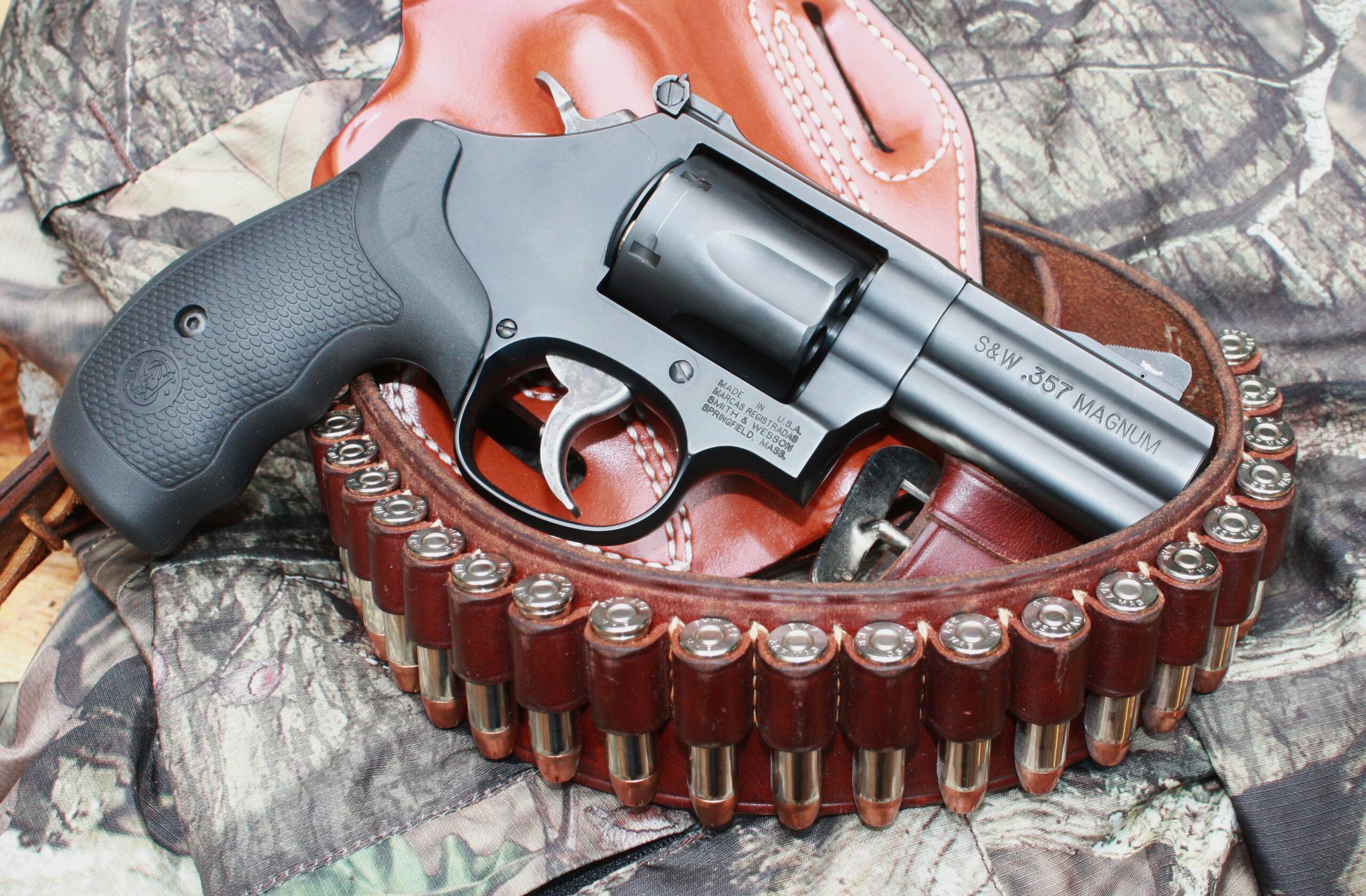
While the Model 19 was available in blue or nickel, S&W introduced a stainless steel version it dubbed the Model 66. I knew a few people who opted for the stainless guns, but I’ll stick with my blue models. Call it nostalgia.
Naturally, for either handgun I’ve got more than one holster. I even wound up with a pancake-style holster for the 6-inch model and modified it by trimming a slot at the upper front end to help clear leather faster. It’s also an old Safariland model lined with some sort of thin suede, and I can’t recall using it more than a couple of times because it just didn’t feel comfortable.
I’d have to say that in an emergency, my Model 19s would be among my “go-to” guns. They are packable, they use common ammunition, which is available essentially everywhere, and they have smooth actions. Most importantly, they’re accurate, and we all know what Wyatt Earp allegedly said: “Fast is fine but accuracy is final.”
I keep that in mind.