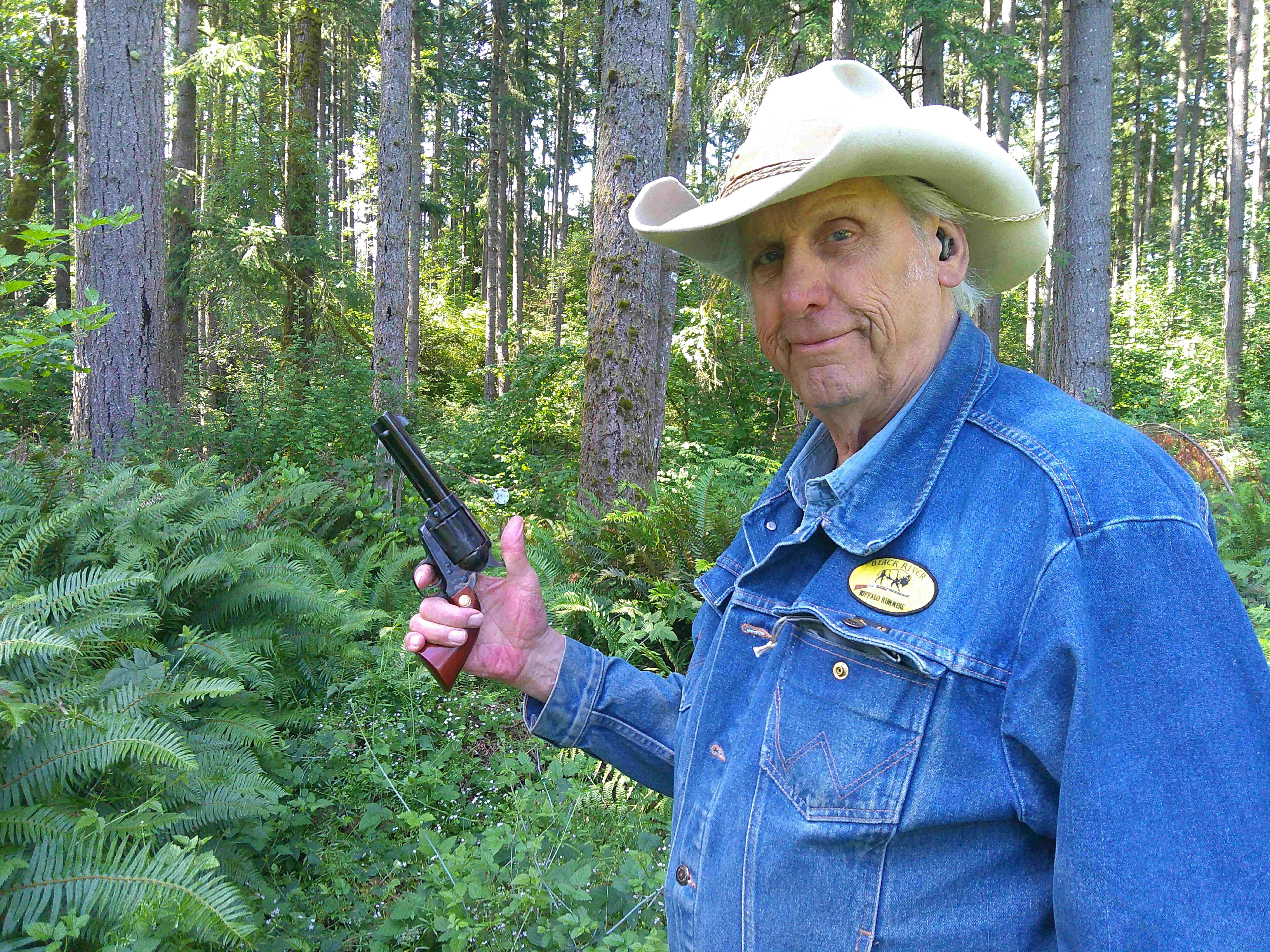
By Mike Nesbitt | Contributing Editor
A new-to-me .44 Special fell into my hands after considering it for at least a little while.
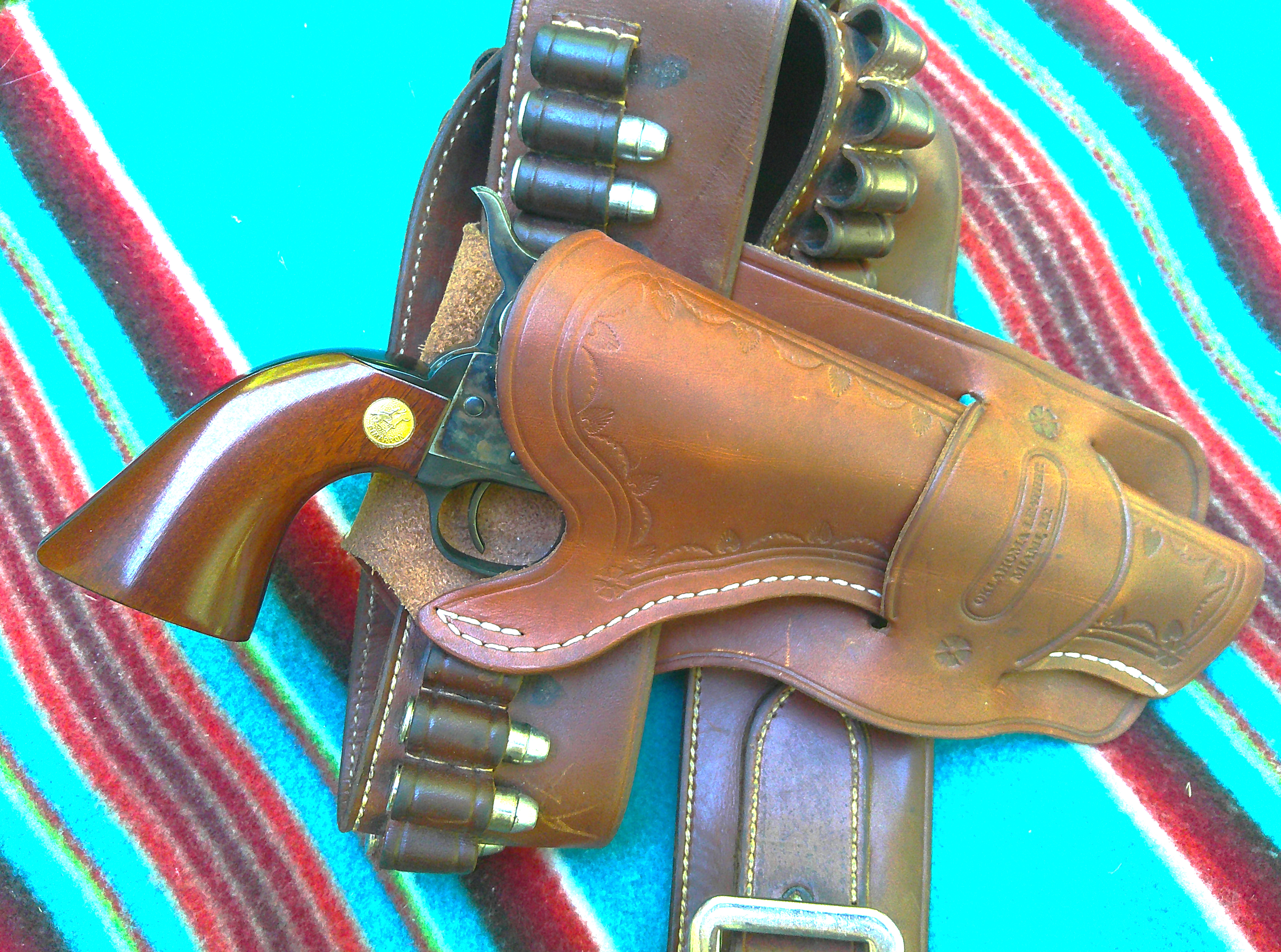
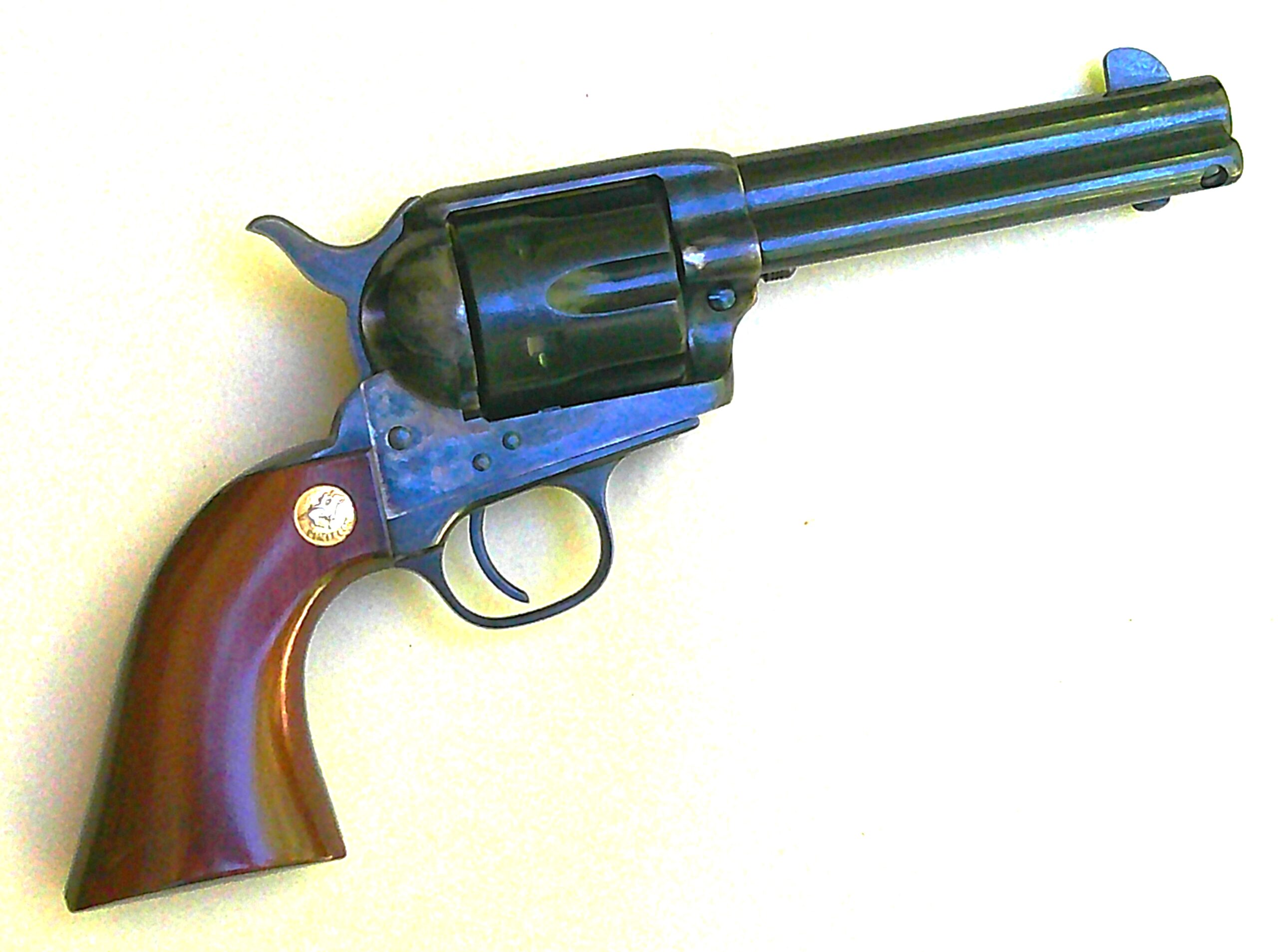
It is an Uberti copy of the pre-war Single Action Colt, what Cimarron Fire Arms calls the P Model. Two things made this gun rather inviting to me, first, it is in .44 Special caliber and, second, it has the 4¾-inch barrel. With that barrel length, I could vision this gun riding in a John Wayne style belt and holster, which I might still be getting.
This gun looked to be in great condition but with one possible exception. Notice in the profile picture that the trigger is just a bit too far forward for an old-style single action when the hammer is all the way down. That made me wonder, at first, if this was one of the newer transfer-bar versions, which I simply do not care for. Considering the general age of this gun, with a suggestion of when it was made, it should still have the firing pin in the hammer and the full series of clicks when the hammer is “eared” back to full-cock. The other thing that forward trigger can indicate on the single actions is a broken trigger and I have replaced at least a few of those in my previous years.
As it turns out, after I was able to handle it, the gun is the old style with the firing pin in the hammer. The reason the trigger is able to go further forward than usual is because a previous gunslinger has modified the hammer, perhaps for reasons discovered in fast firing while shooting in Cowboy Action matches. The first “click,” at the quarter-cock notch, is missing. Apparently that quarter-cock notch, the safety notch, has been removed. That’s fine with me, as I’ve never felt that the quarter-cock on a single action should be trusted and loading the gun with only five shots, carried with the hammer resting down on an empty chamber, is my style of packin’ a six-gun in a holster by my side.
There are other hints about this gun that suggest some good treatments by an experienced single action man. The hammer and trigger pulls are very nice, nicer than usual for these imports. Most likely a spring kit has been installed in this gun, with lighter hammer and trigger springs. I have not taken the gun apart to visually check that out. One reason for not looking into this is because “if it ain’t broke, don’t fix it.”
One more hint about work being done on this gun is the base pin, which the cylinder turns on. Most base pins on the Uberti single actions have two “grooves” for positioning the pins, where with the pin set all the way to the rear, the hammer is stopped before the firing pin can strike the primer in the cartridge. So, to do some shooting, the base pin must be positioned a bit further ahead, with the other groove for the spring-loaded base pin cross-catch (or the base pin holding screw, if the gun is the earlier pre-1895 version). But this gun’s base pin does not have those two grooves, only one. That makes me guess it has a base pin from a Colt. Everything about this gun seems to be on the plus or positive side, whoever did the work I’m guessing at did a rather good job.
One particular feature about this gun has already made me change my mind. At first I could picture it with ivory (imitation) grips. But the grips, or grip, that it has is simply too good to discard. This gun has a one-piece wooden grip, walnut I’m guessing, that feels too good and certainly fits too good to try to improve. The ivory grips might come later but for now the wooden grip stays.
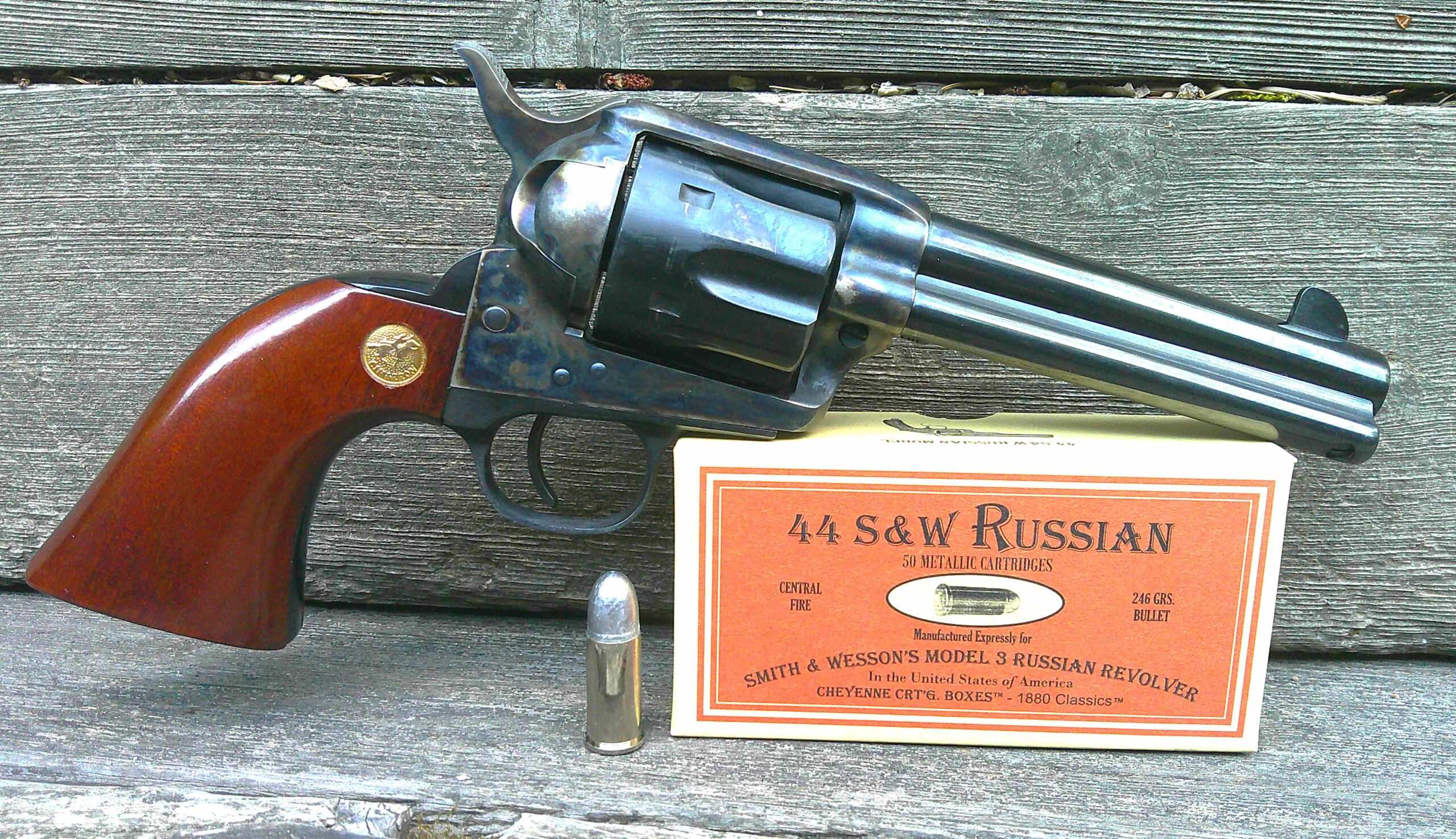
This .44 simply begged to be shot and I tried to reply to those pleas in appropriate time. Some .44 Russian ammo was prepared, using the old style .44 Russian bullets from Lyman’s old (and discontinued) mold number 429184 which weighs about 250 grains. Those bullets were lubed with a good black powder lube, Vigilante in this case, and loaded in Starline .44 Russian cases over 18½ grains of Swiss 2Fg powder. That’s my standard load for the .44 Russian and in general it works very well. With about 25 of those loads, this .44 and I headed to the range where we met with a couple of compadres and took a stroll down the black powder trail.
The two guys who went with me, Bob DeLisle and Dan Johnson, were both carrying old style single-shot .22 Stevens rifles, one a Favorite and the other a Crackshot, and we might say they were shooting just for fun. On the other hand, I was semi-serious because I wanted to see how well this nicely tuned single action would shoot. There are over 10 targets on this trail-walk that we commonly shoot at with handguns, so I carried about 15 loaded rounds with me, just to have most of the bases covered. Of course, I completely expected doing some trial shooting with this .44 would be a real pleasure.
It was a pleasure too. Everything I could have hoped for was present, except getting hits.
Shooting at steel gongs is certainly rewarding, if you are getting good hits, or any hits. The gongs might ring with joy or at least move in frisky ways after being influenced by the hit of a bullet. But if that target is missed, there is often nothing to help indicate where the errant bullet had gone. And I was missing with every shot which had a real dampening effect on my fun.
My assumption was that this gun was hitting high, so I continued shooting while holding low, and continued missing the steel targets. But that all changed, at least temporarily, when I came to the target we call the Mini Moon. This is a circular “gong,” rather small and at a relatively close range. I aimed for the center of this target and hit it, almost in the center. That happy accident restored some of my waning faith in the gun and it made me try harder for the next couple of shots.
We walked to nearly the end of the trail and I took shots at every target that tempted me, skipping the long distant rifle targets of course. But while my satisfaction with this .44 revolver had grown, because I certainly like its features and the smooth trigger pull, my rewarding number of hits had not grown. Out of the at least 15 shots I had fired, only two were good hits. I needed to find out what this gun was doing which means trying it on a paper target, where I should have started in the first place.
My friends were basically done for the day but I was just getting started. After getting to the pistol range, a suitable target was posted at just 30 feet and I prepared to shoot the revolver while resting my arm over a muzzle-rest for support, shooting from the bench. The paper target was supported by a rope at the top, and the target was held to that rope with a large binder clip. In order to keep the target from flapping like a flag in the breeze, a smaller rope is below the target, so the bottom of this target was held to that lower rope with a smaller binder clip. That held the target nicely and I took my seat at the bench to find out what this six-gun was doing.
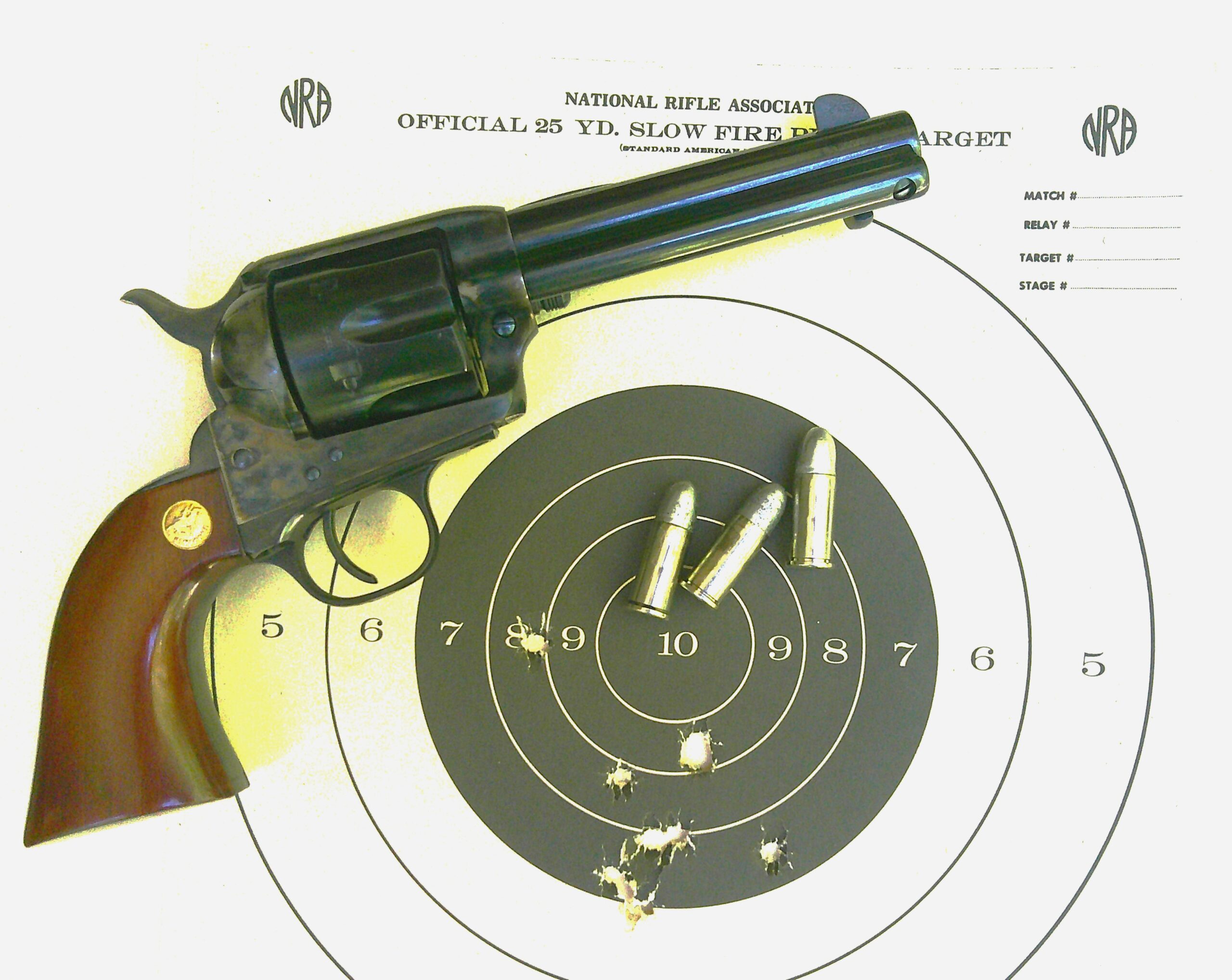
Because I still guessed that the gun was hitting high, I held at six o’clock on the bullseye and carefully squeezed the trigger. When the gun, with its black powder load, roared, things really happened. The target and both of the ropes began to dance wildly. The lower rope sagged away, very relaxed. With that shot, I had expertly hit the smaller binder clip which held the target at the bottom. The gun wasn’t hitting high; it was shooting low.
On these old-style single actions, that is easy to fix. Filing the front sight down, to raise the point of impact, is all that needs to be done. Just be careful that the filing doesn’t go too far. I’ll be doing that soon enough and most likely a story about it will be generated.
But before turning to the tool box, where that well-experienced file lies in waiting, I wanted to be much more positive of things than what just one shot might tell. So, with the bottom of the target clipped to the lower rope again, I fired more shots.
For those shots, however, I held the gun’s sights for the center, or the X, on the target. Yes, the shots still went low and they hit in the outside ring of the target’s black, with one shot going a bit higher and to the left. That one was my fault. The main group, although low, was very pleasing and well centered as far as windage goes. In total, counting that first shot which so quickly removed that lower binder clip, I fired nine rounds and eight of those shots were nicely and rather tightly clustered in a group that is less than 2 inches across.
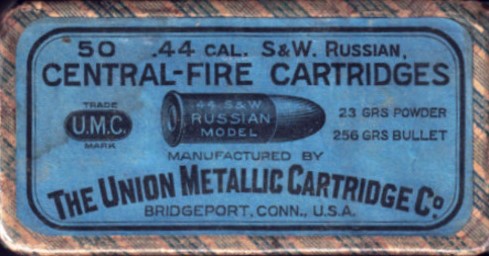
That is the group size I was hoping to get but it just wasn’t in the preferred location which I wanted. Moving that group will come next, most likely by reducing the height of the front sight. That job, however, will not be attempted really fast because I want to do more shooting to make sure such a move will be entirely to my benefit.
In other words, I don’t want to find myself trying to rebuild or replace the front sight blade, although that too could be done. I want a good fix and I want to do it only once.
This six-gun has won my heart and the John Wayne style gun rig might easily be in its future, perhaps along with those ivory grips. The .44 Russian cartridge, filled with black powder loads and cast lead bullets, is a true pleasure to shoot. It is, perhaps, surprising that in the old Colt Single Actions, only about 150 guns were chambered for the .44 Russian. The Colt .45 and the .44-40 Winchester chamberings were favored in the old Colt “thumb-buster” while the .44 Russian was the leading cartridge for the large-frame Smith & Wesson revolvers.
If my shooting with this gun had been on this paper target first, the low shooting would have been discovered right away and I might be further ahead with corrective action. That would be the sensible way to do things. On the other hand, and I have already said that I was only semi-serious about my shooting on the trail, I would have missed out on a lot of fun. Yes, more hits and good shooting would have made that walk down the trail more fun but that will certainly be in this gun’s future.